Robinhood, the First Stock in the Predictive Market Concept

marsbitPublié le 2026-06-16Dernière mise à jour le 2026-06-16

Résumé

The online brokerage Robinhood, which previously partnered with prediction market platform Kalshi to offer event contract trading to its users, is now becoming a direct competitor. This shift began after Robinhood, through a joint venture, acquired and rebranded a CFTC-regulated exchange (now Rothera Exchange). Robinhood's motivation stems from the rapid growth of prediction markets on its platform, which significantly boosted its "other transaction revenue." Recognizing that its vast retail user base is the most critical asset, Robinhood aims to capture more value by routing orders to its own exchange instead of sharing fees with Kalshi. It strategically launched its Rothera platform during the high-traffic 2026 FIFA World Cup, successfully processing tens of millions of contracts in its initial days. This move signals a pivotal power shift in the prediction market industry: control over user distribution and access is emerging as a more decisive advantage than the underlying market infrastructure itself. The future competition may increasingly revolve around which platforms control the major user gateways.

Author: Azuma, Odaily Planet Daily

The battle of the World Cup has begun, and the total trading volume of the predictive market continues to hit new highs. However, as the industry leader, Kalshi might not be in the best mood right now.

The reason is not due to fluctuations in Kalshi's own business data, but because Kalshi now "suddenly" faces another formidable rival besides Polymarket, and this opponent was once its most important ally.
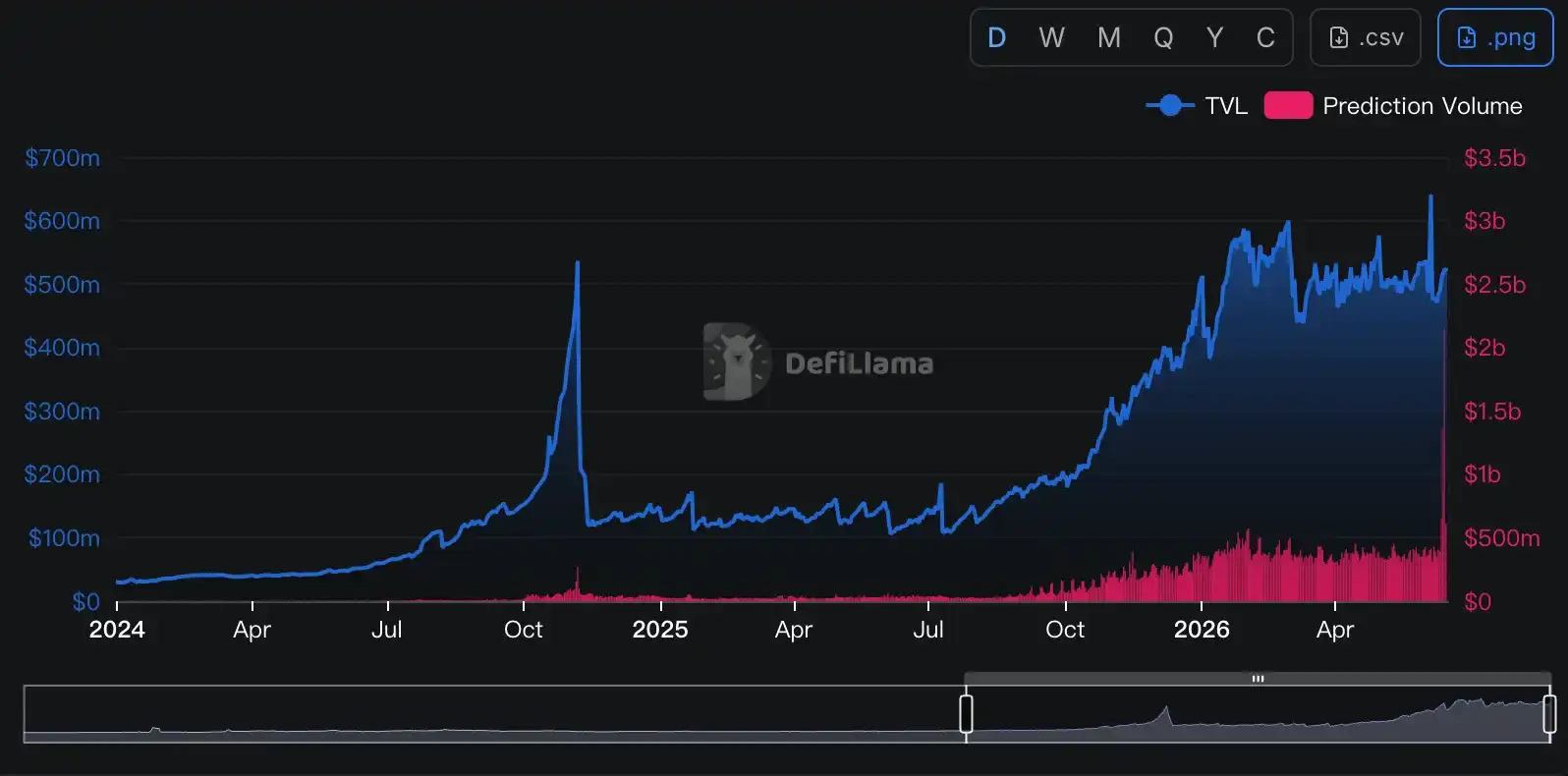
  • Odaily Note: Data sourced from Defillama.

Kalshi's Most Important Traffic Channel — Robinhood

Rewind to March 2025. At that time, Kalshi announced a partnership with the US online broker Robinhood, where the latter would use Kalshi's services to offer its users predictive market trading, allowing them to place bets on events like politics, economics, and sports.

From a business model perspective, this was a typical case of "mutual benefit" — Robinhood, responsible for user access and transaction distribution, could directly use Kalshi's mature product; Kalshi, responsible for the underlying market, matching, clearing, and regulatory compliance systems, could reach Robinhood's massive retail user pool.

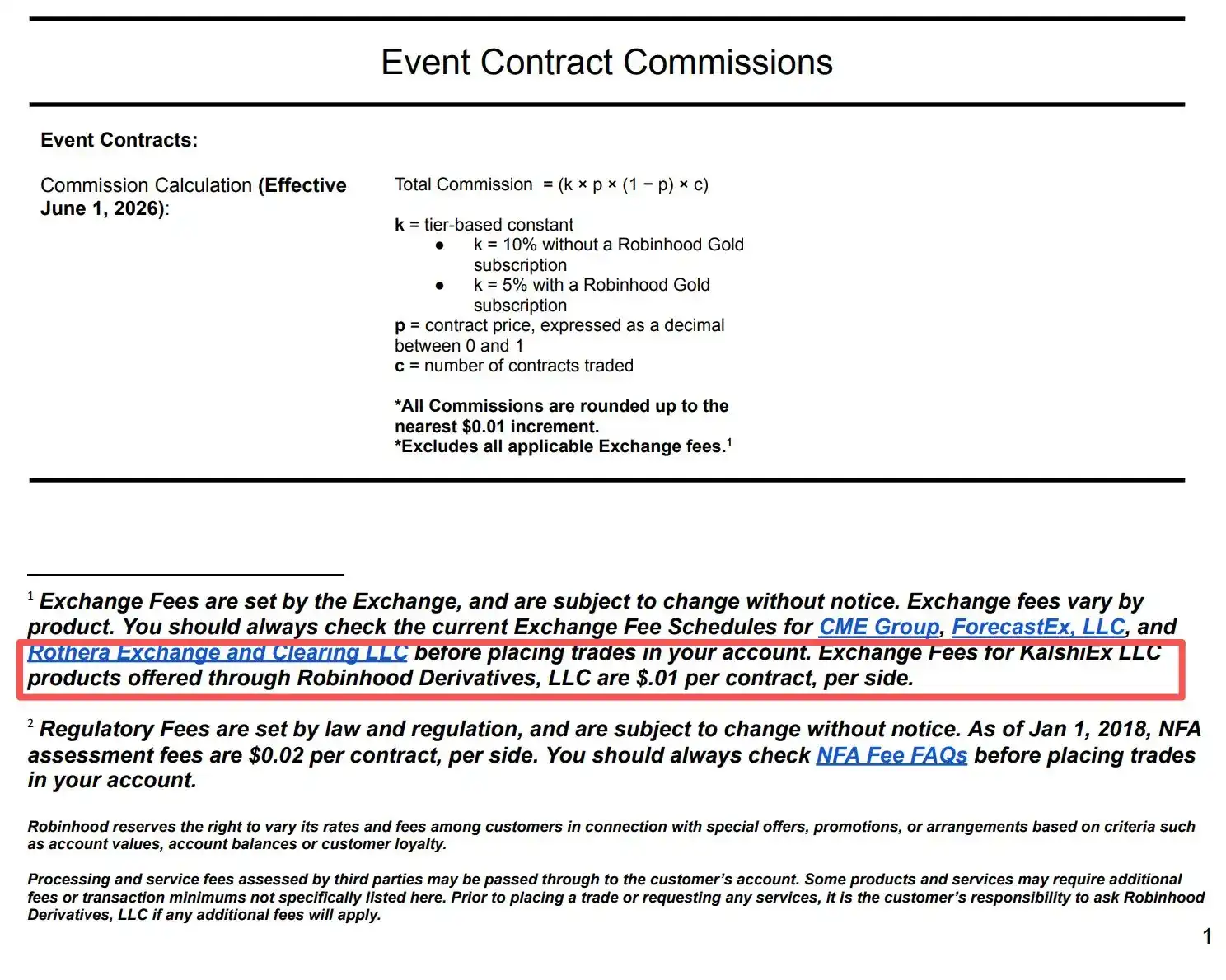
The subsequent story proved the "win-win" outcome of this partnership. Through Robinhood's channel distribution, Kalshi indirectly gained massive users and transaction volume. Piper Sandler analysts once estimated that "trading volume completed through Robinhood's channel accounted for about 25%-35% of Kalshi's total trading volume." These orders ultimately translated into revenue for both parties — Robinhood would independently charge for all Kalshi event contracts traded through its channel, a fixed fee of $0.01 per contract per direction, and then share the revenue with Kalshi (the specific proportion was not disclosed).
The Q1 financial report disclosed at the end of April showed that Robinhood facilitated the trading of 8.8 billion event contracts in Q1, driving "other trading revenue" to grow by 320% year-on-year, reaching $147 million. The predictive market has become the brightest new growth engine in Robinhood's product line.

However, recently, this relationship has undergone some subtle changes.

Robinhood's Ambition: Taking Back the Cake Shared with Kalshi

As internet history has proven countless times, when a channel gains enough leverage, it is no longer content with being just a channel. Robinhood is no exception.

Although the partnership with Kalshi also brought substantial revenue to Robinhood, as the predictive market became one of the fastest-growing new businesses on the platform, Robinhood was no longer satisfied with the current revenue-sharing arrangement.

In their cooperation model, Kalshi was responsible for providing the market and infrastructure, while Robinhood was responsible for providing users and order flow. However, as the partnership deepened, Robinhood gradually realized that what is truly scarce might not be the market itself, but the user access it firmly controls. After all, for most Robinhood users, they don't care whether their orders are ultimately executed on Kalshi or another platform — users only see a trading entry within the Robinhood app, not the underlying infrastructure provider.

In other words, Robinhood always held one of the most critical resources for the predictive market — distribution power. If the users belong to Robinhood, why should the order flow go to someone else?

In fact, just as Robinhood was quickly validating the demand for predictive markets through Kalshi, a Plan B was quietly launched shortly thereafter.

In November 2025, Robinhood announced the formation of a joint venture with Wall Street quantitative trading giant Susquehanna and planned to acquire the CFTC-regulated derivatives exchange MIAXdx. According to the official statement, this joint venture would operate an independent futures and derivatives exchange and clearing organization in the future, with predictive markets being one of its key focus areas. At the time, the outside world largely viewed it as an infrastructure investment. However, as more information was disclosed later, people gradually realized Robinhood's goal was far beyond just finding a new partner for predictive markets.

In January 2026, the transaction was completed. Robinhood and Susquehanna gained 90% control of MIAXdx, simultaneously acquiring a complete CFTC regulatory framework, including Designated Contract Market (DCM) and Derivatives Clearing Organization (DCO) licenses. Subsequently, MIAXdx was renamed Rothera Exchange, and its clearing organization was renamed Rothera Clearing.

At this point, Robinhood possessed the core elements needed to independently operate a predictive market, lacking only a mature product comparable to Kalshi. However, for Robinhood, with its rich experience in internet product development, this was evidently not a difficult task.

Rothera's Opportunity: The World Cup

In June 2026, after about half a year of accelerated development, the Rothera product gradually took shape, and Robinhood finally made the move that was almost destined to happen — gradually shifting the orders that originally flowed to Kalshi into its own controlled system.

Robinhood specifically chose an ideal launch battleground for Rothera — the World Cup. For predictive markets, the World Cup is undoubtedly one of the most high-traffic trading themes. Whether it's match outcomes, advancement results, or champion predictions, related markets can attract a large number of new users to trade in a short period. For the newly launched Rothera platform, there is no better scenario for a cold start than the World Cup.

According to Robinhood's official disclosure, during this World Cup with a total of 104 matches, some event contracts will be directed to Rothera for matching and clearing, including markets for single World Cup match results, the ultimate World Cup champion, total goals in a single match, and others. Compared to the previous model that relied entirely on Kalshi, this marks the first time Robinhood has introduced predictive market orders into its own trading system on a large scale.
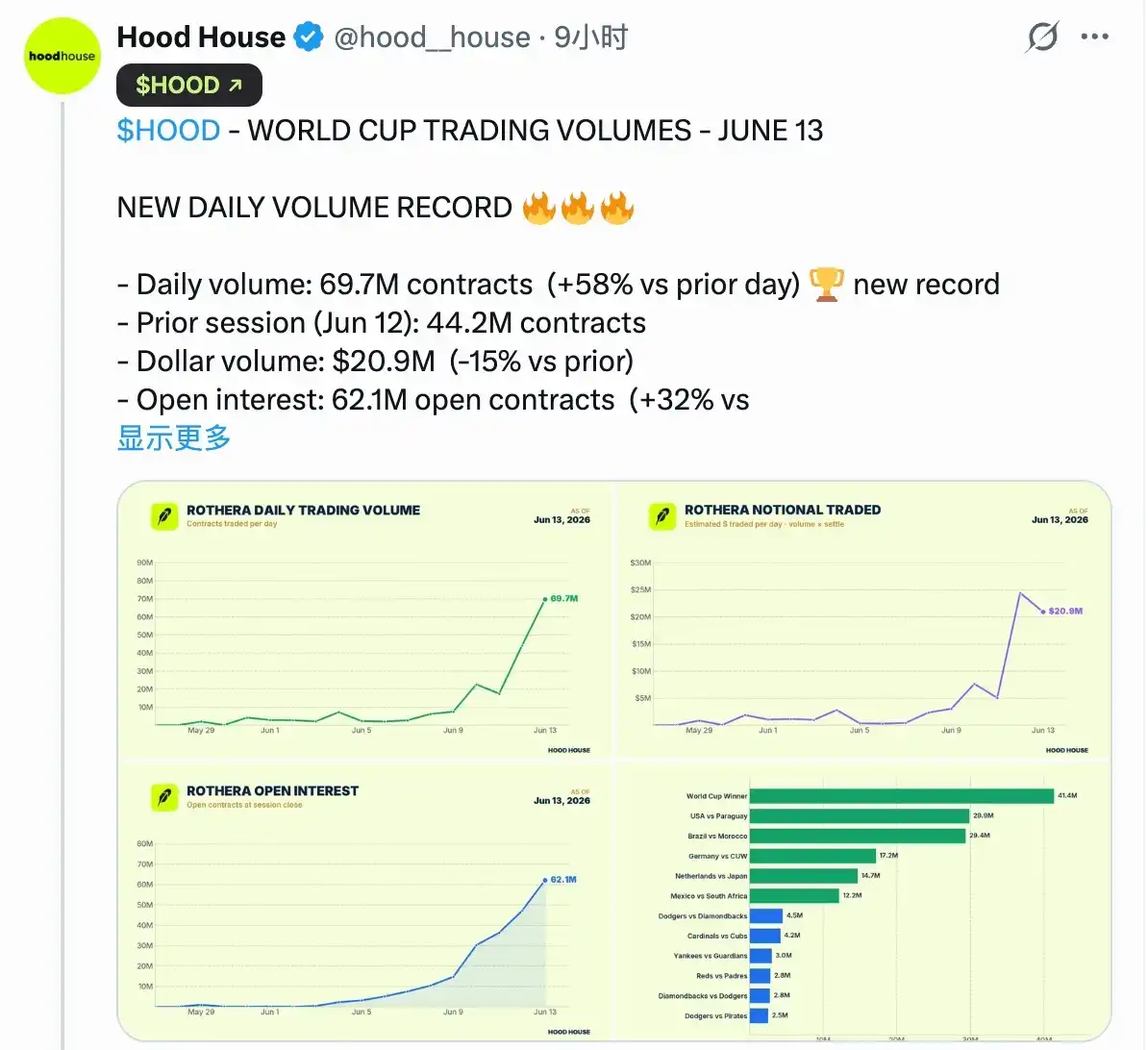
Judging by the results, Rothera clearly seized this opportunity. According to data disclosed by Hood House, an investment research media tracking Robinhood's activities, on June 12, Rothera completed 44.2 million contract trades, corresponding to a dollar trading volume of approximately $24.4 million; on June 13, Rothera completed 69.7 million contract trades, corresponding to a dollar trading volume of approximately $20.9 million... Although these figures still lag behind Kalshi's popular markets, which often involve hundreds of millions of dollars, considering that Rothera has literally just launched a few days ago, this performance is sufficiently successful.

For both Robinhood and Kalshi, this signifies that the balance of their cooperation has begun to tilt. From Robinhood's perspective, the transaction fee revenue that previously had to be shared with Kalshi can now be kept more within its own ecosystem. From Kalshi's perspective, this means that one of its most important growth engines has begun to show signs of weakening.

And the World Cup is clearly just the beginning of Rothera's encroachment on Kalshi. Looking further into the future, Robinhood will inevitably expand Rothera's coverage to more sporting events, as well as economic and political themes. Those orders that originally flowed to Kalshi will be intercepted one by one by Rothera.

Since Robinhood and Kalshi have never publicly disclosed their revenue-sharing ratio (some reports say 50%:50%, but no official information is available), we cannot know the exact monetary value of this interception. However, considering that Robinhood alone generated $147 million in predictive market-related revenue in Q1, and the Q2 World Cup and the more distant mid-term elections will likely bring even larger-scale trading activities, calculated on an annual basis, the value of this interception could reach several billion dollars.

Who Controls Distribution, Controls Everything

The drama of Robinhood and Kalshi moving from allies to opponents once again illustrates a logic repeatedly proven in the internet market — products are easy to build, but traffic is hard to find; whoever controls distribution controls everything.

Over the past few years, the market generally believed that Kalshi's core moat came from regulatory licenses, exchange qualifications, and clearing capabilities. Therefore, whether it was brokers like Robinhood or various media, communities, and traffic platforms, they were essentially just Kalshi's channel partners and traffic inlets. However, the emergence of Rothera proves one thing: in today's landscape of severe product homogenization, the product itself might not be the most critical element. What is truly scarce is always the user.

Where the users are, the liquidity is; where the liquidity is, the market will be. When Robinhood controls the access to tens of millions of retail users, it has the full capability to direct these users to any trading venue. For users, they don't care whether their orders are ultimately executed on Kalshi or Rothera. As long as the experience doesn't significantly differ, it doesn't matter who is matching or clearing behind the scenes.

If the theme of the predictive market industry in the past few years was the market battle between Polymarket and Kalshi, then the theme for the coming years might become a channel war. Robinhood incubating Rothera is essentially a reverse integration initiated by the channel side towards the market layer. As more and more platforms with traffic inlets begin to realize the strategic value of predictive markets, similar stories are highly likely to continue occurring. Whether it's exchanges, brokers, social platforms, or media platforms, they could all become new predictive market entry points.

And when inlets start to control the market, and channels begin to have pricing power, the ultimate winner in the predictive market industry might no longer be the platform responsible for order matching, but the one closest to the user and most capable of controlling distribution.

This was true in the internet era and the mobile internet era. This time, there's no exception either.

Questions liées

QAccording to the article, why did Robinhood partner with Kalshi initially?

ARobinhood partnered with Kalshi in March 2025 to leverage Kalshi's established product and regulatory infrastructure to offer prediction market trading services to its users. This allowed Robinhood to enter the prediction market quickly while Kalshi gained access to Robinhood's large retail user base.

QWhat is the core reason Robinhood decided to develop its own prediction market platform, Rothera Exchange?

AThe core reason is that Robinhood realized it controlled the most critical resource: the user distribution channel. Since users only interacted through the Robinhood app and didn't care about the backend infrastructure, Robinhood saw an opportunity to capture more revenue by diverting orders from Kalshi to its own controlled platform, thereby keeping more of the transaction fees.

QWhat event did Robinhood choose to launch Rothera Exchange, and why was it strategic?

ARobinhood strategically chose the 2026 FIFA World Cup to launch Rothera Exchange. The World Cup is a major event that generates high trading volume and attracts many new users to prediction markets, making it an ideal scenario for the platform's initial growth and market penetration.

QHow significant was the volume of prediction market trades for Robinhood in Q1 of 2026 according to the article?

AAccording to the article, Robinhood's Q1 2026 earnings report showed it facilitated 8.8 billion event contracts, driving a 320% year-over-year growth in 'other transaction revenue' to $147 million. This made prediction markets the fastest-growing new business line for Robinhood at the time.

QWhat broader industry shift does the article suggest is occurring with the rise of Rothera and similar moves by other platforms?

AThe article suggests the industry is shifting from a market-centric competition (like between Polymarket and Kalshi) to a 'channel war' or 'distribution war.' Platforms with large user bases and distribution power (like Robinhood, brokerages, social media) are recognizing the value of prediction markets and may integrate or build their own, challenging the dominance of pure infrastructure providers.

Lectures associées

Kraken Lance des Perpétuelles Pré-IPO pour OpenAI et Anthropic avec un Effet de Levier Jusqu'à 5x

Kraken élargit son offre de produits dérivés en lançant des contrats perpétuels pré-IPO sur OpenAI et Anthropic, permettant aux traders éligibles de prendre des positions longues ou courtes sur ces sociétés privées d'intelligence artificielle avant leur introduction en bourse. Ces produits offrent un effet de levier allant jusqu'à 5x. Ces contrats "pre-IPO perps" diffèrent des perpétuels crypto traditionnels car ils s'exposent à des entreprises privées, dont l'évaluation est moins transparente et dépend de tours de financement, de transactions secondaires et des anticipations de calendrier d'IPO. Cette complexité rend la gestion des risques plus délicate, d'autant plus avec l'effet de levier. Ce lancement illustre la tendance des plateformes de trading crypto à s'étendre au-delà des actifs numériques pour offrir une exposition à des marchés alternatifs, comme les entreprises privées, habituellement difficiles d'accès. Bien que cela ouvre de nouvelles opportunités de spéculation sur des thèmes d'investissement porteurs comme l'IA, cela soulève également des questions sur la protection des investisseurs, la liquidité et la source des prix. Kraken met en garde les traders sur les risques spécifiques de ces produits et les invite à bien comprendre l'exposition sous-jacente avant d'utiliser l'effet de levier.

bitcoinistIl y a 1 mins

Kraken Lance des Perpétuelles Pré-IPO pour OpenAI et Anthropic avec un Effet de Levier Jusqu'à 5x

bitcoinistIl y a 1 mins

Prix d'ouverture pour OpenAI : une nouvelle affaire de survie de six mois sur Hyperliquid

L’article explore l’émergence du marché des contrats « pré-IPO » (avant introduction en bourse) sur la blockchain, en prenant l’exemple de deux projets sur Hyperliquid : Trade.xyz et Ventuals. Trade.xyz, une équipe anonyme, a rencontré un grand succès en se concentrant sur des actifs comme SpaceX, dont la date et le prix d’introduction en bourse étaient déjà connus. Cela a permis au marché de converger vers un prix de référence réel au moment de l’IPO. À l’inverse, Ventuals, soutenu par Paradigm, a choisi de proposer des contrats sur des entreprises comme OpenAI et Anthropic, qui n’ont pas de date d’IPO fixée. Son mécanisme de tarification, qui s’appuyait pour moitié sur des transactions privées et pour moitié sur sa propre moyenne de prix, a créé une boucle autoréférente. Les prix, souvent bloqués près de leurs plafonds, reflétaient peu la véritable offre et la demande. Le projet a fermé après neuf mois, avec un règlement final à 1 341,80 $ pour OpenAI et 1 618,90 $ pour Anthropic – des prix considérés comme artificiels. L’article souligne la demande réelle pour ce type de marchés, permettant un accès à des actifs normalement inaccessibles. Cependant, il met en garde contre le défi fondamental : sans un événement de référence comme une IPO, l’établissement d’un prix véritablement juste reste problématique, même lorsque des acteurs établis comme Coinbase entrent sur ce créneau.

marsbitIl y a 3 mins

Prix d'ouverture pour OpenAI : une nouvelle affaire de survie de six mois sur Hyperliquid

marsbitIl y a 3 mins

Entretien avec la directrice de la stratégie numérique de Morgan Stanley : Le Bitcoin à un million de dollars n'est pas impossible, mais je préférerais que cela aille plus lentement

En juin 2026, Amy Oldenburg, responsable de la stratégie des actifs numériques chez Morgan Stanley, a discuté de l'adoption institutionnelle du Bitcoin. Elle a retracé son parcours, des marchés émergents à la finance numérique, soulignant comment les expériences d'infrastructures financières défaillantes et de monnaies mobiles (comme M-Pesa) ont jeté les bases de la logique du Bitcoin. Elle explique que malgré le lancement réussi du fonds MSBT (qui a battu des records), l'adoption par les conseillers financiers reste lente en raison de la volatilité du prix et d'obligations fiduciaires. Les banques comme Morgan Stanley sont également freinées par une réglementation stricte (règles de Bâle III, statut de banque). Oldenburg ne pense pas qu'un catalyseur unique propulsera le Bitcoin, mais plutôt qu'une adoption graduelle se poursuivra. Elle évoque la possibilité d'une crise majeure du système traditionnel qui pourrait révéler la valeur du Bitcoin comme actif refuge. Bien qu'elle estime qu'atteindre 1 million de dollars est possible, elle souhaite une croissance plus stable pour réduire la volatilité. Elle aborde également le fossé éducatif, la confusion entre les différents actifs cryptographiques, et la tension entre l'idéal décentralisé "cypherpunk" et les produits centralisés comme les ETF qui offrent commodité et services (prêts, gestion successorale). Pour elle, les deux approches peuvent coexister, l'écosystème en étant encore à ses débuts.

marsbitIl y a 15 mins

Entretien avec la directrice de la stratégie numérique de Morgan Stanley : Le Bitcoin à un million de dollars n'est pas impossible, mais je préférerais que cela aille plus lentement

marsbitIl y a 15 mins

Les fusions et acquisitions sur le marché de la cryptographie sont anormalement actives

Le marché des fusions-acquisitions dans la cryptographie connaît une activité exceptionnelle. Alors que le financement par levée de fonds recule fortement, les opérations de rachat représentent désormais près de 42 % des transactions en capital-investissement, atteignant un niveau historique. Cette tendance ne signale pas un boom, mais plutôt un resserrement du financement, poussant les grandes entreprises à saisir l'opportunité d'acquérir à moindre coût des équipes, des licences, des technologies et des parts de marché. Les acquéreurs actifs (Coinbase, Kraken, Ripple, MoonPay, etc.) visent principalement quatre domaines : les infrastructures de trading (ex. : dérivés), les paiements et stablecoins, les actifs réglementés, ainsi que l'émission et la distribution d'actifs (RWA). Leurs motivations incluent des valorisations plus basses, un gain de temps, l'acquisition de licences et l'intégration verticale. Cette dynamique modifie les perspectives de sortie pour les startups, offrant une alternative à la seule dépendance aux levées de fonds et aux jetons. Elle pourrait encourager une focalisation sur la création de valeur réelle et intégrables. Cependant, elle accélère également la concentration du secteur entre les mains de quelques grands acteurs, renforçant les barrières à l'entrée et éloignant le secteur de son idéal initial de décentralisation ouverte.

链捕手Il y a 34 mins

Les fusions et acquisitions sur le marché de la cryptographie sont anormalement actives

链捕手Il y a 34 mins

Trading

Spot
Futures

Articles tendance

Comment acheter T

Bienvenue sur HTX.com ! Nous vous permettons d'acheter Threshold Network Token (T) de manière simple et pratique. Suivez notre guide étape par étape pour commencer votre parcours crypto.Étape 1 : Création de votre compte HTXUtilisez votre adresse e-mail ou votre numéro de téléphone pour ouvrir un compte sur HTX gratuitement. L'inscription se fait en toute simplicité et débloque toutes les fonctionnalités.Créer mon compteÉtape 2 : Choix du mode de paiement (rubrique Acheter des cryptosCarte de crédit/débit : utilisez votre carte Visa ou Mastercard pour acheter instantanément Threshold Network Token (T).Solde :utilisez les fonds du solde de votre compte HTX pour trader en toute simplicité.Prestataire tiers :pour accroître la commodité d'utilisation, nous avons ajouté des modes de paiement populaires tels que Google Pay et Apple Pay.P2P :tradez directement avec d'autres utilisateurs sur HTX.OTC (de gré à gré) : nous offrons des services personnalisés et des taux de change compétitifs aux traders.Étape 3 : stockage de vos Threshold Network Token (T)Après avoir acheté vos Threshold Network Token (T), stockez-les sur votre compte HTX. Vous pouvez également les envoyer ailleurs via un transfert sur la blockchain ou les utiliser pour trader d'autres cryptos.Étape 4 : tradez des Threshold Network Token (T)Tradez facilement Threshold Network Token (T) sur le marché Spot de HTX. Il vous suffit d'accéder à votre compte, de sélectionner la paire de trading, d'exécuter vos trades et de les suivre en temps réel. Nous offrons une expérience conviviale aux débutants comme aux traders chevronnés.

556 vues totalesPublié le 2024.12.10Mis à jour le 2026.06.02

Comment acheter T

Discussions

Bienvenue dans la Communauté HTX. Ici, vous pouvez vous tenir informé(e) des derniers développements de la plateforme et accéder à des analyses de marché professionnelles. Les opinions des utilisateurs sur le prix de T (T) sont présentées ci-dessous.

活动图片