A Clod of Chinese Soil Chokes Two Japanese Giants

marsbitPublié le 2026-06-16Dernière mise à jour le 2026-06-16

Résumé

"Chinese Soil Chokes Japanese Giants" The production of a key electronic specialty gas, tungsten hexafluoride (WF6), vital for manufacturing AI chips, was halted by two leading Japanese producers—Kanto Denka and Central Glass. Their shutdown was not due to a technological failure but a sudden, critical shortage of a raw material they had long taken for granted: ultra-high-purity (6N-grade) tungsten powder, which is almost entirely sourced from China. Following a quiet Chinese export announcement in January 2026, tungsten powder shipments to Japan dropped to zero for months. Despite frantic efforts, Japanese companies found no viable alternative; imported powder was three times more expensive and lacked the required purity. Their existing stockpiles were exhausted by mid-2026. WF6 is essential for depositing tungsten into the microscopic contact holes of High Bandwidth Memory (HBM) chips, which are crucial for advanced processors like those from Nvidia. While Japanese firms had mastered producing ultra-pure WF6 gas, their entire supply chain relied on China's 6N tungsten powder—a dependency now revealed as a fatal vulnerability. China's dominance in this "soil" results from decades of painstaking R&D by companies like Xiamen Tungsten and China Tungsten & Hightech. They overcame immense technical hurdles, such as separating chemically similar molybdenum from tungsten, to achieve mass production of the world's purest tungsten powder. With their primary suppliers gone, Kanto...

Two Japanese companies made a specialty electronic gas a world leader, with even TSMC and Samsung having to heed them.

Then overnight, they announced a permanent production halt. It wasn't a technology failure; it was a raw material cutoff. And that material, they had been buying entirely from China.

Cut Off

On January 6, 2026, the Ministry of Commerce issued Announcement No. 1 of the year. There was no press conference, no explanatory article, just quietly posted on the official website.

The Japanese didn't notice, Kanto Denka Kogyo didn't notice, Central Glass didn't notice.

They still had inventory. High-purity tungsten powder was piled in warehouses, enough for several months. The procurement department placed orders as usual, emails went out, ton-level shipments arrived—cheap, stable.

No one saw this as a risk.

February, customs data came out: Exports of tungsten carbide powder and tungsten powder to Japan—zero.

March, zero. April, still zero.

According to Kyodo News citing General Administration of Customs data, China's tungsten powder exports to Japan remained at zero for three consecutive months from February to April 2026.

Kanto Denka's inventory fell below the red line. Central Glass scrambled to find alternative suppliers. Mitsubishi Materials poured 10 billion yen into boosting tungsten scrap recycling.

Buying from other countries, the price was 3 times higher. As for purity, it fell far short of the 6N grade.

The two Japanese firms together accounted for nearly one-fourth of the global high-end tungsten hexafluoride production capacity. Kanto Denka Kogyo's president, Junichi Hasegawa, and Central Glass's president, Kazuhiko Maeda, now faced a brutal reality:

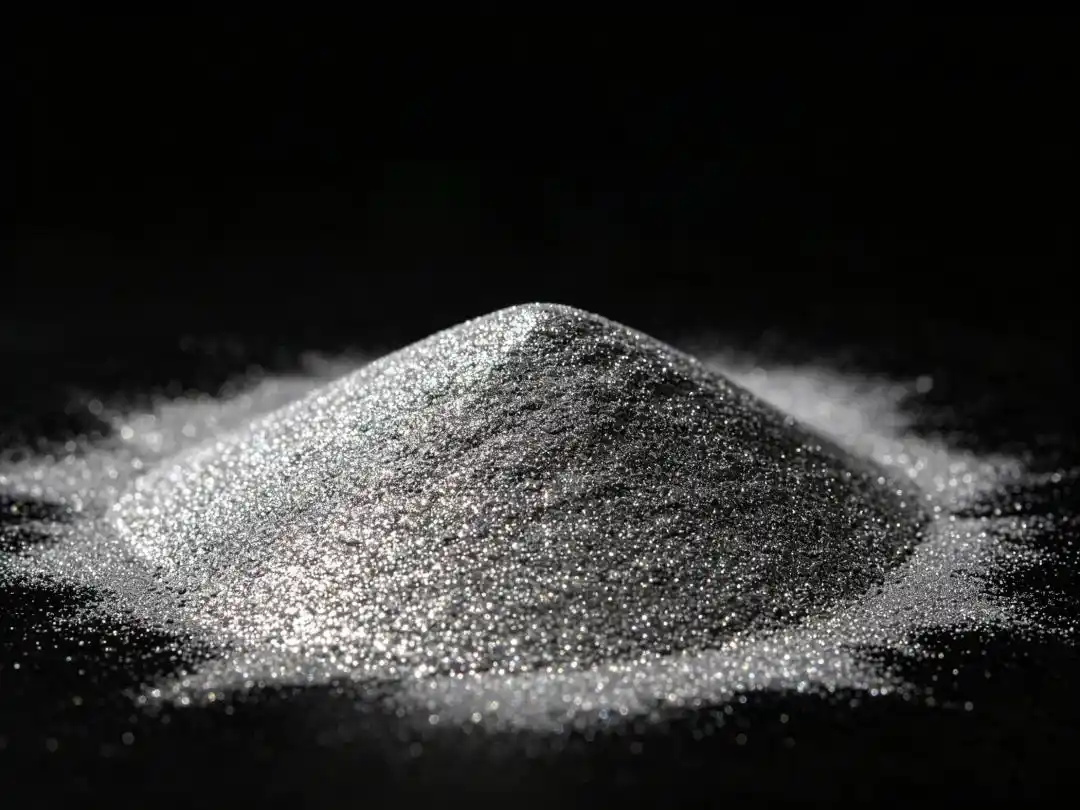
The raw material for making high-end tungsten hexafluoride—6N grade high-purity tungsten powder—was no longer available. And this powder, it's almost entirely in China.
Critical Point

First, what is tungsten hexafluoride?

The soul of AI chips is HBM (High Bandwidth Memory), where over a dozen layers of memory chips are stacked. These chips are densely packed with nanoscale contact holes, thousands of times thinner than a human hair.

Although other metals can be used for these contact holes, tungsten remains the absolute primary material for now. And the key specialty gas that deposits tungsten into these micro-holes is tungsten hexafluoride.

Without tungsten hexafluoride, there is no HBM. Without HBM, Nvidia's GPUs are just scrap metal.

In making this specialty gas, the Japanese were once the best in the world. Kanto Denka could achieve a purity of six nines (6N)—meaning only one impurity molecule per one million molecules.

But a six-nine gas needs six-nine powder.

For over a decade, Chinese tungsten powder was bought by the ton—cheap, stable. To the Japanese, the distillation column was the moat. What was powder? In a sense, just dirt.

But at the critical moment, what choked the Japanese was precisely this dirt.

The Japanese did struggle.

They tried using low-purity coarse powder, relying on distillation columns for forced purification. But the most deadly impurity in coarse powder is molybdenum—molybdenum and tungsten are in the same group on the periodic table, their chemical properties like twins.

Once in the reactor, reacting with fluorine gas, they both turn gaseous. Their boiling points are too close to separate.

You have money, policy, a sense of crisis, but you are powerless against the limits of chemical engineering.

Hard Grind

Leveling this wall was no overnight success for the Chinese either.

Purifying tungsten powder requires removing impurities, and one of the hardest to remove is molybdenum.

Molybdenum and tungsten have similar chemical properties; dissolved in water, they behave the same way. Separating molybdenum from tungsten is no less difficult than separating salt from MSG in a pot of soup.

The solution is to add a sulfidizing agent to the solution. Molybdenum, being more sulfur-loving than tungsten, rushes in first—grabbing the sulfur while tungsten remains unmoved. In that instant, the molybdenum is pulled away.

Sounds simple.

How narrow is that instant? If the pH is off by a bit, molybdenum lets go, mixing back with tungsten. The parameter window is as narrow as walking a tightrope.

To break through, there were no shortcuts, only the most arduous method:

Adjust pH, change adsorbents, modify extraction solutions, grinding through experiments group by group, even redesigning the adsorbents themselves.

Generations, grinding for decades, finally reducing molybdenum in the solution to an acceptable level.

Huang Changgeng, chairman of Xiamen Tungsten, joined the company in 1987 and never left until his recent retirement.

During that time, from the workshop to management, 39 years focused on just this one thing, leading the team from coarse powder to 6N, pushing Chinese tungsten powder to the global ceiling.
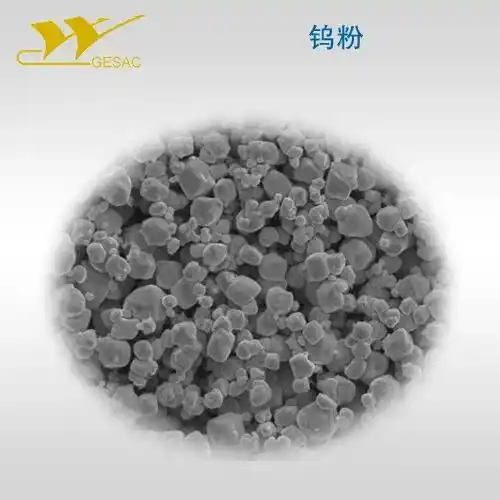
Image source: Xiamen Tungsten

Besides Xiamen Tungsten, there's also China Tungsten and Hightech.

These two are also, so far, among the very few companies globally capable of mass-producing 6N grade high-purity tungsten powder.

China had the high-purity tungsten powder. The Japanese bought the powder, produced tungsten hexafluoride, sold it to Samsung and TSMC, doubling the price.

This business seemed like easy money.

Then, the Japanese themselves smashed the door shut.

Turning the Tables

According to multiple media reports, Kanto Denka Kogyo and Central Glass have officially notified major customers like Samsung and SK Hynix:

June 30th, the last shipment. From July 1st, permanent production halt.

Since January 2026, imports of high-purity tungsten powder from China have essentially been zero. The two Japanese companies' inventories held out for five months, finally running dry.

Not only was the raw material cut off, but more crucially, the uncertainty. Even if they scraped together tungsten powder to restart the line, what about the next cutoff?

During shutdowns, residual tungsten hexafluoride in the pipelines hydrolyzes upon contact with water, producing hydrofluoric acid that corrodes valves and welds. Restarting and repairing is costly.

Repeated shutdowns and restarts are suicide.

When the news reached Seoul, Samsung and SK Hynix panicked. These two South Korean semiconductor giants had previously sourced most of their tungsten hexafluoride from Japan. Samsung's inventory wouldn't last past June.

No tungsten hexafluoride means no HBM, and Nvidia's orders go down the drain.

The certification cycle, the headache for Chinese companies, suddenly wasn't a problem anymore. Chinese tungsten hexafluoride suppliers became the darlings of leading wafer fabs.

The door is open, the players have changed.

Thirty years ago, China mined, others counted the money. Low-purity coarse powder was sold by the ton. Others purified it, made it into gas, into targets, and flipped it for dozens of times the value.

Thirty years later, the Chinese ground their way from 3N to 6N purity. The lowliest dirt overturned the highest throne.

On July 1st, the tungsten hexafluoride production line at Kanto Denka's Shibukawa factory will shut down.

Meanwhile, in Chinese high-purity tungsten powder production lines and tungsten hexafluoride factories, domestic materials are flowing out nonstop, loaded onto trucks heading for ports.

Only this time, Japanese manufacturers are absent from the destination list.

This article is from the WeChat public account "Huashang Strategic" (ID: hstl8888), author: Huashang Strategic


Questions liées

QWhat are the names of the two major Japanese companies mentioned in the article that were forced to permanently halt production?

AThe two major Japanese companies are Kanto Denka Kogyo Co., Ltd. (関東電化工業株式会社) and Central Glass Co., Ltd. (セントラル硝子株式会社).

QWhat is the critical raw material that Japan lost access to from China, leading to the production halt?

AThe critical raw material is high-purity 6N grade tungsten powder. This specific grade of powder is essential for manufacturing high-purity tungsten hexafluoride.

QWhy is tungsten hexafluoride (WF6) so crucial in the semiconductor industry according to the article?

ATungsten hexafluoride is crucial as it is the key electronic specialty gas used for depositing tungsten into the nano-sized contact holes within HBM (High Bandwidth Memory) chips. Without it, HBM production for advanced AI chips, such as those used by Nvidia, would not be possible.

QWhat was the primary technical challenge China faced and overcame in producing high-purity tungsten powder?

AThe primary technical challenge was separating molybdenum (Mo) from tungsten (W) due to their very similar chemical properties. China's breakthrough involved a complex purification process using sulfiding agents and precise control of parameters to exploit the slight difference in their affinity for sulfur, which required decades of persistent research and development.

QWhat were the consequences for South Korean semiconductor giants Samsung and SK Hynix due to the Japanese production halt?

ASamsung and SK Hynix faced a critical supply shortage of tungsten hexafluoride, with Samsung's inventory reportedly running out by June. This shortage directly threatened their HBM production capacity and, consequently, their ability to fulfill orders for companies like Nvidia.

Lectures associées

Le parti colombe de la Fed se tourne collectivement vers la fauconnerie, la première performance de Warsh entre deux feux

Des responsables de la Réserve fédérale, autrefois favorables à une baisse des taux (colombes), y compris Christopher Waller, ont récemment indiqué qu’une hausse n’était pas exclue, laissant presque plus aucun membre du comité en faveur d’un assouplissement. La première réunion présidée par le nouveau président Kevin Warsh pourrait ainsi envoyer un signal : la prochaine étape de la Fed pourrait être un relèvement des taux. Warsh, nommé par le président Trump pour ses positions accommodantes, arrive à un moment délicat. L’inflation américaine dépasse désormais 3 %, le marché du travail se renforce et des tensions sur les prix persistent. Les raisons qui justifiaient une baisse des taux s’effacent une à une. Le changement d’orientation est net. Christopher Waller, qui plaidait pour une baisse début 2024, déclare désormais ne plus pouvoir exclure une future hausse. Même des membres modérés comme Lisa Cook se disent prêts à relever les taux si la baisse de l’inflation tarde trop. Les faucons, tels que Beth Hammack et Lorie Logan, estiment depuis longtemps que les conditions justifient un resserrement et mettent en garde contre le risque d’une inflation ancrée. Lors de sa première réunion, la Fed devrait maintenir son taux directeur mais supprimer toute mention d’une orientation accommodante dans son communiqué, indiquant ainsi que hausse et baisse sont désormais des options équivalentes. Les projections des membres (« point plot ») devraient refléter moins de baisses de taux attendues cette année, voire quelques hausses. Warsh, critique des outils de communication de la Fed comme le « point plot », se trouve dans une position difficile : il doit gérer un comité qu’il n’a pas formé, utiliser des méthodes qu’il a longtemps contestées, et possiblement conduire la politique vers une direction contraire aux souhaits du président qui l’a nommé. Son entrée en fonction marque un tournant net vers un possible resserrement monétaire.

marsbitIl y a 1 h

Le parti colombe de la Fed se tourne collectivement vers la fauconnerie, la première performance de Warsh entre deux feux

marsbitIl y a 1 h

« Yi Zhong Tian » à un billion de dollars de capitalisation boursière, qui est le vrai champion du rapport qualité-prix ?

L'article analyse les trois leaders chinois du secteur des modules optiques, surnommés "Yi Zhong Tian" (d'après les noms Xinyisheng, Zhongji Innolight et TFC Optical Communication), qui ont connu une hausse spectaculaire de leur valorisation, dépassant 1 000 milliards de yuans. L'accent est mis sur la comparaison de leur "rapport qualité-prix" en termes d'investissement. Xinyisheng présente le ratio PEG le plus bas (environ 0,30) et une bonne qualité de bénéfices, mais sa décote reflète des risques : forte dépendance à quelques clients, exposition aux tensions commerciales et incertitudes sur sa croissance durable. Zhongji Innolight, le leader du marché, bénéficie de la plus forte prime pour sa position dominante (plus de 50% des parts de marché sur les modules 800G de NVIDIA) et son avance technologique. Son principal risque est géopolitique, après son inscription sur une liste du département américain de la Défense. TFC Optical Communication, fournisseur de composants en amont, a la marge brute la plus élevée et parie sur la future architecture CPO/NPO. Cependant, sa valorisation est très élevée (PER élevé) et sa croissance est plus stable, moins sensible aux cycles d'investissement AI que les assembleurs de modules. Enfin, l'article souligne un défi sous-jacent : la vraie valeur et les profits durables se situent en amont de la chaîne, dans les puces laser et les semi-conducteurs, dominés par des entreprises comme Coherent et Lumentum. La pérennité à long terme des "Yi Zhong Tian" dépendra de la capacité de l'industrie chinoise à monter en gamme et à capturer cette partie de la valeur ajoutée.

marsbitIl y a 1 h

« Yi Zhong Tian » à un billion de dollars de capitalisation boursière, qui est le vrai champion du rapport qualité-prix ?

marsbitIl y a 1 h

Trading

Spot
Futures

Articles tendance

Comment acheter GAS

Bienvenue sur HTX.com ! Nous vous permettons d'acheter GAS (GAS) de manière simple et pratique. Suivez notre guide étape par étape pour commencer votre parcours crypto.Étape 1 : Création de votre compte HTXUtilisez votre adresse e-mail ou votre numéro de téléphone pour ouvrir un compte sur HTX gratuitement. L'inscription se fait en toute simplicité et débloque toutes les fonctionnalités.Créer mon compteÉtape 2 : Choix du mode de paiement (rubrique Acheter des cryptosCarte de crédit/débit : utilisez votre carte Visa ou Mastercard pour acheter instantanément GAS (GAS).Solde :utilisez les fonds du solde de votre compte HTX pour trader en toute simplicité.Prestataire tiers :pour accroître la commodité d'utilisation, nous avons ajouté des modes de paiement populaires tels que Google Pay et Apple Pay.P2P :tradez directement avec d'autres utilisateurs sur HTX.OTC (de gré à gré) : nous offrons des services personnalisés et des taux de change compétitifs aux traders.Étape 3 : stockage de vos GAS (GAS)Après avoir acheté vos GAS (GAS), stockez-les sur votre compte HTX. Vous pouvez également les envoyer ailleurs via un transfert sur la blockchain ou les utiliser pour trader d'autres cryptos.Étape 4 : tradez des GAS (GAS)Tradez facilement GAS (GAS) sur le marché Spot de HTX. Il vous suffit d'accéder à votre compte, de sélectionner la paire de trading, d'exécuter vos trades et de les suivre en temps réel. Nous offrons une expérience conviviale aux débutants comme aux traders chevronnés.

250 vues totalesPublié le 2024.12.12Mis à jour le 2026.06.02

Comment acheter GAS

Discussions

Bienvenue dans la Communauté HTX. Ici, vous pouvez vous tenir informé(e) des derniers développements de la plateforme et accéder à des analyses de marché professionnelles. Les opinions des utilisateurs sur le prix de GAS (GAS) sont présentées ci-dessous.

活动图片