Tether's 'Gold Standard' Ambition: Deconstructing XAUt, How the Stablecoin Giant is Hoarding Gold?

marsbitPublié le 2026-02-02Dernière mise à jour le 2026-02-02

Résumé

Tether, the company behind the dominant stablecoin USDT, is rapidly becoming a major global buyer of physical gold, with holdings of approximately 140 metric tons valued at around $23 billion. A significant portion of this, over 70 tons, was acquired last year alone to back its gold-backed stablecoin, XAUt. Each XAUt token represents ownership of one troy ounce of LBMA-standard gold, stored in a high-security Swiss vault. The on-chain token facilitates the transfer of ownership of the underlying physical asset. The operation is run by TG Commodities, a Salvadoran entity fully owned by Tether, which is authorized by El Salvador's national digital asset regulator. Tether's CEO has stated the company aims to allocate 10-15% of its portfolio to gold, purchasing an estimated one to two tons per week. With robust profits, this could potentially double its current XAUt reserves. This scale of purchasing has positioned Tether as a significant "marginal buyer" in the gold market, comparable to central banks. While other gold-backed tokens like PAXG and DGX exist, Tether's massive accumulation introduces a new dynamic. The product aims to make gold more divisible and transferable, but it also intertwines the stability of physical gold with the volatility of the crypto market, raising questions about the long-term implications of this new asset class.

Author: imToken

Can you imagine a company that started with a Crypto background is now buying gold at a scale approaching that of central banks?

According to Bloomberg, USDT issuer Tether has become one of the world's largest holders of gold reserves—currently holding approximately 140 tons of gold, valued at about $23 billion, with over 70 tons purchased last year alone, used to supplement its reserves and issue its gold-backed stablecoin, almost surpassing the declared purchases of most national central banks.

Behind such massive gold purchases, Tether is not betting on the price of gold but is building a long-term, scalable physical gold supply system for its tokenized gold product, XAUt.

I. What is XAUt?

According to the latest whitepaper, "Relevant Information Document – Tether Gold(XAU₮)" released on January 27, 2025, Tether Gold (XAUt) is a gold-backed stablecoin issued by the Salvadoran company TG Commodities, S.A. de C.V.

Each XAUt token represents ownership of one troy ounce (approximately 31.1035 grams) of gold stored in a Swiss vault, meeting the London Bullion Market Association (LBMA) gold bar delivery standards. When an on-chain transaction occurs, the system automatically reallocates the gold shares in the vault to ensure that users' tokens always correspond to specific physical assets.

The physical gold is stored in a high-security vault in Switzerland. The custodian, although an affiliate, operates independently with separate financial accounts and customer records. Users can also access the official "Look-up Website" by entering their on-chain address to directly query the serial number, weight, and purity of the gold bars associated with their assets.

However, delivery must be made in whole gold bars. As described in the whitepaper, since each gold bar varies in weight (typically between 385 and 415 ounces), the official recommends users deposit at least 430 XAUt to ensure coverage. Any excess tokens will be refunded to the user.

Delivery must also occur within Switzerland, or users can request Tether to liquidate the gold into USD in the Swiss gold market, with the proceeds returned after deducting fees.
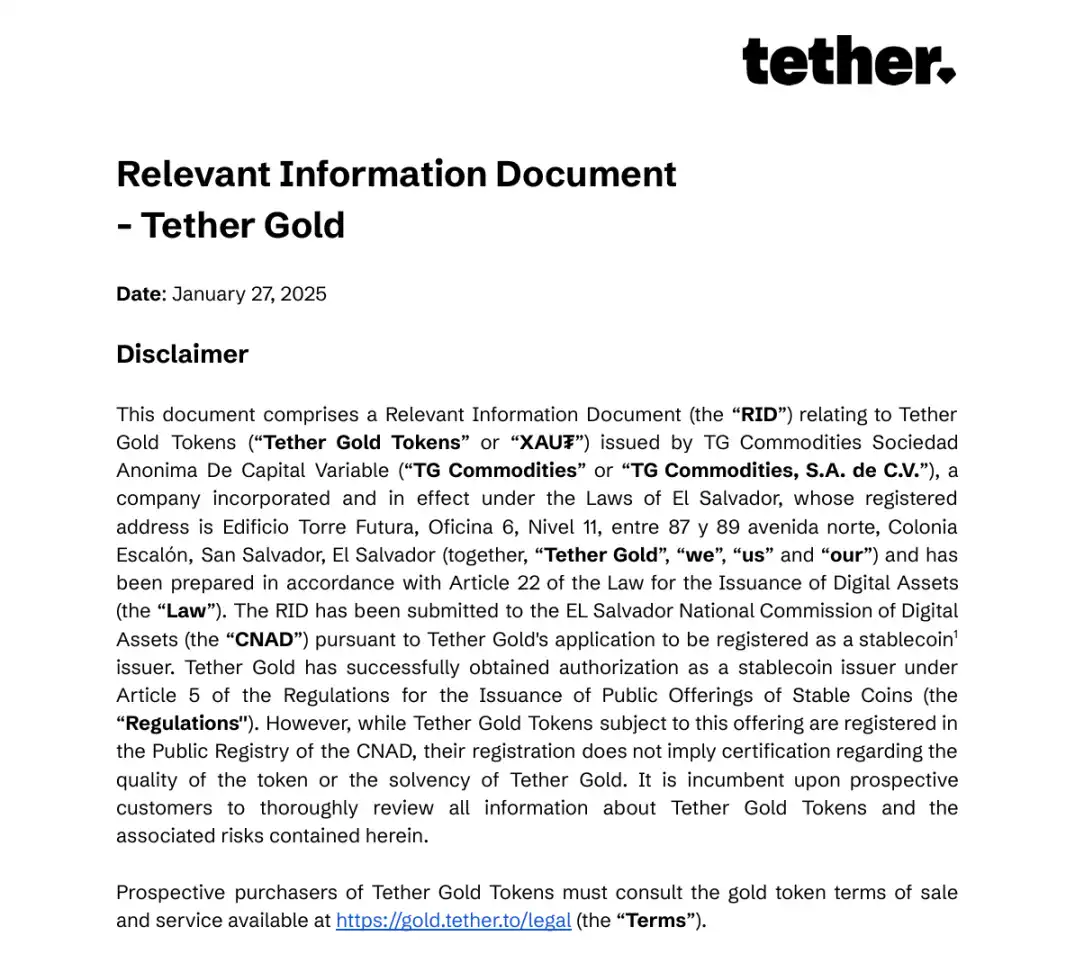
Source: Tether

It is worth noting that the issuer, TG Commodities, has been authorized by El Salvador's National Digital Asset Commission (CNAD) as a regulated stablecoin issuer and approved digital asset service provider (DASP). A look into the parent company reveals it is wholly owned by Tether Holdings and Tether Operations.

In fact, the early萌芽 of XAUt can be traced back to late 2019 when Paolo Ardoino, then CTO of Bitfinex and Tether, revealed that Tether was planning to launch a gold-backed stablecoin product, Tether Gold. The first version of the XAUT whitepaper was also released on January 28, 2022.

Little did anyone expect that in just four years, Tether would become a super gold buyer comparable to sovereign national central banks.

II. Tether: A New Force in the Gold Market That Cannot Be Ignored

As mentioned above, the whitepaper clearly states that each XAUt token represents ownership of one ounce of physical gold. Tether承诺 that every XAU₮ issued is backed by an equivalent amount of physical gold reserves, all stored in a "Swiss vault with first-class security."

As of the time of writing, the total issuance of XAUt is approximately $2.7 billion, representing the physical reserve of about 1,329 gold bars (totaling 16,238.4 kilograms).
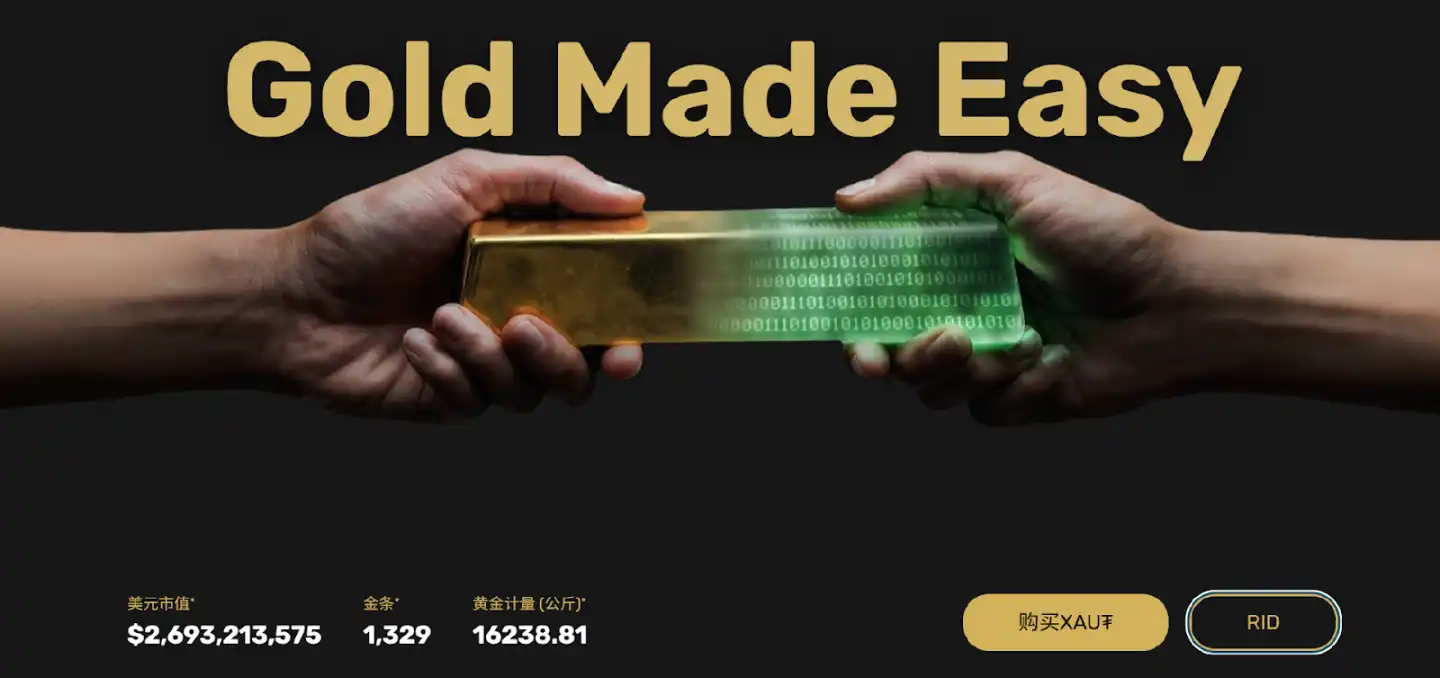
Source: Tether

Interestingly, Tether CEO Paolo Ardoino publicly stated that Tether plans to allocate 10% to 15% of its investment portfolio to physical gold in the future, currently purchasing about one to two tons of gold per week, and intends to continue doing so, aiming for long-term, stable access to gold supply.

According to Bloomberg's calculations, in the last year alone, Tether purchased over 70 tons of new gold to supplement its reserves and support its gold stablecoin issuance. Combining this with Tether's disclosed financial data for the first three quarters of 2025:

Its annual profit is estimated to be nearly $15 billion, with current gold and Bitcoin reserve sizes of approximately $12.9 billion and $9.9 billion, respectively, accounting for about 13% of its total reserves. To reach the 10%-15% target, Tether would need to purchase at least an additional $2-3 billion, effectively doubling the current XAUt规模!

This is why some institutions have begun to view Tether as an unignorable "marginal super buyer" in the gold market. Research from Jefferies shows that in the second quarter, Tether's gold purchases accounted for about 14% of central banks'同期 purchases, and this proportion remained around 12% in the third quarter. It can be said that the timing of the second round of gold price increases高度 coincided with the acceleration of Tether's gold purchasing节奏.

Considering Tether's current strong profitability and the resilience shown by its stablecoin business amid recent crypto market volatility, this gold purchasing target is not激进 from a financial perspective.
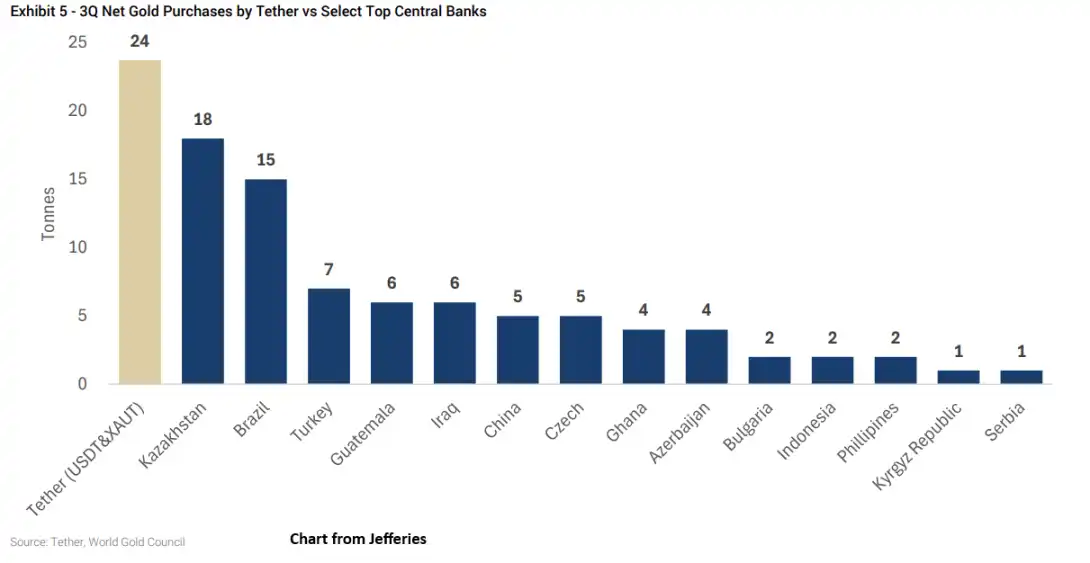
Source: Wall Street News

III. How to View Gold-Backed Stablecoins?

Of course, the multi-trillion-dollar market for investment-grade tokenization of gold is far from being a pie that only Tether wants a piece of.

Over the years, several companies have尝试 to provide on-chain representations of gold ownership, including Digix's率先 launched DGX, a stablecoin collateralized by physical gold. Each DGX is backed by 1 gram of LBMA-certified gold bars with 99.99% purity, minted by authoritative companies and stored in The Safe House vault in Singapore.

In addition, there is another more well-known product, PAXG. In 2019, Paxos Trust Company launched PAXG, a gold token approved by the New York Department of Financial Services (NYDFS), also built on the Ethereum ERC-20 protocol. Each PAXG represents one troy ounce of a standard delivery gold bar stored in a professional vault in London.

Paxos users can redeem PAXG for fiat currency, non-bearer gold, or directly redeem physical gold bars, and can随时 query the serial number, brand, weight, and purity of the corresponding gold bar through their on-chain address.

From a product design perspective, the common goal of these gold-backed stablecoins is clear: to make gold more divisible, more liquid, and more aligned with the usage habits of the digital asset era.

However, unlike dollar stablecoins, the value logic of gold stablecoins is more complex. Because the core proposition of stablecoins is built on the demand for fully collateralized, instantly redeemable digital dollars; whereas gold stablecoins inevitably联动 with the cyclical fluctuations of the crypto market itself.

Therefore, when stablecoin demand changes急剧 due to market sentiment or liquidity conditions, this pressure could theoretically传导 to its underlying asset-liability structure—and now, part of that is a real and sizable gold reserve.

Especially as players like Tether hold more and more reserves, is this new narrative a digital rebirth for gold, or is it introducing additional volatility factors to gold?

Perhaps this is one of the issues worth pondering for every holder.

Questions liées

QWhat is XAUt and how does it relate to physical gold?

AXAUt is a gold-backed stablecoin issued by TG Commodities, S.A. de C.V. Each XAUt token represents ownership of one troy ounce of physical gold that meets the London Bullion Market Association (LBMA) good delivery specifications. The gold is stored in a high-security vault in Switzerland. When on-chain transactions occur, the system automatically reallocates the gold holdings in the vault to ensure each user's tokens are always backed by specific, identifiable physical assets.

QHow much gold does Tether currently hold to back its XAUt stablecoin, and what are its future purchasing plans?

ATether currently holds approximately 140 metric tons of gold, valued at around $23 billion, to back its XAUt stablecoin. The company plans to allocate 10% to 15% of its portfolio to physical gold and is buying about one to two tons of gold per week to achieve this long-term, stable supply goal.

QHow does a user redeem XAUt tokens for physical gold, and what are the requirements?

ARedemption for physical gold must be done in whole gold bars, which typically weigh between 385 to 415 ounces. Therefore, the official white paper recommends users hold at least 430 XAUt to cover the minimum bar weight. The physical delivery must occur within Switzerland. Alternatively, users can request Tether to sell the gold on the Swiss market for U.S. dollars, minus any applicable charges.

QBesides Tether's XAUt, what are some other prominent gold-backed stablecoins in the market?

AOther prominent gold-backed stablecoins include Digix's DGX, where each token is backed by 1 gram of LBMA-certified gold stored in a vault in Singapore, and Paxos Trust Company's PAXG, which is approved by the NYDFS and represents one troy ounce of a London Good Delivery gold bar stored in professional vaults.

QWhat potential risk does the article highlight regarding gold-backed stablecoins like XAUt?

AThe article highlights that the value proposition of gold-backed stablecoins is more complex than that of dollar stablecoins. Their value is inherently linked to the cyclical volatility of the crypto market. If demand for the stablecoin changes drastically due to market sentiment or liquidity conditions, that pressure could theoretically be transmitted to its underlying balance sheet structure, which now consists of a large, real-world gold reserve, potentially introducing additional volatility to the gold market itself.

Lectures associées

Début de Warsh : le président de la Fed le plus au fait du Crypto de l'histoire apportera-t-il des surprises ou des chocs au marché ?

**Résumé :** Kevin Warsh, nouveau président de la Réserve fédérale américaine, s'apprête à tenir sa première conférence de presse monétaire. Sa nomination est historique : il est le premier président de la Fed à détenir personnellement des actifs numériques (investissements indirects dans Solana, dYdX, etc.), montrant une compréhension unique du secteur. Son dilemme est majeur : il doit faire face à une résurgence de l'inflation, qui exige une politique monétaire stricte (position "de faucon"), tout en répondant aux pressions politiques pour des baisses de taux. Parallèlement, son attitude envers les crypto-actifs diffère fondamentalement de celle de son prédécesseur. Il ne les considère pas comme de simples actifs spéculatifs, mais plutôt comme un "bon policier" pour la politique économique et une composante de la compétitivité américaine. Son impact potentiel sur le marché crypto s'articule autour de trois axes : 1. Un changement de paradigme réglementaire, passant de la prévention à l'intégration et à l'innovation. 2. Une reprixation des actifs liée aux taux d'intérêt, où sa clarté de communication pourrait réduire la prime d'incertitude. 3. Une légitimation accrue pouvant attirer les capitaux institutionnels traditionnels. Deux scénarios principaux sont envisagés pour sa première intervention : * **Scénario "Surprise"** : Un ton modéré ("de colombe") sur les taux combiné à des signaux favorables à l'innovation numérique pourrait booster le marché. * **Scénario "Choc"** : Un message excessivement restrictif sur les taux pourrait entraîner une vente généralisée des actifs risqués, y compris les cryptos. Bien qu'il ait dû vendre ses actifs crypto pour des raisons d'éthique, la compréhension intrinsèque de Warsh pour la technologie blockchain pourrait, à long terme, poser les bases d'une intégration plus structurelle des actifs numériques dans le système financier.

marsbitIl y a 1 h

Début de Warsh : le président de la Fed le plus au fait du Crypto de l'histoire apportera-t-il des surprises ou des chocs au marché ?

marsbitIl y a 1 h

XRP Ledger Lance le Rebranding XRPld Avec la Mise à Niveau Version 3.2.0

La version 3.2.0 du XRP Ledger (XRPL) est désormais disponible, introduisant une refonte majeure incluant le changement de nom du logiciel principal de « rippled » à « xrpld ». Cette mise à niveau se concentre principalement sur les améliorations des performances, de la sécurité et de l'évolutivité de l'infrastructure sous-jacente, plutôt que sur de nouvelles fonctionnalités utilisateur. Les principales avancées incluent des optimisations de mémoire pouvant réduire jusqu'à 40% l'utilisation de la mémoire serveur. Sur le plan de la sécurité, la modification `fixCleanup3_2_0` renforce plusieurs modules, notamment les coffres-forts à actif unique, le protocole de prêt, les échanges décentralisés et les jetons multi-usages. De nouveaux contrôles d'invariance garantissent la cohérence du registre après la suppression de comptes. Pour les développeurs, la mise à jour permet désormais de récupérer des informations sur les définitions du protocole et du serveur XRPL sans nécessiter de connexion active, facilitant ainsi la création de portefeuilles, d'explorateurs de blockchain et d'APIs. En termes d'évolutivité et de stabilité, les améliorations comprennent des tailles de bloc configurables, un stockage de base de données optimisé via nuDB, et le support optionnel de TLS/mutual TLS pour le serveur gRPC. Le port de peering par défaut est également passé du 51235 au 2459. Divers correctifs ont été apportés aux fonctions liées aux Market Makers Automatisés, aux paiements, aux séquestres de jetons et aux carnets d'ordres. Une note importante : les invariants de transaction ont été temporairement désactivés dans la v3.2.0 en raison d'un impact sur les performances, mais cela ne présente pas de risque pour la sécurité.

TheNewsCryptoIl y a 1 h

XRP Ledger Lance le Rebranding XRPld Avec la Mise à Niveau Version 3.2.0

TheNewsCryptoIl y a 1 h

L'AGI n'est pas l'arrivée, nouveau document de DeepMind : Vers l'ASI, le véritable progrès de l'IA ne fait que commencer

Si l'intelligence artificielle générale (IAG) était atteinte demain, quelle serait la prochaine étape ? Une étude de Google DeepMind suggère que l'IAG n'est pas un point final, mais une étape vers une superintelligence artificielle (ISA) dépassant les collectifs d'experts humains. L'étude distingue trois concepts : l'IAG (niveau médian humain), l'ISA (supérieure aux meilleurs collectifs humains dans presque tous les domaines) et l'IA universelle (limite théorique). Elle propose quatre voies potentielles vers l'ISA : 1. **Extension des ressources** : augmentation de la puissance de calcul, des données et des modèles. 2. **Évolution algorithmique** : améliorations incrémentales ou nouveaux paradigmes (apprentissage continu, utilisation d'outils, modèles du monde). 3. **Auto-amélioration récursive** : des IA plus performantes conçoivent la génération suivante, créant une boucle de rétroaction positive. 4. **Coordination multi-agents** : des systèmes IAG collaborant atteignent une intelligence collective supérieure. L'étude identifie six principaux goulets d'étranglement : 1. **Le mur des données** : les données humaines de haute qualité pourraient s'épuiser. 2. **Pressions économiques et ressources naturelles** : coûts énergétiques et matériels. 3. **Limites des paradigmes neuronaux actuels** : problèmes d'apprentissage continu, de raisonnement robuste, d'hallucinations. 4. **Difficulté croissante de la recherche**. 5. **Barrières à l'abstraction** : difficulté à former de nouveaux concepts fondamentaux. 6. **Régulation, gouvernance et réaction sociale**. Un défi crucial est l'évaluation des capacités de l'IA au-delà du niveau humain, nécessitant de nouveaux benchmarks. L'étude conclut que la progression vers l'ISA reste incertaine, soumise à des contraintes physiques et de ressources, et appelle à un effort de recherche interdisciplinaire pour mieux anticiper cette évolution.

marsbitIl y a 2 h

L'AGI n'est pas l'arrivée, nouveau document de DeepMind : Vers l'ASI, le véritable progrès de l'IA ne fait que commencer

marsbitIl y a 2 h

Trading

Spot
Futures

Articles tendance

Comment acheter XAUT

Bienvenue sur HTX.com ! Nous vous permettons d'acheter Tether Gold (XAUT) de manière simple et pratique. Suivez notre guide étape par étape pour commencer votre parcours crypto.Étape 1 : Création de votre compte HTXUtilisez votre adresse e-mail ou votre numéro de téléphone pour ouvrir un compte sur HTX gratuitement. L'inscription se fait en toute simplicité et débloque toutes les fonctionnalités.Créer mon compteÉtape 2 : Choix du mode de paiement (rubrique Acheter des cryptosCarte de crédit/débit : utilisez votre carte Visa ou Mastercard pour acheter instantanément Tether Gold (XAUT).Solde :utilisez les fonds du solde de votre compte HTX pour trader en toute simplicité.Prestataire tiers :pour accroître la commodité d'utilisation, nous avons ajouté des modes de paiement populaires tels que Google Pay et Apple Pay.P2P :tradez directement avec d'autres utilisateurs sur HTX.OTC (de gré à gré) : nous offrons des services personnalisés et des taux de change compétitifs aux traders.Étape 3 : stockage de vos Tether Gold (XAUT)Après avoir acheté vos Tether Gold (XAUT), stockez-les sur votre compte HTX. Vous pouvez également les envoyer ailleurs via un transfert sur la blockchain ou les utiliser pour trader d'autres cryptos.Étape 4 : tradez des Tether Gold (XAUT)Tradez facilement Tether Gold (XAUT) sur le marché Spot de HTX. Il vous suffit d'accéder à votre compte, de sélectionner la paire de trading, d'exécuter vos trades et de les suivre en temps réel. Nous offrons une expérience conviviale aux débutants comme aux traders chevronnés.

1.1k vues totalesPublié le 2024.12.13Mis à jour le 2026.06.02

Comment acheter XAUT

Discussions

Bienvenue dans la Communauté HTX. Ici, vous pouvez vous tenir informé(e) des derniers développements de la plateforme et accéder à des analyses de marché professionnelles. Les opinions des utilisateurs sur le prix de XAUT (XAUT) sont présentées ci-dessous.

活动图片