Going All-In on Arc: Circle Is Making a High-Stakes Gamble It Can't Afford to Lose

比推Publié le 2026-01-09Dernière mise à jour le 2026-01-09

Résumé

Circle, the issuer of USDC, is launching its own Layer 1 blockchain called Arc to address challenges in the stablecoin industry, particularly as interest rate cuts threaten its revenue model. Arc is designed for enterprise cross-border payments using stablecoins, offering sub-second finality, configurable privacy options, and transaction fees paid in USDC to avoid crypto volatility. It aims to reduce reliance on interest income and expand distribution channels. Despite partnerships with major firms like BlackRock and Visa, Arc faces competition from Tether and Stripe's Tempo, as well as challenges in attracting liquidity and regulatory scrutiny over privacy features. Circle's established reputation and payment network provide a competitive advantage, but the success of Arc is critical amid a shifting economic landscape.

Author: Prathik Desai

Original Title: Circle Draws an Arc, Can it address the rate-cut problem?

Compiled and Edited by: BitpushNews


The year is 2026. When we make video calls with people around the world, the delay is at most a second or two, with marginal costs close to zero. However, when it comes to transferring funds between institutions, countries, or systems, we still face deadlines, exorbitant fees, and reliance on settlement windows that close on weekends.
Cryptocurrency promised to solve this problem with stablecoins, which have been around for over a decade. Yet, despite the significant, quantifiable savings stablecoins can bring, businesses and commercial institutions have not fully embraced them for fund transfers.

We have discussed this issue before, and how the inherent privacy concerns in public blockchains become a barrier here. We also listed privacy infrastructure as the number one cryptocurrency theme to watch in 2026.

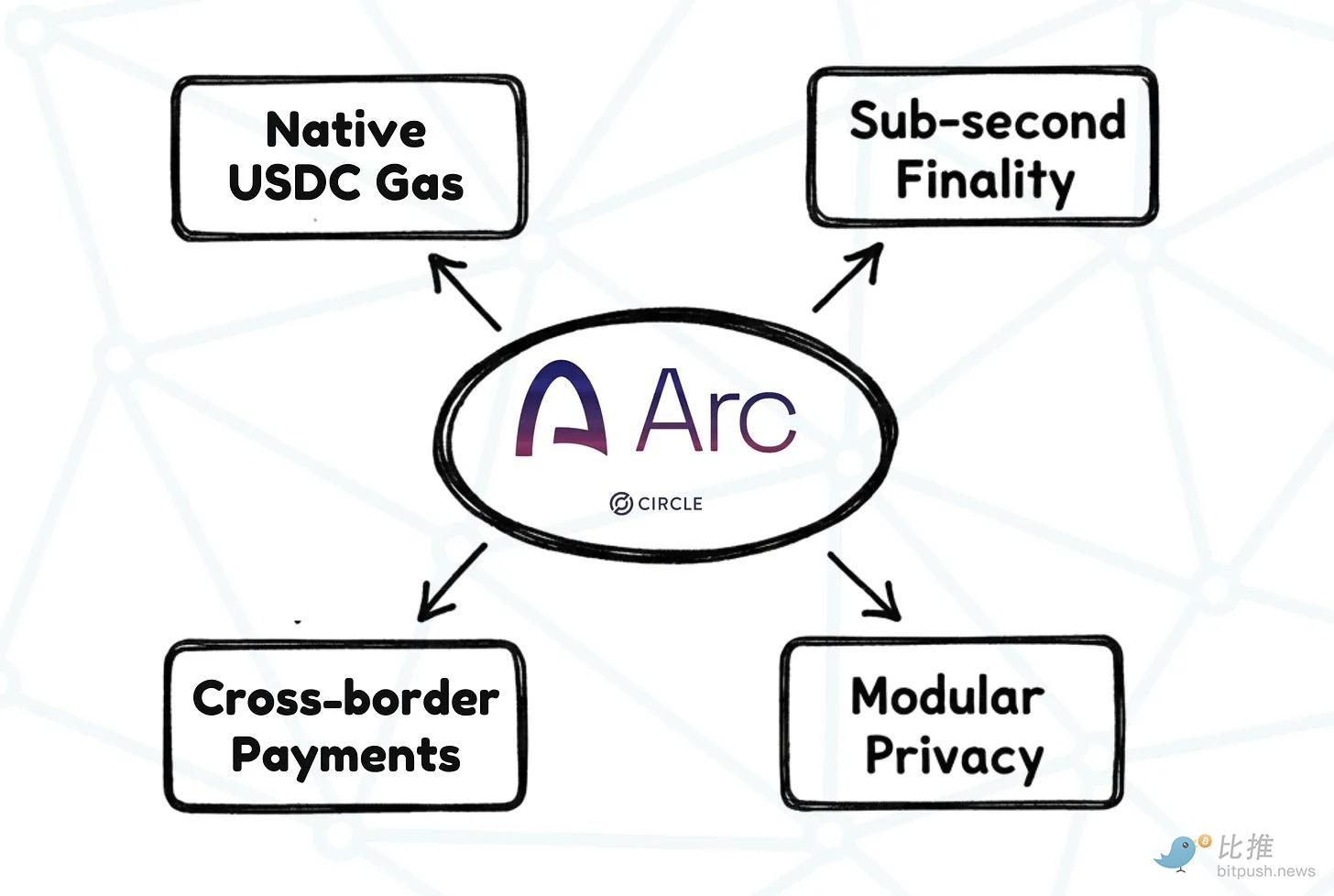
Stablecoin issuer Circle has seized this opportunity with its Layer 1 blockchain, Arc, to address the industry's demand for privacy and stablecoin infrastructure.

In this in-depth analysis, I will explain why Circle is building an L1 blockchain now, what its biggest challenges are, and how this move could change the stablecoin ecosystem.

The story begins......

Why Launch an L1 Blockchain Now?

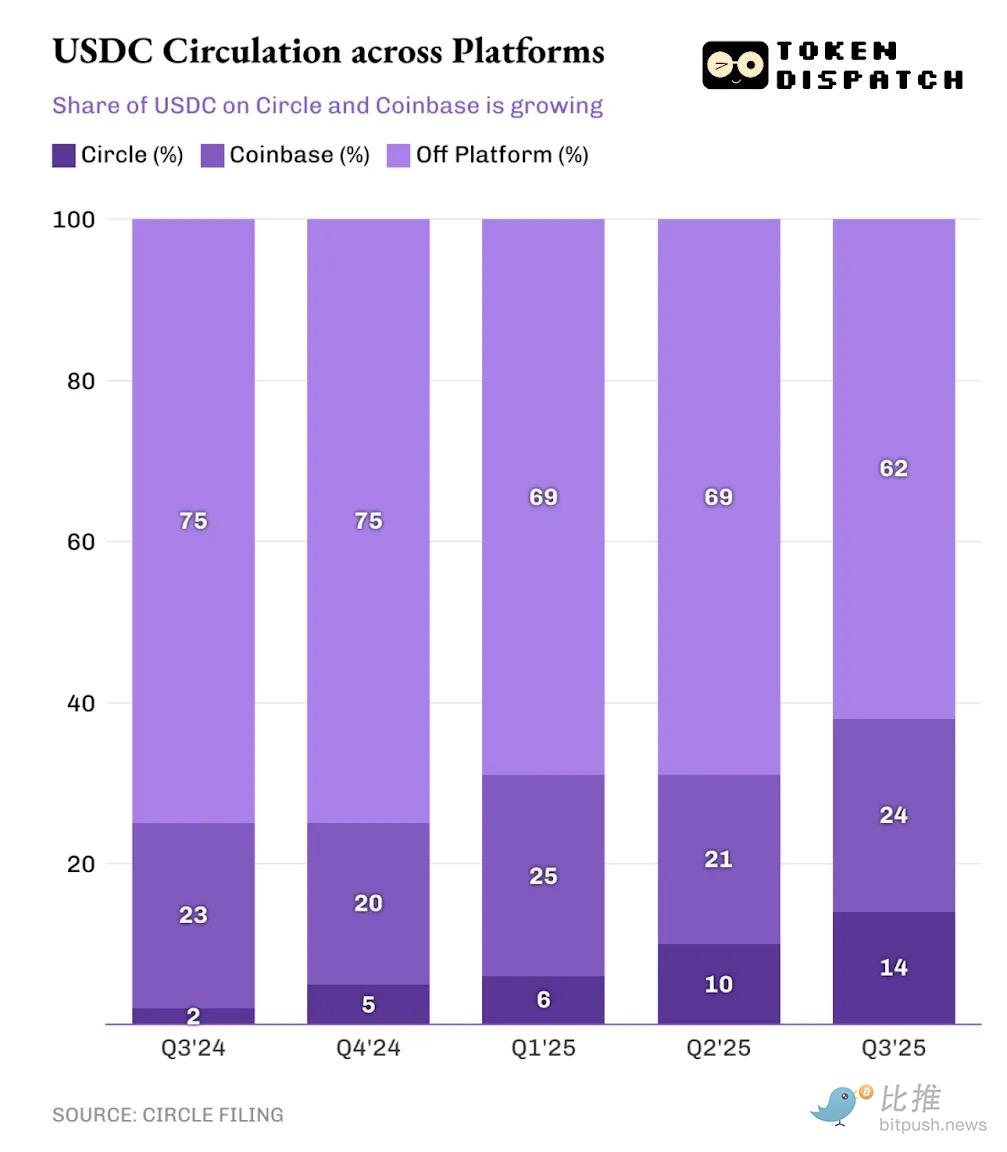
Currently, the stablecoin issuance business is entirely driven by interest income and heavily reliant on distribution channels. This has become clearer since the company went public last June, through the public reports of the USDC issuer.
I mentioned last year:

> In the third quarter, although the circulation of USDC increased by more than 100% year-over-year, reserve income only grew by 66%, reaching $711 million. The rest was offset by the Federal Reserve's interest rate cuts. The average yield dropped by 96 basis points, resulting in a $122 million reduction in Circle's reserve income.

> For every $1 of reserve income Circle earned in Q3, it spent over 60 cents on distribution and transaction costs, including wallet integrations, exchange listings, incentive programs, and revenue sharing.
The U.S. Federal Reserve has begun cutting interest rates. In December 2025, it lowered the effective rate by 25 basis points to 3.50%–3.75%. The central bank also announced the cessation of quantitative tightening effective December 1st.

Recently, the U.S. economy has also been signaling to policymakers that it's time to soften their stance in response to disappointing data.

The U.S. Institute for Supply Management's Manufacturing Purchasing Managers' Index (PMI) for December 2025 was 47.9 (a reading below 50 indicates contraction), marking the 10th consecutive month of contraction. The December employment report will be released later today, but data from the past few months has been lackluster.

When you put all this together, it explains why Circle is desperately pivoting to a new business model.

The issuer wants to reduce its reliance on falling short-to-mid-term interest rates while building a second engine that can rely on broader, more diversified distribution.

The Arc Transformation

Arc is the transformation Circle is betting on.

Circle built Arc as an open Layer 1 blockchain designed for cross-border enterprise payments via stablecoins. It also aims to provide sub-second finality (transaction confirmation speed) and configurable privacy options, masking enterprises' confidential payment data through opt-in privacy features.

By transitioning from a stablecoin issuer to a stablecoin settlement stack operator, Circle aims to build its business model around moving money the way enterprises care about.

In its testnet phase, Circle's Arc has already established partnerships with over 100 companies, including traditional finance and tech giants like BlackRock, Amazon Web Services, HSBC, Standard Chartered, and Visa.

Although Arc is still in the testnet phase and will face a series of challenges before it succeeds (which I will discuss later), I find this move interesting given its timing and the problem it aims to solve.

First, it charges Gas fees (network transaction fees) natively in its own token. Arc is designed to charge low, predictable, and USD-denominated transaction fees in USDC. This eliminates the need for corporate treasury departments to hold ETH, SOL, or any other cryptocurrency just to pay transaction fees.

Second, Arc offers sub-second finality and a 24/7 settlement window. CFOs don't care about shaving off milliseconds like traders do, but they will lose sleep if a payment doesn't settle after they hit "send" because it's the weekend or due to a cross-border intermediary chain.

Third, and perhaps most importantly, is the configurable privacy Arc offers. By explicitly providing opt-in privacy features, it bridges the gap between the built-in transparency of public blockchains and enterprises' need to ensure the confidentiality of sensitive information, such as B2B supplier invoices, fund transfers, and payroll settlements.

The most interesting part is that all these features do not require stakeholders to buy into cryptocurrency ideology. Instead, Arc removes the crypto traits enterprises dislike, such as absolute transparency, fee volatility, and uncertain settlement, enabling blockchain usage in mainstream commerce.

But couldn't Circle build these features on an existing chain? Why build its own blockchain?

Circle has always been "renting the venue." On someone else's chain, Circle would be forced to inherit their fee token, compete with other players for network resources and face congestion, follow their governance rules, and be subject to their network downtime risks. It would also lose an entire revenue stream by not being able to collect fees in USDC. Circle already pays distribution costs to expand USDC's reach on other platforms. By launching its own chain, it hopes to "own the venue" and earn "rent" by offering "space" to everyone using its infrastructure.

However, this is not a race that will be easily won. Circle has no shortage of competitors watching closely.

On the issuer side, Tether remains the biggest threat, with the highest liquidity globally. It has also launched the regulation-friendly stablecoin USAT to strengthen its presence in the U.S. market.

Beyond issuers, players like Stripe pose a threat, building something similar to what Circle is doing with Arc.

In September 2025, Stripe and Paradigm announced Tempo, a payment-first blockchain built around stablecoins. Tempo's architecture allows paying Gas fees with any stablecoin and similarly aims for sub-second finality.

Besides external threats, many things could go wrong with Arc itself.

It might face cold-start difficulties in attracting liquidity and developers. Enterprises won't choose Circle's Arc just because it looks best on paper. Many are already using traditional payment platforms like PayPal and would prefer platforms that already have counterparties and integration services.

Arc's "configurable privacy" will be a contentious topic. The opt-in feature gives enterprises what they want, but it will also draw regulatory scrutiny. Arc must prove to the market that privacy here means "commercial confidentiality with auditability," not just a blind spot that could create new vulnerabilities.

Despite these hurdles, I am optimistic about Circle's opportunity for two reasons.

First is its distribution channels and reputation. Circle doesn't need to prove to the market that USDC is a real dollar token. It's already embedded in countless exchanges, wallets, fintech processes, and increasingly in institutional pipelines. Now a public company, Circle's initiatives look different from any other crypto company. Its public reputation lends credibility to its launches. It also forces Circle to build Arc in a way that can be explained clearly to the compliance and finance teams in boardrooms.

Second is the Circle payment network. Combined with Arc, it can build a network of institutions and payment channels executing real-world transactions within a compliance framework.

Arc could still fail. But does it have any other choice? With the rate-cut era officially here and more cuts likely in the new year, this is the only logical move for an issuer facing intense competition.


Twitter:https://twitter.com/BitpushNewsCN

Bitpush TG Discussion Group:https://t.me/BitPushCommunity

Bitpush TG Subscription: https://t.me/bitpush

Original article link:https://www.bitpush.news/articles/7601422

Questions liées

QWhy is Circle launching its own Layer 1 blockchain called Arc?

ACircle is launching Arc to reduce its reliance on interest rate-driven revenue from stablecoin issuance and to create a new business model focused on enterprise-grade cross-border payments with features like sub-second finality, configurable privacy, and USDC-denominated gas fees.

QWhat are the main challenges that Circle's Arc blockchain might face?

AArc may face challenges including attracting liquidity and developers, competing with established players like Tether and Stripe, overcoming enterprise reliance on traditional payment platforms, and addressing regulatory scrutiny over its configurable privacy features.

QHow does Arc aim to address enterprise concerns about using blockchain for payments?

AArc addresses enterprise concerns by offering sub-second finality for 24/7 settlement, USDC-denominated fees to avoid crypto volatility, and configurable privacy options to protect sensitive business data while maintaining auditability.

QWhat competitive threats does Circle face with the launch of Arc?

ACircle faces competition from Tether, which dominates stablecoin liquidity and has launched a regulatory-friendly USDT variant, as well as from Stripe's Tempo blockchain, which also focuses on stablecoin payments with fast finality and flexible gas fees.

QWhy is Circle's shift to a blockchain model considered urgent?

AThe shift is urgent because the Federal Reserve has begun cutting interest rates, which directly reduces Circle's revenue from USDC reserves, forcing the company to diversify its business model and reduce dependency on rate-sensitive income.

Lectures associées

Début de Warsh : le président de la Fed le plus au fait du Crypto de l'histoire apportera-t-il des surprises ou des chocs au marché ?

**Résumé :** Kevin Warsh, nouveau président de la Réserve fédérale américaine, s'apprête à tenir sa première conférence de presse monétaire. Sa nomination est historique : il est le premier président de la Fed à détenir personnellement des actifs numériques (investissements indirects dans Solana, dYdX, etc.), montrant une compréhension unique du secteur. Son dilemme est majeur : il doit faire face à une résurgence de l'inflation, qui exige une politique monétaire stricte (position "de faucon"), tout en répondant aux pressions politiques pour des baisses de taux. Parallèlement, son attitude envers les crypto-actifs diffère fondamentalement de celle de son prédécesseur. Il ne les considère pas comme de simples actifs spéculatifs, mais plutôt comme un "bon policier" pour la politique économique et une composante de la compétitivité américaine. Son impact potentiel sur le marché crypto s'articule autour de trois axes : 1. Un changement de paradigme réglementaire, passant de la prévention à l'intégration et à l'innovation. 2. Une reprixation des actifs liée aux taux d'intérêt, où sa clarté de communication pourrait réduire la prime d'incertitude. 3. Une légitimation accrue pouvant attirer les capitaux institutionnels traditionnels. Deux scénarios principaux sont envisagés pour sa première intervention : * **Scénario "Surprise"** : Un ton modéré ("de colombe") sur les taux combiné à des signaux favorables à l'innovation numérique pourrait booster le marché. * **Scénario "Choc"** : Un message excessivement restrictif sur les taux pourrait entraîner une vente généralisée des actifs risqués, y compris les cryptos. Bien qu'il ait dû vendre ses actifs crypto pour des raisons d'éthique, la compréhension intrinsèque de Warsh pour la technologie blockchain pourrait, à long terme, poser les bases d'une intégration plus structurelle des actifs numériques dans le système financier.

marsbitIl y a 1 h

Début de Warsh : le président de la Fed le plus au fait du Crypto de l'histoire apportera-t-il des surprises ou des chocs au marché ?

marsbitIl y a 1 h

XRP Ledger Lance le Rebranding XRPld Avec la Mise à Niveau Version 3.2.0

La version 3.2.0 du XRP Ledger (XRPL) est désormais disponible, introduisant une refonte majeure incluant le changement de nom du logiciel principal de « rippled » à « xrpld ». Cette mise à niveau se concentre principalement sur les améliorations des performances, de la sécurité et de l'évolutivité de l'infrastructure sous-jacente, plutôt que sur de nouvelles fonctionnalités utilisateur. Les principales avancées incluent des optimisations de mémoire pouvant réduire jusqu'à 40% l'utilisation de la mémoire serveur. Sur le plan de la sécurité, la modification `fixCleanup3_2_0` renforce plusieurs modules, notamment les coffres-forts à actif unique, le protocole de prêt, les échanges décentralisés et les jetons multi-usages. De nouveaux contrôles d'invariance garantissent la cohérence du registre après la suppression de comptes. Pour les développeurs, la mise à jour permet désormais de récupérer des informations sur les définitions du protocole et du serveur XRPL sans nécessiter de connexion active, facilitant ainsi la création de portefeuilles, d'explorateurs de blockchain et d'APIs. En termes d'évolutivité et de stabilité, les améliorations comprennent des tailles de bloc configurables, un stockage de base de données optimisé via nuDB, et le support optionnel de TLS/mutual TLS pour le serveur gRPC. Le port de peering par défaut est également passé du 51235 au 2459. Divers correctifs ont été apportés aux fonctions liées aux Market Makers Automatisés, aux paiements, aux séquestres de jetons et aux carnets d'ordres. Une note importante : les invariants de transaction ont été temporairement désactivés dans la v3.2.0 en raison d'un impact sur les performances, mais cela ne présente pas de risque pour la sécurité.

TheNewsCryptoIl y a 1 h

XRP Ledger Lance le Rebranding XRPld Avec la Mise à Niveau Version 3.2.0

TheNewsCryptoIl y a 1 h

L'AGI n'est pas l'arrivée, nouveau document de DeepMind : Vers l'ASI, le véritable progrès de l'IA ne fait que commencer

Si l'intelligence artificielle générale (IAG) était atteinte demain, quelle serait la prochaine étape ? Une étude de Google DeepMind suggère que l'IAG n'est pas un point final, mais une étape vers une superintelligence artificielle (ISA) dépassant les collectifs d'experts humains. L'étude distingue trois concepts : l'IAG (niveau médian humain), l'ISA (supérieure aux meilleurs collectifs humains dans presque tous les domaines) et l'IA universelle (limite théorique). Elle propose quatre voies potentielles vers l'ISA : 1. **Extension des ressources** : augmentation de la puissance de calcul, des données et des modèles. 2. **Évolution algorithmique** : améliorations incrémentales ou nouveaux paradigmes (apprentissage continu, utilisation d'outils, modèles du monde). 3. **Auto-amélioration récursive** : des IA plus performantes conçoivent la génération suivante, créant une boucle de rétroaction positive. 4. **Coordination multi-agents** : des systèmes IAG collaborant atteignent une intelligence collective supérieure. L'étude identifie six principaux goulets d'étranglement : 1. **Le mur des données** : les données humaines de haute qualité pourraient s'épuiser. 2. **Pressions économiques et ressources naturelles** : coûts énergétiques et matériels. 3. **Limites des paradigmes neuronaux actuels** : problèmes d'apprentissage continu, de raisonnement robuste, d'hallucinations. 4. **Difficulté croissante de la recherche**. 5. **Barrières à l'abstraction** : difficulté à former de nouveaux concepts fondamentaux. 6. **Régulation, gouvernance et réaction sociale**. Un défi crucial est l'évaluation des capacités de l'IA au-delà du niveau humain, nécessitant de nouveaux benchmarks. L'étude conclut que la progression vers l'ISA reste incertaine, soumise à des contraintes physiques et de ressources, et appelle à un effort de recherche interdisciplinaire pour mieux anticiper cette évolution.

marsbitIl y a 2 h

L'AGI n'est pas l'arrivée, nouveau document de DeepMind : Vers l'ASI, le véritable progrès de l'IA ne fait que commencer

marsbitIl y a 2 h

Trading

Spot
Futures

Articles tendance

Comment acheter ARC

Bienvenue sur HTX.com ! Nous vous permettons d'acheter AI Rig Complex (ARC) de manière simple et pratique. Suivez notre guide étape par étape pour commencer votre parcours crypto.Étape 1 : Création de votre compte HTXUtilisez votre adresse e-mail ou votre numéro de téléphone pour ouvrir un compte sur HTX gratuitement. L'inscription se fait en toute simplicité et débloque toutes les fonctionnalités.Créer mon compteÉtape 2 : Choix du mode de paiement (rubrique Acheter des cryptosCarte de crédit/débit : utilisez votre carte Visa ou Mastercard pour acheter instantanément AI Rig Complex (ARC).Solde :utilisez les fonds du solde de votre compte HTX pour trader en toute simplicité.Prestataire tiers :pour accroître la commodité d'utilisation, nous avons ajouté des modes de paiement populaires tels que Google Pay et Apple Pay.P2P :tradez directement avec d'autres utilisateurs sur HTX.OTC (de gré à gré) : nous offrons des services personnalisés et des taux de change compétitifs aux traders.Étape 3 : stockage de vos AI Rig Complex (ARC)Après avoir acheté vos AI Rig Complex (ARC), stockez-les sur votre compte HTX. Vous pouvez également les envoyer ailleurs via un transfert sur la blockchain ou les utiliser pour trader d'autres cryptos.Étape 4 : tradez des AI Rig Complex (ARC)Tradez facilement AI Rig Complex (ARC) sur le marché Spot de HTX. Il vous suffit d'accéder à votre compte, de sélectionner la paire de trading, d'exécuter vos trades et de les suivre en temps réel. Nous offrons une expérience conviviale aux débutants comme aux traders chevronnés.

272 vues totalesPublié le 2025.01.09Mis à jour le 2026.06.02

Comment acheter ARC

Discussions

Bienvenue dans la Communauté HTX. Ici, vous pouvez vous tenir informé(e) des derniers développements de la plateforme et accéder à des analyses de marché professionnelles. Les opinions des utilisateurs sur le prix de ARC (ARC) sont présentées ci-dessous.

活动图片













