The Joe Rogan Phenomenon: From Maverick Path to Podcast King, the True Influence of $250 Million

比推Publié le 2025-12-23Dernière mise à jour le 2025-12-23

Résumé

Joe Rogan, a comedian and UFC commentator, rose from humble beginnings to host the world's most influential podcast, "The Joe Rogan Experience," valued at $250 million. His unconventional, long-form, and unscripted style attracts high-profile guests like Elon Musk, Donald Trump, and Jensen Huang, who share candid moments rarely seen in traditional media. The podcast’s success lies in its authenticity, reaching audiences distrustful of mainstream media. In 2024, Trump’s three-hour appearance, discussing topics from UFOs to tariffs, garnered over 50 million views and was credited as a key factor in his election victory. However, Rogan faces controversy for spreading misinformation on COVID-19, AIDS, and climate change, highlighting the tension between free speech and responsible media. In China, figures like Luo Yonghao attempt to replicate this model, but face challenges due to shorter content trends, weaker monetization, and cultural constraints. While the format can be imitated, Rogan’s unique influence remains rooted in American media dynamics.

Author:David, Deep Chao TechFlow

Original Title: This American Earns $250 Million a Year from Podcasting, Luo Yonghao Is Learning from Him


You might not listen to podcasts, but you must have seen this scene.

In 2018, Musk holding a joint, surrounded by smoke, became one of his most viral iconic moments.

However, few people know where this scene took place, and even fewer care about who was sitting opposite him.

Actually, this was the recording of an American podcast.

The host handed Musk a joint mixed with marijuana and tobacco. Musk asked, "This is legal, right?" and then took a puff.
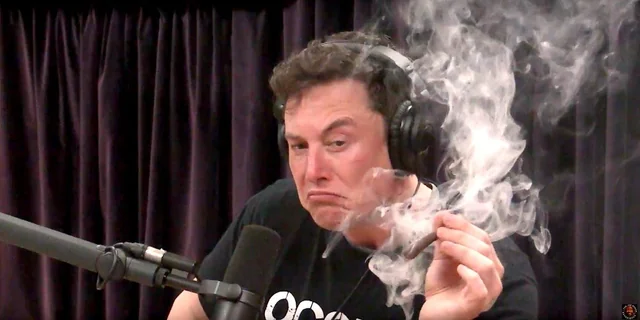
The next day, Tesla's stock price dropped by 9%.

This episode has over 69 million views on YouTube to date, making it the most-watched episode in the podcast's history.

What kind of show, what kind of host, could make the world's richest man do such a thing on camera?

During the 2024 US presidential election, Trump also spent three hours on this show, and in his victory speech, he specifically thanked the host by name; two weeks ago, NVIDIA CEO Jensen Huang also sat in this recording studio, talking about AI and the chip war for two and a half hours, garnering over 2.8 million views in two weeks.

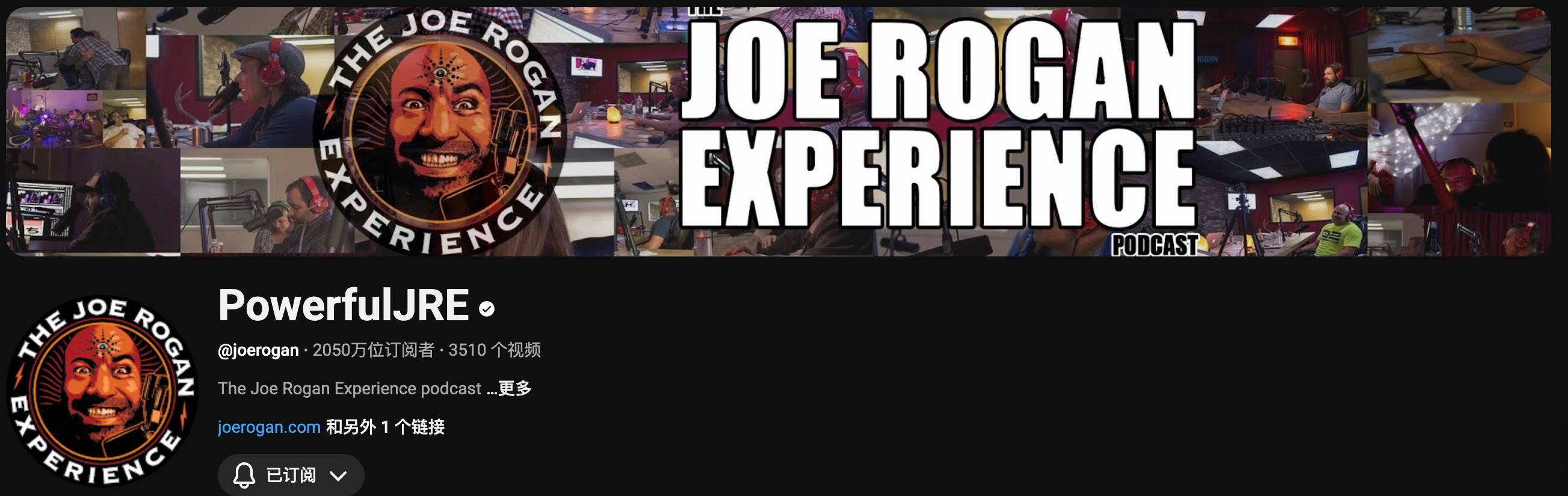
His name is Joe Rogan. His show, "The Joe Rogan Experience," is currently the world's largest podcast.

From Comedian to Podcast King, A Show Worth $250 Million

Joe Rogan's podcast influence is built on a maverick personal resume.

Comedian, reality show host, UFC commentator. Put these three identities together, and it hardly seems like the profile of someone who would create the world's largest podcast.

He is not a traditional interview host, not the kind of straight-laced, professionally trained media person. His background is actually in entertainment and the fighting world, not journalism.

But it is precisely this "maverick" approach that allowed him to create something completely different from traditional media; his ability to connect and his viewership far surpass many professional media shows.
Initially, Joe Rogan was a comedian, doing stand-up in Boston clubs in the 90s. Later, he moved to Los Angeles, acted in sitcoms for a few years, and hosted a reality show called "Fear Factor."

This show followed a sensationalist route, making contestants eat bugs, jump from tall buildings, relying on gross-out and刺激 for ratings. In today's short-video environment, it would definitely be categorized as vulgar but high-traffic content.

But what really made him break through was another job.

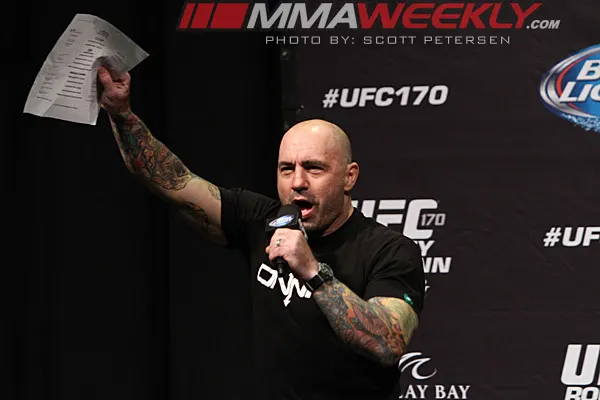
Starting in 1997, he became a commentator for the UFC, sitting cageside to commentate mixed martial arts fights, a job he held for over twenty years. This work solidified his standing in the fighting world and accumulated a large loyal male audience.
In 2009, he started recording podcasts at home.

Like the starting point of many podcasts, the equipment was简陋, there were no sponsors, and no business plan. But each episode often lasted two to three hours, chatting with friends or guests about anything.

Looking back, all those seemingly random previous experiences actually came in handy.

Having been a comedian, he knew how to make conversations interesting and rhythmic. Having hosted a reality show, he was also comfortable and relaxed in front of the camera. Being a UFC commentator for twenty years meant this audience was accustomed to listening to him talk.

Moreover, he isn't an expert in any particular field, which gives him a maverick advantage:

He can unabashedly ask "dumb questions."

Facing a physicist, he would ask about the most basic concepts; facing a politician, he wouldn't press for policy details but would talk about "what you really think." This style is something you simply don't see in traditional media.

TV interviews have strict time limits, hosts must quickly get to the point. News interviews emphasize confrontation, journalists must dig out what the interviewee doesn't want to say.

Rogan's show does the opposite, giving you three hours, unedited, uninterrupted, talking about whatever you want.

The result is that many celebrities say things on his show they wouldn't say elsewhere. Musk smoking marijuana is just one example. Zuckerberg came on to talk about MMA training, looking more like a normal person than in any Congressional hearing.

Slowly, Joe Rogan's podcast became the go-to place for celebrities to "show their real side." Traditional media interviews are performances; here, they can be themselves.

As various celebrities appeared, the show became increasingly valuable.

In 2020, Spotify acquired the exclusive distribution rights to "The Joe Rogan Experience" for $200 million, the largest deal in podcast industry history at the time.

In 2022, Rogan faced a舆论 storm due to negative comments about certain COVID-19 vaccines on his podcast, leading to protests from musicians pulling their music from Spotify.

Right at this critical moment, another video platform, Rumble, publicly offered $100 million to poach his podcast, but Rogan didn't bite.

In 2024, he renewed his licensing deal with Spotify, but the price increased to $250 million.
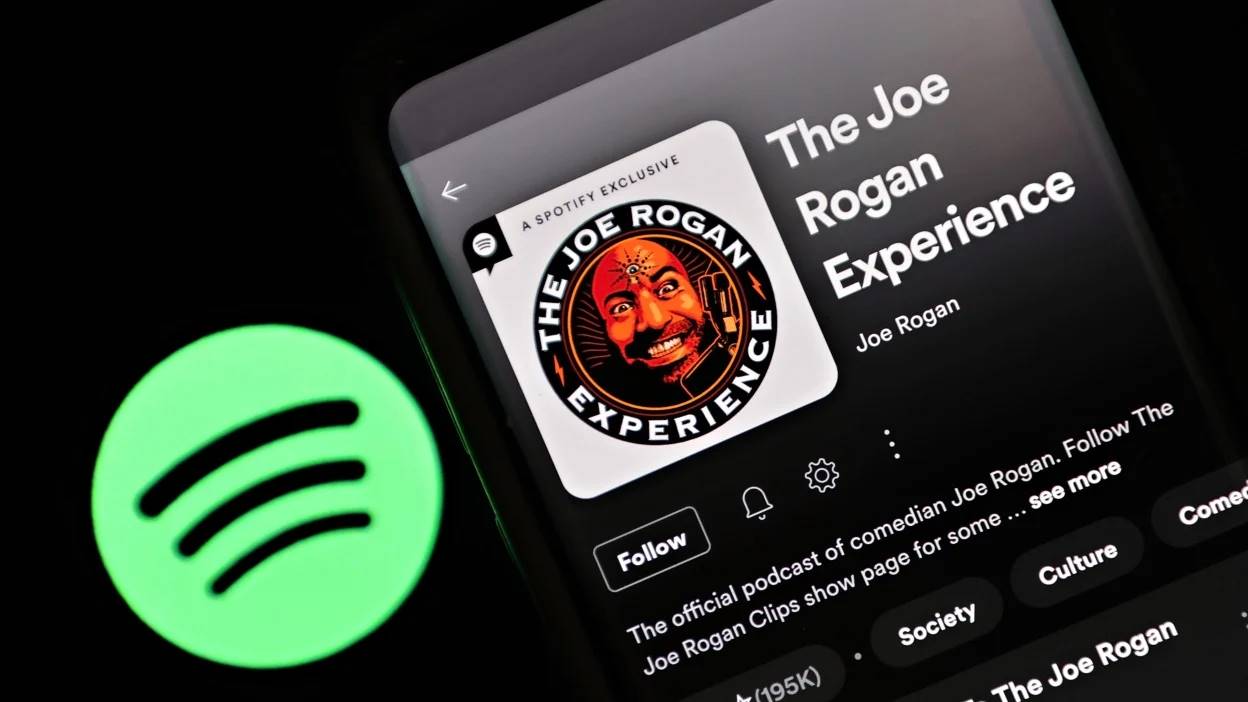
Furthermore, this time he did not accept exclusivity; the show returned to being available on Spotify, YouTube, and Apple Podcasts simultaneously. Spotify paid more money but got fewer rights.

In 2025, "The Joe Rogan Experience" topped the annual podcast charts on Spotify, Apple Podcasts, and YouTube simultaneously for the first time.

A chat show that started recording at home sixteen years ago is now valued higher than many traditional media companies.

Podcast Chats, Precise Vote Pulling

On October 25, 2024, during the final stretch of the election campaign, Trump sat down in Rogan's Austin recording studio.

This episode lasted a full three hours. After recording, Trump rushed to a campaign rally in Michigan, making thousands of supporters wait an extra three hours.

What did they talk about for three hours?

UFOs. Trump said he interviewed fighter pilots who told him they saw spherical objects traveling four times faster than an F-22 fighter jet.

The White House bed. He genuinely described his feelings upon first entering the Lincoln Bedroom in the White House, thinking the bed was huge because Lincoln was six foot six.

Tariffs. Trump also proposed replacing income tax entirely with tariffs. Rogan asked: "Are you serious?"

Trump said: "Of course, why not? In the 1880s, when our country was at its wealthiest, it was thanks to tariffs."

These topics seem unrelated but share a common trait:

They are things traditional political interviews would absolutely never discuss.

TV networks ask about policy details, press on controversial statements, and stick to time limits. No serious political journalist would let a presidential candidate spend ten minutes talking about UFOs and Lincoln's bed.
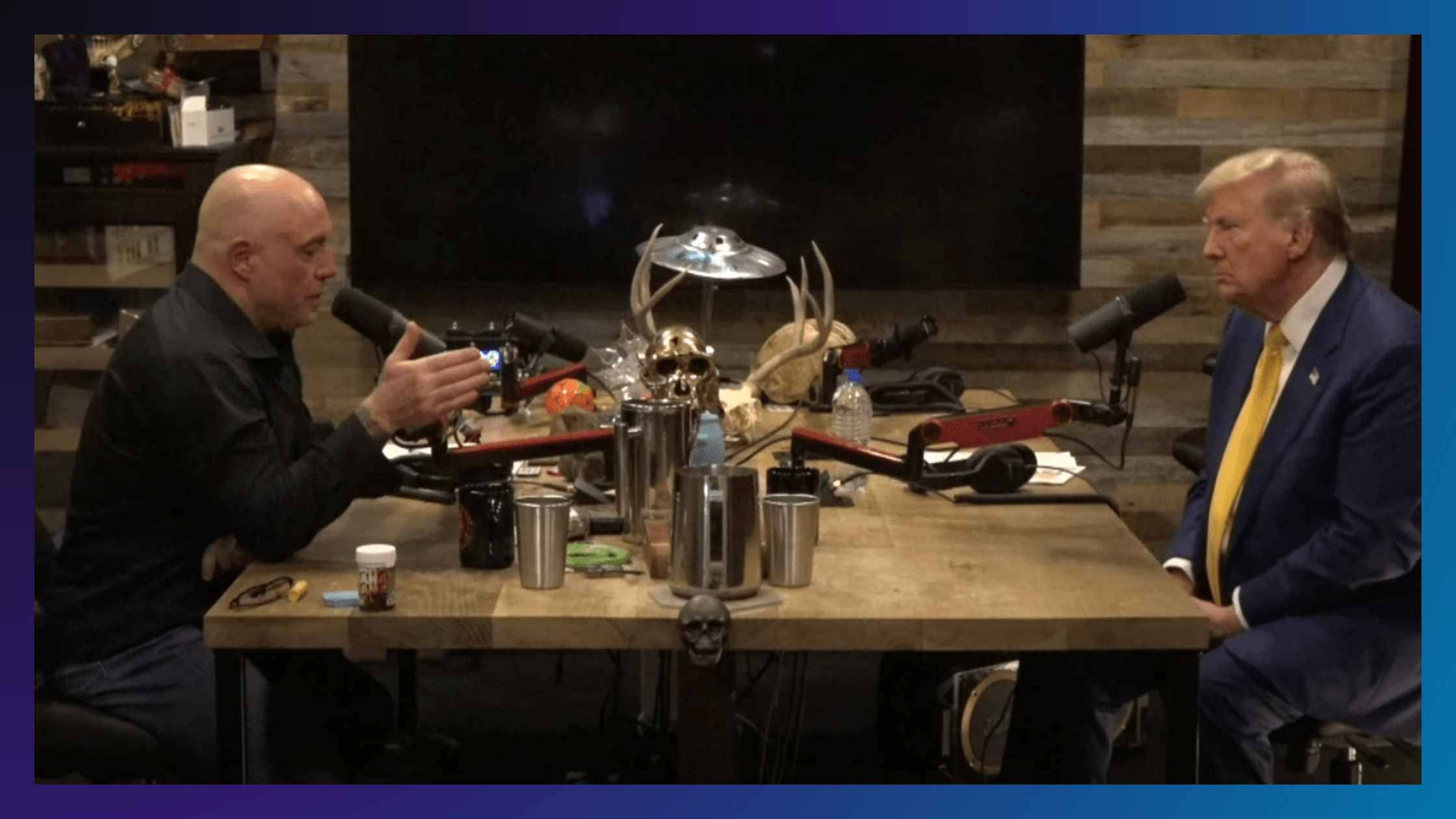
But this is precisely the characteristic of Rogan's show. Three hours, no interruptions, no set agenda, talk about whatever you want.

The audience sees not a candidate constrained by media frameworks, but a complete Trump: curious, with outrageous ideas, capable of casual conversation.

Rogan's own evaluation actually sums up the show's effect well:

"You say a lot of crazy things, but when traditional media takes those things and makes news out of them, it actually makes you more popular. Because people are tired of that scripted politician-speak. Even if they disagree with you, at least they know this person is real."

This sense of authenticity is especially effective with Rogan's audience.

Data from foreign research institutions shows that 80% of the show's listeners are male, with over half aged 18 to 34. Politically, 35% identify as independent, 32% lean Republican, and 27% lean Democratic. This group shares a common characteristic:

They don't watch traditional TV news much, generally distrust mainstream media, but they spend hours each week listening to Rogan chat.

In other words, this is a group that is hard for traditional political communication to reach. And Trump spending three hours sitting across from a host they trust, speaking in a relaxed, informal manner, had an effect far surpassing any campaign ad.

After the episode went live, YouTube views quickly surpassed 50 million.

The entire video was chopped into countless clips, spreading on X, TikTok, and Instagram. Every soundbite, every outrageous statement became independent content piece, reaching people who would never click on a three-hour video.

Meanwhile, Trump's presidential election opponent, Harris, did not go on the show.

Reportedly, both sides talked, and Rogan publicly invited her. But Harris's team wanted to limit the duration to under an hour, which Rogan refused. He said on his show:

"It's not that I didn't want to invite her, it's that she didn't want to come."

As a comparison, Trump's episode garnered over 50 million views, while Harris's appearance on another podcast, "Call Her Daddy," got 600,000 views.

The election ended, Trump won. In his victory speech, UFC President Dana White specifically thanked Joe Rogan, listing him as one of the功臣 (key contributors) to the victory.

A podcast being named in the thank-you list of a presidential victory speech is a first in American political history.

Chinese Mirror Image, Luo Yonghao's Attempts

Can Joe Rogan's model be replicated in China?

Some are trying.

In June 2025, Luo Yonghao revealed at an AI conference that DeepSeek founder Liang Wenfeng suggested he leverage his "talent for talking." A few months later, he launched a video podcast on Bilibili called "Luo Yonghao's Crossroads," positioning it as a counterpart to Joe Rogan and Lex Fridman.
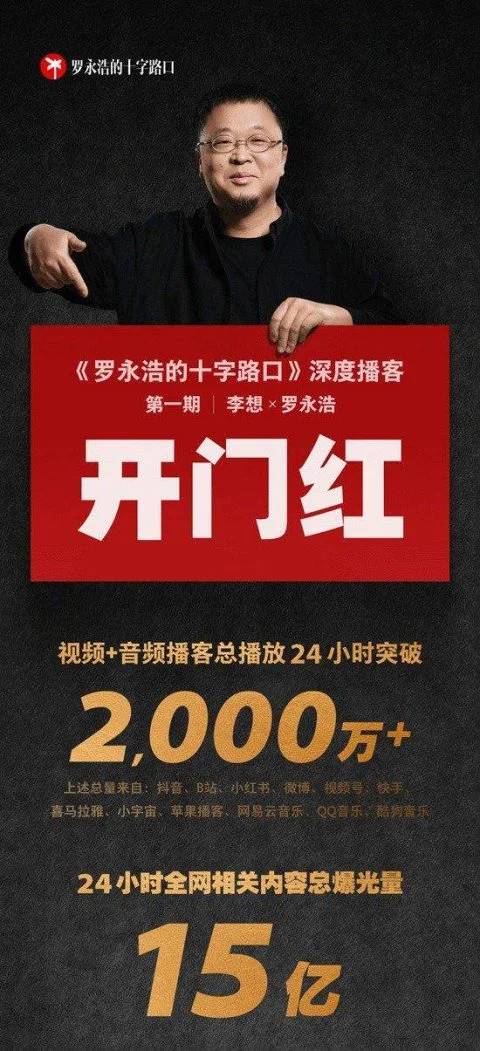
The format is very similar to The Joe Rogan Experience: long conversations, minimal editing, each episode three to five hours.

The first guest was Li Xiang, founder of Li Auto. The two talked for four hours, from childhood trauma to his relationship with Wang Xing, daring to ask and answer anything. The reaction in the comments was:

In the short-video era, this kind of "long and satisfying超大杯 (super large cup)" is too rare.

Luo Yonghao isn't the only one. Chen Luyu, Yu Qian, Li Dan, Yang Di—these famous talkers have all set up shop on Bilibili doing video podcasts. Bilibili has also made heavy investments, pouring billions in traffic support during the summer, providing free recording studios in Beijing, Shanghai, Guangzhou, and Hangzhou, and planning to launch AI creation tools专属 for podcasts.

It seems China's video "podcast元年 (first year)" has finally arrived, but it's not that simple.

When Luo Yonghao was in conversation with Tim from '影视飓风' (Film Tornado), he mentioned his video views were around 20-30 million, while Tim believed "reaching 100 million才算火 (counts as being popular)." This actually reveals a structural problem:

In China's internet traffic ecosystem, long-form content is inherently at a disadvantage.

Over the past few years, users have been trained by short videos into the habit of "watching a three-minute summary of a movie." The algorithms of Douyin and Kuaishou reward completion rates; a three-hour video has almost no survival space in the recommendation pool.

More ironically, the highlight moments of many long video podcasts are often spread through几十秒的切片 (dozens-of-second clips) on Douyin and Xiaohongshu.

At the same time, monetization is also a challenge.

The US podcast industry's advertising revenue exceeded $2 billion in 2024, with top hosts securing exclusive contracts worth hundreds of millions of dollars. In China, a podcast brand with nearly 500,000 subscribers might charge less than 40,000 RMB for a single voiced ad, with annual net income possibly only around a hundred thousand RMB.

YouTube has a mature AdSense revenue-sharing system; the longer the video, the more ad slots, the higher the income—this incentivizes long-form content through its利益机制 (profit mechanism). Bilibili's monetization capability is far from this level.

There's an even more fundamental issue:

Rogan's influence largely comes from his ability to host people like Trump, Musk, and Jensen Huang, and these people are willing to say things on his show they wouldn't say elsewhere.

This status as an "information首发地 (first release location)" requires long-accumulated trust and a unique舆论环境 (public opinion environment).

Luo Yonghao can invite Li Xiang, He XPeng, Zhou Hongyi—this is already the top-tier lineup in China's tech circle. But there are天然存在边界 (natural boundaries) in terms of topic openness.

So, can Joe Rogan's model be replicated in China?

The form can be learned, but the soil is different.

Controversy and Boundaries

Writing this far, there's an unavoidable question: Joe Rogan is a controversial figure.

In 2022, he faced a storm for questioning the effectiveness of COVID-19 vaccines on his show. Spotify did not abandon Rogan but added "content warning" labels to all episodes discussing COVID-19 and removed over 70 old episodes.

This wasn't his first brush with trouble.

In 2024, he discussed the origins of AIDS with a guest on his show, spreading some claims already refuted by the medical community, drawing public criticism from the American Foundation for AIDS Research.

A Yale University study found that among the top ten most popular podcasts in the US, eight had spread erroneous or misleading information about climate change, with Rogan's show among them.

His show is also a gathering place for various American conspiracy theories.

From the Kennedy assassination to UFOs, from big pharma to government surveillance, he maintains an "open attitude" towards these topics. Critics believe this provides a platform for misinformation, while his supporters see it as challenging mainstream narratives.

In July 2025, he posted on X:

"Salute to those who still don't believe in conspiracy theories, your ability to hold your ground is admirable." This post received over 15 million views.

This is also the complexity of Joe Rogan.

He is not a person of consistent立场 (stance). For example, supporting same-sex marriage, marijuana legalization, and universal healthcare are typical liberal positions. But he also questions mainstream media and provides a platform for controversial figures, which also makes him a darling of conservatives.

His show's influence stems precisely from the fact that he doesn't belong to any camp. Those who have lost trust in mainstream media find an "anti-establishment" alternative in him.

But the same特质 (trait) also makes him a node for spreading misinformation. When someone with an audience of hundreds of millions says "I'm just asking questions," the questions themselves are already shaping public perception.

This is also the inherent tension of the podcast medium:

Its charm lies in being real, relaxed, and unlimited, but when its influence reaches a certain scale, "unlimited" itself becomes a problem.

Joe Rogan is a product of this era and also a mirror of it.


Twitter:https://twitter.com/BitpushNewsCN

Bitpush TG Discussion:https://t.me/BitPushCommunity

Bitpush TG Subscription: https://t.me/bitpush

Original link:https://www.bitpush.news/articles/7597853

Questions liées

QWhat is the name of Joe Rogan's podcast and how much is it valued at?

AThe podcast is called 'The Joe Rogan Experience' and it is valued at $250 million as of the 2024 Spotify deal.

QWhat unconventional background did Joe Rogan have before starting his podcast, and how did it contribute to his success?

AJoe Rogan was a comedian, a reality TV show host for 'Fear Factor', and a long-time UFC commentator. This 'unconventional' background gave him the skills to make conversations engaging and relaxed, and provided him with a built-in audience from the combat sports world.

QHow did Joe Rogan's interview with Donald Trump during the 2024 US election campaign differ from traditional political interviews?

AThe interview lasted three hours with no time limits or set agenda, allowing them to discuss unconventional topics like UFOs and the beds in the White House. This created a sense of authenticity and reached an audience that distrusts mainstream media, which traditional political interview formats often fail to do.

QWhat are some of the major challenges facing the replication of the Joe Rogan podcast model in China, as mentioned in the article?

AThe challenges include a content ecosystem dominated by short-form video platforms where long content is at a disadvantage, underdeveloped monetization models for long-form podcasts compared to the US, and natural boundaries on the openness of topics that can be discussed.

QWhat major controversy surrounded Joe Rogan in 2022, and how did Spotify respond?

AIn 2022, Joe Rogan faced significant backlash for expressing skeptical views on COVID-19 vaccines on his podcast. In response, Spotify added content warning labels to episodes discussing COVID-19 and removed over 70 older episodes from its platform.

Lectures associées

Quand même les vendeurs de pelles doivent emprunter pour acheter des pelles : Le secteur de l'IA sur les marchés américains perd des milliers de milliards en une semaine, le marché commence à facturer la « facture » de l'IA

Cette semaine, les actions liées à l'IA sur le marché américain ont connu une volatilité significative, malgré des résultats financiers records. Des entreprises comme Broadcom et Oracle ont publié des revenus et commandes en forte hausse, mais leurs actions ont chuté après ces annonces. Le marché s'inquiète désormais moins des bénéfices que des flux de trésorerie et du financement massif nécessaire à la course aux infrastructures d'IA. Broadcom a vu son action chuter après des perspectives prudentes pour ses puces IA, tandis qu'Oracle, malgré une commande record de 6380 milliards de dollars, a annoncé un besoin de financement supplémentaire de 40 milliards de dollars, alourdissant sa dette. Même Alphabet, avec des réserves de liquidités énormes, a lancé une levée de capitaux de près de 85 milliards de dollars, signalant l'intensité des investissements requis. La chaîne de financement est sous tension : des géants de la tech aux fournisseurs de semi-conducteurs et aux laboratoires d'IA comme OpenAI et Anthropic, tous lèvent des fonds par dette ou capitaux propres. Les dépenses d'investissement des grandes entreprises technologiques pour 2026 sont estimées à des centaines de milliards, dépassant souvent leur flux de trésorerie disponible. Le point crucial est que la demande finale repose sur un petit groupe de laboratoires d'IA non encore rentables, eux-mêmes dépendants de financements. Le marché commence à évaluer qui paiera la facture de cette croissance. Le prochain test sera l'introduction en bourse de SpaceX, la plus importante de l'histoire.

marsbitIl y a 6 mins

Quand même les vendeurs de pelles doivent emprunter pour acheter des pelles : Le secteur de l'IA sur les marchés américains perd des milliers de milliards en une semaine, le marché commence à facturer la « facture » de l'IA

marsbitIl y a 6 mins

Doubao coûte plus cher que GPT, DeepSeek réduit considérablement ses prix, qui gagnera ?

L'industrie de l'IA en Chine connaît un développement contrasté. D'un côté, Doubao (de ByteDance), après une phase de test, a officiellement annoncé une tarification élevée, dépassant même celle de ChatGPT Plus pour sa version professionnelle. Cette décision, critiquée par de nombreux utilisateurs en ligne, marque la fin imminente du modèle gratuit pour les applications grand public et vise à compenser les coûts de calcul énormes liés à son énorme base d'utilisateurs (3,45 milliards de MAU). De l'autre, DeepSeek a choisi la stratégie inverse en réduisant définitivement ses prix d'API d'environ 75%, atteignant des niveaux parmi les plus bas au monde. Cette baisse agressive est soutenue par des innovations techniques réduisant drastiquement les coûts de calcul, une optimisation des infrastructures et une indépendance croissante vis-à-vis du matériel étranger. DeepSeek vise clairement à dominer le marché des entreprises (B2B) et est devenu le modèle le plus utilisé sur certaines plateformes. Les deux entreprises, bien qu'en pertes, poursuivent des chemins divergents : Doubao mise sur la monétisation de son écosystème grand public, tandis que DeepSeek consolide sa position sur le marché des entreprises grâce à des prix bas et une technologie efficace. L'article suggère que le véritable gagnant à long terme sera celui qui réussira à intégrer l'IA dans des flux de travail réels, générant un retour sur investissement tangible, que ce soit pour les consommateurs ou les entreprises, à l'image d'Anthropic qui a atteint la rentabilité en se concentrant sur les solutions d'entreprise. Le secteur n'en est qu'à ses débuts.

marsbitIl y a 13 mins

Doubao coûte plus cher que GPT, DeepSeek réduit considérablement ses prix, qui gagnera ?

marsbitIl y a 13 mins

L'année tant attendue des introductions en bourse crypto ? Une seule en six mois, et une chute de 70 %

Auteur : Claude, Deep Tide TechFlow Préambule : Alors que SpaceX s'apprête à réaliser la plus grande introduction en bourse (IPO) de l'histoire (valorisation : 1,75 billion de dollars), le pipeline des IPOs dans le secteur de la cryptomonnaie est paralysé en 2026. La seule société cryptonative à être entrée en bourse cette année, BitGo, a vu son action chuter d'environ 70 % par rapport à son prix d'émission. D'autres projets majeurs sont à l'arrêt ou reportés : Kraken a suspendu son projet d'IPO et a vu sa valorisation chuter de 33 %, Consensys (maison-mère de MetaMask) a repoussé son projet à l'automne, et Bitpanda risque de manquer sa fenêtre de tir prévue au premier semestre. Cette situation coïncide avec un contexte de marché difficile pour les cryptomonnaies, le Bitcoin étant tombé sous les 60 000 dollars, tandis que les liquidités sont absorbées par des géants comme SpaceX et le secteur de l'IA. La faible performance post-IPO des actifs crypto, comme le montrent les exemples passés (Gemini, Bullish), refroidit également les investisseurs. Une pression temporelle existe cependant : les élections américaines de mi-mandat en novembre pourraient modifier le paysage réglementaire, incitant initialement les entreprises à vouloir se lancer avant cette échéance. La transparence financière qu'apporterait une entrée en bourse reste un argument, mais elle n'est pas suffisante dans les conditions de marché actuelles. L'évolution de la liquidité après l'IPO de SpaceX et les décisions de Kraken, Consensys et Bitpanda dans les prochains mois seront déterminantes pour savoir si une fenêtre d'opportunité se rouvrira avant la fin de l'année.

marsbitIl y a 25 mins

L'année tant attendue des introductions en bourse crypto ? Une seule en six mois, et une chute de 70 %

marsbitIl y a 25 mins

Derrière les « usines d’IA » de Musk et Huang, une « guerre silencieuse pour l’eau douce » a déjà commencé

Une nouvelle bataille invisible pour les ressources en eau douce se profile derrière les « usines à IA » d'Elon Musk et de Jensen Huang. Contrairement aux récits dominants sur la course aux puces et au calcul, un rapport de l'Université des Nations Unies révèle que l'IA consomme des quantités astronomiques d'eau pour le refroidissement des centres de données. D'ici 2030, l'infrastructure mondiale de l'IA pourrait consommer 9,3 billions de litres d'eau par an, soit les besoins de base annuels de 1,3 milliard de personnes. Cette consommation massive est principalement due aux systèmes de refroidissement par évaporation utilisés dans plus de 70% des centres de données. Pour refroidir les puces haute puissance, de l'eau est évaporée et perdue. Par exemple, l'entraînement de GPT-4 aurait consommé environ 600 millions de litres. Des conflits éclatent, comme à Memphis où le supercalculateur Colossus de xAI, construit en 122 jours, a provoqué une crise en puisant quotidiennement dans les réserves d'eau potable, forçant Musk à construire une usine de retraitement des eaux usées. Face aux critiques, les géants technologiques proposent des solutions comme le refroidissement en circuit fermé (sans évaporation), mais cela augmente la consommation électrique et déplace l'empreinte hydrique vers les centrales. Pour la Chine, la voie à suivre ne doit pas être la reproduction de ce modèle « monstrueux ». La stratégie « Computing from East to West » et le développement d'une intelligence hybride, combinant des puces légères en périphérie (pour les appareils domestiques, les robots) et le cloud, pourraient être la clé pour réduire drastiquement la consommation d'eau et d'énergie de l'IA.

marsbitIl y a 1 h

Derrière les « usines d’IA » de Musk et Huang, une « guerre silencieuse pour l’eau douce » a déjà commencé

marsbitIl y a 1 h

L'AGI n'est plus qu'à un pas de distance

En avril, Anthropic a dévoilé le modèle Mythos, capable d'identifier des milliers de vulnérabilités critiques, ce qui a secoué le secteur de la cybersécurité. Considéré trop dangereux pour être publié, il est resté confidentiel jusqu'à la mise en ligne récente de Fable 5, une version dotée de sécurités. La version non censurée, Mythos 5, n'est accessible qu'à environ 200 organismes strictement sélectionnés, comme la Maison Blanche. Les tests révèlent que Fable 5 surpasse largement ses concurrents (Claude Opus 4.8, GPT-5.5, Gemini 3.1 Pro) dans des benchmarks comme SWE-Bench Pro. Une démonstration avec Stripe a montré sa capacité à migrer 50 millions de lignes de code en un jour, démontrant une réelle « capacité d'agence à long terme ». Il ne s'agit plus d'un simple assistant réactif, mais d'un outil capable de planifier, d'exécuter et de corriger des tâches complexes de manière autonome. Selon les critères d'OpenAI, Fable 5 atteint le niveau 3 (Agent) et touche au niveau 4 (Innovateur). Le rythme des progrès laisse penser que le niveau 5 (Organisation, équivalent à l'AGI) pourrait être atteint d'ici 18 à 24 mois. Cette rapidité justifie les mesures de sécurité drastiques. Les rapports internes indiquent que Mythos 5 a atteint un niveau (CB-1) lui permettant théoriquement de guider la création d'armes biochimiques ou de générer des exploits pour des cyberattaques contre des infrastructures critiques. Pour le contenir, Anthropic a implémenté un mécanisme de « routage par rétrogradation silencieuse » (redirigeant les requêtes sensibles vers un modèle moins puissant) et une rétention obligatoire des données de 30 jours pour surveiller les abus. Anthropic facture Fable 5 à un prix élevé (10$/M de tokens en entrée, 50$/M en sortie), le rendant prohibitif pour les particuliers. Cette stratégie vise délibérément le marché B2B, où les entreprises sont prêtes à payer pour un gain de productivité radical et, surtout, pour une défense contre les cybermenaces avancées que seul un modèle comme Mythos 5 peut contrer. Ceci marque la fin de l'ère « gratuite » de l'IA grand public et consacre une division où la technologie la plus avancée devient un bien stratégique réservé aux applications commerciales et gouvernementales, accélérant potentiellement l'avènement des « entreprises à une personne » tout en posant des défis majeurs pour le marché du travail.

marsbitIl y a 1 h

L'AGI n'est plus qu'à un pas de distance

marsbitIl y a 1 h

Trading

Spot
Futures

Articles tendance

Comment acheter JOE

Bienvenue sur HTX.com ! Nous vous permettons d'acheter TraderJoe (JOE) de manière simple et pratique. Suivez notre guide étape par étape pour commencer votre parcours crypto.Étape 1 : Création de votre compte HTXUtilisez votre adresse e-mail ou votre numéro de téléphone pour ouvrir un compte sur HTX gratuitement. L'inscription se fait en toute simplicité et débloque toutes les fonctionnalités.Créer mon compteÉtape 2 : Choix du mode de paiement (rubrique Acheter des cryptosCarte de crédit/débit : utilisez votre carte Visa ou Mastercard pour acheter instantanément TraderJoe (JOE).Solde :utilisez les fonds du solde de votre compte HTX pour trader en toute simplicité.Prestataire tiers :pour accroître la commodité d'utilisation, nous avons ajouté des modes de paiement populaires tels que Google Pay et Apple Pay.P2P :tradez directement avec d'autres utilisateurs sur HTX.OTC (de gré à gré) : nous offrons des services personnalisés et des taux de change compétitifs aux traders.Étape 3 : stockage de vos TraderJoe (JOE)Après avoir acheté vos TraderJoe (JOE), stockez-les sur votre compte HTX. Vous pouvez également les envoyer ailleurs via un transfert sur la blockchain ou les utiliser pour trader d'autres cryptos.Étape 4 : tradez des TraderJoe (JOE)Tradez facilement TraderJoe (JOE) sur le marché Spot de HTX. Il vous suffit d'accéder à votre compte, de sélectionner la paire de trading, d'exécuter vos trades et de les suivre en temps réel. Nous offrons une expérience conviviale aux débutants comme aux traders chevronnés.

155 vues totalesPublié le 2024.12.11Mis à jour le 2026.06.02

Comment acheter JOE

Discussions

Bienvenue dans la Communauté HTX. Ici, vous pouvez vous tenir informé(e) des derniers développements de la plateforme et accéder à des analyses de marché professionnelles. Les opinions des utilisateurs sur le prix de JOE (JOE) sont présentées ci-dessous.

活动图片