Vietnam Crypto Payments Field Report: From Street Stalls to Coffee Shops

比推Publié le 2025-12-22Dernière mise à jour le 2025-12-22

Résumé

Vietnam, a top-ranked country in global crypto adoption, presents a fascinating case study in real-world use of digital currencies. This on-the-ground exploration reveals a complex ecosystem where crypto payment adoption is both emerging and encountering hurdles. The author's experience began when a spa owner in Nha Trang offered a discount for cash over credit card payments, citing high fees and tax implications. This preference for cash hinted at a potential openness to dollar-denominated stablecoins like USDT. Subsequent testing showed that using a crypto wallet (Bitget Wallet) for everyday purchases—from ride-hailing and street food to massages—was often seamless, thanks to widespread acceptance of the VietQR system. The experience was described as nearly equivalent to using Alipay. However, a failed payment at a seafood restaurant exposed a critical vulnerability. A transaction from the crypto wallet showed as completed on-chain but failed to register on the merchant’s older, non-standard QR system, highlighting compatibility issues and the "last mile" problem for crypto payments. Public perception also varies greatly. In northern cities like Hanoi, crypto is often viewed negatively, associated with money laundering and gambling. This contrasts sharply with the vibrant, tech-savvy crypto culture observed in the south, particularly in Ho Chi Minh City, where young people in cafes are seen trading on Binance or even writing Solidity code. This creates a "Vietnamese cry...

Author: Joe Zhou, Foresight News

Original Title: I Bought Seafood with USDT in Vietnam: Has Web3 Truly Achieved Mass Adoption?


Vietnam, a fascinating country repeatedly mentioned in countless Web3 research reports.

It boasts one of the world's youngest population structures, an extremely high mobile internet penetration rate, and a financial vitality that grows almost wildly. In the "Global Cryptocurrency Adoption Index" released by Chainalysis, Vietnam has consistently ranked at the top or near the top for many years.

As a long-time observer of the crypto industry, I have always wanted to figure out one question: when grand concepts like "crypto payments," "stablecoins," and "Mass Adoption" written in PPTs and research reports are actually deployed into the streets and alleys of Vietnam, what kind of chemical reaction will occur?

At the end of 2025, I set foot on this land. During my two weeks in Vietnam, I did not visit high-end exchanges or attend industry cocktail parties filled with clinking glasses. Instead, I acted as an ordinary tourist, taking taxis, getting massages, and eating at street stalls.

I recorded five small incidents from my journey. They may not represent the full picture, but they are the most authentic slices of Vietnam's current Web3 landscape.

One: 'No International Credit Cards, Cash and USDT Only'

At a SPA shop in Nha Trang, Vietnam, our group of 12 spent $320. When settling the bill, the merchant stated bluntly: a 10% discount for cash payment, full price for Visa or Mastercard.

I was initially displeased, as carrying large amounts of Vietnamese dong cash is inconvenient, and I suspected the owner might be "ripping off" familiar customers. But the owner's patient explanation cleared up my misunderstanding.

In Vietnam, international credit card fees are high, typically 3% or more. More importantly, using a card means funds enter the banking system, requiring additional tax payments, while cash can avoid these. From a very pragmatic small business owner's perspective, she explained her difficulties.

In the end, we paid with $300 cash. The owner paid less tax, and we saved dozens of dollars—a win-win. Of course, the losers were the credit card organizations and banks, the "middlemen."
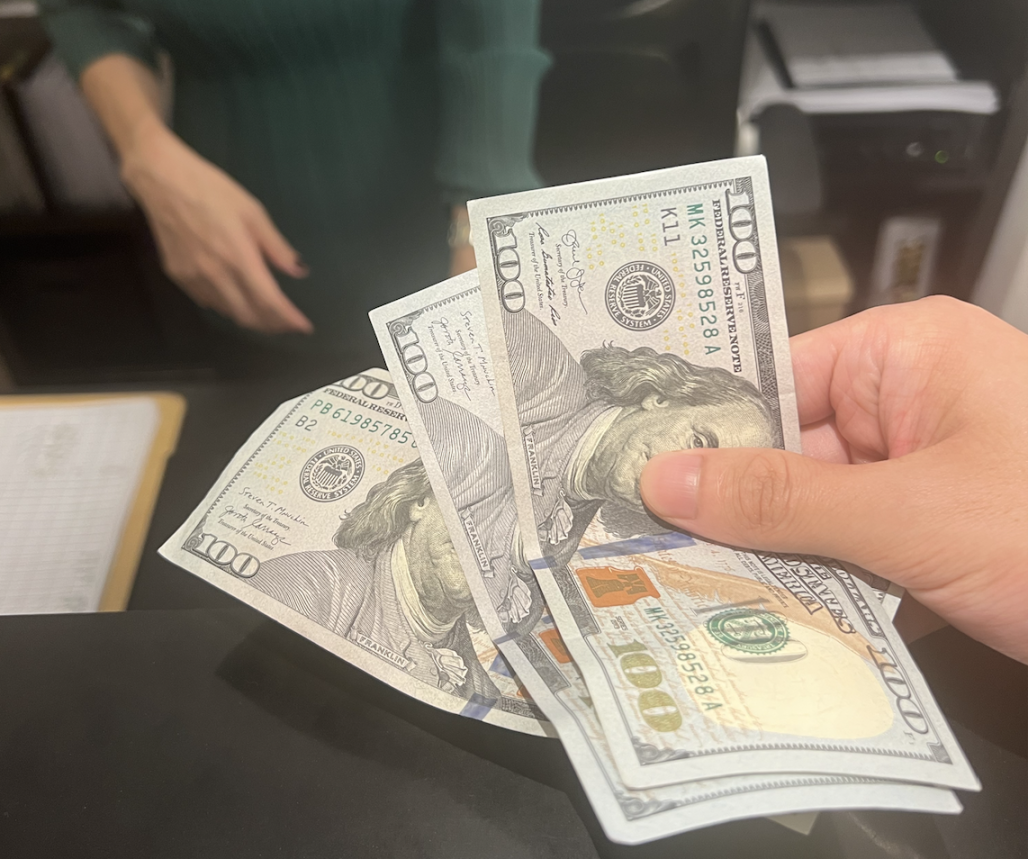
Caption: The author paying with US dollar cash

This deeply resonated with me: the global credit card payment system has long been monopolized by a few giants, not only charging a 3% "toll" per transaction but also imposing ATM withdrawal fees as high as 4% or more. For merchants, this is not just a financial cost but also a compliance cost.

Since merchants have a natural preference for "US dollars," theoretically, their acceptance of "digital dollars" (stablecoins) is also worth anticipating—as long as the payment tool can help them solve the "last mile" problem, instantly converting USDT into the Vietnamese dong they need.

With this verification logic, I began my subsequent experience with crypto payments in Vietnam.

Two: Vietnam's Stablecoin Payments, the Dawn of Mass Adoption Emerges

When Vietnamese merchants accept US dollar bills, are they ready to accept US dollar stablecoins?

During the next leg of the journey, I deliberately tried to live solely using Bitget Wallet. Grab rides, buying pho at street stalls, SPA massages, seafood dinners... I was surprised to find that as long as the merchant had a VietQR (Vietnam's universal payment QR code), I could basically use the wallet to scan and pay directly, with funds converted and arriving in real-time. And VietQR can be seen almost everywhere in Vietnam.

I use the word "basically" because I discovered a significant bug in crypto payments, which will be mentioned in Chapter Three.
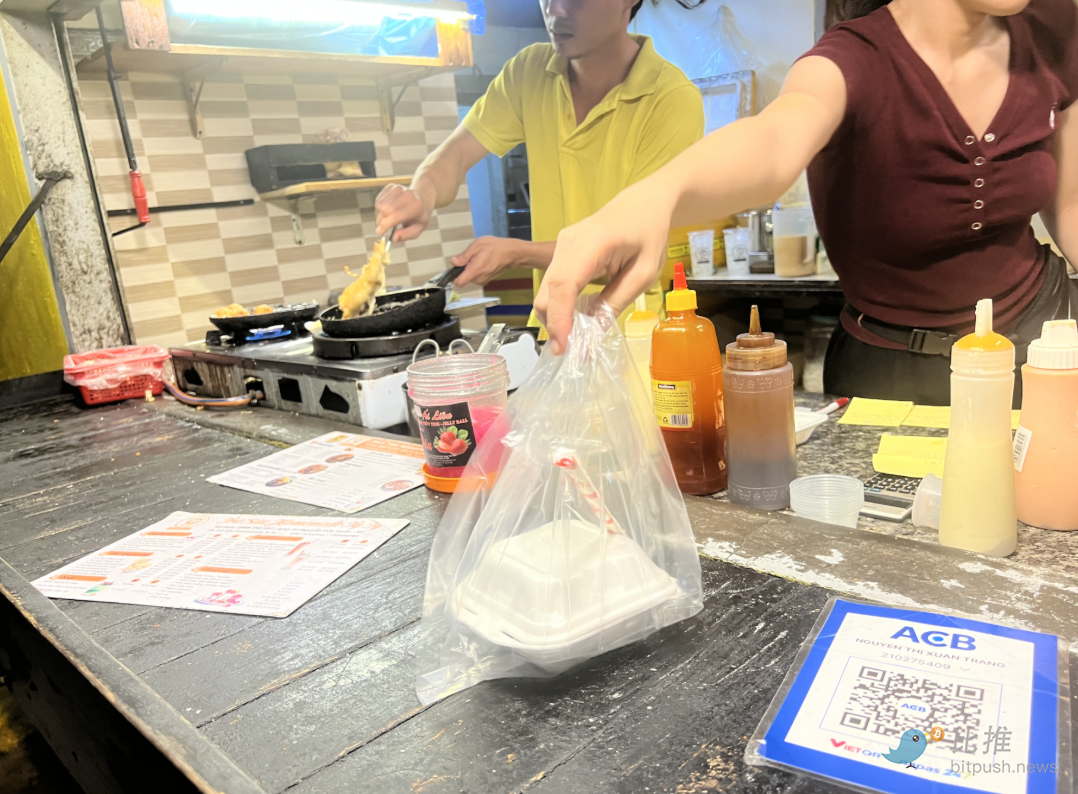
Caption: VietQR (bottom right corner) ubiquitous throughout Vietnam's streets and alleys, can be scanned directly for payment using Bitget Wallet

It's no exaggeration to say that in Vietnam, the experience of crypto payment is infinitely close to that of Alipay.

Although I had heard about it before, the shock of experiencing it firsthand was still strong. Crypto wallets like Bitget Wallet have underlying access to aggregated payment networks like Aeon Pay, which transforms cryptocurrency from a "speculative asset" into real "purchasing power," directly reaching tens of millions of merchants in Vietnam and surrounding countries.

Of course, all this smooth experience is built on Vietnam having a highly unified and popular QR code payment system (VietQR). It is the infrastructure, while crypto payment is the new blood running on it.

However, frequent use finally made me realize that Bitget Wallet scan-to-pay is not omnipotent. I really did find a bug once.

Three: A Failed Crypto Payment Revealed the 'Real-World Bug' to Me

On December 20, 2025, I dined again at the famous restaurant Moc Seafood in Nha Trang. The first two times I used cash and a credit card respectively; the third time, I decided to challenge myself to pay using Bitget Wallet.

However, this "challenge" failed.

The reason was that the store presented not a standard VietQR aggregated code, but a printed QR code from an internal bank or old system. My wallet scanned the code and showed a successful deduction, but after the on-chain funds were transferred, the store side had no voice broadcast or receipt notification for a long time.

The other party also demonstrated to me that when she used her mobile phone to pay, she received the money arrival notification immediately.

Caption: The author's attempt at crypto payment failed, but the staff completed it smoothly using a local bank scan

The store owner helplessly showed me their verification method: scanning with a local financial App, instant arrival.

The loss of these few dollars was the "tuition fee" I paid for this experience. This small episode made me realize that the "last mile" of crypto payments in the real world is still fragile. The lack of compatibility protocols, confirmation delays on the merchant side, and the cognitive time difference between the user side's "deduction equals success" and the merchant side's "arrival counts" are all pits that must be filled on the road to Mass Adoption.

Four: In the Minds of Ordinary People, Cryptocurrency is Still 'Grey'

The commercialization of technology depends not only on the maturity of the code but also on cultural acceptance.

Although Vietnam has an extremely young population, in the general public's eyes, Crypto's image is not glorious, especially in northern cities of Vietnam, where this situation is more obvious. The author spoke with several locals in Hanoi—including currency exchangers, motorbike taxi drivers, and university students—and their first reaction to cryptocurrency was surprisingly consistent: money laundering tool, grey industry, gambling.

In their view, this is not some "future of the internet" or "future of finance," but a means to evade regulation.

On the bustling streets of Hanoi and Nha Trang, the author could hardly find any Bitcoin ATMs or offline OTC exchange shops. This creates a strong visual contrast with places like Hong Kong, Japan, or Georgia—where the neon signs of Crypto Exchanges have long openly occupied the C位 (center stage) of commercial streets.

On one hand, it ranks first globally in on-chain data; on the other hand, it's hard to find in the physical world. This complete disconnect between online and offline vividly演绎 (dramatizes) a kind of "Vietnamese crypto fold."

Five: In the Driver's Car, I Found a Binance Cap

An accidental discovery tore open a corner of Vietnam's crypto world.

During a Grab ride, my colleague敏锐地 (sharply) noticed that this young driver had a cap with the Binance logo casually placed on his dashboard. Seeing we noticed, the driver grinned and skillfully took out his phone, showing us the Binance App he was running.

This scene made me realize that cryptocurrency in this country is not just an underground undercurrent; it is permeating ordinary people's lives in a highly vital way. Multiple public data show that over 20 million people in Vietnam hold or have used digital assets, and a large proportion of Vietnam's population is young (e.g., the 10-24 age group accounts for a significant share of the total population), which significantly promotes the acceptance of digital assets and the formation of Web3 usage habits.

This penetration shows an interesting "North-South difference" geographically.

A university student in Hanoi, Vietnam, told me that the north and south of Vietnam have截然不同的 (distinctly different) views on money: people in the north, represented by the capital Hanoi, are conservative,倾向于 (inclined towards) saving, preparing for rainy days; while people in the south, led by the economic center Ho Chi Minh City, are deeply influenced by Western business culture, accustomed to spending in advance, and have an extremely high acceptance of new things.

This also explains why the vast majority of Chinese Web3 practitioners—whether media, VCs, or blockchain game developers—mostly choose to settle in Ho Chi Minh City among Vietnamese cities.

Here, low labor costs collide with the high returns of the crypto economy, making Vietnam a heaven for geographical arbitrage in "play-to-earn" mining. Many young people are ordinary office workers during the day and turn into "gold-mining worker ants" on the chain at night.

If the fourth point of the travelogue showed me the "prejudice" of the public in northern Vietnamese cities towards cryptocurrency, then on the streets of Ho Chi Minh City, my friends described to me the "enthusiasm" for cryptocurrency in this country.

Vietnam has a strong coffee culture, and in those crowded Highlands Coffee or The Coffee House shops, my friend witnessed an extremely hardcore scene: on the screens of rows of young people tapping on laptops, not all were games or social software; frequently, Binance's K-line charts, or even the black window of a Solidity code editor, were seen.

Data doesn't lie. According to Chainalysis's "Global Cryptocurrency Adoption Index," Vietnam has consistently ranked at the top or near the top for many years. It has the perfect "golden population structure," tens of millions of young people渴望 (yearning for) class leapfrogging, proficient in digital technology, and unlike the older generation, they do not迷信 (blindly believe in) the traditional banking system.

This gives Vietnam a wonderful sense of "folding":

On the street, a motorbike taxi driver might tell you Crypto is a "money laundering tool"; but in a café at the end of the alley, a young developer might be building the next Axie Infinity (a phenomenal Web3 game born in Vietnam).

This bottom-up vitality is perhaps the most authentic底色 (background color) of Vietnam's Web3. There are no高大上的 (high-end) financial centers here, but every crowded coffee shop could be a Web3 node; every Grab穿梭 (shuttling) through the rainstorm might have a young person waiting for the Bitcoin bull market in the driver's seat.

Conclusion: Searching for the Next Decade's 'Alpha'

These five small incidents are just the tip of the iceberg of my observations of Vietnam.

The chapters of the journey are far from over. Next, I will delve into the "Southern Economic Heart" Ho Chi Minh City, climb the highlands of "Vietnam's Dali" Da Lat, traverse the coastal hub Da Nang, and finally arrive at Phu Quoc Island in the south.

Having traveled to dozens of countries and after repeated exchanges with multiple friends who have long been deeply involved locally and with Vietnamese locals, I am increasingly convinced of one judgment: in the next decade, Vietnam will be one of the world's most promising economies, perhaps even the most promising. The young population structure, continuously restless desire for upward mobility, and a relatively open social attitude towards foreign things together constitute a rare soil, and these are the best soil for nurturing new technologies.

I will continue to walk on this hot land and surrounding countries, not just as a tourist, but as an observer, to explore the real growth state of Web3 in Southeast Asia.

Please stay tuned, our exploration continues.


Twitter:https://twitter.com/BitpushNewsCN

Bitpush TG Discussion Group:https://t.me/BitPushCommunity

Bitpush TG Subscription: https://t.me/bitpush

Original link:https://www.bitpush.news/articles/7597600

Questions liées

QWhat is the main reason why some Vietnamese merchants prefer cash payments over international credit cards, according to the author's experience at a spa in Nha Trang?

AMerchants prefer cash because international credit cards incur high transaction fees (around 3% or more) and require funds to go through the banking system, which subjects them to additional taxes. Cash payments allow them to avoid these costs.

QWhat payment infrastructure in Vietnam enables the widespread use of crypto wallets like Bitget Wallet for everyday transactions?

AVietQR, a unified and highly普及的二维码支付系统 (QR code payment system) found almost everywhere in Vietnam, allows crypto wallets to scan and make payments directly, with funds converted and arriving in real-time.

QWhat was the 'bug' or issue the author encountered when trying to use crypto payment at the Moc Seafood restaurant?

AThe payment failed because the restaurant used a non-standard, older printed QR code from a bank's internal system. The author's wallet showed the transaction as successful, but the merchant did not receive a notification or the funds, highlighting a compatibility and confirmation delay issue.

QHow does the general public in northern Vietnam, such as in Hanoi, typically view cryptocurrencies, based on the author's conversations?

AIn northern cities like Hanoi, the general public often views cryptocurrencies negatively, associating them with money laundering, gray market activities, and gambling, rather than as a technological or financial innovation.

QWhat demographic and cultural factors make Vietnam, particularly Ho Chi Minh City, a fertile ground for Web3 and crypto adoption according to the article?

AVietnam has a very young population structure, high mobile internet penetration, and a strong desire for upward mobility. Southern cities like Ho Chi Minh City have a culture more influenced by Western business practices, with higher acceptance of new technologies and consumerism, making them hubs for crypto activity and development.

Lectures associées

Quand même les vendeurs de pelles doivent emprunter pour acheter des pelles : Le secteur de l'IA sur les marchés américains perd des milliers de milliards en une semaine, le marché commence à facturer la « facture » de l'IA

Cette semaine, les actions liées à l'IA sur le marché américain ont connu une volatilité significative, malgré des résultats financiers records. Des entreprises comme Broadcom et Oracle ont publié des revenus et commandes en forte hausse, mais leurs actions ont chuté après ces annonces. Le marché s'inquiète désormais moins des bénéfices que des flux de trésorerie et du financement massif nécessaire à la course aux infrastructures d'IA. Broadcom a vu son action chuter après des perspectives prudentes pour ses puces IA, tandis qu'Oracle, malgré une commande record de 6380 milliards de dollars, a annoncé un besoin de financement supplémentaire de 40 milliards de dollars, alourdissant sa dette. Même Alphabet, avec des réserves de liquidités énormes, a lancé une levée de capitaux de près de 85 milliards de dollars, signalant l'intensité des investissements requis. La chaîne de financement est sous tension : des géants de la tech aux fournisseurs de semi-conducteurs et aux laboratoires d'IA comme OpenAI et Anthropic, tous lèvent des fonds par dette ou capitaux propres. Les dépenses d'investissement des grandes entreprises technologiques pour 2026 sont estimées à des centaines de milliards, dépassant souvent leur flux de trésorerie disponible. Le point crucial est que la demande finale repose sur un petit groupe de laboratoires d'IA non encore rentables, eux-mêmes dépendants de financements. Le marché commence à évaluer qui paiera la facture de cette croissance. Le prochain test sera l'introduction en bourse de SpaceX, la plus importante de l'histoire.

marsbitIl y a 5 mins

Quand même les vendeurs de pelles doivent emprunter pour acheter des pelles : Le secteur de l'IA sur les marchés américains perd des milliers de milliards en une semaine, le marché commence à facturer la « facture » de l'IA

marsbitIl y a 5 mins

Doubao coûte plus cher que GPT, DeepSeek réduit considérablement ses prix, qui gagnera ?

L'industrie de l'IA en Chine connaît un développement contrasté. D'un côté, Doubao (de ByteDance), après une phase de test, a officiellement annoncé une tarification élevée, dépassant même celle de ChatGPT Plus pour sa version professionnelle. Cette décision, critiquée par de nombreux utilisateurs en ligne, marque la fin imminente du modèle gratuit pour les applications grand public et vise à compenser les coûts de calcul énormes liés à son énorme base d'utilisateurs (3,45 milliards de MAU). De l'autre, DeepSeek a choisi la stratégie inverse en réduisant définitivement ses prix d'API d'environ 75%, atteignant des niveaux parmi les plus bas au monde. Cette baisse agressive est soutenue par des innovations techniques réduisant drastiquement les coûts de calcul, une optimisation des infrastructures et une indépendance croissante vis-à-vis du matériel étranger. DeepSeek vise clairement à dominer le marché des entreprises (B2B) et est devenu le modèle le plus utilisé sur certaines plateformes. Les deux entreprises, bien qu'en pertes, poursuivent des chemins divergents : Doubao mise sur la monétisation de son écosystème grand public, tandis que DeepSeek consolide sa position sur le marché des entreprises grâce à des prix bas et une technologie efficace. L'article suggère que le véritable gagnant à long terme sera celui qui réussira à intégrer l'IA dans des flux de travail réels, générant un retour sur investissement tangible, que ce soit pour les consommateurs ou les entreprises, à l'image d'Anthropic qui a atteint la rentabilité en se concentrant sur les solutions d'entreprise. Le secteur n'en est qu'à ses débuts.

marsbitIl y a 12 mins

Doubao coûte plus cher que GPT, DeepSeek réduit considérablement ses prix, qui gagnera ?

marsbitIl y a 12 mins

L'année tant attendue des introductions en bourse crypto ? Une seule en six mois, et une chute de 70 %

Auteur : Claude, Deep Tide TechFlow Préambule : Alors que SpaceX s'apprête à réaliser la plus grande introduction en bourse (IPO) de l'histoire (valorisation : 1,75 billion de dollars), le pipeline des IPOs dans le secteur de la cryptomonnaie est paralysé en 2026. La seule société cryptonative à être entrée en bourse cette année, BitGo, a vu son action chuter d'environ 70 % par rapport à son prix d'émission. D'autres projets majeurs sont à l'arrêt ou reportés : Kraken a suspendu son projet d'IPO et a vu sa valorisation chuter de 33 %, Consensys (maison-mère de MetaMask) a repoussé son projet à l'automne, et Bitpanda risque de manquer sa fenêtre de tir prévue au premier semestre. Cette situation coïncide avec un contexte de marché difficile pour les cryptomonnaies, le Bitcoin étant tombé sous les 60 000 dollars, tandis que les liquidités sont absorbées par des géants comme SpaceX et le secteur de l'IA. La faible performance post-IPO des actifs crypto, comme le montrent les exemples passés (Gemini, Bullish), refroidit également les investisseurs. Une pression temporelle existe cependant : les élections américaines de mi-mandat en novembre pourraient modifier le paysage réglementaire, incitant initialement les entreprises à vouloir se lancer avant cette échéance. La transparence financière qu'apporterait une entrée en bourse reste un argument, mais elle n'est pas suffisante dans les conditions de marché actuelles. L'évolution de la liquidité après l'IPO de SpaceX et les décisions de Kraken, Consensys et Bitpanda dans les prochains mois seront déterminantes pour savoir si une fenêtre d'opportunité se rouvrira avant la fin de l'année.

marsbitIl y a 24 mins

L'année tant attendue des introductions en bourse crypto ? Une seule en six mois, et une chute de 70 %

marsbitIl y a 24 mins

Derrière les « usines d’IA » de Musk et Huang, une « guerre silencieuse pour l’eau douce » a déjà commencé

Une nouvelle bataille invisible pour les ressources en eau douce se profile derrière les « usines à IA » d'Elon Musk et de Jensen Huang. Contrairement aux récits dominants sur la course aux puces et au calcul, un rapport de l'Université des Nations Unies révèle que l'IA consomme des quantités astronomiques d'eau pour le refroidissement des centres de données. D'ici 2030, l'infrastructure mondiale de l'IA pourrait consommer 9,3 billions de litres d'eau par an, soit les besoins de base annuels de 1,3 milliard de personnes. Cette consommation massive est principalement due aux systèmes de refroidissement par évaporation utilisés dans plus de 70% des centres de données. Pour refroidir les puces haute puissance, de l'eau est évaporée et perdue. Par exemple, l'entraînement de GPT-4 aurait consommé environ 600 millions de litres. Des conflits éclatent, comme à Memphis où le supercalculateur Colossus de xAI, construit en 122 jours, a provoqué une crise en puisant quotidiennement dans les réserves d'eau potable, forçant Musk à construire une usine de retraitement des eaux usées. Face aux critiques, les géants technologiques proposent des solutions comme le refroidissement en circuit fermé (sans évaporation), mais cela augmente la consommation électrique et déplace l'empreinte hydrique vers les centrales. Pour la Chine, la voie à suivre ne doit pas être la reproduction de ce modèle « monstrueux ». La stratégie « Computing from East to West » et le développement d'une intelligence hybride, combinant des puces légères en périphérie (pour les appareils domestiques, les robots) et le cloud, pourraient être la clé pour réduire drastiquement la consommation d'eau et d'énergie de l'IA.

marsbitIl y a 1 h

Derrière les « usines d’IA » de Musk et Huang, une « guerre silencieuse pour l’eau douce » a déjà commencé

marsbitIl y a 1 h

L'AGI n'est plus qu'à un pas de distance

En avril, Anthropic a dévoilé le modèle Mythos, capable d'identifier des milliers de vulnérabilités critiques, ce qui a secoué le secteur de la cybersécurité. Considéré trop dangereux pour être publié, il est resté confidentiel jusqu'à la mise en ligne récente de Fable 5, une version dotée de sécurités. La version non censurée, Mythos 5, n'est accessible qu'à environ 200 organismes strictement sélectionnés, comme la Maison Blanche. Les tests révèlent que Fable 5 surpasse largement ses concurrents (Claude Opus 4.8, GPT-5.5, Gemini 3.1 Pro) dans des benchmarks comme SWE-Bench Pro. Une démonstration avec Stripe a montré sa capacité à migrer 50 millions de lignes de code en un jour, démontrant une réelle « capacité d'agence à long terme ». Il ne s'agit plus d'un simple assistant réactif, mais d'un outil capable de planifier, d'exécuter et de corriger des tâches complexes de manière autonome. Selon les critères d'OpenAI, Fable 5 atteint le niveau 3 (Agent) et touche au niveau 4 (Innovateur). Le rythme des progrès laisse penser que le niveau 5 (Organisation, équivalent à l'AGI) pourrait être atteint d'ici 18 à 24 mois. Cette rapidité justifie les mesures de sécurité drastiques. Les rapports internes indiquent que Mythos 5 a atteint un niveau (CB-1) lui permettant théoriquement de guider la création d'armes biochimiques ou de générer des exploits pour des cyberattaques contre des infrastructures critiques. Pour le contenir, Anthropic a implémenté un mécanisme de « routage par rétrogradation silencieuse » (redirigeant les requêtes sensibles vers un modèle moins puissant) et une rétention obligatoire des données de 30 jours pour surveiller les abus. Anthropic facture Fable 5 à un prix élevé (10$/M de tokens en entrée, 50$/M en sortie), le rendant prohibitif pour les particuliers. Cette stratégie vise délibérément le marché B2B, où les entreprises sont prêtes à payer pour un gain de productivité radical et, surtout, pour une défense contre les cybermenaces avancées que seul un modèle comme Mythos 5 peut contrer. Ceci marque la fin de l'ère « gratuite » de l'IA grand public et consacre une division où la technologie la plus avancée devient un bien stratégique réservé aux applications commerciales et gouvernementales, accélérant potentiellement l'avènement des « entreprises à une personne » tout en posant des défis majeurs pour le marché du travail.

marsbitIl y a 1 h

L'AGI n'est plus qu'à un pas de distance

marsbitIl y a 1 h

Trading

Spot
Futures

Articles tendance

Comment acheter JOE

Bienvenue sur HTX.com ! Nous vous permettons d'acheter TraderJoe (JOE) de manière simple et pratique. Suivez notre guide étape par étape pour commencer votre parcours crypto.Étape 1 : Création de votre compte HTXUtilisez votre adresse e-mail ou votre numéro de téléphone pour ouvrir un compte sur HTX gratuitement. L'inscription se fait en toute simplicité et débloque toutes les fonctionnalités.Créer mon compteÉtape 2 : Choix du mode de paiement (rubrique Acheter des cryptosCarte de crédit/débit : utilisez votre carte Visa ou Mastercard pour acheter instantanément TraderJoe (JOE).Solde :utilisez les fonds du solde de votre compte HTX pour trader en toute simplicité.Prestataire tiers :pour accroître la commodité d'utilisation, nous avons ajouté des modes de paiement populaires tels que Google Pay et Apple Pay.P2P :tradez directement avec d'autres utilisateurs sur HTX.OTC (de gré à gré) : nous offrons des services personnalisés et des taux de change compétitifs aux traders.Étape 3 : stockage de vos TraderJoe (JOE)Après avoir acheté vos TraderJoe (JOE), stockez-les sur votre compte HTX. Vous pouvez également les envoyer ailleurs via un transfert sur la blockchain ou les utiliser pour trader d'autres cryptos.Étape 4 : tradez des TraderJoe (JOE)Tradez facilement TraderJoe (JOE) sur le marché Spot de HTX. Il vous suffit d'accéder à votre compte, de sélectionner la paire de trading, d'exécuter vos trades et de les suivre en temps réel. Nous offrons une expérience conviviale aux débutants comme aux traders chevronnés.

155 vues totalesPublié le 2024.12.11Mis à jour le 2026.06.02

Comment acheter JOE

Discussions

Bienvenue dans la Communauté HTX. Ici, vous pouvez vous tenir informé(e) des derniers développements de la plateforme et accéder à des analyses de marché professionnelles. Les opinions des utilisateurs sur le prix de JOE (JOE) sont présentées ci-dessous.

活动图片