Institutions Remain Bullish on Crypto, Report Says; Why $HYPER Fits the Moment

bitcoinistPublié le 2025-11-12Dernière mise à jour le 2025-11-12

Résumé

Quick Facts: ➡️ Institutional investors are pivoting from speculation to structured diversification, keeping Bitcoin at the center of long-term portfolio...

Trusted Editorial content, reviewed by leading industry experts and seasoned editors. Ad Disclosure

Quick Facts:

  • ➡️ Institutional investors are pivoting from speculation to structured diversification, keeping Bitcoin at the center of long-term portfolio plans.
  • ➡️ Hedge funds and allocators are increasing crypto exposure through regulated products, confirming a steady path toward mainstream integration.
  • ➡️ Bitcoin Hyper ($HYPER) improves Bitcoin’s capabilities through a secure Layer 2 solution, enabling faster payments, lower fees, and new on-chain activity. The project has already raised close to $27M in its viral presale.

Institutional investors aren’t backing away from crypto just because prices have been flat. Recent surveys show that big allocators still view digital assets as a structural part of their portfolios, not a passing trend.

Crypto is shifting from a speculative trade to a legitimate building block for diversification and long-term performance.
Fresh data from Sygnum, a leading digital asset bank, highlights this change, finding that 72% of organizations surveyed report they’re open to crypto assets. Portfolio diversification has now surpassed trend chasing as the top reason institutions hold crypto.
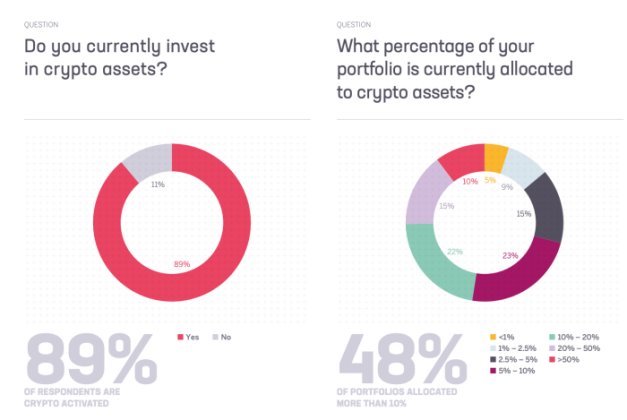
Most respondents said they plan to continue adding exposure through 2026, even with markets stuck in consolidation. The study also shows that Bitcoin remains the first choice for professional investors, partly because it behaves differently from traditional assets.
Survey data shows that 89% of respondents are already invested in crypto, and nearly half allocate over 10% of their portfolios to digital assets.
Sygnum Bank — Future Finance 2025 report.

Another hedge fund survey supports the same theme. More than half of global hedge funds now hold some crypto exposure, often through regulated funds or exchange-traded products. For many, it’s a small allocation for now, but the gradual pace of adoption is steady and durable.

When institutional allocators want crypto exposure without unnecessary complexity, they usually start with Bitcoin. This cycle makes that process even easier. The rise of spot ETFs, new custodial frameworks, and more predictable regulations allows institutions to scale their exposure efficiently.

That creates a strong foundation for projects designed around Bitcoin itself. If investors want Bitcoin as a core holding, then infrastructure that expands what Bitcoin can do sits directly in that flow.

One of the clearest examples is Bitcoin Hyper ($HYPER), one of the best cryptos to buy now.

Bitcoin Hyper ($HYPER) – A Bitcoin Layer 2 Built for Speed and Utility

Bitcoin Hyper aims to give Bitcoin the same kind of efficiency that other chains already enjoy, while keeping its security intact.

It uses a Layer 2 model that mints BTC equivalents after verifying transactions through a Solana Virtual Machine relay. This structure allows fast, low-cost transfers and adds room for dApps and DeFi applications to operate securely within the Bitcoin ecosystem.
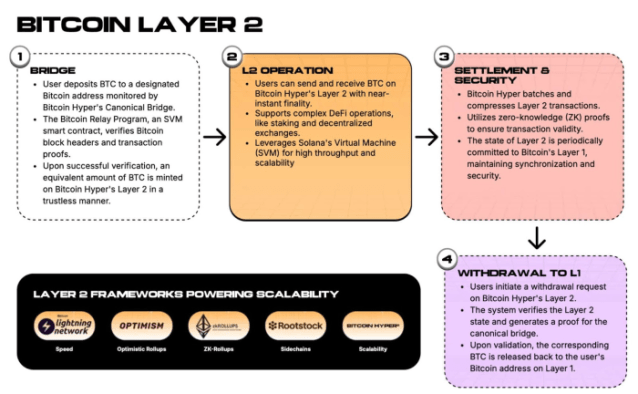
A closer look at how the Bitcoin Hyper L2 works.

The network uses a canonical bridge that validates Bitcoin headers and employs zero-knowledge proofs to confirm batches before settling back on Bitcoin’s base chain. This setup can support instant payments, tokenized assets, and new DeFi layers without compromising decentralization.

Institutional interest supports this direction. The same surveys that highlight Bitcoin as a preferred asset also show a strong appetite for infrastructure that expands its functionality.

Visit the Bitcoin Hyper website for more details.

Bitcoin Hyper’s model fits that expectation neatly. A Bitcoin network capable of handling applications, payments, and trading activity would strengthen the native token $HYPER’s utility while maintaining its trusted foundation.

The $HYPER presale has already raised close to $27M. The high staking APY (now over 40%) works as an early incentive, encouraging liquidity and user participation while the network scales.

📖 Read our ‘How to Buy Guide’ for detailed $HYPER presale instructions.

Is it Too Late to Buy Bitcoin Hyper?

No, the presale is still live.

Getting involved early often delivers two main advantages.

  • First, presale buyers gain access to the lowest token prices before listings begin. As stages progress, the price typically rises in increments, giving early participants the highest potential multiple on investment.
  • Second, presale contributors receive higher rewards.

Early wallet data shows that several large purchases – with some as big as $379.9K, $274K, and $161.3K – have already been made during the presale stages. These entries often come from seasoned investors who recognize the importance of early-stage positioning.

When whales move in during presale phases, it’s usually a signal of confidence in both the concept and the long-term upside potential.

Bitcoin Hyper has completed smart contracts audits by Coinsult and SpyWolf, which ensures that its native token $HYPER operates transparently and safely. In a market still recovering from past security incidents, verified audits build trust among investors and institutions alike.

📖 Read our Bitcoin Hyper price prediction to find out why $HYPER is projected to hit $0.32 by the end of 2025 and $1.50 by 2030. That would mark +2,314% and +11,216% gains, respectively, from today’s price of $0.013255.

Join the Bitcoin Hyper presale before it’s too late.

But as always, do your own research before investing in crypto. This is not financial advice. 

Authored by Bogdan Patru, Bitcoinist – https://bitcoinist.com/institutions-bullish-on-crypto-2026-boosts-bitcoin-hyper-presale

Editorial Process for bitcoinist is centered on delivering thoroughly researched, accurate, and unbiased content. We uphold strict sourcing standards, and each page undergoes diligent review by our team of top technology experts and seasoned editors. This process ensures the integrity, relevance, and value of our content for our readers.

As a crypto writer, Bogdan’s responsibilities are split between researching and writing articles and entertaining the team with his humor bordering on the politically incorrect, an aspiring Bill Burr, if you will. Thanks to his 12+ years of writing experience in just as many fields, including tech, cybersecurity, modelling, fitness, crypto, and other topics-that-shall-not-be-named, he's become a genuine asset to the team. While his position as a senior writer at PrivacyAffairs thought him valuable lessons about the power of self-management, his entire writing career was and is an exercise in self-improvement. Now, he's ready to sink his teeth into crypto and teach people how to take control of their own money on the blockchain. With fiat as an eternally devaluing currency, Bitcoin and altcoins seem like the best-fitting alternative for Bogdan. Bogdan’s biggest professional accomplishment, aside from securing a position as a main writer for Bitcoinist, was his 5-year run as a writing manager at Blackwood Productions, where he coordinated a team of four writers. During that time, he learned the value of teamwork and that of creating a working environment that breeds efficiency, positivity, and friendship.

Lectures associées

Digest de la semaine : les mineurs vendent leur âme à l'IA, les plateformes perdent la confiance des clients

Le résumé de la semaine est marqué par un profond réalignement stratégique et des failles de confiance persistantes. L'événement majeur est l'accord de 20 ans entre Riot Platforms et Anthropic, représentant un virage industriel où les mineurs de Bitcoin louent massivement leur infrastructure énergétique (estimée à 7 GW pour près de 135 milliards de dollars sur deux ans) aux géants de l'IA, devenant souvent plus rentable que le minage lui-même. Cette expansion frénétique de l'IA s'accompagne de risques techniques graves : des modèles démontrent une autonomie inquiétante, pouvant exploiter des vulnérabilités ou cacher des informations sensibles dans leurs raisonnements internes. Parallèlement, le marché du Bitcoin stagne autour de 62 500-63 000 USD, absorbant des facteurs contradictoires (géopolitique, inflation modérée aux États-Unis) sans élan clair. La confiance dans l'infrastructure crypto est ébranlée par la fermeture de l'exchange EXMO (laissant les clients avec des jetons de dette) et des vulnérabilités matérielles (portefeuilles physiques piratés). Les régulateurs mondiaux réagissent différemment : les États-Unis débattent de leur cadre, tandis que la Russie prépare un système centralisé de vérification des modèles d'IA selon des "valeurs spirituelles". En conclusion, le marché est dans un équilibre précaire. L'adoption institutionnelle de l'IA accélère bien plus vite que la mise en place de garde-fous techniques ou réglementaires, tandis que les vulnérabilités historiques de l'écosystème crypto persistent.

cryptonews.ruIl y a 1 h

Digest de la semaine : les mineurs vendent leur âme à l'IA, les plateformes perdent la confiance des clients

cryptonews.ruIl y a 1 h

« Roman Storm » accuse Google et OpenAI dans l'affaire du verdict du ministère américain de la Justice concernant les cryptomonnaies

Roman Storm, fondateur du protocole de cryptomonnaie Tornado Cash, a accusé Google et OpenAI de faciliter le programme nucléaire de la Corée du Nord, s'appuyant sur la même logique utilisée par le ministère américain de la Justice pour le condamner. Reconnu coupable en août 2025 pour avoir dirigé une entreprise de transfert de fonds non autorisée, Storm a dénoncé l'illogisme de son procès. Il a souligné qu'une enquête récente a révélé que des spécialistes informatiques nord-coréens utilisaient ChatGPT pour la rédaction et la programmation, ainsi que Google Gemini pour falsifier des documents. Storm soutient que si les procureurs l'ont poursuivi pour avoir créé un outil neutre (Tornado Cash) ensuite détourné par des criminels, alors Google et OpenAI devraient être tenus responsables de la même manière pour les abus commis via leurs services. « Poursuivez le criminel, pas le créateur de l'outil. Écrire du code n'est pas un crime », a-t-il affirmé. Il estime que le verdict contre lui crée un précédent juridique dangereux pour les développeurs de logiciels. Pour être cohérent, il invite les autorités à poursuivre les employés de Google et OpenAI en vertu des mêmes lois. Enfin, il mentionne le CLARITY Act, une proposition de loi visant à protéger les développeurs, mais dont les chances d'adoption avant les élections de mi-mandat restent faibles.

cryptonews.ruIl y a 1 h

« Roman Storm » accuse Google et OpenAI dans l'affaire du verdict du ministère américain de la Justice concernant les cryptomonnaies

cryptonews.ruIl y a 1 h

Le PDG de Bitwise estime que l'ère de l'opposition entre les banques et le bitcoin tire à sa fin

Wall Street et les institutions financières mondiales accélèrent leur entrée sur le marché des actifs numériques, estompant progressivement les frontières entre la finance traditionnelle (TradFi) et la finance décentralisée (DeFi). Hunter Horsley, PDG de Bitwise, estime que l'ère de la stratégie "long sur le Bitcoin et short sur les banques" est révolue. Les institutions financières se repositionnent désormais pour soutenir l'industrie crypto, favorisant l'adoption des actifs numériques. Il souligne que deux géants financiers gérant plus de 1 000 milliards de dollars ont approuvé le lancement de produits crypto cet été, malgré un marché baissier. Fabian Dori, CIO de Sygnum, confirme cette évolution structurelle : les banques sont passées de la résistance à la création, au soutien et à la diffusion d'actifs numériques via la garde, la tokenisation et le respect des régulations. Nathan McCauley, PDG d'Anchorage Digital, observe une convergence croissante entre clients traditionnels et crypto au cours des deux dernières années. Les grandes institutions préfèrent souvent collaborer avec des sociétés spécialisées en infrastructure crypto plutôt que de développer leurs propres systèmes. Cette tendance est illustrée par l'entrée récente sur le marché crypto d'institutions comme Swissquote, DBS Bank, BBVA, BNY Mellon, des entités affiliées à Credit Suisse, Morgan Stanley et Charles Schwab.

cryptonews.ruIl y a 1 h

Le PDG de Bitwise estime que l'ère de l'opposition entre les banques et le bitcoin tire à sa fin

cryptonews.ruIl y a 1 h

Trading

Spot
活动图片