Feds Demand Five Years for Samourai Wallet Founders: Best Wallet Remains Private

bitcoinistPublié le 2025-11-04Dernière mise à jour le 2025-11-04

Résumé

Quick Facts: 1️⃣ Prosecutors want the full five-year prison sentence for Samourai Wallet's founders after they pleaded guilty to an...

Trusted Editorial content, reviewed by leading industry experts and seasoned editors. Ad Disclosure

Quick Facts:

1️⃣ Prosecutors want the full five-year prison sentence for Samourai Wallet’s founders after they pleaded guilty to an illegal money-transmitting charge.

2️⃣ A key piece of evidence is an internal message where a founder called their mixing feature ‘money laundering for Bitcoin.’

3️⃣ Best Wallet remains a private and secure multi-chain wallet for all your crypto needs.

Get ready for a tense week in the world of crypto law. The co-founders of the privacy-focused Samourai Wallet, Keonne Rodrigues and William Lonergan Hill, are due in court for sentencing, and US prosecutors are demanding the maximum five years in prison for both men.

The government isn’t pulling any punches, painting Rodriguez and Hill as anything but simple software developers.

In a new filing, prosecutors argue that the pair were basically running a digital ‘money laundering for Bitcoin’ service, actively encouraging criminals to use the platform to hide their dirty money. They’re definitely not buying the defense’s claim that they were just bystanders.

Here’s a breakdown:

  • The Crime: The duo pleaded guilty back in July to conspiracy to operate an unlicensed money-transmitting business. This was strategic, as it let them avoid three more serious charges, including money laundering, which carries a 20-year sentence.
  • The Stakes: They face up to five years on the charge they admitted to. Prosecutors say that over $237M in criminal cash, from drug cartels, darknet markets like Silk Road, and even sanctioned entities, flowed through Samourai’s mixing service.
  • The Evidence: The government’s smoking gun? Internal messages in which one of the founders allegedly referred to the mixing feature as ‘money laundering for Bitcoin’ and even promoted the tool on dark web forums as a way to ‘clean dirty Bitcoin.’

While the court’s probation office suggested a shorter 42-month sentence, the prosecutors are determined to make a statement by getting the full five-year term.

This case is seen as a huge test for the crypto community, raising major alarms for developers and privacy advocates who worry that simply creating tools for financial anonymity could now be seen as a crime.

It’s a high-profile showdown that’s putting the entire concept of crypto privacy under intense scrutiny. The legal crackdown on crypto mixers like Samourai Wallet underscores a fundamental tension in the industry: the clash between financial anonymity and regulatory compliance.

As the spotlight shifts away from privacy-focused tools targeted by law enforcement, the market is increasingly looking toward all-in-one, multi-chain wallets that offer robust features alongside transparent, audited security. One player standing out is Best Wallet.

Best Wallet: The New Guard of Secure Crypto Management

Unlike the old-guard, which often focused on singular aspects like deep anonymity (as Samourai did), Best Wallet is positioning itself as the gold standard for secure, non-custodial, multi-chain asset management.

It’s an all-in-one platform that’s racked up a huge user base by offering features that go far beyond simple storage, making it a powerful and secure alternative in the wake of all these regulatory crackdowns.

What truly sets Best Wallet apart is its next-level security and commitment to making crypto accessible without sacrificing safety. It ditches the biggest point of failure for most users, the easily lost or phished seed phrase, by using Fireblocks’ secure multi-party computation technology.
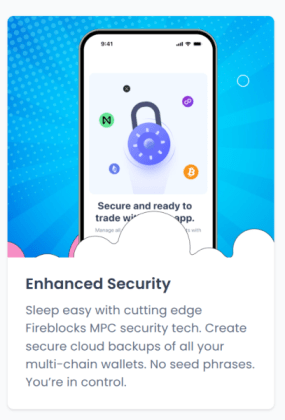
Infographic explaining the security features of Best Wallet.

This kind of military-grade security, combined with features like biometric login and advanced anti-fraud checks, gives you real peace of mind.

On the functionality side, the wallet is a hub for everything: you can manage, swap, and trade assets across six blockchains, including Bitcoin, Ethereum, and Solana. And the team has plans to expand this to over 60 blockchains.

Plus, its integrated DEX aggregator automatically scouts hundreds of exchanges to guarantee you get the best price and lowest fees on every single trade.

Best Wallet is built for the modern crypto user who needs speed, security, and smart trading all in one place. It’s no surprise it’s at the number one spot on our list of the best crypto wallets.

$BEST: The Fuel Behind Best Wallet

The entire Best Wallet ecosystem is fueled by its native asset, Best Wallet Token ($BEST), which is designed to be much more than just a typical crypto coin. This token is built on utility and access, and it’s why the ongoing presale has already raised a massive amount – close to $17M.

Holding $BEST essentially means a VIP pass to the entire ecosystem. The most direct benefit is a significant reduction in transaction fees for swaps and trades made within the wallet. It’s one of the main reasons our experts see $BEST potentially reaching $0.072 by the end of 2025.

But the real game-changer is the exclusive early access to the Upcoming Tokens launchpad. This allows you to get in on the top high-potential crypto presales through a vetted, secure channel, eliminating the risk of falling for scam links.
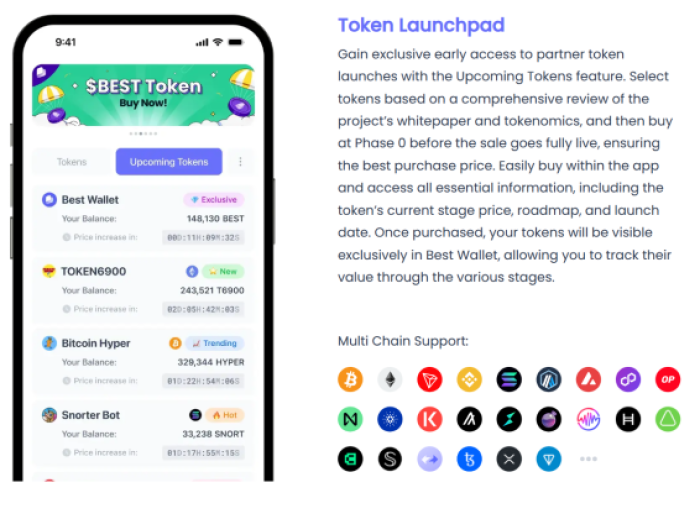
Token Launchpad explanation and the planned roll out for additional blockchains.

As the team continues to build out its roadmap, the utility will grow, with plans to integrate $BEST with a future crypto debit card for reduced spending fees, enhanced staking rewards, and full governance rights over the platform.

Time is running out, though, if you want to join the presale and secure your $BEST at its current early-bird price of $0.025895, with 78% staking rewards. The Best Wallet team has announced that the presale will end on November 28 – so the clock is ticking.

Remember, this is not intended as financial advice, and you should always do your own research before making any investments.

Authored by Ben Wallis, Bitcoinist – https://bitcoinist.com/samourai-wallet-devs-crypto-laundering-charges-best-wallet-stays-private/

Editorial Process for bitcoinist is centered on delivering thoroughly researched, accurate, and unbiased content. We uphold strict sourcing standards, and each page undergoes diligent review by our team of top technology experts and seasoned editors. This process ensures the integrity, relevance, and value of our content for our readers.

Ben is a freelance writer specializing in crypto developments (mainly altcoins) and the intricate ways global economics shape the digital asset space. His B.Ed. in Education provides a unique foundation for his writing, enabling him to distill complex crypto concepts and market shifts into clear, digestible insights. This skill is key to helping readers adapt and apply their understanding to the ever-evolving world of crypto investment. Passionate about making crypto accessible, Ben crafts content designed to educate a broad audience, from current market events to the essential foundational knowledge that underpins them. His goal is to empower readers through understanding. When he’s not immersed in crypto analysis and breaking down complex topics, Ben is an avid Pokémon fan and enjoys all things Disney.

Lectures associées

DeepSeek baisse ses prix de façon permanente, mais Liang Wenfeng ne veut pas devenir le « bodhisattva cybernétique »

DeepSeek a annoncé la pérennisation d'une réduction de 75 % sur son API V4-Pro, abaissant significativement ses tarifs par token. Cette décision intervient dans un contexte où la plupart des grands acteurs de l'IA, comme OpenAI, Anthropic et Google, augmentent leurs prix en raison d'une demande croissante et de contraintes sur les ressources de calcul. Bien que salué comme un « bodhisattva cybernétique », le fondateur Liang Wenfeng est avant tout un entrepreneur. Son choix stratégique de l'open-source et des prix bas repose sur des avantages structurels profonds : des talents en IA relativement moins chers, l'utilisation de puces chinoises comme l'Ascend et, surtout, un accès à une énergie beaucoup moins chère. La Chine bénéficie de coûts électriques industriels bien inférieurs à ceux des États-Unis ou de l'Europe, ce qui réduit considérablement le coût opérationnel principal des grands modèles. Cette compétitivité par les coûts permet à DeepSeek d'offrir une alternative viable pour de nombreuses applications professionnelles qui n'exigent pas nécessairement le modèle le plus performant, mais plutôt un rapport qualité-prix et une stabilité optimaux. Alors que l'IA devient plus chère ailleurs, la proposition de valeur de DeepSeek se renforce, positionnant l'entreprise comme un acteur clé capable d'influencer les prix du marché mondial de l'IA.

marsbitIl y a 4 h

DeepSeek baisse ses prix de façon permanente, mais Liang Wenfeng ne veut pas devenir le « bodhisattva cybernétique »

marsbitIl y a 4 h

Le voile de Mythos, le levier d'Anthropic pour soulever des billions

Selon des rapports, Anthropic finaliserait une levée de fonds d'environ 300 milliards de dollars, portant sa valorisation à plus de 9000 milliards de dollars. Malgré la possession de son propre modèle Gemini, Google investirait massivement dans Anthropic, visant moins le modèle que le positionnement stratégique. L'analyse pointe la campagne de communication d'Anthropic autour de son modèle non publié "Mythos" et du projet de cybersécurité "Glasswing". Le projet prétend avoir détecté des milliers de vulnérabilités critiques, mais manque de références comparatives. En présentant la non-publication de Mythos comme une mesure de responsabilité, Anthropic cultive une aura de puissance mystérieuse et non vérifiable. Le récit gagne en crédibilité lorsque la Maison Blanche, après avoir évoqué des risques liés à Anthropic, serait en pourparlers pour permettre à des agences comme la NSA d'utiliser Claude, potentiellement Mythos. Ce retournement suggère une technologie perçue comme indispensable, offrant une validation puissante sans qu'Anthropic n'ait à le proclamer. Ces récits alimentent l'ascension financière. Anthropic annonce un chiffre d'affaires annualisé dépassant 500 milliards de dollars, tiré par les API entreprises et Claude Code. Les investissements de Google agissent comme un signal fort pour les autres capitaux. L'article conclut que le modèle économique d'Anthropic réside dans sa capacité à transformer une capacité non vérifiable (Mythos) et des partenariats non confirmés en un récit convaincant, capable de séduire les marchés, les gouvernements et les investisseurs, et de le monétiser à une échelle immense.

marsbitIl y a 6 h

Le voile de Mythos, le levier d'Anthropic pour soulever des billions

marsbitIl y a 6 h

Réglementation des Stablecoins : La FDIC annonce de nouvelles règles proposées de lutte contre le blanchiment d'argent pour les émetteurs

Alors que les régulations sur les cryptomonnaies se précisent aux États-Unis, la FDIC a proposé de nouvelles règles pour étendre les exigences du Bank Secrecy Act (BSA) et des sanctions économiques aux Émetteurs Autorisés de Stablecoins de Paiement (PPSI) qu'elle supervise. Cette proposition vise à intégrer ces acteurs du secteur des actifs numériques dans le cadre de conformité qui régit le secteur bancaire traditionnel. Le projet de règle soumettrait les PPSI aux obligations de lutte contre le blanchiment d'argent et le financement du terrorisme (AML/CFT) ainsi qu'aux programmes de sanctions. Ils seraient formellement classés comme institutions financières au sens du BSA, les obligeant à mettre en place des programmes de conformité complets, incluant le contrôle interne, un responsable désigné, la formation du personnel, des tests indépendants, l'identification des clients et le signalement des activités suspectes. Cette initiative fait suite à une proposition antérieure de la FDIC datant d'avril 2026, qui établissait des normes prudentielles pour les PPSI. La période de consultation publique sur cette nouvelle règle devrait durer jusqu'au 9 juin 2026, avec une règle finale annoncée plus tard dans l'année. La FDIC estime qu'entre cinq et trente PPSI pourraient être approuvés dans les premières années suivant l'adoption de la loi.

bitcoinistIl y a 6 h

Réglementation des Stablecoins : La FDIC annonce de nouvelles règles proposées de lutte contre le blanchiment d'argent pour les émetteurs

bitcoinistIl y a 6 h

Trading

Spot
Futures
活动图片