Key Takeaways
What is the main concern raised about Trump’s crypto ventures?
Trump’s World Liberty Financial has reportedly sold tokens to entities linked to North Korea, Iran, and sanctioned money-laundering platforms, raising national security and regulatory concerns.
How much has Trump personally earned from World Liberty Financial?
Over $57 million, with crypto assets now comprising 73% of his net worth.
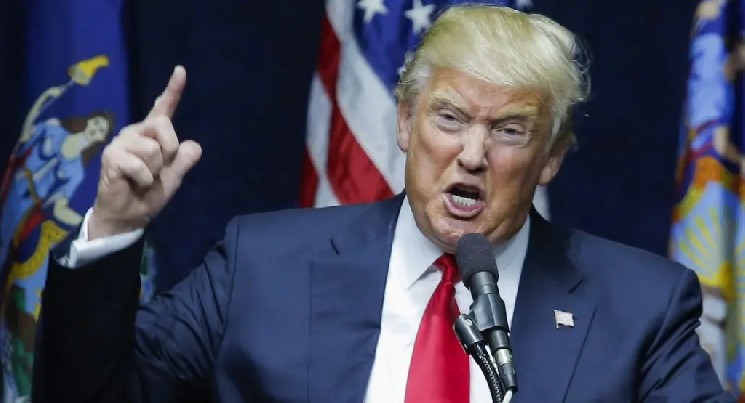
Despite his well-known pro-crypto stance, both in the U.S. and globally, President Donald Trump’s involvement in cryptocurrency ventures has sparked scrutiny.
A new report from government watchdog Accountable.US, titled “American Sell-Out,” alleges that Trump’s World Liberty Financial crypto initiative sold tokens to entities linked to North Korea, Iran, and sanctioned money-laundering platforms.
This has raised serious national security concerns as Trump’s World Liberty Financial has generated over $1 billion in personal wealth while the Trump family expands aggressively across the digital asset space.
Transaction patterns raising red flags
Specific transactions highlighted in the report illustrate potential exposure to sanctioned entities and high-risk actors.
For instance, on Inauguration Day, a trader known as Shryder.eth purchased $10,000 worth of World Liberty Financial [WLFI] tokens.
This same trader conducted 55 transactions with a Treasury-sanctioned North Korean Lazarus Group wallet.
Adding to that, in October 2024, World Liberty Financial sold nearly 3,500 WLFI tokens to a user who had previously deposited over $26,000 on Iran’s largest crypto exchange, NoBitex.ir, a platform known for facilitating sanctions violations.
The same user also controls a pro-Iran X.com account, posting threats such as,
“U.S. warships will sleep on the ocean floor.”
The report further identifies user 0x9009, who has bought over 10,000 WLFI tokens since February 2025.
This individual also used the A7A5 crypto token, a Russian ruble-backed sanctions evasion tool sanctioned by the U.S. in August 2025.
Moreover, World Liberty Financial sold WLFI tokens to at least 62 users who utilized TornadoCash, a crypto mixing service linked to laundering over $1 billion in illicit assets, including those associated with the Lazarus Group.
Although TornadoCash was sanctioned by the Biden administration in 2022, the Trump administration lifted those sanctions in March 2025.
Steps taken by the firm
Yet, despite these risks, the company only disclosed blacklisting five accounts with “high-risk exposure” on the 5th of September, months after controversial token sales occurred.
Notably, Shryder.eth’s wallet was blacklisted only on the 31st of August, highlighting a delayed response amid growing scrutiny of Trump’s crypto dealings.
Financial disclosures show Trump earned over $57 million from World Liberty Financial, with crypto now 73% of his net worth.
The family’s digital empire grew from 60 to 185 Bitcoin [BTC] treasury companies in a year, generating billions, mainly via foreign exchanges.
In fact, recently Senator Elizabeth Warren too had raised concerns over Trump’s growing influence in crypto, questioning SEC oversight of ETFs launched by his media company.
What’s more?
Adding to the fray, Democratic lawmakers also increased their oversight, requesting SARs since 2023 concerning World Liberty Financial and the Trump token, signaling heightened scrutiny of Trump’s crypto ventures.
The letter had noted,
“We write regarding the potential misuse of certain politically oriented fundraising ventures for fraudulent, corrupt, or other illegal purposes.”
This coincided with TRUMP trading at $8.42 after a drop of 0.36% in the past 24 hours, as per CoinMarketCap.
In fact, AMBCrypto also pointed to the Trump family’s recent foray into crypto, which added nearly $1.3 billion to their fortune.
The meteoric rise of these crypto ventures underscores both the opportunity and volatility inherent in the Trump-linked digital asset ecosystem, marking a new chapter in the family’s financial empire.