Best Altcoins to Buy as Grayscale Launches GDLC, the First Index-Based Spot Crypto ETF

bitcoinistPublié le 2025-09-20Dernière mise à jour le 2025-09-20

Résumé

The arrival of the new SEC Chair Paul Atkins ushered in a never-before-seen wave of optimism in the crypto community,...

Trusted Editorial content, reviewed by leading industry experts and seasoned editors. Ad Disclosure

The arrival of the new SEC Chair Paul Atkins ushered in a never-before-seen wave of optimism in the crypto community, and for good reason.

Atkins publicly voiced his commitment to improving and supporting crypto infrastructure. He even said he wants to assist Donald Trump in making the U.S. the crypto capital of the world.

The latest example of this has been the approval of Grayscale’s mixed crypto exchange-traded product, formerly known as the Grayscale CoinDesk Crypto 5 ETF, which trades under the ticker GDLC.

Read on as we unpack this in detail, discussing how it opens up an entirely new option for crypto investors. We’ll also point you toward the best altcoins to buy now.

Grayscale’s GDLC Simplifies Crypto Investing

This product is essentially a one-stop shop for crypto investors, with Bitcoin accounting for about 73% of the fund’s weight, followed by Ethereum at 17%.

That’s pretty much what the standard Bitcoin textbook says: if you’re creating a strong long-term portfolio, go heavy on Bitcoin, followed by Ethereum.

For a long time, investors have been demanding a mutual-fund-like product, similar to the stock market. Something that gives them a simple, centralized way to invest in crypto without going through the entire process of setting up cold or hot wallets, buying each individual currency, calculating fees, and constantly adjusting proportions.

That was too complex and arguably one of the biggest deterrents for new crypto users. But with Grayscale’s new launch, that barrier is effectively gone.

‘This launch is more than just another ETP – it’s a reflection of our decade-long commitment to being first, moving fast, and giving investors transparent exposure to the crypto ecosystem,’ said Grayscale CEO Peter Mintzberg.

Even better, this index will automatically be rebalanced every quarter to ensure alignment with the evolving market leadership in crypto.

Here’s the kicker: with crypto gaining mainstream legitimacy at breakneck pace, your portfolio needs to have low-cap, high-upside gems to capitalize on the upcoming bull run.

Here are our top 3 picks for the best crypto to buy right now.

1. Bitcoin Hyper ($HYPER) – Layer 2 Bitcoin Solution for Solana-Like Speed and Scalability

Bitcoin Hyper ($HYPER) is the first Layer 2 solution built for the Bitcoin blockchain, aiming to solve the issues of speed and scalability.

As of now, Bitcoin can only process 7 transactions per second, leading to slow confirmations and high costs. Bitcoin Hyper leverages Solana Virtual Machine (SVM) integration, which enables parallel execution.

This means transactions on $HYPER can be processed simultaneously, as long as they’re unrelated. The result is faster processing, lower fees, and significantly higher throughput.

Another major limitation of Bitcoin is that it isn’t compatible with Web3 and DeFi applications, causing it to miss out on the explosive growth of decentralized finance and other blockchain-based innovations.

Bitcoin Hyper's layer-2 ecosystem explained, step by step.

With $HYPER’s SVM integration, developers can now build dApps and execute smart contracts without compromising Bitcoin’s security.

Adding to this is a decentralized, non-custodial canonical bridge that serves as a user-friendly portal to $HYPER’s Web3 environment:

  • Lock in your Layer 1 Bitcoin with the bridge.
  • Receive an equivalent amount of Layer 2 $BTC tokens.
  • Use these L2 tokens for staking, lending, swapping, NFTs, DAOs, and DeFi applications.
  • Once done, redeem your original L1 $BTC by sending the L2 tokens back through the bridge.

In short, $HYPER provides a fast utility and compatibility lane to an otherwise limited Bitcoin, which explains why its presale has been such a massive success.

The project has already raised over $17.16M, including $418K from whales in just the last 19 days. Here’s how to buy Bitcoin Hyper.

Currently, 1 $HYPER is priced at only $0.012945. According to our $HYPER price prediction, the token could reach $0.32 before year-end – a staggering 2,300% return.

Visit Bitcoin Hyper’s official website for more information about this revolutionary Bitcoin-themed altcoin.

2. Snorter Token ($SNORT) – Telegram-Based Trading Bot for Sniping Meme Coins

Snorter Token ($SNORT) is the official cryptocurrency of the Snorter Telegram trading bot, built specifically for small and retail Solana meme coin traders.

If you’ve been in the markets long enough, you probably know that liquidity in hot new meme coins often gets swallowed up by large players with access to sophisticated trading algorithms and tools, leaving little to nothing for smaller traders.

Snorter Bot flips the script on these whales. It lets you place buy/sell limit and stop orders well in advance, and as soon as liquidity is pumped into an asset, your trades are executed in the blink of an eye.
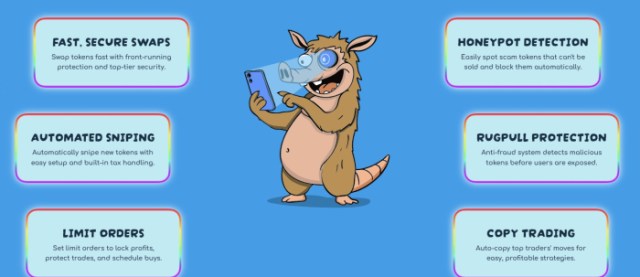
Snorter Bot features.

Using the bot is just as easy as chatting with someone on Telegram. The best part? It all happens in a secure environment.

  • Snorter uses MEV-resistant layers to protect against scams like honeypots and rug pulls.
  • Furthermore, none of the transactions you enter through the bot are sent to the mempool, keeping you hidden from potential sandwich attacks.
On top of that, the bot allows you to copy trades from successful traders on the blockchain. This gives you a strong starting point – earn profits while learning the ropes and developing your own strategy.

Currently in presale, $SNORT has already raised over $4M from early investors, with each token priced at just $0.1049.

According to our $SNORT price prediction, a $100 investment today could turn into $900 by the end of 2025. Here’s a detailed guide on how to buy $SNORT before the next price hike.

Check out Snorter Token’s official website to learn more about the benefits of buying $SNORT – including no daily sniping limits, advanced analytics, and reduced fees.

3. MemeCore ($M) – Viral Altcoin Aiming to Transform Meme Coins Into Sustainable Digital Assets

MemeCore ($M) is a Layer 1 blockchain that seeks to transform meme coins from purely hype-driven, speculative tokens into fundamentally robust assets supported by long-term cultural and economic forces, along with strong community backing.

The project operates on a Proof-of-Meme (PoM) consensus mechanism, which emphasizes that every contribution plays a crucial role in sustaining a blockchain ecosystem.

MemeCore rewards all participants, be it traders, stakers, creators, or validators, ensuring that each effort is recognized and contributes to a thriving participatory economy.

To facilitate this, MemeCore features an on-chain reward pool called the Meme Vault, a smart contract used to distribute contribution rewards. The native $M token serves as the backbone of the ecosystem, powering gas fees, staking, and rewards.
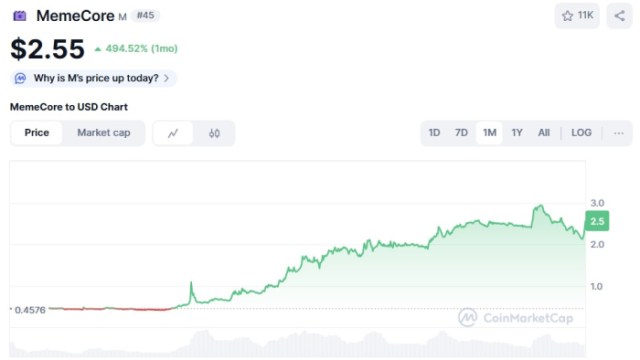
MemeCore ($M) price chart CoinMarketCap

Over the past month, $M has surged more than 580%, including a 10% gain in just the past 24 hours. The token reached a new all-time high of $2.96 on September 18 and is currently trading around $2.55.

It has established strong support levels at $2.36 and $1.82, so it’s likely we’ll see a brief retest before resuming its push toward new highs.

Recap: With crypto quickly climbing the legitimacy ladder – the latest example being Grayscale’s GDLC launch – now’s the perfect time to buy low-cap coins like Bitcoin Hyper ($HYPER), Snorter Token ($SNORT), and MemeCore ($M).

Disclaimer: Crypto investments are inherently risky. This article is not financial advice, so kindly do your own research before investing.

Authored by Krishi Chowdhary, Bitcoinist — https://bitcoinist.com/best-altcoins-to-buy-as-grayscale-launches-first-index-based-spot-crypto-etf

Editorial Process for bitcoinist is centered on delivering thoroughly researched, accurate, and unbiased content. We uphold strict sourcing standards, and each page undergoes diligent review by our team of top technology experts and seasoned editors. This process ensures the integrity, relevance, and value of our content for our readers.

As a crypto writer, Krishi splits his time between decoding the chaos of the markets and writing about it in a way that doesn’t put you to sleep. He’s been at it for nearly two years in the crypto trenches. Yes, he regrets missing the magnificent rallies that came before that (who doesn’t!), but he’s more than ready to put his money where his words are. Before diving headfirst into crypto, Krishi spent over five years writing for some of the biggest names in tech, including TechRadar, Tom’s Guide, and PC Gaming, covering everything from gadgets and cybersecurity to gaming and software. When he’s not scouring and writing about the latest happenings in crypto, Krishi trades the forex market while keeping crypto in his long-term HODL plans. He’s a Bitcoin believer, though he never lets that bias creep into his writing.

Lectures associées

Des groupes catholiques et de l'application de la loi mettent en garde contre la loi CLARITY qui pourrait affaiblir les garde-fous contre la criminalité liée aux crypto-actifs

Une coalition de dirigeants catholiques, de groupes liés à l'application de la loi et de défenseurs de la lutte contre la traite des êtres humains met en garde contre le projet de loi CLARITY Act. Ils estiment qu'il pourrait affaiblir les garde-fous utilisés pour lutter contre la criminalité facilitée par les crypto-monnaies. Leurs critiques portent principalement sur des dispositions qui protégeraient les développeurs de logiciels non-custodiaux d'être assimilés à des transmetteurs de fonds. Ce débat soulève une question centrale de la régulation des crypto-actifs : comment distinguer un logiciel neutre d'une intermédiation financière ? Les partisans des crypto-monnaies soutiennent que les développeurs publiant du code non-custodial ne devraient pas être régulés comme des plateformes d'échange. Les critiques, quant à eux, craignent que des exemptions trop larges ne rendent plus difficile le suivi des financements illicites. Le logiciel non-custodial est au cœur de la finance décentralisée (DeFi), permettant des transactions sans qu'une entreprise ne contrôle les fonds. Si cette architecture est un pilier de la valeur des crypto-actifs, elle pose aussi des défis pour les autorités lorsque des acteurs malveillants l'utilisent. L'opposition rencontrée par le CLARITY Act signifie que ses partisans devront répondre aux préoccupations concernant d'éventuelles lacunes favorisant la finance illicite. Cela pourrait conduire à des amendements, des protections plus limitées ou des obligations de déclaration supplémentaires. Pour l'industrie, l'enjeu est de taille : des règles plus claires pourraient stimuler les investissements, mais si le projet est perçu comme affaiblissant la lutte contre le crime, son adoption politique deviendra plus difficile.

bitcoinistIl y a 4 h

Des groupes catholiques et de l'application de la loi mettent en garde contre la loi CLARITY qui pourrait affaiblir les garde-fous contre la criminalité liée aux crypto-actifs

bitcoinistIl y a 4 h

L'histoire complète de Blockstream, la licorne de la cryptographie, profondément impliquée dans de graves fraudes

Depuis le début de l'année, Blockstream, la société cofondée par le pionnier du Bitcoin Adam Back, est sous le feu des critiques. Une enquête publiée début juin par NatInfoSec accuse la société d'avoir potentiellement levé des milliards de dollars via des billets de mine (BMN) liés à des revenus miniers, mais soulève des doutes sur la réalité des fermes de minage et de la puissance de calcul sous-jacente, évoquant des caractéristiques de type schéma de Ponzi. Les principaux points d'accusation sont les suivants : 1. **Capacité de minage et de paiement douteuses** : Pour honorer ses obligations, Blockstream aurait besoin d'une puissance de calcul bien supérieure (20-45 EH/s) à celle affichée sur son tableau de bord (15 EH/s). Aucune preuve publique (connexions électriques, importations de matériel, parts de pool minier) ne corrobore l'existence d'une infrastructure à cette échelle. Les clauses contractuelles permettraient de plus d'utiliser des bitcoins provenant de sources non divulguées pour les paiements. 2. **Rendements élevés et risque** : Les billets offriraient des rendements fixes allant jusqu'à environ 20% par an, ce qui est considéré comme très élevé et difficile à justifier dans le secteur cyclique du minage de Bitcoin. 3. **Antécédents et divulgation concernant Chris Cook** : Christopher William Cook, ancien responsable des opérations minières de Blockstream et actuel PDG d'Exacore (une entité scindée), a été condamné en 2008 pour fraude postale. Ce passé judiciaire n'aurait pas été divulgué dans les documents d'offre des BMN. Des allégations portent également sur des déclarations trompeuses concernant son expérience professionnelle. 4. **Implications potentielles pour BSTR** : L'enquête soulève des questions sur l'entreprise Bitcoin Standard Treasury (BSTR), liée à Adam Back, qui prévoit une introduction en bourse via SPAC, s'interrogeant sur la divulgation des risques liés aux BMN et sur d'éventuels conflits d'intérêts dans sa structure. La recherche BitMEX a apporté des nuances, confirmant probablement les antécédents de Cook et s'interrogeant sur les rendements, mais estimant que d'autres accusations manquaient de preuves ou étaient trompeuses, notamment concernant la séparation juridique entre les BMN et BSTR. Le débat dans la communauté s'est concentré sur la **vérifiabilité** : les investisseurs et observateurs peuvent-ils indépendamment vérifier la puissance de calcul, les revenus miniers réels et la source des paiements ? Malgré les prises de position divergentes, des questions cruciales sur les BMN demeurent sans réponse claire : leur taille réelle et leurs limites de responsabilité, l'adéquation entre la puissance minière et les obligations, l'origine des rendements élevés, la traçabilité des paiements en BTC, et le rôle exact de Chris Cook. Blockstream n'a pas encore publié de réponse systématique à ces allégations.

marsbitIl y a 8 h

L'histoire complète de Blockstream, la licorne de la cryptographie, profondément impliquée dans de graves fraudes

marsbitIl y a 8 h

Le collectif Reddit qui avait "short-squeezé" Wall Street a-t-il trouvé le prochain GME ?

En juin 2024, l'action de Wendy's (WEN) a connu une hausse significative après la diffusion d'un post populaire sur le forum Reddit r/wallstreetbets intitulé "We need to save Wendy's". Cette dynamique rappelle le phénomène des meme stocks, comme celui de GameStop (GME) en 2021. Le post, jouant sur un running gag de la communauté (le fait de devoir travailler chez Wendy's après de mauvais trades), a généré un fort engouement retail, se traduisant par un volume d'échanges anormalement élevé et une hausse de prix. WEN présente certains ingrédients classiques d'un "short squeeze" potentiel : un taux de ventes à découvert élevé (environ 32% des actions en circulation) et une attention communautaire soutenue. Cependant, l'article nuance fortement la comparaison avec le squeeze historique de GME. La structure est jugée moins extrême : le taux de découvert est significatif mais loin des niveaux de GME (qui avait dépassé 100%), et il manque pour l'instant des preuves solides d'un "gamma squeeze" auto-entrenenu via les options. L'élan actuel semble davantage être un "meme pop" à court terme, alimenté par l'attention et un faible prix de l'action, plutôt qu'un mouvement de fond structurel. L'histoire montre que Wendy's, par sa notoriété et son lien avec la culture WSB, est propice à ce genre de vague, mais que la volatilité qui en découle est souvent temporaire. La durabilité de la hausse dépendra de la persistance de la discussion en ligne, des volumes d'échanges sur plusieurs jours et surtout de l'activité sur le marché des options, qui pourrait, ou non, amplifier mécaniquement la tendance.

marsbitIl y a 8 h

Le collectif Reddit qui avait "short-squeezé" Wall Street a-t-il trouvé le prochain GME ?

marsbitIl y a 8 h

Trading

Spot
Futures
活动图片