Ripple Flamed By Caitlin Long: ‘XRP Is Doomed, Banks Don’t Trust It’

bitcoinistPublié le 2025-08-06Dernière mise à jour le 2025-08-07

Résumé

Caitlin Long, founder and CEO of Custodia Bank, delivered one of the harshest assessments yet of Ripple and the XRP...

Trusted Editorial content, reviewed by leading industry experts and seasoned editors. Ad Disclosure

Caitlin Long, founder and CEO of Custodia Bank, delivered one of the harshest assessments yet of Ripple and the XRP ecosystem in a recent episode of the Gold Goats ‘n Guns podcast, calling into question the project’s credibility, tokenomics, and long-term viability in institutional finance. In a sweeping critique, Long stated bluntly: “It’s not going to take over. If it were going to take over, it would have taken over a long time ago.”

Caitlin Long Slams Ripple And XRP

The conversation began with a reference to growing speculation that Ripple might be among the blockchain networks “blessed” by regulators to handle tokenized financial infrastructure. But Long pushed back hard on that narrative, saying the idea “overstates how important that network is.”

According to Long, the core issue lies in Ripple’s structural legacy. “The banks have always been suspicious of it,” she said, citing what she described as the project’s centralized architecture and flawed tokenomics. “It is a centralized network and the tokenomics are backwards.” She argued that the XRP supply model — rooted in a massive pre-mine and upfront fundraising — has permanently damaged institutional trust. “The people who extracted money up front are never going to be trusted because everybody is going to look and think that anything they do is an exit scam to try to dump on retail.”

For Long, the contrast with Bitcoin and Ethereum is stark. “The most effective tokenization platforms are the ones where there was no money up front or very little money up front,” she explained. “That’s Bitcoin and Ethereum.”

Long also interpreted Ripple’s recent pivot — with the company now launching its own regulated stablecoin — as a tacit admission of failure. “Instead of trying to sell that into the banking industry, they’re getting their own regulated financial institutions and trying to issue a stablecoin,” she said. “That’s kind of, in some ways, an admission that the base layer blockchain didn’t get the adoption they were looking for.”

Her comments come amid Ripple’s continued push into institutional markets, including efforts to obtain a US bank charter and launch a US dollar stablecoin. While these moves have been celebrated in some circles as signs of maturity and strategic adaptation, Long framed them as a fallback, noting that the original promise — to become a foundational layer for interbank settlement — had clearly not materialized. “The base layer network is not going to become the base layer of replacing SWIFT,” she said.

She also pointed to the legal and regulatory drag Ripple faced over the past several years, including the SEC’s long-running lawsuit against the company for allegedly conducting an unregistered securities offering. “That hamstrung them,” she said, while acknowledging that Ripple wasn’t alone in suffering under the Biden administration’s broader crackdown on crypto: “It didn’t hurt Ripple as much as the Fed hurt us… Everybody who was targeted by the Biden administration was hurt to varying degrees.”

When asked what network the US Treasury is most likely to choose for tokenizing US Treasuries, Long was unequivocal: “They’re not going to use Ripple. They’re going to use Ethereum. They may use Bitcoin, but the Bitcoin layer twos are not mature enough for something like that.” She cited Ethereum’s technical maturity and infrastructure readiness as the decisive factors.

XRP Community Reacts

The backlash from the XRP community was swift and furious. Prominent community figure Crypto Eri called the remarks “ugly tribalism,” accusing Long of conflating Ripple with the XRP Ledger, and failing to distinguish between a centralized company and a decentralized protocol. “The entire blockchain community should be deeply disappointed,” she wrote.

Digital Asset Investor, another well-known XRP supporter, tagged Ripple executives directly, suggesting the company was still on track to achieve regulatory breakthroughs. Ashley Prosper went even further, alleging that Long’s criticism may stem from frustration over Custodia Bank’s lack of a Federal Reserve master account: “Sounds like Caitlin Long is mad that Ripple will get their Fed master account before Custodia Bank.”

But Long’s criticism was not offhanded nor casual — it was pointed and rooted in her long-standing perspective on what makes blockchain infrastructure bank-grade. For her, trust, decentralization, and long-term neutrality are prerequisites — and XRP, in her view, fails on all three.

“Ripple’s been at this longer than almost anybody else and they haven’t made a lot of progress,” Long concluded. “It’s really that simple.”

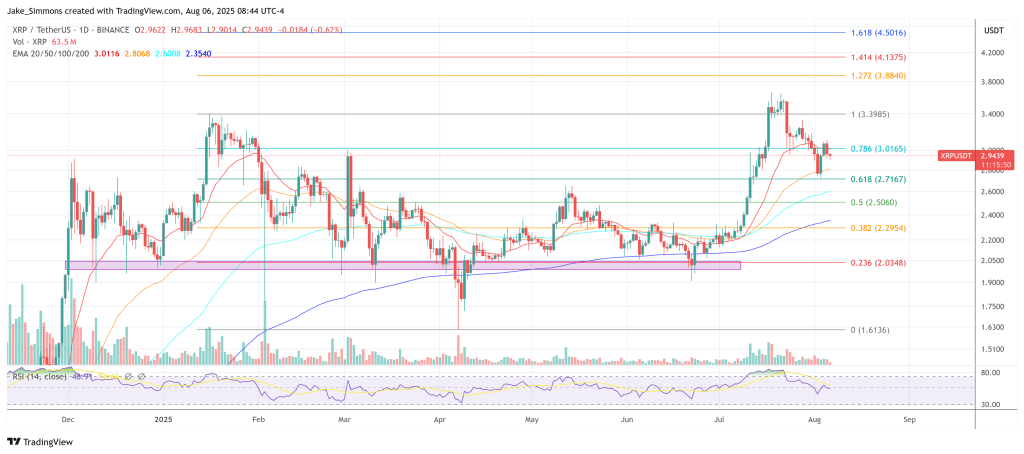
At press time, XRP traded at $2.94.
XRP price
XRP price, 1-day chart | Source: XRPUSDT on TradingView.com
Featured image created with DALL.E, chart from TradingView.com
Editorial Process for bitcoinist is centered on delivering thoroughly researched, accurate, and unbiased content. We uphold strict sourcing standards, and each page undergoes diligent review by our team of top technology experts and seasoned editors. This process ensures the integrity, relevance, and value of our content for our readers.

Jake Simmons has been a Bitcoin enthusiast since 2016. Ever since he heard about Bitcoin, he has been studying the topic every day and trying to share his knowledge with others. His goal is to contribute to Bitcoin's financial revolution, which will replace the fiat money system. Besides BTC and crypto, Jake studied Business Informatics at a university. After graduation in 2017, he has been working in the blockchain and crypto sector. You can follow Jake on Twitter at @realJakeSimmons.

Cryptos en tendance

Lectures associées

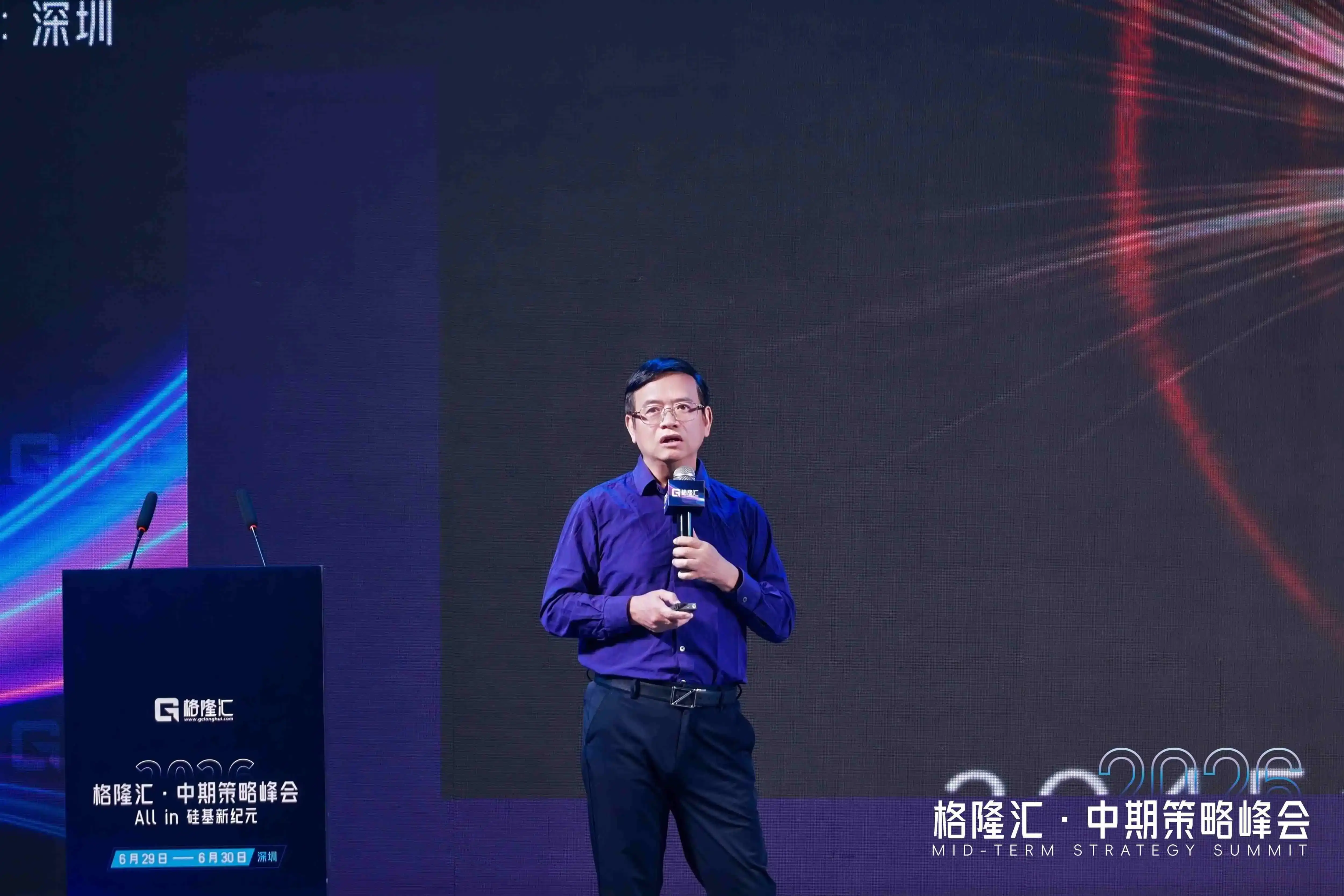
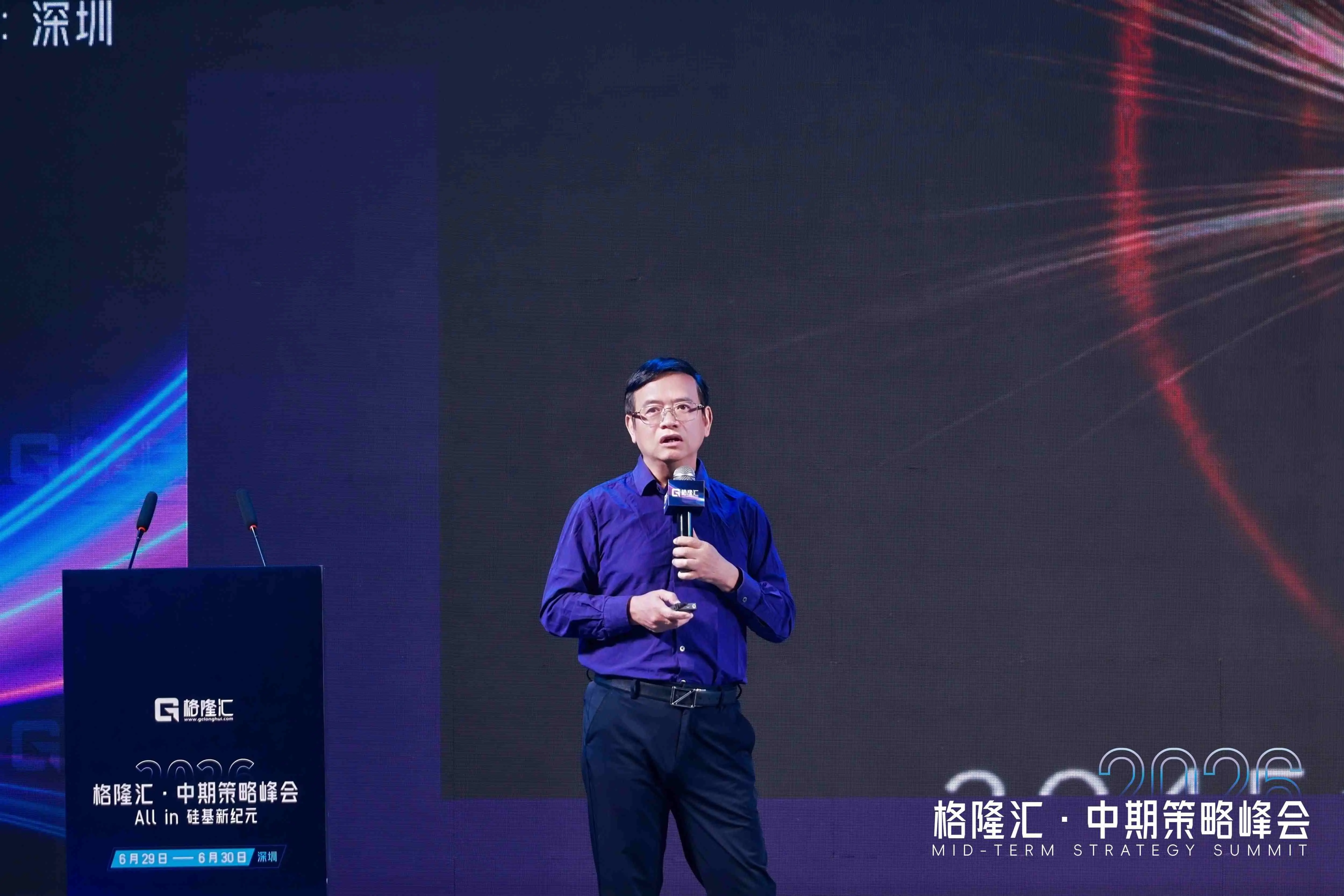
Discours récent de Dan Bin : Ne manquez pas une époque grandiose

Dans son discours intitulé "Ne manquez pas une grande époque", Dan Bin, président de Dongfang Harbor, a partagé sa vision sur l'ère de l'intelligence artificielle (IA) lors du sommet stratégique de Guruiong. Il estime que le risque de manquer cette ère révolutionnaire est plus grand que celui de craindre une bulle à court terme. Selon lui, l'IA, plus disruptive que les époques électronique, Internet et mobile, devrait connaître un cycle industriel d'environ dix ans, similaire à celui d'Internet, avec un point de risque potentiel vers 2033. Dan Bin souligne que le progrès technologique, et non les taux d'intérêt ou les politiques macroéconomiques, est le principal moteur de la croissance à long terme des marchés. Il évoque également une perspective civilisationnelle : le remplacement progressif de la vie carbonée par la vie silicée, portée par l'IA, pourrait être essentiel pour l'avenir de l'humanité. Dans la compétition sino-américaine en IA, aucun des deux pays ne peut se permettre de perdre, chacun ayant ses avantages distincts. S'appuyant sur l'exemple de Warren Buffett qui a tardé à investir dans les géants technologiques, Dan Bin encourage les investisseurs à élargir leurs horizons cognitifs et à saisir les opportunités de cette époque. Il conclut par un poème exhortant à ne pas se laisser piéger par les fluctuations à court terme, mais à embrasser résolument cette ère de transformation historique.

链捕手Il y a 15 mins

Discours récent de Dan Bin : Ne manquez pas une époque grandiose

链捕手Il y a 15 mins

Robinhood lance sa propre blockchain, ne veut plus être locataire sur celle des autres

Le 1er juillet, Robinhood a dévoilé plusieurs nouvelles initiatives, dont le lancement de sa propre blockchain, Robinhood Chain. Il s'agit d'un réseau de couche 2 basé sur Arbitrum, conçu pour les actifs réels tokenisés et les applications DeFi. À travers cette chaîne, les utilisateurs peuvent négocier des actions tokenisées sur des DEX comme Uniswap et utiliser ces actifs dans divers scénarios DeFi. Robinhood a également présenté "Robinhood Earn", un produit permettant de prêter sa stablecoin USDG pour un rendement annuel estimé à 7%, ainsi qu'une expansion de ses produits à terme en Europe et l'introduction de comptes de trading par IA aux États-Unis. Cette série d'annonces marque une évolution stratégique profonde pour Robinhood. Au-delà de son identité initiale de courtier à commission zéro, la plateforme aspire à devenir un "everything exchange" intégré, regroupant actions, cryptomonnaies, actifs tokenisés et outils de trading avancés. Le lancement de sa propre blockchain est au cœur de cette ambition. Plutôt que de rester un simple fournisseur d'interface utilisateur dépendant des infrastructures d'autres chaînes, Robinhood cherche à contrôler la couche de règlement et de compensation pour ses produits financiers émergents, évitant ainsi de n'être qu'un "locataire" sur les réseaux d'autrui. Cette stratégie s'inscrit dans une tendance plus large où les institutions financières comme Coinbase et Circle lancent leurs propres blockchains pour conserver la souveraineté sur leurs écosystèmes. Cependant, ce développement ambitieux intervient dans un contexte opérationnel mitigé pour Robinhood. Alors que ses revenus liés au trading de cryptomonnaies ont chuté, le marché des prédictions, notamment via sa plateforme Rothera, connaît une croissance explosive et pourrait dépasser les revenus cryptos. Ainsi, le défi pour Robinhood n'est pas seulement de construire une blockchain viable, mais de réussir à intégrer de manière durable une multitude de services financiers – actions, cryptos, prédictions, RWA et trading par IA – au sein d'un écosystème économique cohérent et rentable.

链捕手Il y a 25 mins

Robinhood lance sa propre blockchain, ne veut plus être locataire sur celle des autres

链捕手Il y a 25 mins

Trading

Spot

Articles tendance

Comment acheter T

Bienvenue sur HTX.com ! Nous vous permettons d'acheter Threshold Network Token (T) de manière simple et pratique. Suivez notre guide étape par étape pour commencer votre parcours crypto.Étape 1 : Création de votre compte HTXUtilisez votre adresse e-mail ou votre numéro de téléphone pour ouvrir un compte sur HTX gratuitement. L'inscription se fait en toute simplicité et débloque toutes les fonctionnalités.Créer mon compteÉtape 2 : Choix du mode de paiement (rubrique Acheter des cryptosCarte de crédit/débit : utilisez votre carte Visa ou Mastercard pour acheter instantanément Threshold Network Token (T).Solde :utilisez les fonds du solde de votre compte HTX pour trader en toute simplicité.Prestataire tiers :pour accroître la commodité d'utilisation, nous avons ajouté des modes de paiement populaires tels que Google Pay et Apple Pay.P2P :tradez directement avec d'autres utilisateurs sur HTX.OTC (de gré à gré) : nous offrons des services personnalisés et des taux de change compétitifs aux traders.Étape 3 : stockage de vos Threshold Network Token (T)Après avoir acheté vos Threshold Network Token (T), stockez-les sur votre compte HTX. Vous pouvez également les envoyer ailleurs via un transfert sur la blockchain ou les utiliser pour trader d'autres cryptos.Étape 4 : tradez des Threshold Network Token (T)Tradez facilement Threshold Network Token (T) sur le marché Spot de HTX. Il vous suffit d'accéder à votre compte, de sélectionner la paire de trading, d'exécuter vos trades et de les suivre en temps réel. Nous offrons une expérience conviviale aux débutants comme aux traders chevronnés.

576 vues totalesPublié le 2024.12.10Mis à jour le 2026.06.02

Comment acheter T

Discussions

Bienvenue dans la Communauté HTX. Ici, vous pouvez vous tenir informé(e) des derniers développements de la plateforme et accéder à des analyses de marché professionnelles. Les opinions des utilisateurs sur le prix de T (T) sont présentées ci-dessous.

活动图片