Tether CEO: 40% Of Blockchain Fees Go To Just Moving USDT

bitcoinistPublié le 2025-08-06Dernière mise à jour le 2025-08-06

Résumé

Tether CEO Paolo Ardoino has revealed a staggering 40% of all fees that users are paying on the major blockchains...

Trusted Editorial content, reviewed by leading industry experts and seasoned editors. Ad Disclosure

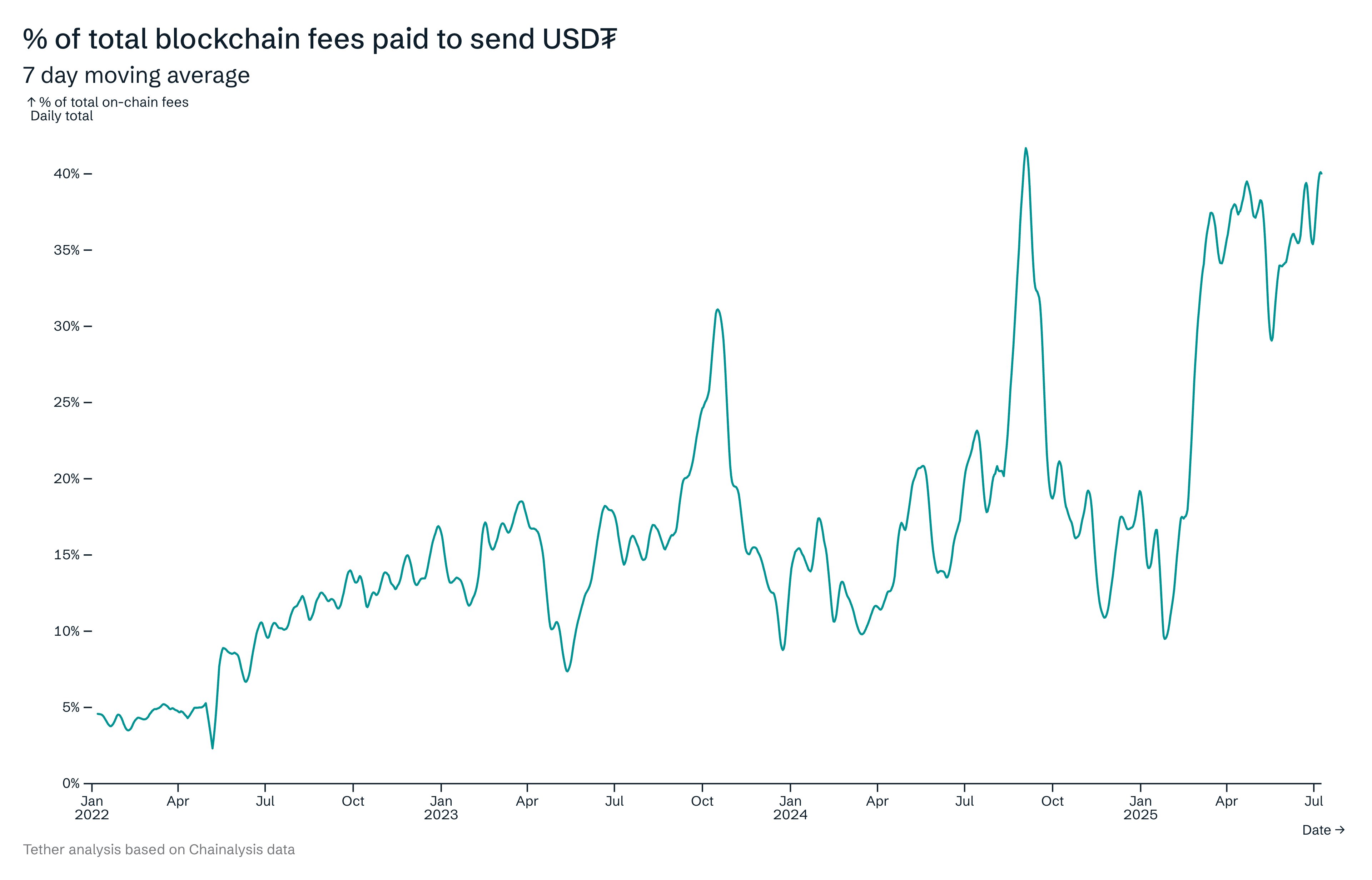
Tether CEO Paolo Ardoino has revealed a staggering 40% of all fees that users are paying on the major blockchains are spent to move USDT.

USDT Transfers Make Up For A Notable Portion Of Network Fees

In a post on X, Paolo Ardoino has shared the latest data related to USDT’s transfer fees share on the major blockchains. Transfer fee here naturally refers to the amount that senders have to attach with their network transactions as a reward for the validators.

Below is the chart shared by the Tether CEO that shows the trend in the percentage of these transfer fees that users on major networks are paying for making USDT transfers.
USDT Transfer Fee

The 7-day moving average value of the metric appears to have climbed up in recent months | Source: @paoloardoino on X

Nine networks are included here: Ethereum, Tron, Toncoin, Solana, BSC, Avalanche, Arbitrum, Polygon, and Optimism. From the graph, it’s visible that the 7-day moving average fees share of USDT transfers across these chains recently hit the 40% mark.

Fees usage can serve as a proxy for transaction activity, so this high share would indicate strong user interest in Tether’s stablecoin. “Hundreds of millions of people in emerging markets use Tether’s digital dollar USDt daily, to protect their families from local inflation and devaluation of their national currencies,” notes Ardoino.

On most networks, the transfer fee is paid using the chain’s native token, even when the transaction involves a secondary coin. For example, ETH is required to make any kind of transaction on the Ethereum network.

Since stablecoins like USDT run on blockchains like these, senders also need to own the network’s main token to participate in transfers related to them. Among the chains included in the above data, however, there is one exception: Tron.

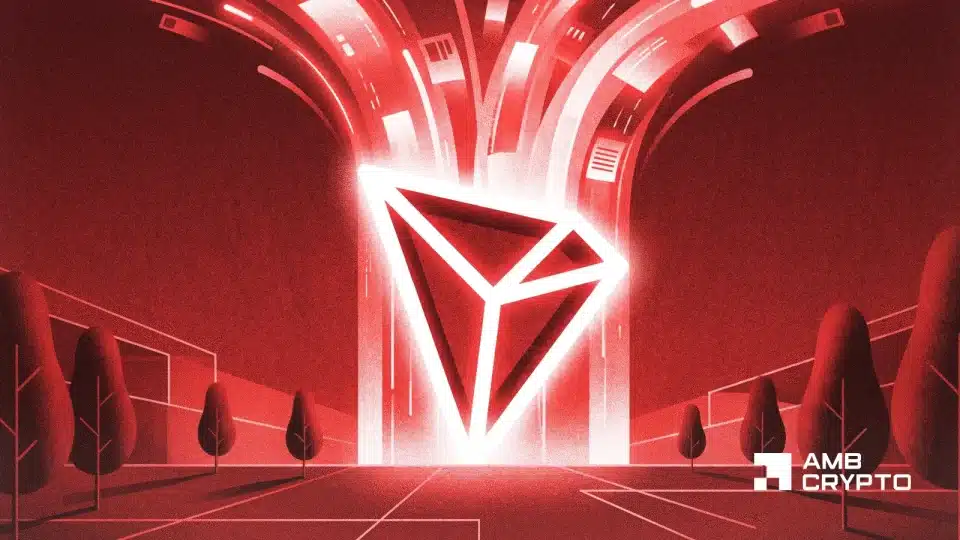
This year, the blockchain launched a feature that allows users to pay gas fees in other tokens, including USDT. As a result, Tron has established itself as the dominant network when it comes to the supply of the number one stablecoin.

“Blockchains that will focus on lower gas fees, allowing paying these in USDT will take over the world,” says the Tether CEO.

In related news, the on-chain volume associated with all stablecoins set a new record recently, as institutional DeFi solutions provider Sentora has pointed out in an X post.

Stablecoins USDT Volume

The trend in the volume associated with the different stablecoins | Source: Sentora on X

As displayed in the above chart, the combined monthly transaction volume of the stablecoins crossed $1.5 trillion last month, which is a new all-time high (ATH).

ETH Price

At the time of writing, Ethereum is trading around $3,600, down more than 4% over the past week.

Ethereum Price Chart

The price of the coin appears to have recovered a bit since its low | Source: ETHUSDT on TradingView
Featured image from Dall-E, chart from TradingView.com
Editorial Process for bitcoinist is centered on delivering thoroughly researched, accurate, and unbiased content. We uphold strict sourcing standards, and each page undergoes diligent review by our team of top technology experts and seasoned editors. This process ensures the integrity, relevance, and value of our content for our readers.

Keshav is a Physics graduate who has been employed as a writer with Bitcoinist since June 2021. He is passionate about writing and through the years, he has gained experience working in a variety of niches. Keshav holds an active interest in the cryptocurrency market, with on-chain analysis being an area he particularly likes to research and write about.

Lectures associées

Discours récent de Dan Bin : Ne manquez pas une époque grandiose

Dans son discours intitulé "Ne manquez pas une grande époque", Dan Bin, président de Dongfang Harbor, a partagé sa vision sur l'ère de l'intelligence artificielle (IA) lors du sommet stratégique de Guruiong. Il estime que le risque de manquer cette ère révolutionnaire est plus grand que celui de craindre une bulle à court terme. Selon lui, l'IA, plus disruptive que les époques électronique, Internet et mobile, devrait connaître un cycle industriel d'environ dix ans, similaire à celui d'Internet, avec un point de risque potentiel vers 2033. Dan Bin souligne que le progrès technologique, et non les taux d'intérêt ou les politiques macroéconomiques, est le principal moteur de la croissance à long terme des marchés. Il évoque également une perspective civilisationnelle : le remplacement progressif de la vie carbonée par la vie silicée, portée par l'IA, pourrait être essentiel pour l'avenir de l'humanité. Dans la compétition sino-américaine en IA, aucun des deux pays ne peut se permettre de perdre, chacun ayant ses avantages distincts. S'appuyant sur l'exemple de Warren Buffett qui a tardé à investir dans les géants technologiques, Dan Bin encourage les investisseurs à élargir leurs horizons cognitifs et à saisir les opportunités de cette époque. Il conclut par un poème exhortant à ne pas se laisser piéger par les fluctuations à court terme, mais à embrasser résolument cette ère de transformation historique.

链捕手Il y a 28 mins

Discours récent de Dan Bin : Ne manquez pas une époque grandiose

链捕手Il y a 28 mins

Robinhood lance sa propre blockchain, ne veut plus être locataire sur celle des autres

Le 1er juillet, Robinhood a dévoilé plusieurs nouvelles initiatives, dont le lancement de sa propre blockchain, Robinhood Chain. Il s'agit d'un réseau de couche 2 basé sur Arbitrum, conçu pour les actifs réels tokenisés et les applications DeFi. À travers cette chaîne, les utilisateurs peuvent négocier des actions tokenisées sur des DEX comme Uniswap et utiliser ces actifs dans divers scénarios DeFi. Robinhood a également présenté "Robinhood Earn", un produit permettant de prêter sa stablecoin USDG pour un rendement annuel estimé à 7%, ainsi qu'une expansion de ses produits à terme en Europe et l'introduction de comptes de trading par IA aux États-Unis. Cette série d'annonces marque une évolution stratégique profonde pour Robinhood. Au-delà de son identité initiale de courtier à commission zéro, la plateforme aspire à devenir un "everything exchange" intégré, regroupant actions, cryptomonnaies, actifs tokenisés et outils de trading avancés. Le lancement de sa propre blockchain est au cœur de cette ambition. Plutôt que de rester un simple fournisseur d'interface utilisateur dépendant des infrastructures d'autres chaînes, Robinhood cherche à contrôler la couche de règlement et de compensation pour ses produits financiers émergents, évitant ainsi de n'être qu'un "locataire" sur les réseaux d'autrui. Cette stratégie s'inscrit dans une tendance plus large où les institutions financières comme Coinbase et Circle lancent leurs propres blockchains pour conserver la souveraineté sur leurs écosystèmes. Cependant, ce développement ambitieux intervient dans un contexte opérationnel mitigé pour Robinhood. Alors que ses revenus liés au trading de cryptomonnaies ont chuté, le marché des prédictions, notamment via sa plateforme Rothera, connaît une croissance explosive et pourrait dépasser les revenus cryptos. Ainsi, le défi pour Robinhood n'est pas seulement de construire une blockchain viable, mais de réussir à intégrer de manière durable une multitude de services financiers – actions, cryptos, prédictions, RWA et trading par IA – au sein d'un écosystème économique cohérent et rentable.

链捕手Il y a 38 mins

Robinhood lance sa propre blockchain, ne veut plus être locataire sur celle des autres

链捕手Il y a 38 mins

Trading

Spot
活动图片