Best Presales & Coins to Watch in July – Grok AI Points to 3 High-Upside Tokens That Could Explode

bitcoinistPublié le 2025-07-25Dernière mise à jour le 2025-07-25

Résumé

Grok, the AI bot on X, has been meme’d to death. But being integrated straight into X, arguably one of...

Trusted Editorial content, reviewed by leading industry experts and seasoned editors. Ad Disclosure

Grok, the AI bot on X, has been meme’d to death. But being integrated straight into X, arguably one of the biggest crypto hubs online, has also helped it develop a weird knack for spotting trends before they go mainstream.

This week, the bot flagged some of the best crypto presales gaining serious traction across X and Discord. And yes, it’s got range.

Retail appetite is back with the market flipping into the greed zone. And meme coins are mutating into real infrastructure plays. The appetite for early-stage tokens, especially ones with a unique spin or actual utility, is heating up fast.

CoinMarketCap’s crypto fear and greed index.

So what made Grok’s shortlist?

One project is dragging Bitcoin out of the Stone Age. Another is embedding a full trading terminal inside Telegram. And the third is training AI models directly on-chain.

Whether you’re here for the best meme coins or the mechanics, these picks are worth a serious look.

Let’s break down what Grok’s watching.

1. Bitcoin Hyper ($HYPER) – Solana Speed Meets Bitcoin Security

Bitcoin Hyper ($HYPER) is exactly what it sounds like: Bitcoin, but juiced. It’s the first meme-centered Layer-2 for Bitcoin that integrates the Solana Virtual Machine (SVM).

Thanks to this, Hyper is bringing smart contracts, lightning-fast transactions, and meme-fueled dApps compatible with the oldest coin in crypto.

If Bitcoin was the dinosaur, $HYPER is the asteroid; except this time, it builds instead of destroys.

By integrating with Solana’s high-speed execution layer, Bitcoin Hyper gives $BTC the upgrade it never had. You can now send, stake, and build with wrapped Bitcoin at Solana speeds, without sacrificing L1 security.
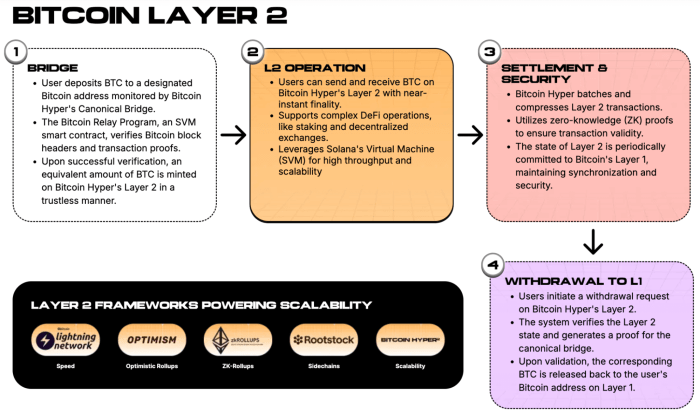
Bitcoin Hyper ($HYPER) layer 2 framework for powering scalability.

The Canonical Bridge handles trustless swaps between Bitcoin and Hyper’s L2, removing the middlemen and delays.

The presale has already raised over $4.7M, and early buyers can stake their $HYPER at a whopping 204% APY.

It’s a full-blown programmable ecosystem for Bitcoin, opening the door to everything from DeFi to meme coins, all settled back to Bitcoin. If Satoshi would be building in 2025, this is what it would look like.

Learn more with our guide to Bitcoin Hyper and our $HYPER price prediction.

If you want to get in early, join the Hyper presale now while the token sells for just $0.0124.

2. Snorter Bot ($SNORT) – Meme Bot That Actually Trades For You

Snorter Bot ($SNORT) isn’t just another Telegram token; it’s a full-blown trading suite stuffed inside your favorite group chat.

Built natively for Telegram, Snorter Bot lets you snipe tokens at launch, mirror top wallets, set dynamic stop-losses, and track your entire portfolio, all without leaving the app.

It’s lightning fast too. Thanks to a custom Solana RPC routing engine, Snorter executes trades in under a second, dodging MEV bots and front-runners in the process.

If you’ve ever missed a meme pump because your browser lagged or your wallet failed to confirm, Snorter is the antidote.

Comparison table of Snorter Bot vs numerous top Telegram trading bots.

The $SNORT token fuels it all. Hold it to unlock lower fees (just 0.85% vs 1.5% for other competing bots), premium features, staking perks (currently with 174% APY), and governance access.

This is what happens when memes meet actual infrastructure. And yes, the mascot is an aardvark with a snout for alpha.

Although it has already raised over $2.3M, you can still buy $SNORT for $0.0991 using $SOL, $ETH, $BNB, $USDT, $USDC, or even a debit card.

Our Snorter Token price prediction sees the coin hitting $0.9 after listing in Q4 this year. Learn all about $SNORT to get the facts before the official launch.

3. Lightchain AI ($LCAI) – Blockchain Infrastructure Meets AI Computation

Lightchain AI ($LCAI) is what happens when blockchain stops wasting energy and starts doing something useful.

Instead of burning electricity on pointless hash puzzles, Lightchain’s Proof-of-Intelligence (PoI) rewards nodes for completing real AI work – think model training, inference, and optimization.

At the core is the AIVM, or AI Virtual Machine: a programmable layer designed specifically for AI workloads. It’s built for privacy-first, federated learning, where data stays local but insights get shared. That means smarter models without the creepy surveillance or centralized control.

How Lightchain AI transforms blockchain and AI virtual machine.

The $LCAI token powers everything: gas, governance, rewards, and developer incentives. It’s priced at just $0.007125, with plenty of upside left in the presale.

And with features like decentralized governance, an AI memecoin launchpad, and a developer grant system, the project is clearly playing long-term.

If you’re betting on AI becoming the next crypto megatrend, Lightchain AI is where infrastructure meets narrative, before it goes mainstream.

Final Thoughts

Grok might be cracking jokes, but these presales are no punchline. $HYPER, $SNORT, and $LCAI are each carving out serious lanes – reviving Bitcoin, retooling Telegram, and rebuilding AI infra from the ground up.

The common thread? Utility. Projects with real-world use cases and early traction are dominating presale season, especially as retail chases the next wave of high-upside narratives.

Just remember: Grok is smart, but it’s still just a chatbot.

As usual, please do your own research (DYOR). Presales are high risk and volatile. Never invest more than you’re willing to lose. This is not investment advice.

Editorial Process for bitcoinist is centered on delivering thoroughly researched, accurate, and unbiased content. We uphold strict sourcing standards, and each page undergoes diligent review by our team of top technology experts and seasoned editors. This process ensures the integrity, relevance, and value of our content for our readers.

Aidan Weeks, a Master's graduate in Mechanical Engineering, has thrived as a content writer for over four years. Specializing in crypto, tech, engineering, AI, and B2B sectors, Aidan adeptly crafts web copy, blog posts, buying guides, manuals, product pages, and more, making complex concepts accessible and engaging. His transition from academia to full-time writing reflects his passion for bridging technical expertise with clear, informative content. Since joining Bitcoinist, Aidan has written extensively about DeFi, dApps, AI, and meme coins, solidifying his grasp on emerging blockchain technologies. An early adopter, he began investing in Solana in 2020, further deepening his insights into crypto markets and innovation. Today, he combines hands-on experience with a sharp editorial instinct to help readers cut through hype, spot real trends, and make sense of a fast-moving space.

Lectures associées

Les fonctionnalités d'agents intelligents de Doubao et Qianwen seront retirées le 15 juillet

Le 4 juillet, les plateformes d’IA Doubao et Tongyi Qianwen ont annoncé la suppression imminente de leurs fonctionnalités d’agents intelligents. Doubao a confirmé que ses agents seront désactivés le 15 juillet, redirigeant les utilisateurs vers l’application Mao Xiang. De son côté, Tongyi Qianwen a indiqué que les agents personnalisés et les interactions personnalisées cesseront le 10 juillet, avec une fermeture complète le 15 juillet, après quoi les configurations et l’historique des conversations ne seront plus accessibles. Cette décision touche des scénarios d’utilisation personnalisés centraux pour les utilisateurs, tels que le jeu de rôle, les assistants spécialisés et les agents outils. Le choix de la date du 15 juillet n’est pas un hasard : elle correspond à l’entrée en vigueur du Règlement intérimaire sur la gestion des services d’interaction personnalisée en IA, qui renforce les exigences en matière de contrôle du temps d’écran, de vérification d’identité des mineurs et de modération des contenus. Face à cette régulation, les plateformes adoptent une démarche proactive pour réduire les risques de conformité. Elles offrent toutefois une période de transition aux utilisateurs pour sauvegarder leurs données via des captures d’écran ou des exports, avant suppression définitive prévue en octobre pour Doubao. Au-delà des pressions réglementaires, des défis économiques expliquent également ce retrait. Les agents personnalisés, bien que générateurs de trafic, consomment beaucoup de ressources informatiques tout en ayant une faible valeur commerciale directe. Dans une phase où l’IA doit prouver sa viabilité économique, les plateformes réorientent leurs ressources vers des services à plus haute valeur, notamment pour les entreprises, comme en témoigne l’ouverture récente de Qianwen aux développeurs et marques tiers.

marsbitIl y a 43 mins

Les fonctionnalités d'agents intelligents de Doubao et Qianwen seront retirées le 15 juillet

marsbitIl y a 43 mins

Pourquoi Codex et ChatGPT ont-ils fusionné ? Quel avenir pour Codex ? Un responsable clé d'OpenAI répond à toutes les questions

En 2026, Codex est le produit d'IA à la croissance la plus remarquable, avec une multiplication par cinq de ses utilisateurs actifs hebdomadaires depuis janvier, atteignant désormais 5 millions. Cette croissance exponentielle, particulièrement rapide parmi les travailleurs du savoir non-développeurs, a été catalysée par le lancement de son application de bureau en février, offrant une interface optimisée. Dans une interview, Andrew Ambrosino, responsable de l'application de bureau Codex, aborde les transformations profondes induites par l'IA. Aujourd'hui, le coût de la « mise en œuvre » (coder) s'est effondré. Ce qui devient rare et précieux est le **goût** – la capacité de curation, de jugement et de prise de décision parmi une multitude de possibilités. Ce « goût » englobe l'esthétique, la pensée systémique, le sens de la direction et la sémantique des interactions. Il explique pourquoi l'IA peine encore à bien concevoir : l'évaluation du design est subjective et culturelle, contrairement au code qui a des critères objectifs (compilation, fonction). De plus, la conception nécessite une compréhension des abstractions profondes et des relations structurelles au sein d'un système, ce qui reste un défi. Andrew souligne que le succès d'un produit d'IA dépend moins de son interface que des **capacités du modèle au moment du lancement**. La même application Codex aurait échoué si elle était sortie quelques mois plus tôt, avant une progression cruciale du modèle. Concernant les rôles au sein des équipes, les frontières entre ingénieur, designer et chef de produit s'estompent, mais les compétences spécifiques de chaque métier restent cruciales. La tendance est à l'élargissement des responsabilités, non à la suppression des spécialisations. Enfin, il détaille la fusion entre Codex et ChatGPT. L'observation clé est que la frontière entre outil de développement et outil de travail généraliste s'efface. Codex, initialement conçu pour les développeurs, était massivement utilisé par tous les métiers. Plutôt que de créer des applications séparées, la vision est de construire une **« base centrale » (home base)** unique et suffisamment générique. Cette plateforme servirait de point de départ pour toutes les tâches, capable d'interagir de manière transparente avec les outils spécialisés existants (comme Excel ou Premiere Pro) via des connecteurs, plutôt que de tout recréer en interne. L'objectif est de devenir l'assistant universel qui orchestre le travail de l'utilisateur à travers son écosystème numérique.

marsbitIl y a 51 mins

Pourquoi Codex et ChatGPT ont-ils fusionné ? Quel avenir pour Codex ? Un responsable clé d'OpenAI répond à toutes les questions

marsbitIl y a 51 mins

Trading

Spot
活动图片