Crypto Craze Among Russian Investors Surges Past 50% Mark: Study

bitcoinistPublié le 2025-07-10Dernière mise à jour le 2025-07-10

Résumé

More than half of Russia’s top investors have already dipped a toe into crypto, and most of the rest plan...

Trusted Editorial content, reviewed by leading industry experts and seasoned editors. Ad Disclosure

More than half of Russia’s top investors have already dipped a toe into crypto, and most of the rest plan to follow suit.

That’s the headline result of a recent survey of 1,500 qualified investors aged over 20 in cities with more than 100,000 residents. Each participant holds at least ₽50,000 (about $600) in financial assets.

Based on reports, 52% of these investors say they’ve bought digital coins, while another 38% intend to do so. Taken together, that means 90% of the surveyed group has either embraced crypto or will likely jump in soon.

Qualified Investors Face High Entry Barriers

According to the survey, Russia’s authorities aren’t ready to let everyone trade digital assets. In March, the Bank of Russia proposed an “experimental legal regime” that would limit direct crypto trading to “highly qualified investors.”
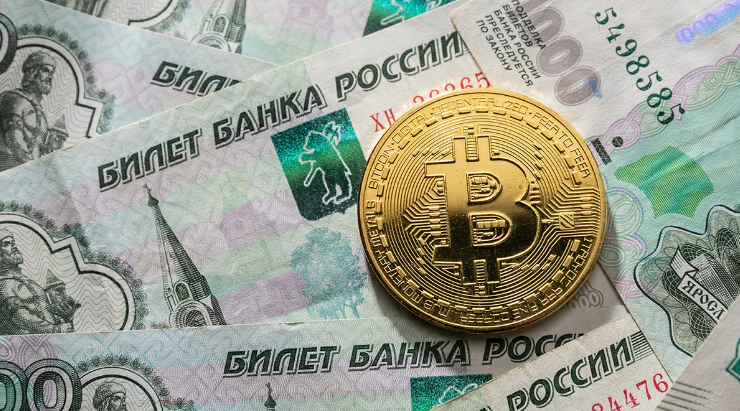
Image: Evgeny Razumny/Vedomosti

To qualify, individuals would need an annual income of at least ₽50 million (over $600,000) and at least ₽100 million (more than $1.2 million) in securities or deposits. Those thresholds still await final approval, but they make it clear that only a small fraction of the population could ever join.

Regulated Next Steps And New Products

While the central bank has no plans to add Bitcoin to its own reserves, it has opened the door to non‑deliverable crypto derivatives. That means qualified investors can buy products linked to Bitcoin prices without owning the coin itself.

In May, the bank confirmed these securities would be allowed under its pilot. Now, major players like the Moscow Exchange are lining up to launch Bitcoin futures based on a new domestic index.

As of today, the market cap of cryptocurrencies stood at $3.36 trillion. Chart: TradingView

High Trust In Russian Platforms

Domestic exchanges are gaining the battle of trust. The poll indicates 78% of investors prefer Russian-registered platforms, and 85% would like to pay for their crypto accounts in rubles.

Reliability is the number one aspect that counts (43%), followed by fees being low (24%) and simple deposits or withdrawals (24%). It seems many wealthy Russians feel safer sticking with local firms they know, rather than offshore sites.

Investment Motives And Portfolio Mix

Investors cite long‑term holdings as their top motive (57%), while 32% point to portfolio diversification and 25% to short‑term trading. About 33% of respondents currently allocate 5‑10% of their holdings to crypto‑related instruments.

Reports show these figures show that for many, digital assets are no longer a fringe gamble but a regular slice of a broader investment strategy.

Education Gaps And Market Worries

Not all barriers have vanished. Many investors say they lack deep knowledge of blockchain technology, and they worry about wild price swings.

High volatility and uncertainty remain the biggest deterrents for those who’ve held off. That suggests a clear need for better education, risk‑management tools, and perhaps simpler, regulated funds to ease newcomers in.

Featured image from Atlantic Council, chart from TradingView

Editorial Process for bitcoinist is centered on delivering thoroughly researched, accurate, and unbiased content. We uphold strict sourcing standards, and each page undergoes diligent review by our team of top technology experts and seasoned editors. This process ensures the integrity, relevance, and value of our content for our readers.

Christian, a journalist and editor with leadership roles in Philippine and Canadian media, is fueled by his love for writing and cryptocurrency. Off-screen, he's a cook and cinephile who's constantly intrigued by the size of the universe.

Lectures associées

Q-Day : Le compte à rebours avant que l'informatique quantique ne mette fin aux cryptomonnaies ?

**Q-Day et la Cryptographie : La Menace Quantique sur les Cryptomonnaies** L'avènement de l'ordinateur quantique tolérant aux fautes (CRQC) représente une menace existentielle pour les cryptomonnaies en raison de sa capacité à casser les algorithmes de chiffrement asymétrique actuels (comme ECDSA) via l'algorithme de Shor. Le "Q-Day", point critique où cette capacité devient pratique, est estimé entre 2035 et 2045. Les blockchains, par leur nature immuable et décentralisée, sont particulièrement vulnérables. Le risque est immédiat pour les actifs dont la clé publique est déjà exposée sur la chaîne (ex : certaines anciennes adresses Bitcoin). La migration vers la cryptographie post-quantique (PQC), comme les algorithmes basés sur les réseaux (ML-KEM/DSA) ou les hachages (SLH-DSA), est donc urgente. Cependant, cette transition est extrêmement complexe : * **Pour Bitcoin** : Le défi principal est la gouvernance et la gestion sociale des UTXO historiques à risque. Une mise à jour progressive par soft fork est privilégiée, mais elle se heurte à l'inflation de la taille des signatures PQC et à un dilemme éthique sur le gel éventuel des actifs non migrés. * **Pour Ethereum** : La migration nécessite une refonte à plusieurs niveaux (comptes, consensus, couche de données). La stratégie repose sur l'agilité cryptographique, l'abstraction de compte pour les utilisateurs et des solutions techniques comme leanXMSS couplé à un zkVM pour compresser les grandes signatures. La fenêtre d'action confortable est estimée à 5-8 ans. L'industrie doit se coordonner à l'échelle de l'écosystème (protocoles, portefeuilles, bourses). La menace quantique n'anéantira pas la blockchain, mais force une reconfiguration fondamentale de ses bases cryptographiques, testant sa résilience technique et sociale.

marsbitIl y a 2 h

Q-Day : Le compte à rebours avant que l'informatique quantique ne mette fin aux cryptomonnaies ?

marsbitIl y a 2 h

Compte à rebours pour Q-Day : L'informatique quantique va-t-elle mettre fin aux cryptomonnaies ?

La cryptographie moderne est vulnérable face aux ordinateurs quantiques, en particulier l'algorithme de Shor, menaçant les systèmes actuels comme RSA et ECC. Le « Q-Day », moment où les ordinateurs quantiques pourront casser ces cryptosystèmes, est estimé entre 2035 et 2045. La cryptographie post-quantique (PQC) se développe, avec des algorithmes comme ML-KEM, ML-DSA et SLH-DSA normalisés par le NIST, pour garantir une sécurité durable. Dans le domaine de la blockchain, le Bitcoin et l'Ethereum sont particulièrement exposés. Pour Bitcoin, le risque principal concerne les UTXO dont la clé publique est déjà exposée sur la chaîne. La migration vers des algorithmes PQC se heurte à des défis techniques (signatures plus volumineuses) et à un dilemme de gouvernance concernant les fonds dormants. Ethereum, grâce à son agilité cryptographique et à l'abstraction de compte, pourrait adopter une approche plus graduelle, notamment via ses L2. La transition ne sera pas uniquement technique, mais nécessitera un large consensus social et une coordination à l'échelle de l'écosystème. Le véritable enjeu n'est pas l'absence de solutions, mais la capacité de l'écosystème à migrer de manière coordonnée avant que les risques quantiques ne deviennent une réalité économique. La fenêtre d'action confortable est estimée à 5-8 ans.

链捕手Il y a 2 h

Compte à rebours pour Q-Day : L'informatique quantique va-t-elle mettre fin aux cryptomonnaies ?

链捕手Il y a 2 h

Trading

Spot
活动图片