Tether Announces Strategic Partnership To Combat Stablecoin Misuse

bitcoinistPublié le 2025-07-08Dernière mise à jour le 2025-07-08

Résumé

According to a press release, the company behind the top stablecoin in the world, Tether, has poured millions of dollars...

Trusted Editorial content, reviewed by leading industry experts and seasoned editors. Ad Disclosure

According to a press release, the company behind the top stablecoin in the world, Tether, has poured millions of dollars to ink a new partnership. The deal will allow the crypto company to contribute with the overall health of the nascent industry.

Tether To Fight Against Crypto Crime

Per the document, Tether has partnered with Crystal Intelligence, a blockchain analytics company to provide fraud detection, regulatory intelligence solutions, and risk scams. In that way, the company joins the many efforts of key industry players to combat illicit stablecoin use.

The main goal behind the partnership, according to the release, is to create a more secure crypto ecosystem. Data provided by the company claims that over $9.3 billion in digital assets were stolen, or illegally taken from its users in 2024 alone.

This number represented a 66% increase from 2023. Thus, the company claims that there has been a steady increase in illicit activities and bad actors in the crypto industry. The partnership with Crystal Intelligence aims to mitigate this threat.
tether crypto bitcoin btc btcusdt

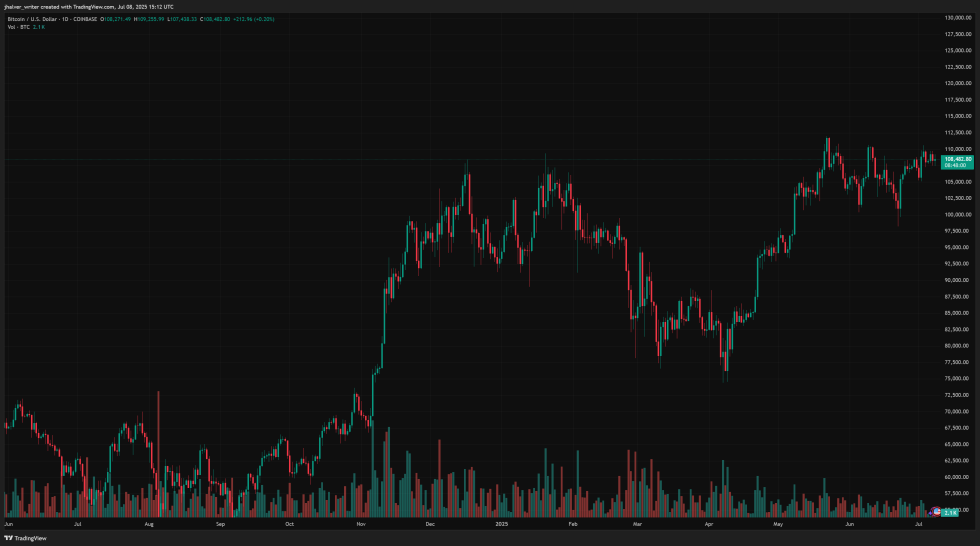
BTC price trends to the upside on the daily chart. Source: BTCUSD on Tradingview 

Paolo Ardoino, CEO of Tether, stated the following regarding the partnership:

Tether is firmly committed to supporting law enforcement agencies in a shared effort to combat illicit activity. With the latest in advanced intelligence tools, like those being developed by Crystal Intelligence, we are enhancing our ability to assist authorities in tracing the movement of funds in real time. Tether has already contributed to freezing billions in unlawful funds and has supported investigations across dozens of jurisdictions. This strategic investment will strengthen our capacity to collaborate more effectively and reinforce a clear message: USD₮ is the the digital dollar for the people, bad actors will be stopped.

Stablecoin Company Steps Up, Crypto Safety On the Line

Tether has been making an extra push for several years to fight against illicit on-chain activity, including aiding international law enforcement agencies to track and freeze funds from bad actors.

However, it is also worth noting that Tether has been the subject of some controversy. In particular, the previous US administration launched several investigations against the crypto company, and was close to facing criminal charges for alleged fraud.

Navin Gupta, CEO of Crystal Intelligence, added the following regarding the deal:

As the crypto industry matures, so must its foundations of trust and intelligence. Tether’s backing is both a validation of the work we’ve done together and a joint commitment to future-proofing the industry through actionable insight, integrity, and innovation. We see too many players waiting for mandates. At Crystal, we believe responsible innovation means getting ahead of threats and not just reacting to them.

Cover image from ChatGPT, BTCUSD chart from Tradingview

Editorial Process for bitcoinist is centered on delivering thoroughly researched, accurate, and unbiased content. We uphold strict sourcing standards, and each page undergoes diligent review by our team of top technology experts and seasoned editors. This process ensures the integrity, relevance, and value of our content for our readers.

Lectures associées

Q-Day : Le compte à rebours avant que l'informatique quantique ne mette fin aux cryptomonnaies ?

**Q-Day et la Cryptographie : La Menace Quantique sur les Cryptomonnaies** L'avènement de l'ordinateur quantique tolérant aux fautes (CRQC) représente une menace existentielle pour les cryptomonnaies en raison de sa capacité à casser les algorithmes de chiffrement asymétrique actuels (comme ECDSA) via l'algorithme de Shor. Le "Q-Day", point critique où cette capacité devient pratique, est estimé entre 2035 et 2045. Les blockchains, par leur nature immuable et décentralisée, sont particulièrement vulnérables. Le risque est immédiat pour les actifs dont la clé publique est déjà exposée sur la chaîne (ex : certaines anciennes adresses Bitcoin). La migration vers la cryptographie post-quantique (PQC), comme les algorithmes basés sur les réseaux (ML-KEM/DSA) ou les hachages (SLH-DSA), est donc urgente. Cependant, cette transition est extrêmement complexe : * **Pour Bitcoin** : Le défi principal est la gouvernance et la gestion sociale des UTXO historiques à risque. Une mise à jour progressive par soft fork est privilégiée, mais elle se heurte à l'inflation de la taille des signatures PQC et à un dilemme éthique sur le gel éventuel des actifs non migrés. * **Pour Ethereum** : La migration nécessite une refonte à plusieurs niveaux (comptes, consensus, couche de données). La stratégie repose sur l'agilité cryptographique, l'abstraction de compte pour les utilisateurs et des solutions techniques comme leanXMSS couplé à un zkVM pour compresser les grandes signatures. La fenêtre d'action confortable est estimée à 5-8 ans. L'industrie doit se coordonner à l'échelle de l'écosystème (protocoles, portefeuilles, bourses). La menace quantique n'anéantira pas la blockchain, mais force une reconfiguration fondamentale de ses bases cryptographiques, testant sa résilience technique et sociale.

marsbitIl y a 5 h

Q-Day : Le compte à rebours avant que l'informatique quantique ne mette fin aux cryptomonnaies ?

marsbitIl y a 5 h

Compte à rebours pour Q-Day : L'informatique quantique va-t-elle mettre fin aux cryptomonnaies ?

La cryptographie moderne est vulnérable face aux ordinateurs quantiques, en particulier l'algorithme de Shor, menaçant les systèmes actuels comme RSA et ECC. Le « Q-Day », moment où les ordinateurs quantiques pourront casser ces cryptosystèmes, est estimé entre 2035 et 2045. La cryptographie post-quantique (PQC) se développe, avec des algorithmes comme ML-KEM, ML-DSA et SLH-DSA normalisés par le NIST, pour garantir une sécurité durable. Dans le domaine de la blockchain, le Bitcoin et l'Ethereum sont particulièrement exposés. Pour Bitcoin, le risque principal concerne les UTXO dont la clé publique est déjà exposée sur la chaîne. La migration vers des algorithmes PQC se heurte à des défis techniques (signatures plus volumineuses) et à un dilemme de gouvernance concernant les fonds dormants. Ethereum, grâce à son agilité cryptographique et à l'abstraction de compte, pourrait adopter une approche plus graduelle, notamment via ses L2. La transition ne sera pas uniquement technique, mais nécessitera un large consensus social et une coordination à l'échelle de l'écosystème. Le véritable enjeu n'est pas l'absence de solutions, mais la capacité de l'écosystème à migrer de manière coordonnée avant que les risques quantiques ne deviennent une réalité économique. La fenêtre d'action confortable est estimée à 5-8 ans.

链捕手Il y a 5 h

Compte à rebours pour Q-Day : L'informatique quantique va-t-elle mettre fin aux cryptomonnaies ?

链捕手Il y a 5 h

Trading

Spot
活动图片