How Investors Navigate Fear and Uncertainty of a Bear Market

bitcoinistPublié le 2025-03-24Dernière mise à jour le 2025-03-24

Résumé

Bear markets bring out the worst in investor sentiment—fear, doubt, and a whole lot of secondguessing. When prices keep dropping,...

Trusted Editorial content, reviewed by leading industry experts and seasoned editors. Ad Disclosure

Bear markets bring out the worst in investor sentiment—fear, doubt, and a whole lot of secondguessing. When prices keep dropping, many shift from chasing gains to simply protecting what they have. Some park their funds in stablecoins, while others stick with blue-chip cryptos or turn to staking for passive income. In this article, I will examine how investor sentiment shapes market behavior and explore effective strategies for weathering bearish conditions.

Understanding Investor Sentiment in a Bear Market

A bear market is characterized by prolonged price declines, high volatility, and widespread uncertainty. Investor sentiment during such periods is typically pessimistic and risk-averse, driven by fear, doubt, and caution. Many traders and investors shift their focus from aggressive growth to capital preservation, seeking ways to protect their assets while waiting for market recovery. During a bear market, the usual “buy low, sell high” mentality is replaced by a more defensive approach. Investors look for strategies that help them minimize losses, generate steady returns, and prepare for the next bull run. One of the most effective ways to achieve this is by staking cryptocurrencies, which allows investors to earn passive income while holding their assets.

Common Investment Strategies in a Bear Market

When market sentiment turns negative, investors adopt various strategies to mitigate risk and optimize returns. One common approach is the flight to safety, where investors move funds into stablecoins such as USDT, USDC, and DAI to avoid volatility.

Some hedge their portfolios with blue-chip cryptocurrencies like Bitcoin (BTC) and Ethereum (ETH), which are often considered safer bets due to their established market dominance.

Another popular strategy is dollar-cost averaging (DCA), where investors purchase crypto at regular intervals, lowering their average entry price over time. This reduces the risk of investing a lump sum at the wrong time and is particularly effective for long-term investors.

While these strategies help investors navigate bearish conditions, they are not without drawbacks. Moving funds into stablecoins provides stability but doesn’t generate meaningful returns. Hedging with blue-chip cryptocurrencies can reduce volatility but still expose investors to downturns and liquidity challenges. Dollar-cost averaging helps smooth out entry prices, yet it can lead to prolonged unrealized losses if the bear market persists.

Why Staking Is an Attractive Strategy in a Bear Market

To balance these risks, investors may consider complementing these strategies with yield-generating options like staking.

Staking is another key strategy in the bear markets. Investors use staking to earn passive income while waiting for prices to recover. Staking assets like ETH, ADA, and TRX helps holders earn additional tokens without active trading, while liquidity pools and lending platforms provide alternative ways to generate yield.

Among all investment strategies, staking stands out as a low-risk, passive income option that can provide steady rewards even in uncertain market conditions. Here are some benefits of staking:

Earning Passive Income: Staking allows investors to earn passive income by generating additional tokens as rewards, helping offset unrealized losses.

Compounding Returns: By reinvesting staking rewards, investors can increase their holdings over time and benefit when the market recovers.

Maximizing Asset Productivity: In a bear market, fewer traders make profits, and staking ensures that funds remain productive rather than sitting idle.

Staking on CoinEx: Features and Benefits

CoinEx is one of the prominent platforms offering staking services, providing investors with a secure and efficient way to generate passive income.

CoinEx supports five popular PoS tokens; they include CET, ETH, SOL, ADA, and TRX. Here are their advantages for staking.

CoinEx Token (CET): A unique staking option on CoinEx, CET comes with a major advantage: the platform waives the 10% service fee, allowing stakers to maximize their rewards. CET also plays a central role in the CoinEx ecosystem, offering trading fee discounts and other benefits.

Ethereum (ETH): As the largest PoS blockchain, ETH staking provides stable returns and contributes to the security of the Ethereum network. With Ethereum’s dominance in DeFi and Web3, staking ETH is a strategic move for long-term believers in the ecosystem.

Solana (SOL): Known for its high-speed transactions and low fees, Solana offers attractive staking rewards. Stakers benefit from Solana’s growing adoption in DeFi and NFT markets, making it a strong option for earning passive income.

Cardano (ADA): With its research-driven approach and strong development community, ADA is a solid staking asset. Cardano’s staking model is designed for decentralization, allowing users to earn rewards while supporting network security.

TRON (TRX): TRON boasts high throughput and efficiency, making it a reliable staking choice. TRX staking not only generates passive income but also contributes to the network’s governance, allowing users to participate in decision-making.

Staking Rewards and Fees

Annual Percentage Yield (APY): The APY for staking on CoinEx varies by cryptocurrency and fluctuates based on on-chain supply and demand.

Service Fees: CoinEx charges a 10% service fee on staking rewards, except for CET, which is exempt from this fee.

Redemption Periods: CoinEx offers relatively short redemption periods, typically ranging from one to four days, providing greater liquidity compared to platforms with longer lock-up periods.

Navigating a Bear Market with Strategic Investments

There are actually more ways to navigate a bear market effectively other than the above strategies. Some investors focus on accumulating high-quality project assets at discounted prices, viewing downturns as opportunities. More experienced traders may engage in short selling and perpetual futures, profiting from price declines through derivatives like futures contracts and perpetual swaps. However, this strategy carries higher risks and requires careful risk management to avoid significant losses.

At the end, portfolio diversification is key. Staking stands out as a prudent investment choice that allows investors to earn passive income, accumulate more tokens, and maintain a productive portfolio despite market uncertainties. By carefully selecting reputable platforms like CoinEx and focusing on cryptocurrencies with favorable staking terms, investors can navigate bear markets effectively while preparing for the next uptrend. While the overall market sentiment may be negative, opportunities still exist to generate yield, hedge against volatility, and accumulate strong assets at discounted prices. With the right strategy, staking can serve as a valuable tool for sustaining and growing a crypto portfolio during turbulent times.


Editorial Process for bitcoinist is centered on delivering thoroughly researched, accurate, and unbiased content. We uphold strict sourcing standards, and each page undergoes diligent review by our team of top technology experts and seasoned editors. This process ensures the integrity, relevance, and value of our content for our readers.

Bitcoinist is the ultimate news and review site for the crypto currency community!

Lectures associées

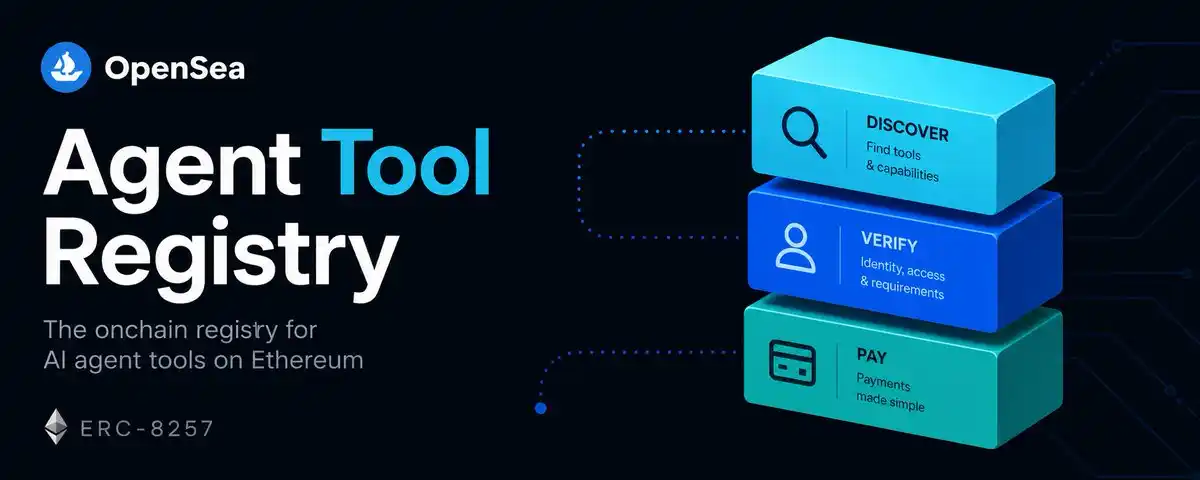
OpenSea lance ERC-8257 : le magasin d'outils pour agents d'IA, achetez un NFT pour débloquer une API

**OpenSea lance ERC-8257 : une place de marché d'outils pour agents IA** Le standard ERC-8257, récemment approuvé par OpenSea, constitue une infrastructure clé pour l'économie des agents IA. Il s'agit d'un registre d'outils sur la blockchain où les développeurs peuvent publier des services (API, etc.) et définir des règles d'accès et de tarification exécutées de manière décentralisée. Les agents IA peuvent alors parcourir ce registre, acquérir automatiquement les droits d'accès nécessaires (par exemple en achetant un NFT spécifique) et utiliser les outils sans intervention humaine. Un cas concret illustre son fonctionnement : un agent cherchant à évaluer un NFT se voit refuser l'accès à un outil de pricing professionnel, à moins de détenir un NFT particulier (CHONK). L'agent achète alors le NFT sur une place de marché et obtient instantanément l'accès à un tarif préférentiel. Ce système ouvre de nouvelles utilités pour les NFT existants, transformant la détention en clé d'accès à des services pour agents. Il fonctionne en tandem avec d'autres standards comme MCP (découverte d'outils), ERC-8004 (identité de l'agent) et x402 (micro-paiements). Déjà déployé sur Ethereum et Base, OpenSea encourage les développeurs à expérimenter avec le SDK fourni pour construire de nouveaux outils (oracles, abonnements d'analyse, etc.).

marsbitIl y a 32 mins

OpenSea lance ERC-8257 : le magasin d'outils pour agents d'IA, achetez un NFT pour débloquer une API

marsbitIl y a 32 mins

Le fondateur de Bankless : pourquoi j'ai vendu tous mes ETH

L'auteur, David Hoffman, cofondateur de Bankless, explique son récent choix de vendre tous ses ETH. Il souligne que cette décision a été difficile, car il a construit sa carrière et sa communauté autour d'Ethereum. Son raisonnement principal est que le récit « l'ETH est de l'argent », qu'il a longtemps porté, s'est déjà matérialisé. Il estime qu'Ethereum a atteint la valorisation qu'il mérite et que le potentiel de réévaluation significative de l'ETH (à la hausse ou à la baisse) est désormais faible. Bien qu'il reste extrêmement optimiste quant à la réussite future du réseau Ethereum, il pense que cette réussite profitera principalement aux applications et aux L2, pas à l'actif ETH lui-même. Hoffman développe plusieurs points clés : 1. Le statut de monnaie pour l'ETH nécessitait une domination écrasante et parfaite d'Ethereum à tous les niveaux (technique, gouvernance, adoption), un défi de coordination trop exigeant. 2. La valorisation des L1 est fortement corrélée à leurs revenus (frais). Ethereum, en s'orientant vers une route à base de Rollups, cède la majorité de ces revenus à ses L2. 3. La « version forte » de la crypto-monnaie (un système financier alternatif) n'a pas réussi à s'imposer durablement dans l'opinion publique en dehors d'une brève période. 4. Ethereum fonctionne comme un « donneur », fournissant une sécurité et une infrastructure de qualité au prix coûtant, sans capter de marge substantielle pour son actif natif. Son architecture favorise l'écosystème, pas la valorisation de l'ETH. En conclusion, il vend non par bearishness sur l'ETH, mais parce qu'il considère que la thèse d'investissement qu'il suivait est accomplie. Il souhaite réallouer son capital vers d'autres opportunités, tout en restant confiant dans l'avenir de l'écosystème Ethereum.

marsbitIl y a 2 h

Le fondateur de Bankless : pourquoi j'ai vendu tous mes ETH

marsbitIl y a 2 h

Bankless Founder: Why I Sold All My ETH

L'auteur, David Hoffman, co-fondateur de Bankless, explique sa décision de vendre tous ses ETH. Malgré son optimisme pour le réseau Ethereum, il estime que la thèse « ETH est de l'argent », qu'il a longtemps défendue, s'est déjà matérialisée dans la valorisation actuelle de l'actif. Il ne prévoit pas de réévaluation significative future, ni à la hausse ni à la baisse. Hoffman avance plusieurs raisons. D'abord, la valorisation des L1 de contrats intelligents reste étroitement corrélée à leurs revenus (frais), une dynamique qu'Ethereum, en tant que « donneur » à son écosystème, ne domine plus comme avant. Ensuite, la « version forte » de la crypto-monnaie, basée sur des idéaux décentralisateurs, a perdu son élan après la fenêtre exceptionnelle de 2020-2022, affaiblissant le récit d'ETH comme monnaie globale. Enfin, l'utilité d'Ethereau profite autant, sinon plus, à d'autres actifs monétaires (comme les stablecoins) qu'à l'ETH lui-même. Il conclut que le chemin pour qu'ETH devienne une monnaie nécessitait une exécution parfaite et une domination écrasante du marché, ce qui ne s'est pas produit. Bien qu'il reste extrêmement optimiste quant à la réussite future du réseau Ethereum et de ses applications (théorie des « applications épaisses »), il considère que le potentiel de réévaluation de l'actif ETH est désormais limité, le conduisant à réallouer son capital.

链捕手Il y a 2 h

Bankless Founder: Why I Sold All My ETH

链捕手Il y a 2 h

Quelle est la variable clé qui déterminera le bull market de l'IA ?

Le titre de l'article est : "Quelles sont les variables clés qui déterminent le bull market de l'IA ?". L'article analyse la poursuite de la hausse des actifs liés à l'intelligence artificielle (IA) malgré un contexte macroéconomique difficile (pétrole à 100 dollars, pressions inflationnistes). Il identifie trois variables déterminantes pour la pérennité du marché haussier de l'IA : 1. **Court terme : Le choc de liquidité.** Le principal risque immédiat est que la remontée des taux d'intérêt (liée au pétrole et à l'inflation) soit plus rapide que la croissance des revenus récurrents annuels (ARR) des entreprises d'IA. Une crise de liquidité globale (ex. : débouclage des trades de portage au yen) pourrait fragiliser les valorisations élevées. 2. **Moyen terme : La concrétisation industrielle.** Le marché anticipe une diffusion extrêmement rapide de l'IA, exigeant une vitesse de pénétration 5 à 8 fois supérieure aux révolutions technologiques passées. La capacité de l'écosystème à adapter les organisations, les compétences et les modèles économiques à ce rythme sera cruciale pour justifier les valorisations actuelles. 3. **Long terme : Les contraintes structurelles.** Des défis plus profonds émergent : les besoins massifs en énergie et en infrastructures électriques pour les data centers, l'impact sur l'emploi et le pouvoir d'achat, la résistance sociale, et le risque de disruption technologique (ex. : une percée matérielle rendant obsolète les équipements actuels). Le point positif récent est le passage des agents IA d'un rôle d'assistant ("copilote") à un rôle d'exécution autonome ("pilote automatique"), ce qui accélère la consommation de ressources informatiques (tokens, puissance de calcul) et améliore les perspectives de revenus, justifiant davantage les dépenses d'investissement (Capex). En conclusion, bien que les perspectives industrielles à long terme restent solides, la continuation du bull market dépendra de la capacité de la croissance des revenus de l'IA à surpasser les contraintes de liquidité, à réaliser les promesses de diffusion rapide et à surmonter les limites physiques et sociétales.

marsbitIl y a 2 h

Quelle est la variable clé qui déterminera le bull market de l'IA ?

marsbitIl y a 2 h

Trading

Spot
Futures
活动图片