2 Days, 20x: A Quick Look at the Automated Market Making Mechanism of the New Gem Snowball

marsbitPublié le 2025-12-22Dernière mise à jour le 2025-12-22

Résumé

The meme token Snowball" launched on pump.fun on December 18 and gained significant traction in the English-speaking crypto community, reaching a $10 million market cap within four days while largely flying under the radar in Chinese crypto circles. Its core innovation is an automated market-making mechanism: instead of the typical "creator fee" (usually 0.5%–1% per transaction) going to the developer’s wallet—a common setup that often leads to rug pulls—Snowball directs 100% of this fee to an on-chain bot. This bot periodically: 1. Buys back tokens to create buy pressure, 2. Adds the purchased tokens and corresponding SOL to the liquidity pool to improve depth, 3. Burns 0.1% of tokens to induce deflation. The fee rate also adjusts dynamically based on market cap (0.05%–0.95%) to balance accumulation and transaction friction. The idea is a "snowball effect": trading generates fees → fees fuel buybacks → buybacks may push price up → higher prices attract more trading. On-chain data shows 7,270 holders, with the top 10 holding ~20% of supply. Trading volume has been relatively balanced between buys and sells. However, the token remains highly speculative. While the structure reduces dev exit risk, it doesn’t eliminate other meme coin risks like low liquidity, narrative fatigue, or large holder dumps. Similar projects like FIREBALL are emerging, suggesting a trend toward "mechanism-driven memes." But as past examples like OlympusDAO and Safemoon show, complex t...

The crypto market in December is as cold as the weather.

On-chain transactions have been dormant for a long time, and new narratives are hard to come by. Just look at the drama and gossip circulating in the Chinese CT (Crypto Twitter) these past few days, and you'll know hardly anyone is playing in this market anymore.

But the English-speaking community has been discussing something new.

A meme coin called Snowball launched on pump.fun on December 18th. In four days, its market cap surged to $10 million and is still hitting new highs; yet it's barely mentioned in Chinese circles.
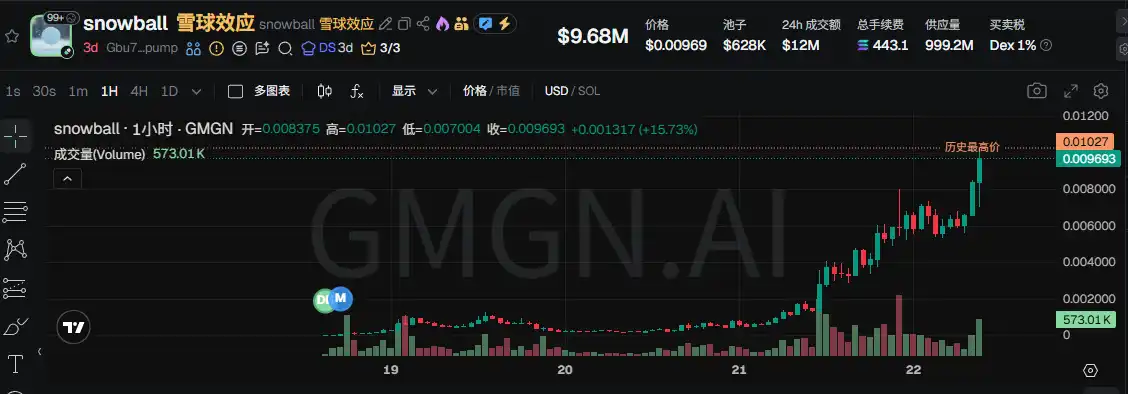
In the current environment, lacking new narratives and where even memes are considered unplayable, this is one of the few things that catches the eye and shows some localized wealth effect.

And the name Snowball itself tells the story it wants to convey:

A mechanism that allows the token to "roll and grow bigger by itself."

Turning Transaction Fees into Buying Pressure, Rolling the Snowball for Market Making

To understand what Snowball is doing, you first need to know how pump.fun tokens typically make money.

On pump.fun, anyone can create a token in minutes. The token creator can set a "creator fee," essentially taking a cut of every transaction into their own wallet, usually between 0.5% and 1%.

This money could theoretically be used for community building and marketing, but in practice, most Devs choose to: accumulate enough and then rug.

This is part of the typical life cycle of a shitcoin. Launch, pump, harvest fees, rug. Investors aren't betting on the token itself, but on the developer's conscience.

Snowball's approach is to not take this creator fee money.

To be precise, 100% of the creator fees do not go to anyone's wallet but are automatically transferred to an on-chain market-making bot.

This bot performs three actions at regular intervals:

First, it uses the accumulated funds to buy tokens on the market, creating buying support;

Second, it adds the bought tokens and the corresponding SOL to the liquidity pool, improving trading depth;

Third, it burns 0.1% of the tokens with each operation, creating deflation.
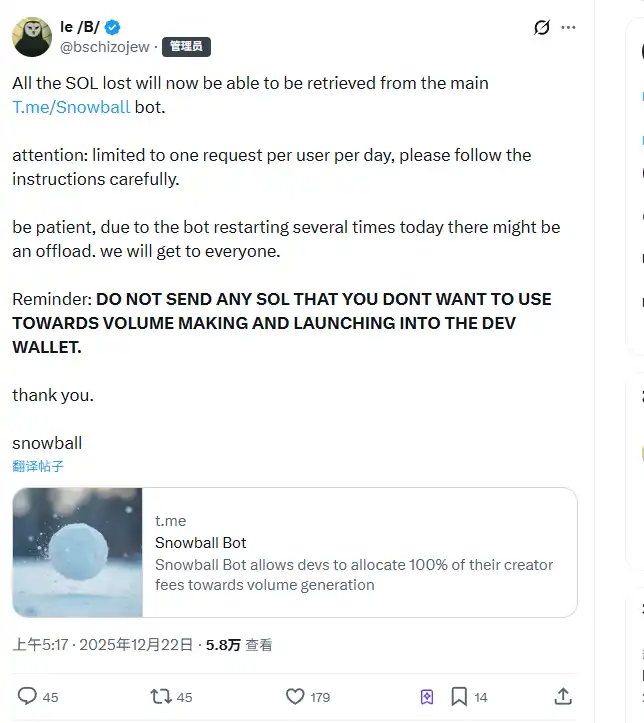
Additionally, the percentage of creator fees this coin charges is not fixed; it fluctuates between 0.05% and 0.95% based on market cap.

It takes a higher percentage when the market cap is low, allowing the bot to accumulate ammunition faster; it reduces the fee when the market cap is high, decreasing transaction friction.

In one sentence, the logic of this mechanism is: every time you trade, a portion of the money automatically becomes buying pressure and liquidity, instead of going into the developer's pocket.

Therefore, you can easily understand this snowball effect:

Transactions generate fees → Fees become buying pressure → Buying pressure pushes up the price → Higher price attracts more transactions → More fees... theoretically, it can roll on by itself.

On-Chain Data Situation

Now that we've covered the mechanism, let's look at the on-chain data.

Snowball launched on December 18th, four days ago. Its market cap grew from zero to $10 million, with a 24-hour trading volume exceeding $11 million.

For a shitcoin on pump.fun, this performance is considered relatively long-lasting in the current environment.

In terms of token distribution, there are currently 7,270 holder addresses. The top ten holders combined account for about 20% of the total supply, with the single largest holder holding 4.65%.
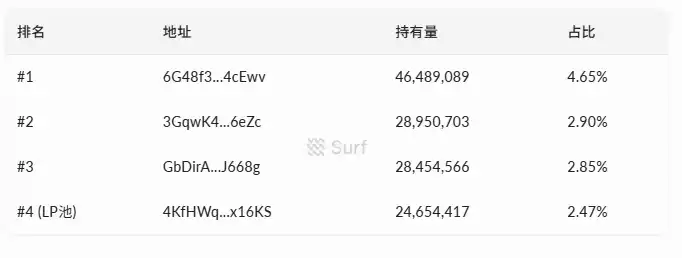
(Data source: surf.ai)

There's no address holding 20-30% of the supply; the distribution is relatively decentralized.

Regarding transaction data, there have been over 58,000 transactions since launch, with 33,000 buys and 24,000 sells. The total buy volume is $4.4 million, and the sell volume is $4.3 million, resulting in a net inflow of about $100,000. Buying and selling are basically balanced, with no one-sided selling pressure.

The liquidity pool holds about $380,000, half in tokens and half in SOL. For a market cap of this size, the depth isn't very thick, and large orders would still experience significant slippage.

Another noteworthy point is that Bybit Alpha announced listing the token less than 96 hours after launch, which to some extent confirms the short-term hype.

Perpetual Motion Meets a Cold Market

After looking around, you can see that the English community's discussion about Snowball mainly focuses on the mechanism itself. Supporters' logic is straightforward:

This is the first meme coin that locks 100% of the creator fees into the protocol, preventing developers from rugging, making it structurally safer than other shitcoins, at least.

The Dev is also playing into this narrative. The developer wallet, market-making bot wallet, and transaction logs are all public, emphasizing "verifiable on-chain."

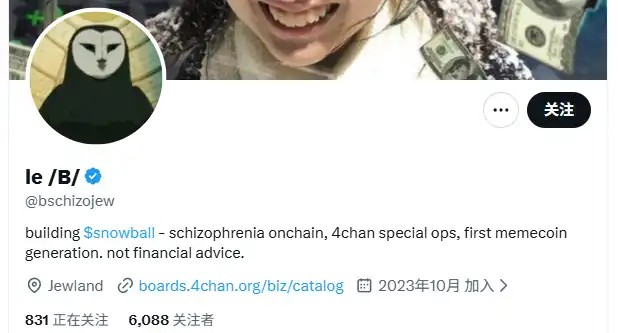
@bschizojew labels himself as "on-chain schizophrenic, 4chan special forces, first-generation meme coin veteran," radiating a self-deprecating degen vibe that strongly appeals to the crypto-native community.
But a safe mechanism and making money are two different things.

The snowball effect relies on the premise that there is sufficient trading volume to continuously generate fees to feed the bot for buybacks. More trades mean more ammunition for the bot, stronger buying pressure, higher prices, attracting more people to trade...

This is the ideal state where any meme coin's so-called buyback flywheel spins up in a bull market.

The problem is, the flywheel needs external force to start.

What is the current crypto market environment? On-chain activity is sluggish, overall meme coin hype is down, and there's already little capital willing to chase shitcoins. In this context, if new buying pressure doesn't keep up and trading volume shrinks, the fees the bot receives will become less and fewer, buybacks will weaken, price support will diminish, and trading willingness will decline further.

The flywheel can spin forward, but it can also spin in reverse.

A more realistic problem is that the mechanism solves only one risk point—"developers taking the money and running"—but meme coins face far more risks than that.

Whales dumping, insufficient liquidity, narratives going out of style—any one of these happening would render the 100% fee buyback largely ineffective.

Everyone is tired of being rugged. A Chinese crypto brother summarized it quite well:

Play if you want, but don't get in over your head.

More Than One Snowball is Rolling

Snowball isn't the only project telling this automated market-making story.

Within the pump.fun ecosystem, a token called FIREBALL is doing something similar: automatic buybacks and burns, packaged as a protocol other tokens can plug into. But its market cap is much smaller than Snowball's.
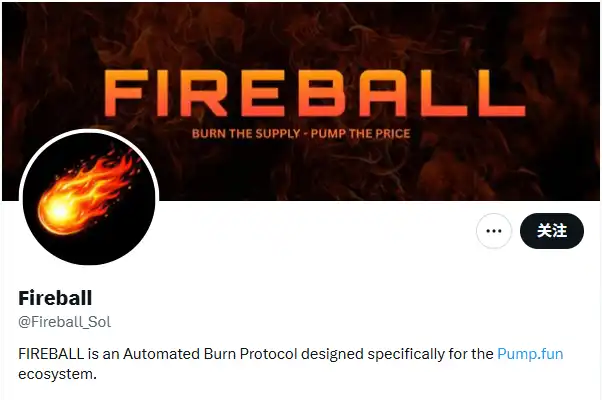
This indicates the market is currently responsive to the direction of "mechanism-based meme coins."

The traditional玩法 of shilling, pumping, and community hype is finding it harder to attract capital. Using mechanism design to tell a "structurally safe" story might be one of the recent trends for meme coins.

That said, artificially creating a specific mechanism isn't a new玩法.

The most typical case in 2021 was OlympusDAO's (3,3), which used game theory to package a staking mechanism, telling the story "if everyone holds, everyone profits," reaching a peak market cap of billions of dollars. The ending, as everyone knows, was a death spiral, dropping over 90%.

Even earlier, there was Safemoon's玩法 of "taxing every transaction and distributing it to holders," also a narrative of mechanism innovation, which ended with the SEC suing and charging the founders with fraud.

Mechanisms can be great narrative hooks, capable of gathering capital and attention in the short term, but the mechanism itself does not create value.

When external capital stops flowing in, even the most精巧designed flywheel will stop turning.

Finally, let's recap what this little gem is actually doing:

Turning the meme coin's creator fees into an "automated market-making bot." The mechanism itself isn't complicated, and the problem it solves is very clear: preventing developers from directly taking the money and running.

The developer not being able to rug doesn't mean you will make money.

If after reading this you find the mechanism interesting and want to participate, remember one thing: it is first and foremost a meme coin, and only secondly an experiment with a new mechanism.


Questions liées

QWhat is the core mechanism that Snowball uses to create a 'self-rolling' effect?

ASnowball uses a mechanism where 100% of the creator fees from each transaction are automatically sent to an on-chain market-making bot. This bot periodically uses the accumulated funds to buy tokens (creating buy pressure), adds the purchased tokens and corresponding SOL to the liquidity pool, and burns 0.1% of the tokens to create deflation.

QHow does the creator fee in Snowball differ from a typical pump.fun token?

AIn a typical pump.fun token, the creator fee (usually 0.5% to 1%) goes directly into the developer's wallet, which they can withdraw and potentially abandon the project with. In Snowball, 100% of this fee is automatically sent to an on-chain market-making bot instead of going to any individual, making it structurally harder for the developer to 'rug pull'.

QWhat are the potential risks of investing in a meme coin like Snowball, according to the article?

AThe risks include a general decline in market activity and meme coin hype, which could lead to reduced trading volume. If new buying pressure doesn't materialize, the bot's funding from fees decreases, weakening buy support and price stability. Other risks not solved by the mechanism include large holders (whales) dumping, insufficient liquidity, and the narrative simply falling out of fashion.

QWhat precedent does the article mention for meme coins with innovative mechanisms, and what was their outcome?

AThe article mentions OlympusDAO's (3,3) staking mechanism, which promised mutual gains if holders sold, but its市值 eventually fell over 90%. It also references Safemoon, which used a transaction tax redistribution mechanism and whose founders were later charged with fraud by the SEC. These examples show that mechanisms can be a good narrative but don't inherently create value if external capital stops flowing in.

QWhat key piece of advice does the article give to potential participants interested in Snowball's mechanism?

AThe key advice is to remember that Snowball is first and foremost a meme coin, and only secondly an experiment with a new mechanism. While the mechanism addresses developer rug pulls, it does not guarantee profits. Participants are advised to 'play but don't get too carried away' or 'don't go overboard'.

Lectures associées

Ce n'est pas Jensen Huang qui veut changer le PC, c'est le PC qui va faire sa propre révolution

L'industrie du PC, vieille de 40 ans, est en pleine transformation. En juin 2026, NVIDIA a lancé le super-puce RTX Spark pour PC Windows, marquant son entrée sur le marché des processeurs centraux. Soutenu par Microsoft et les principaux fabricants de PC, cet événement a officialisé la redéfinition de l'AI PC. Lors du Build 2026, Microsoft a repositionné Windows comme "plateforme native pour les agents d'IA locaux" et a présenté le Surface RTX Spark Dev Box. Jensen Huang a souligné que l'IA redessine l'industrie du PC, transformant l'ordinateur d'un outil passif en un assistant d'IA autonome capable d'exécuter des tâches en arrière-plan. Pourtant, le concept d'AI PC a été initialement lancé par Intel début 2026 avec ses processeurs Core Ultra de 3ᵉ génération. Le marché voit également l'arrivée de Qualcomm, AMD et Apple, signalant une tendance claire : l'IA migre massivement vers les dispositifs de calcul personnels. L'article retrace l'essor historique du duopole Wintel (Microsoft-Intel) qui a dominé l'industrie pendant des décennies, reléguant NVIDIA au rôle de fournisseur de composants. Le tournant est survenu avec les puces M d'Apple et la définition des "Copilot+ PC" par Microsoft en 2024, exigeant une puissance NPU minimale. Cependant, le manque d'applications IA locales tangibles a initialement freiné l'adoption. La stratégie de NVIDIA repose sur son écosystème. Avec 6 millions de développeurs CUDA, l'entreprise possède un avantage considérable en matière de logiciels. Le RTX Spark, une SoC intégrant CPU ARM, cœurs CUDA et mémoire unifiée, vise à porter cet écosystème sur PC portable, permettant l'exécution locale de grands modèles de langage. Trois signaux majeurs se dégagent : 1) Le PC passe d'une architecture centrée sur le CPU à une architecture centrée sur une SoC IA. 2) Il évolue d'un outil opéré par l'humain vers une plateforme de collaboration avec des agents IA autonomes. 3) La base massive de développeurs CUDA de NVIDIA trouve un nouveau support matériel grand public. Le succès dépendra du prix final, de la maturité de l'écosystème logiciel Windows sur ARM et de l'émergence d'applications phares pour les agents IA locaux. En définitive, la révolution est moins menée par un acteur spécifique que par la trajectoire inévitable de la technologie IA cherchant à s'intégrer au PC. Intel, avec ses processeurs Panther Lake, suit la même direction. Microsoft, en adaptant Windows, conserve un rôle pivot. L'ère de l'AI PC est ouverte, et l'industrie du PC est en train de se réinventer.

marsbitIl y a 47 mins

Ce n'est pas Jensen Huang qui veut changer le PC, c'est le PC qui va faire sa propre révolution

marsbitIl y a 47 mins

La SEC américaine envisage d'abroger une vieille règle de 2005 : que signifie-t-elle pour les actions tokenisées ?

Le 11 juin, la SEC américaine a proposé de supprimer les Règles 611 et 610(e) du Règlement NMS, une réforme potentielle de la structure des marchés traditionnels. La Règle 611, dite « trade-through rule », empêche les transactions d'ignorer les meilleures cotations disponibles sur d'autres plateformes. La SEC estime qu'elle est devenue moins nécessaire dans un marché désormais hautement automatisé, et qu'elle génère des coûts de conformité et une fragmentation excessive. La Règle 610(e) restreint les « cotations verrouillées » (prix d'achat égal au prix de vente) et « croisées » (prix d'achat supérieur au prix de vente). Sa suppression pourrait permettre des écarts de prix plus serrés, tout en réduisant la complexité des systèmes. Cette proposition est pertinente pour le monde de la tokenisation, car la SEC évoque explicitement les technologies de registre distribué et les contrats intelligents. En assouplissant ces règles conçues en 2005, la SEC pourrait ouvrir un espace pour des mécanismes de négociation plus innovants et compatibles avec des actifs tokenisés fonctionnant 24h/24. Cependant, cette réforme ne résout pas les défis réglementaires fondamentaux liés à la tokenisation des titres. La SEC estime que cette suppression pourrait générer des économies annuelles de 54 à 77 millions de dollars pour les acteurs du marché en réduisant les complexités induites par la réglementation.

Foresight NewsIl y a 2 h

La SEC américaine envisage d'abroger une vieille règle de 2005 : que signifie-t-elle pour les actions tokenisées ?

Foresight NewsIl y a 2 h

La transformation d'Ethena et l'anxiété de Wall Street

En juin 2026, le protocole de stablecoin Ethena a annoncé un partenariat stratégique avec le géant de la gestion d'actifs Janus Henderson. Cette collaboration marque une évolution majeure pour Ethena, qui se transforme d'un protocole DeFi natif en une entité intégrant des actifs financiers traditionnels de haut niveau. À l'origine connu pour son stablecoin USDe basé sur une stratégie delta-neutre (en utilisant des positions perpétuelles courtes pour couvrir des dépôts en cryptomonnaies), Ethena a dû réviser son modèle après que sa dépendance aux taux de financement des contrats perpétuels ait montré ses limites lors des ralentissements de marché. La plateforme a ensuite diversifié ses réserves, réduisant fortement l'exposition aux produits dérivés pour y inclure des fonds monétaires tokenisés (comme BUIDL de BlackRock), des obligations d'entreprise et, désormais via le partenariat, des fonds de CLO (Certificate of Loan Obligation) de Janus Henderson. USDe est ainsi devenu un stablecoin hybride, adossé à un mélange d'actifs cryptographiques et traditionnels (RWA). La coopération avec Janus Henderson est multidimensionnelle : intégration d'un fonds CLO dans les réserves de l'USDe, investissement de Janus Henderson dans le jeton de gouvernance ENA, utilisation de l'sUSDe (la version stakée) comme outil de gestion de trésorerie par le géant de l'asset management, et projet commun de développer des produits cotés en bourse (ETP) pour distribuer USDe et ENA à une clientèle institutionnelle. Cet engagement d'un acteur traditionnel de cette envergure reflète une "anxiété" stratégique de Wall Street face à la montée en puissance des stablecoins, devenus une couche de règlement essentielle. Face à une régulation clarifiée (loi GENIUS aux États-Unis) et à la concurrence d'autres grands noms (PayPal, banques), les institutions financières craignent de perdre le contrôle de l'accès aux clients et cherchent à sécuriser leur rôle dans les futures infrastructures financières en s'associant avec des protocoles innovants comme Ethena. Cette fusion croissante entre la finance traditionnelle et la finance décentralisée a pour cœur de bataille le marché des stablecoins.

Foresight NewsIl y a 3 h

La transformation d'Ethena et l'anxiété de Wall Street

Foresight NewsIl y a 3 h

Trading

Spot
Futures

Articles tendance

Comment acheter QUICK

Bienvenue sur HTX.com ! Nous vous permettons d'acheter Quickswap (QUICK) de manière simple et pratique. Suivez notre guide étape par étape pour commencer votre parcours crypto.Étape 1 : Création de votre compte HTXUtilisez votre adresse e-mail ou votre numéro de téléphone pour ouvrir un compte sur HTX gratuitement. L'inscription se fait en toute simplicité et débloque toutes les fonctionnalités.Créer mon compteÉtape 2 : Choix du mode de paiement (rubrique Acheter des cryptosCarte de crédit/débit : utilisez votre carte Visa ou Mastercard pour acheter instantanément Quickswap (QUICK).Solde :utilisez les fonds du solde de votre compte HTX pour trader en toute simplicité.Prestataire tiers :pour accroître la commodité d'utilisation, nous avons ajouté des modes de paiement populaires tels que Google Pay et Apple Pay.P2P :tradez directement avec d'autres utilisateurs sur HTX.OTC (de gré à gré) : nous offrons des services personnalisés et des taux de change compétitifs aux traders.Étape 3 : stockage de vos Quickswap (QUICK)Après avoir acheté vos Quickswap (QUICK), stockez-les sur votre compte HTX. Vous pouvez également les envoyer ailleurs via un transfert sur la blockchain ou les utiliser pour trader d'autres cryptos.Étape 4 : tradez des Quickswap (QUICK)Tradez facilement Quickswap (QUICK) sur le marché Spot de HTX. Il vous suffit d'accéder à votre compte, de sélectionner la paire de trading, d'exécuter vos trades et de les suivre en temps réel. Nous offrons une expérience conviviale aux débutants comme aux traders chevronnés.

179 vues totalesPublié le 2024.12.11Mis à jour le 2026.06.02

Comment acheter QUICK

Discussions

Bienvenue dans la Communauté HTX. Ici, vous pouvez vous tenir informé(e) des derniers développements de la plateforme et accéder à des analyses de marché professionnelles. Les opinions des utilisateurs sur le prix de QUICK (QUICK) sont présentées ci-dessous.

活动图片











