Robert Kennedy Jr Warns of Mega Economic Crisis — Says 'It's Not Just the Banks'

Crypto.newsPublié le 2023-05-05Dernière mise à jour le 2023-05-05

Résumé

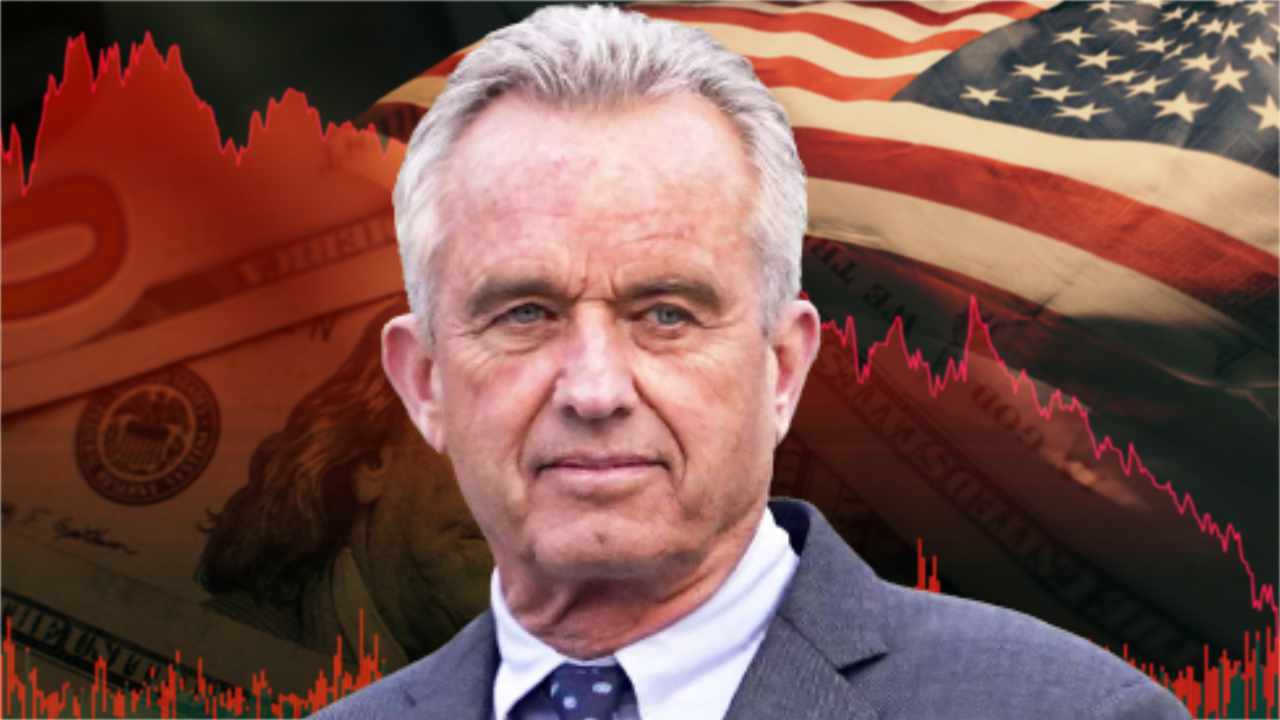
U.S. Presidential Candidate Robert F. Kennedy Jr. has warned that “the banking collapse is the tip of an economic mega-crisis,” emphasizing that “It’s not just the banks.” He also slammed President Joe Biden’s crypto mining tax proposal. “It is a mistake for the U.S. government to hobble the industry and drive innovation elsewhere,” Kennedy stressed.

Robert Kennedy Jr Says US Banking Collapse Is the Tip of Economic Mega-Crisis — 'It's Not Just the Banks'

U.S. Presidential Candidate Robert F. Kennedy Jr. has warned that “the banking collapse is the tip of an economic mega-crisis,” emphasizing that “It’s not just the banks.” He also slammed President Joe Biden’s crypto mining tax proposal. “It is a mistake for the U.S. government to hobble the industry and drive innovation elsewhere,” Kennedy stressed.

Looming Economic ‘Mega-Crisis’

Robert F. Kennedy Jr., who launched his presidential campaign last month, issued several warnings this week about the state of the U.S. economy, the banking crisis, and President Joe Biden’s cryptocurrency mining tax proposal. He is a nephew of President John F. Kennedy and a son of U.S. attorney general Robert F. Kennedy.

Firstly, Kennedy warned about an incoming economic “mega-crisis.” He tweeted Tuesday:

The banking collapse is the tip of an economic mega-crisis. It’s not just the banks.

“Job openings plummeted for the third month in a row. Core factory orders dropped for the second consecutive month. Inflation is destroying the middle and working class. We need to turn our attention to rebuilding our nation,” his tweet further details.

Bank Stocks Are Crashing, Bailouts Create Problems

Commenting on President Joe Biden assuring Americans on Monday that the banking system is “safe and sound,” Kennedy pointed out in another tweet that “bank stocks are crashing.” He stressed: “The American people deserve more than glib assurances and perception management.”

The presidential hopeful continued: “Bailouts create perverse incentives for banks to make reckless swings for the fences with depositors’ money, knowing they will pocket vast windfalls when they connect and that the taxpayer will bail them out when they miss.”

He added: “I understand the rationale for the rescue of First Republic Bank. The problem isn’t this specific bailout. It’s a system of too-big-to-fail institutions that requires bailouts in the first place.” Regulators seized First Republic Bank on Monday and sold most of its assets to JPMorgan Chase.

Biden’s Crypto Mining Tax Proposal Is ‘a Bad Idea’

On Wednesday, Kennedy also slammed the proposed Digital Asset Mining Energy (DAME) excise tax. “Biden’s proposed 30% tax on cryptocurrency mining is a bad idea,” he tweeted, elaborating:

Cryptocurrencies, led by bitcoin, along with other crypto technologies are a major innovation engine. It is a mistake for the U.S. government to hobble the industry and drive innovation elsewhere.

“Some advocate tight control of cryptocurrencies to prevent their use by criminals. But it isn’t just criminals who want privacy. So do dissidents and ordinary citizens,” he emphasized. “Governments harass their enemies and crush dissent by controlling bank accounts and payment platforms. Until we restore trust in government (a distant prospect) we need cash and crypto to ensure freedom.”

Lectures associées

Les gros investisseurs sont très actifs : ils achètent et vendent des altcoins majeurs aujourd'hui !

Les gros investisseurs, souvent appelés "baleines", sont très actifs sur le marché des cryptomonnaies, effectuant d'importantes transactions sur plusieurs altcoins majeurs. Un premier grand investisseur a réalisé un profit substantiel en prenant une position longue de 20 000 ETH (Ethereum) à environ 1 936 $, portant sa position à environ 50 millions de dollars pour un bénéfice non réalisé dépassant 11 millions de dollars. Le même investisseur a ensuite ouvert une nouvelle position longue sur 100 000 SOL (Solana) avec un effet de levier de 20x, à un prix d'entrée d'environ 104,5 $, pour une position totale évaluée à 10,45 millions de dollars. Parallèlement, un deuxième grand investisseur a attiré l'attention par des achats agressifs du token HYPE (Hyperliquid). Après un achat initial de 24 millions de dollars de HYPE en juin, environ 24 millions de dollars supplémentaires ont été utilisés ces dernières 24 heures pour acquérir 282 090 HYPE à un prix moyen d'environ 81,5 $. Les acquisitions totales de HYPE par les grands investisseurs atteignent désormais 4,67 millions de tokens, d'une valeur d'environ 381 millions de dollars, générant un bénéfice non réalisé d'environ 74,4 millions de dollars sur cette seule transaction. Ces mouvements importants mettent en lumière la forte activité et l'optimisme des grands porteurs sur des actifs cryptographiques comme Ethereum, Solana et Hyperliquid. *Ceci n'est pas un conseil en investissement.

cryptonews.ruIl y a 4 mins

Les gros investisseurs sont très actifs : ils achètent et vendent des altcoins majeurs aujourd'hui !

cryptonews.ruIl y a 4 mins

Pourquoi le staking de l'ethereum va changer en 2026

La validation par preuve d'enjeu (staking) de l'Ethereum devient un outil de gestion d'actifs pratique pour les conseillers financiers et les grands investisseurs, générant des revenus intégrés directement à partir de la blockchain, contrairement au Bitcoin. Pour participer, les utilisateurs peuvent devenir validateurs indépendants (nécessitant 32 ETH), ou utiliser des pools, des plateformes centralisées ou des protocoles de staking liquide. Le rendement annuel se situe généralement entre 2% et 5%, variant selon plusieurs facteurs. Le staking transforme l'ETH d'un actif passif en un actif productif. Le modèle natif verrouille les fonds pour une liquidité limitée, tandis que le staking liquide offre plus de flexibilité via des jetons représentatifs. D'ici 2026, la mise à jour majeure "Glamsterdam" visera à renforcer la décentralisation, la résilience quantique et l'évolutivité du réseau, consolidant ainsi son attractivité pour les participants institutionnels. Les avantages incluent un revenu passif et la sécurisation du réseau. Les risques couvrent les pannes techniques, les pénalités, la perte d'accès, les risques des plateformes/tiers et l'évolution réglementaire. Avant de recommander un produit, il est crucial d'examiner : la responsabilité en cas de pénalité, la robustesse de l'infrastructure, le modèle de liquidité, la composition des récompenses (part protocolaire stable vs MEV variable), la prévisibilité du rendement et les solutions de garde. Les tendances à surveiller incluent l'évolution réglementaire sur la garde d'actifs, les travaux sur la résistance quantique et les discussions législatives concernant les récompenses sur les stablecoins.

cryptonews.ruIl y a 56 mins

Pourquoi le staking de l'ethereum va changer en 2026

cryptonews.ruIl y a 56 mins

Trading

Spot
活动图片