Zcash Flaw Sparks Monero Audit Interest as Privacy Coin Debate Heats Up

TheNewsCryptoPublicado a 2026-06-06Actualizado a 2026-06-06

Resumen

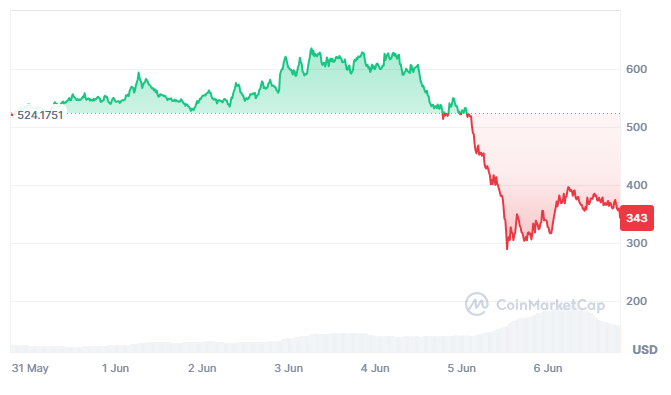
A significant security flaw in Zcash's Orchard privacy pool was disclosed by non-profit developer Shielded Labs, causing ZEC's price to drop 38% in 24 hours before a modest recovery. The vulnerability, discovered on May 29th by security researcher Taylor Hornby using Anthropic's Opus 4.8 AI model, could have allowed an attacker to create an unlimited supply of counterfeit ZEC tokens undetected. This event has intensified the privacy coin debate. In response, Hornby announced plans to audit Monero (XMR), a leading privacy-focused cryptocurrency that, unlike Zcash, defaults to hiding all transaction data. Hornby expressed confidence in finding vulnerabilities in such privacy coins. The disclosure has cast fresh security scrutiny on the sector.

After non-profit developer Shielded Labs revealed a serious weakness in the blockchain’s Orchard privacy pool, which could have jeopardized the integrity of the token supply, Zcash (ZEC) fell 38% in 24 hours, speeding up the drop. Recent trading for ZEC has been around $361, with a low of $290, and the price has made some modest recovery of around 8% in the last 24 hours as per data from CMC.
Fresh Security Scrutiny

On Thursday night, Shielded Labs released a comprehensive disclosure about X, exposing a security hole that, if used, might have enabled an attacker to secretly produce an infinite supply of fake ZEC tokens. Imagine someone sneaking into the Federal Reserve’s dollar printing machine and making off with a bunch of additional cash; the only difference is that not even the Fed would know it happened.

The flaw was found on May 29th by Taylor Hornby, a security expert hired by Shielded Labs in April 2026 to find protocol weaknesses before bad guys could. The Orchard circuit is the cryptographic scheme supporting Zcash’s most sophisticated privacy pool; Hornby performed a focused evaluation of it using Anthropic’s newly published Opus 4.8 AI model.

One of the tokens that security researcher Taylor Hornby plans to audit next is privacy coin Monero. Hornby utilized Anthropic’s Opus 4.8 AI model to discover a serious flaw in Zcash. Hornby said, “Absolutely!” when asked on X whether he could find vulnerabilities in private coins like Monero. Adding that, Monero will be put up to my list of things to audit.

Unlike Zcash, which gives users the option to be either visible or shielded, Monero (XMR) defaults to hiding transaction data and is one of the biggest privacy-focused cryptocurrencies.

Highlighted Crypto News Today:

Worldcoin Falls Terribly as Arthur Hayes Dumps WLD

TagsAltcoinMoneroZcash

Preguntas relacionadas

QWhat was the key event that triggered the drop in Zcash's price and sparked interest in auditing Monero?

AThe key event was the disclosure by Shielded Labs of a serious security flaw in Zcash's Orchard privacy pool, which could have allowed an attacker to secretly create an unlimited supply of fake ZEC tokens.

QWho discovered the critical vulnerability in Zcash's Orchard circuit, and what tool did they use?

AThe vulnerability was discovered by security expert Taylor Hornby, who was hired by Shielded Labs. He found the flaw using Anthropic's newly published Opus 4.8 AI model.

QHow did the disclosure of the Zcash flaw specifically impact its price (ZEC) in the short term?

AFollowing the disclosure, Zcash (ZEC) fell 38% within 24 hours, reaching a low of around $290. It later saw a modest recovery of about 8% in the subsequent 24 hours.

QWhat is the fundamental difference between Monero's (XMR) and Zcash's (ZEC) approach to privacy, as mentioned in the article?

AThe fundamental difference is that Monero defaults to hiding all transaction data by design, whereas Zcash gives users an option to choose between transparent (visible) or shielded (private) transactions.

QWhat is the next project that security researcher Taylor Hornby plans to audit, and what was his confident response regarding finding vulnerabilities in it?

ATaylor Hornby plans to audit the privacy coin Monero next. When asked on X if he could find vulnerabilities in privacy coins like Monero, he responded, 'Absolutely!'

Lecturas Relacionadas

Unlocking $100 Million in Liquidity? Pump.fun's New Policy Tests the 5-Minute Pump Technique

Pump.fun, a popular meme coin launchpad, has introduced a new standard mechanism called BOOST. It aims to address a significant capital efficiency issue: when a newly launched token graduates from its initial bonding curve to a liquidity pool (LP), roughly 20% of its liquidity becomes permanently locked as "dead liquidity," estimated to waste over $100 million annually. Instead of locking these funds permanently, BOOST repurposes them. Upon a token's migration, approximately 20% of the settlement funds (e.g., 17.6 SOL or ~$2516 USDC) are used to buy back the token on the open market over a 5-minute period via a Time-Weighted Average Price (TWAP) mechanism. All purchased tokens are immediately burned. This creates a brief, systematic buy pressure immediately after migration, potentially generating a short-term price surge ("pump") while permanently reducing the token's circulating supply. The goal is to enhance the immediate post-launch trading experience, potentially increasing trader retention and sustainable protocol revenue, which funds ongoing token buybacks. However, concerns exist that this artificial 5-minute boost could lower the barrier for launching low-quality tokens and lead to steeper price crashes once the buy pressure stops, if followed by large sell-offs. The feature automatically applies to tokens migrating after July 21, 2024, but not to previously migrated tokens or those launched via the Mayhem AI Agent lab.

marsbitHace 3 min(s)

Unlocking $100 Million in Liquidity? Pump.fun's New Policy Tests the 5-Minute Pump Technique

marsbitHace 3 min(s)

Podcast Notes | Conversation with GSR Asset Management Head: To Determine if This Crypto Rally is Real, Just Watch the Lending Rates on Aave

Podcast Summary: Dialogue with GSR's Head of Asset Management: To Determine if This Crypto Rally is Real, Just Check Lending Rates on Aave Andy Baehr, Managing Director of Asset Management at GSR, discusses the current crypto market, characterizing it as stuck in a state of "ambivalence" with short-lived, unsustainable rallies. He outlines a simple framework: the market moves between "ambivalence" and "conviction" (sustained upward momentum). Currently, every rally resembles a single-stage rocket booster that quickly fizzles out. Baehr identifies three key signals to watch: 1) DeFi lending rates, 2) the potential passage of the CLARITY Act, and 3) the market forming a consensus on the "Fed hawkish peak." He emphasizes that the most immediate indicator for the sustainability of the recent CPI-triggered rally is the USDC borrowing rate on Aave, currently around 3.75%—close to U.S. Treasury yields. The absence of a credit spread indicates low leverage demand and a lack of market energy. He explains that a healthy, sustained rally requires layered buying pressure. Last year's rally progressed from an ETH short squeeze to crypto-native trader influx and finally to ETF inflows. Currently, this structure is missing. Other potential structural buyers like Digital Asset Treasury (DAT) companies are absent, and ETF flows have proven transient. Baehr notes that while small-cap crypto tokens outperformed large caps in Q2—a potential sign of capitation in major assets—capital is also flowing to more exciting opportunities like AI stocks and tech IPOs, leaving crypto sidelined. Regarding DeFi, he highlights that platforms like Aave provide a clear, real-time signal of leverage demand through their supply/demand-driven interest rates. A significant, sustained rate increase would signal genuine market conviction. He also observes the quiet emergence of fixed-income-like products and vaults in DeFi. On regulation, the probability of the CLARITY Act passing before the August 7th deadline has dropped linearly from 75% to below 40% on Polymarket. Baehr suggests its passage would be treated as a bullish surprise, a potent driver for price movement. However, political hurdles, including ethical clause debates and disclosures about the First Family's crypto profits, remain significant obstacles. Ultimately, the market awaits clarity on the Fed's terminal rate under Chair Warsh. Until the "Fed Solstice"—the point where the market collectively understands the peak of hawkish policy—sustained conviction will be difficult to achieve.

marsbitHace 34 min(s)

Podcast Notes | Conversation with GSR Asset Management Head: To Determine if This Crypto Rally is Real, Just Watch the Lending Rates on Aave

marsbitHace 34 min(s)

Trading

Spot
活动图片





