A crowdsourcing platform that cost just a few cents per task, yet once supported the entire deep learning era.
Now, it's shutting down.
Amazon has just announced that its crowdsourcing platform, Mechanical Turk, will cease operations completely on September 30th this year.

At its peak, over 500,000 people were online on the platform doing odd jobs—looking at images, classifying, labeling—completely manually completing the small tasks that computers couldn't yet learn to do at the time.
Later, this massive "human computing power" directly helped build the ImageNet dataset—
Without MTurk, the manual labeling of tens of millions of images in ImageNet would have been almost impossible.
Without ImageNet, Fei-Fei Li might not have become famous overnight.
Hinton and his students might not have become legendary in one battle, and deep learning might not have suddenly revived in 2012.
Twenty-one years later, real AI is getting better and better at doing this homework.
And those who once pretended to be smart for AI, along with this platform, have received the "Notice of Shutdown."
500,000 People Working Odd Jobs Online, MTurk Hired Real People to "Take Over"
Mechanical Turk (MTurk) launched in 2005.
Actually, at first, Amazon never imagined this thing would rewrite any AI history.
At the time, MTurk solved a very practical and dramatic problem: some tasks were extremely difficult for computers but ridiculously simple for people...
So Amazon came up with a very straightforward solution: since the program couldn't handle it, just break the problem into pieces and throw it to real people~
Thus, these broken-down small tasks were called HITs, or Human Intelligence Tasks.
For example, if a company had 10,000 images to classify, MTurk's approach was to directly split them into 10,000 independent tasks and scatter them across the platform simultaneously.
100 people could work together, 1,000 people could, and with tens of thousands online, it was even faster.
In other words, MTurk didn't make a single person work faster, but turned a task that originally could only be done in a queue into something that could be "globally parallelized."
Truly a manual version of the data flywheel...

The name Mechanical Turk itself also perfectly matches this "gameplay."
In the 18th century, there was a famous Mechanical Turk in Europe. From the outside, it was a machine that could play chess by itself, even against Napoleon.
Later, it was discovered that there had always been a real chess player hidden inside the machine!? (I underestimated it...)
Amazon moved this story to the internet, fitting almost perfectly—the program appeared to be processing automatically, but the real work was done by people behind the screens.
Bezos once gave it a description that was almost prophetic:
Artificial Artificial Intelligence.
Once this idea took off, MTurk quickly grew from an internal Amazon tool into a global crowdsourcing marketplace.
By 2011, MTurk had gathered over 500,000 Workers from more than 190 countries.
With more people, the tasks it could handle also expanded rapidly: image screening, speech transcription, text classification, data cleaning, sentiment judgment, content moderation.
As long as it was a task where "machines easily struggle, but people can decide in seconds," it could be thrown here.
And it was thrown here for 21 years.
Without MTurk, There Would Be No ImageNet and the Deep Learning Revolution Today
Rewind to around 2006.
Fei-Fei Li, who had just started teaching at Princeton, decided to do something rather against the trend at the time—
Create a large enough visual encyclopedia for machines.
Back then, mainstream computer vision datasets often had only thousands to tens of thousands of images—too little data. Models easily became test-takers, memorizing patterns in the training set but struggling to truly understand the myriad objects in the real world.
So the Fei-Fei Li team wanted to do something very crazy at the time: create a "large enough" visual world for machines.
Thus, the ImageNet dataset was born.
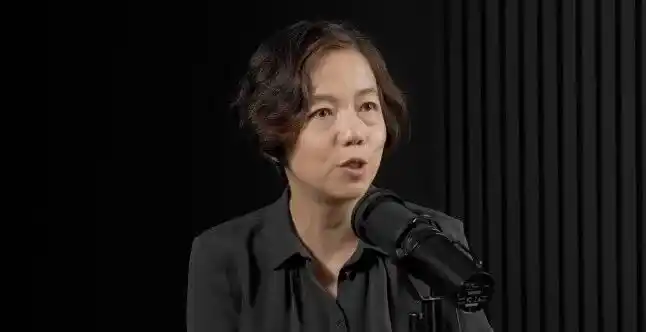
Using WordNet as its skeleton, ImageNet broke down the real world into concepts, then stuffed hundreds or thousands of real images under each concept.
Dogs, cars, apples, chairs, birds, fish... anything that could be defined was packed in as much as possible.
But soon, a more practical problem hit head-on—
Finding images wasn't hard; Google, Yahoo, Flickr could indeed search, but the real trouble was that the images returned weren't necessarily correct, or were completely irrelevant!!!
So after the search engine fished out the images, the final step still required humans: confirming them one by one.
To give an exaggerated number, the scale of candidate images ImageNet later had to handle exceeded 160 million!!! This time, the manpower problem became a deadlock...

Just as ImageNet was about to be bogged down by the massive manual image screening, the Fei-Fei Li team turned their attention to the recently launched Amazon Mechanical Turk.
The ImageNet team began breaking down the massive image screening work into micro-tasks, then distributing them to global Workers on the MTurk platform.
A grand AI infrastructure was thus broken down into countless ordinary "mouse clicks."
The ImageNet paper published in 2009 mentioned that the dataset already contained 5,247 concepts and 3.2 million organized images at the time.
The number given by the ImageNet team later when reviewing the entire project was: 49,000 MTurk workers from 167 countries.
In other words, what truly supported this image screening project behind ImageNet was a temporary global labeling army.
That's why without MTurk, ImageNet might truly not have been possible back then...

After ImageNet was built, the story truly began to accelerate.
In 2010, the ImageNet Challenge kicked off. Models from around the world started training on the same dataset, then competing on the same leaderboard.
Two years later, the combination later repeatedly written into AI history took the stage—
The University of Toronto's Geoffrey Hinton, and his two students Alex Krizhevsky and Ilya Sutskever.
The three participated in the ImageNet Large Scale Visual Recognition Challenge with a deep convolutional neural network.
They forcefully pushed the Top-5 error rate in the 2012 ImageNet Challenge down to about 15%, suddenly leaving traditional methods far behind.
This also made the entire computer vision community see so directly for the first time that combining massive data, GPU computing power, and deep neural networks could leapfrog performance by a whole step.
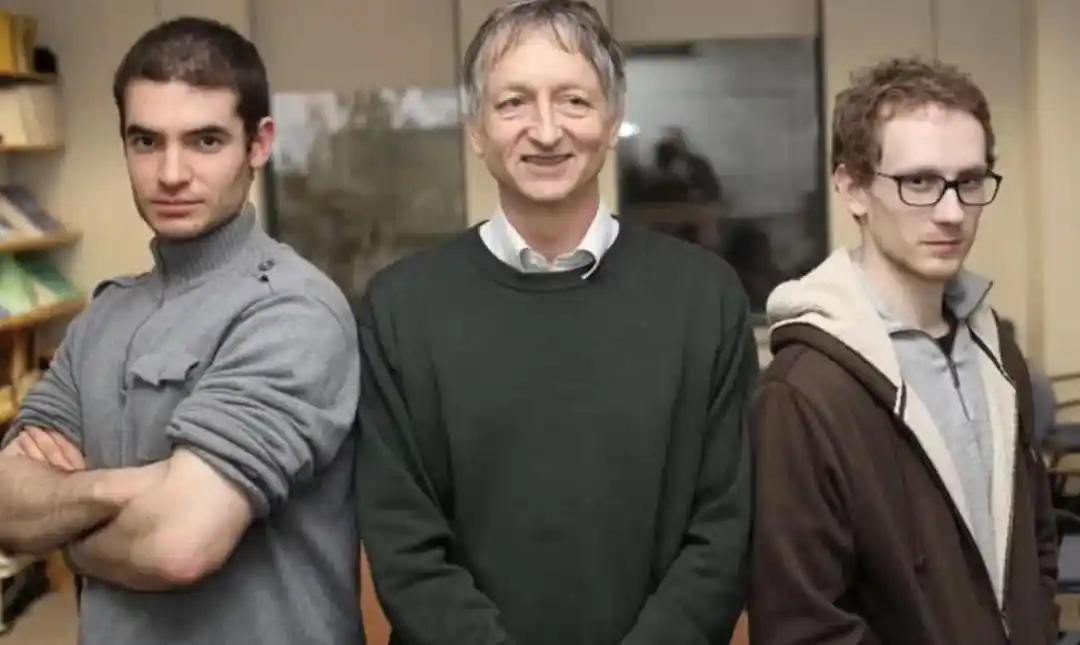
From left to right: Ilya Sutskever, Geoffrey Hinton, and Alex Krizhevsky
From then on, Alex Krizhevsky's name was welded to AlexNet.
Ilya later went to Google Brain, co-founded OpenAI and served as Chief Scientist, left and later founded SSI.
Hinton later won the Turing Award and became recognized as one of the godfathers of deep learning.
Fei-Fei Li returned to teach at Stanford, co-led HAI, and established her position in modern computer vision history with ImageNet.
After that, VGG came, GoogLeNet came, ResNet came.
The ImageNet leaderboard was beaten down year after year. Deep learning charged from vision into speech, then into natural language processing, and finally to today's era of large models.
The world is really magical—
The Fei-Fei Li team used MTurk to create ImageNet; ImageNet made Fei-Fei Li famous; Hinton and his students became legendary through ImageNet; deep learning moved towards revival through that victory.
Nearly 50,000 ordinary people from 167 countries, sitting in front of computers, "clicked" hundreds of millions of candidate images bit by bit into ImageNet.
AI Finally Learned to Do the Work, but MTurk Shuts Down First
It is precisely because of this that the shutdown of Mechanical Turk today seems particularly like the closing of an era.
Amazon's official statement is very restrained, only stating that it is continuously evaluating its products and services and therefore decided to stop MTurk.
CNBC previously cited Krista Pawloski from the data worker rights organization Turkopticon, saying that MTurk has been declining over the years, with Amazon investing less and less, and new-generation data annotation platforms constantly drawing away workers and clients.
But a more direct reason, bluntly put, is that the tasks that were most valuable back then are increasingly things AI can do itself...
In 2005, asking a machine to judge if there was a dog in an image was a real challenge, but now it's a basic task multimodal models can handle effortlessly.
At the same time, the AI industry's demand for "people" has also changed.
Frontier models now need professionals like programmers, doctors, and lawyers to review code, evaluate responses, and test reasoning and safety.
Thus, new platforms like Scale AI, Mercor, Prolific have risen, starting to screen and manage experts, providing more professional training and evaluation data.
In comparison, MTurk's crowdsourcing model of "anyone can take tasks, a few cents per task" is increasingly falling behind the times...
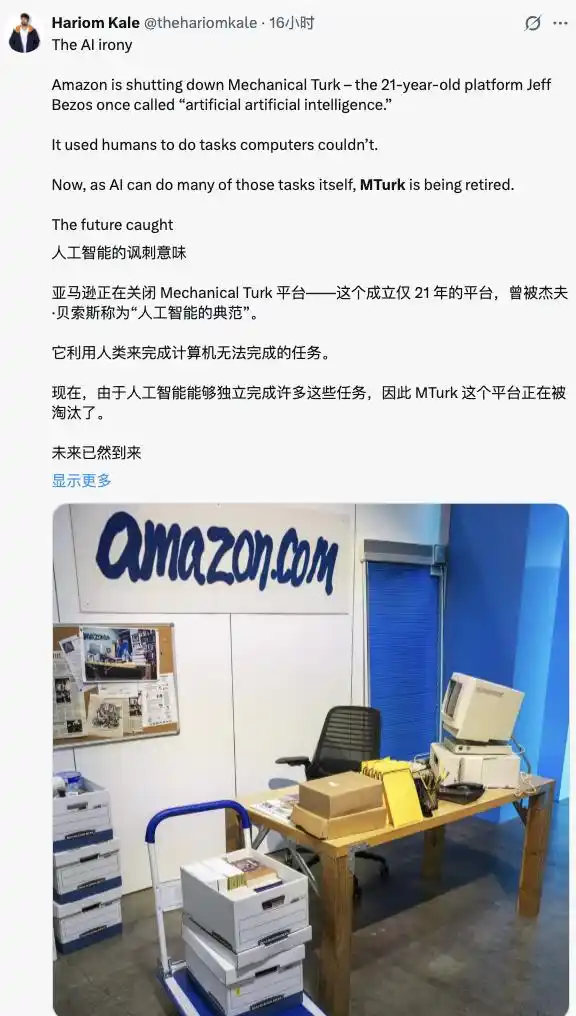
Even more surreal, MTurk workers themselves have started using AI!!!
A 2023 study by Swiss scholars found that among surveyed MTurk workers, the proportion using AI models to complete text tasks could be as high as 46%.
Originally, clients were paying for human judgment, but some workers might, after accepting a task, pass the question to a model like ChatGPT for an answer.
This is somewhat darkly humorous...
The fate of MTurk is actually a microcosm of AI over the past 20 years.
At first, humans hid behind machines, clicking image by image, painstakingly building ImageNet and pushing open the door to the deep learning era.
Later, AI grew up along this data, finally learning to see images, hear sounds, and write text by itself.
Twenty-one years later, those who pretended to be smart for AI have stepped down.
The "Mechanical Turk" that hid a real chess player can finally close its cabinet door.
Reference Links:
[1]https://www.cnbc.com/2026/08/25/amazon-service-that-jeff-bezos-called-artificial-ai-is-shutting-down.html
This article is from the WeChat public account "QbitAI," author: Meng Yao