US CPI Data Tonight May Significantly Weaken September Rate Hike Expectations?

marsbitPublicado a 2026-08-12Actualizado a 2026-08-12

Resumen

The key to whether the Fed will raise rates in September may hinge on tonight's US CPI data for July, scheduled for release at 8:30 AM ET. Market consensus expects a 0.1% MoM increase in headline CPI and 0.2% for core CPI. Following a surprisingly weak non-farm payrolls report last week, this data is a crucial test for September rate hike expectations. A mild reading could further dampen hike probabilities, while a hotter-than-expected report would increase pressure on the already hawkish-leaning Fed. Current market pricing for a September hike is around 50%. Analysts from Goldman Sachs and others predict data will likely land within expectations. Headline inflation is expected to be subdued mainly due to falling energy prices, while core inflation remains above target. Despite the likely mild data, hawkish voices within the Fed are growing. Several officials have recently indicated a preference for further tightening. The Fed's policy stance remains highly sensitive to inflation data. Market analysis suggests equities and bonds will face pressure if data is hot. A Morgan Stanley scenario analysis shows S&P 500 reactions ranging from a 2.5% drop to a 2% gain based on the core CPI outcome. Longer-term concerns include potential "AI inflation" from rising memory prices and market signals suggesting strong earnings growth may necessitate higher rates. Ultimately, even with tonight's data, the September decision remains open. The Fed will see additional employment, CPI, and...

The question of whether the Federal Reserve will raise interest rates in September may be answered tonight.

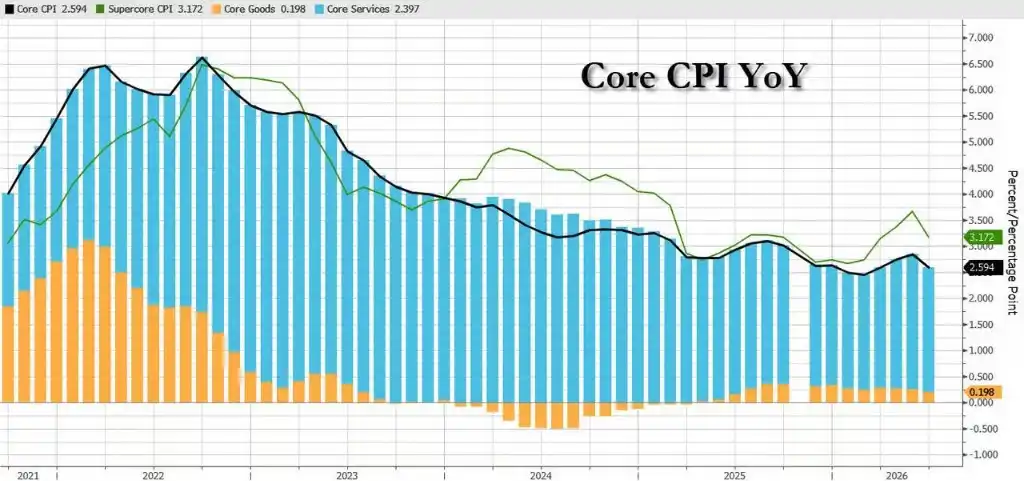
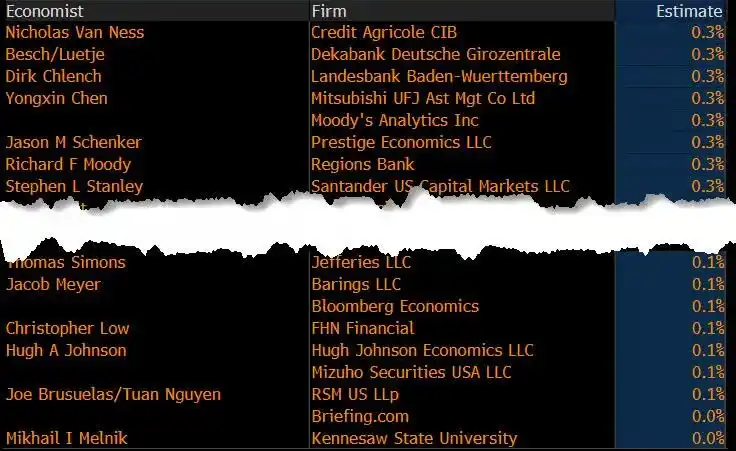
The US Bureau of Labor Statistics will release the July CPI data at 8:30 AM ET on Wednesday (20:30 Beijing time Wednesday evening). Market consensus expects the overall CPI to rise 0.1% month-over-month and core CPI to rise 0.2% month-over-month, with annual rates falling to 3.4% and 2.5%, respectively.

Following last week's unexpectedly weak non-farm payroll data, this report will serve as a crucial test for the September rate hike expectations. If the data is mild, the market may further lower the probability of a September hike; if the data is hotter than expected, it will put greater pressure on the already hawkish-leaning Fed.
Currently, interest rate futures markets are pricing in the probability of a September rate hike at around 50%, a so-called "coin toss." Last week's non-farm payroll data, showing a decline of 23,000 jobs in July, once significantly cooled rate hike expectations, but a subsequent rebound in oil prices pushed the probability back to an even split. Meanwhile, at the Fed's July policy meeting, three governors voted in favor of a rate hike, and several non-voting members also explicitly expressed a preference for tightening policy, giving hawkish voices considerable weight within the meeting. Tonight's CPI data will directly influence the tilt of this scale.

Mild Reading Highly Likely, But Still Above Target

According to forecasts from Goldman Sachs, Pantheon Macroeconomics, and other institutions, the CPI data is highly likely to fall within the expected range, unlikely to repeat the large fluctuations seen in last month's report.

Goldman Sachs expects July core CPI to rise 0.19% month-over-month, with an annual rate of about 2.47%, both slightly below market consensus; overall CPI is expected to rise only 0.05% month-over-month, with an annual rate of about 3.35%. Falling energy prices (-2.0%) are the main reason for suppressing overall inflation, while food prices are expected to rise modestly by 0.2%.
At the component level, Goldman Sachs expects used car prices to rise 0.5% month-over-month, new car prices to rise 0.1%, but auto insurance prices to fall 0.5%; regarding the housing component, owners' equivalent rent (OER) is expected to rise 0.23% month-over-month, rent to rise 0.16%, continuing the recent slowing trend; travel services are somewhat mixed, with airfare prices expected to rise 2.0% and hotel prices expected to fall 1.0%, partly because the demand boost from the World Cup has gradually faded.

Pantheon Macroeconomics expects core goods prices to rise 0.18% month-over-month, the largest increase since last September, partly influenced by Apple (AAPL) raising prices for most hardware products by 15% to 30% starting June 25th, but weakness in the services component will offset this—the agency expects airfare prices to fall 1.5% month-over-month, lodging prices to fall 1.0%, auto insurance to continue its downward trend, and energy goods prices to fall 2.6%, which will drag down the overall CPI monthly rate by about 11 basis points.

Fed's Stance: On Hold, But Hawkish Noise Growing

RSM Chief Economist Joe Brusuelas stated that if the July CPI is close to expectations, "a majority of the committee will likely choose to ignore supply-side shocks, and the FOMC will keep rates unchanged for the remainder of the year," while providing some buffer for Fed Chair Wash—who has faced policy pressure since taking office in May.

However, hawkish forces within the Fed are gathering. Cleveland Fed President Beth Hammack, one of the three governors who voted for a rate hike at the July meeting, said on Monday that multiple rate hikes may be needed, emphasizing that "a single 25-basis-point adjustment likely has a fairly limited impact on the economy." Additionally, non-voting members Schmid and Musalem indicated they would have been inclined to support a rate hike at the July meeting. While Fed Chair Wash acknowledged that current tightening financial conditions are doing some of the Fed's work and that the July jobs data and its downward revisions have indeed tempered recent tightening expectations, he also did not explicitly rule out the possibility of further hikes.

Bank of America maintains its forecast for three rate hikes in the coming months. The bank's economists noted in a client report that the July employment report "did not change the overall picture of the labor market," and the Fed's policy reaction function remains "highly tilted toward inflation data." The bank warned that if the core CPI monthly rate averages 0.25% over the next two months, "the Fed will almost certainly start hiking in September"; if it averages below 0.2%, the hike will be delayed; if it falls between, then September remains "a coin toss."

Stocks and Bonds Under Pressure, Stock Sentiment Indicator Flashing Red

J.P. Morgan's market intelligence team provided a scenario analysis for the CPI data:

· If core CPI month-over-month exceeds 0.30%, the S&P 500 is expected to fall 1.5% to 2.5%, with a probability of 5%;

· If it falls in the 0.25% to 0.30% range, the index is expected to fall 0.5% to 1.25%, probability 25%;

· If it falls in the 0.20% to 0.25% range (the highest probability scenario, about 40%), the index is expected to rise 0.25% to 0.75%;

· If it is below 0.20%, the gains could expand to 0.5% to 2%. Overall, the bond market's reaction to higher-than-expected inflation will be more severe than the stock market's.

It is worth noting that the current implied volatility magnitude priced by options expiring on August 12 is about 0.9%, slightly below the recent average of about 1.1%, indicating the market does not expect extreme outcomes from tonight's data.

A team led by Wells Fargo analyst Ohsung Kwon warned investors, advising them to set up hedge positions before the CPI release. The bank's sentiment indicator currently reads 1.4, within its strongest "sell" signal range since January 2018. "We believe hedging costs are low and are inclined to hedge the risk of hotter data," the analysts wrote. "If CPI exceeds expectations, the market narrative will quickly shift to stagflation concerns, especially against the backdrop of last week's weak jobs data." However, Wells Fargo also noted that second-quarter corporate earnings grew 30% year-over-year, exceeding market expectations by 8%, the strongest growth in over four years, which still supports the stock market to some extent.

Longer-Term Risks: AI Inflation and Market Structure Signals

Although the short-term inflation outlook is relatively mild, Societe Generale analyst Andrew Lapthorne pointed out that the structure of the stock market is sending warning signals. The bank's equity inflation proxy index, constructed from developed market stocks most correlated with inflation, has significantly outperformed the MSCI World Index over the past 12 months, accumulating a 71% gain. Lapthorne stated:

"The market is no longer expecting the contradictory combination of 'strong earnings growth + rate cuts,' but rather believes that such strong earnings growth typically accompanies the need for rate hikes."

Meanwhile, commodities related to the AI industry chain are facing upward pressure. Reportedly, soaring memory prices could push up core PCE by 0.5 percentage points. Goldman Sachs expects the July core PCE month-over-month rate to record a larger 0.26% increase, partly reflecting the lagged transmission of second-quarter stock price gains to investment portfolio management service costs. A methodological adjustment for this item's classification will be implemented at the end of September, at which point related data may be revised downward, but a subsequent revision in December could reintroduce strong correlations.

More Data Ahead, September Decision Still Hanging in the Balance

Even if tonight's CPI outcome becomes clear, the direction of a September rate hike is still not settled. Before the September 16 FOMC meeting, the Fed will also receive August non-farm payrolls, August CPI, and August PPI data, while August PCE will only be released after the meeting concludes. This means there is ample room for policy expectations to shift in the coming weeks.

Overall, the highest probability scenario is data in line with expectations, which is neither sufficient to reignite the flames of a September hike nor enough for the market to completely dismiss tightening expectations. The final verdict in the hawk-dove debate remains in the hands of subsequent data and Chair Wash.


Criptos en tendencia

Preguntas relacionadas

QWhat is the key economic data release discussed in the article and why is it important for the Fed's September rate decision?

AThe key data release is the US Consumer Price Index (CPI) for July. It is considered a crucial test for the September Federal Reserve (Fed) interest rate hike expectation. A mild reading could further lower the probability of a September hike, while a hotter-than-expected reading would increase pressure on the already hawkish-leaning Fed.

QWhat are the market consensus expectations for the July US CPI report according to the article?

AThe market consensus expects a month-on-month increase of 0.1% for headline CPI and 0.2% for core CPI. The annual rates are expected to fall to 3.4% and 2.5%, respectively.

QWhat scenario does Morgan Stanley's market intelligence team outline as the most probable outcome for the stock market (S&P 500) following the CPI release?

AThe most probable scenario (about 40% chance) is that the core CPI month-on-month rate falls between 0.20% to 0.25%. In this case, the S&P 500 is expected to rise by 0.25% to 0.75%.

QAccording to the article, what are the opposing views within the Federal Reserve regarding future interest rate policy?

AThe article describes a growing hawkish faction within the Fed, with three voting governors supporting a hike in July and non-voting members also expressing a preference for tightening. However, the view of the majority of the committee is expected to favor keeping rates unchanged for the rest of the year if the July CPI meets expectations, giving the Fed Chair room to maneuver.

QWhat does the article suggest could be a longer-term inflationary concern beyond the immediate CPI report?

AThe article points to potential 'AI inflation' as a longer-term concern. Prices for commodities related to the AI industry chain, such as memory chips, are facing upward pressure. Additionally, a stock market proxy index for inflation has significantly outperformed, suggesting the market expects strong earnings growth to be accompanied by demand for rate hikes, not cuts.

Lecturas Relacionadas

Supply Skyrockets by 3 Trillion, Veteran Blockchain Harmony Dealt Another Fatal Blow

**Title: Supply Surges by 3 Trillion, Dealing Another Blow to Veteran Blockchain Harmony** A significant security breach has struck the Harmony blockchain, involving the illegal minting of approximately 3 trillion ONE tokens (valued around $23.4 billion), which constitutes about 26% of its total supply. The attack exploited critical logic errors in Harmony's cross-shard receipt verification and signature validation systems, allowing the attacker to forge receipts and bypass security checks. Initial reports indicated around 4 billion tokens were minted, but this figure was later revised drastically upwards as more data became available. A substantial portion of the newly minted tokens was quickly transferred to cryptocurrency exchanges, leading to a sharp price drop of nearly 38% for ONE. Harmony's official response included identifying related wallet addresses, urging exchanges to freeze associated funds, releasing a software patch (v2026.1.1) to prevent further minting, and temporarily halting its cross-chain bridge service. The team is also evaluating the option of a network rollback. This incident marks the third major security or technical issue directly affecting Harmony's token supply in recent years, following a $100 million bridge hack in 2022 and a staking bug in late 2023. Once a notable Layer 1 chain, Harmony's market capitalization has dwindled to around $12 million, with its Total Value Locked (TVL) collapsing from a peak over $1.4 billion to under $170,000. The event underscores the persistent security vulnerabilities faced by smaller blockchain protocols and highlights the importance of scrutinizing a project's security history and on-chain activity.

marsbitHace 35 min(s)

Supply Skyrockets by 3 Trillion, Veteran Blockchain Harmony Dealt Another Fatal Blow

marsbitHace 35 min(s)

ENS Has Quietly Completed a 'Self-Revolution'

On August 11th, the ENS DAO officially voted into effect the "Next Era of ENS DAO" proposal. This move by the crucial Ethereum domain name protocol establishes a legal entity, the ENS Foundation, to represent it in the real world—a long-missing piece after nearly a decade of operation. The proposal, initially introduced in June, sparked significant community debate. Critics feared it amounted to the DAO dissolving itself and handing over its treasury. The final version, however, represents a compromise, carefully balancing control. The DAO retains governance over its substantial ENS token holdings and its operational wallet. A $65 million endowment is delegated to the Foundation's Board but protected by a 9-day timelock and a Security Council veto. The DAO also holds ultimate power to appoint and remove Board members. The Foundation's role is to handle tasks the DAO is ill-suited for, such as legal representation, trademark enforcement, and engagement with traditional internet governance bodies like ICANN. This allows ENS Labs, the core development company, to focus on engineering, like the upcoming ENSv2. The five-member Foundation Board includes independent directors with provisions to manage conflicts of interest, particularly regarding funding to ENS Labs. This governance restructuring aims to create a clearer separation of duties: the DAO safeguards protocol neutrality, the Foundation handles real-world operations and diplomacy, and ENS Labs focuses on development. It acknowledges the limitations of pure token voting for day-to-day operations, seeking efficiency through a professionally managed entity with built-in accountability mechanisms. The ENS experiment—aiming to be both credibly neutral and effectively represented in traditional forums—will be closely watched as a potential model for the broader DAO ecosystem.

marsbitHace 55 min(s)

ENS Has Quietly Completed a 'Self-Revolution'

marsbitHace 55 min(s)

Trading

Spot

Artículos destacados

Cómo comprar DATA

¡Bienvenido a HTX.com! Hemos hecho que comprar DATA Network (DATA) sea simple y conveniente. Sigue nuestra guía paso a paso para iniciar tu viaje de criptos.Paso 1: crea tu cuenta HTXUtiliza tu correo electrónico o número de teléfono para registrarte y obtener una cuenta gratuita en HTX. Experimenta un proceso de registro sin complicaciones y desbloquea todas las funciones.Obtener mi cuentaPaso 2: ve a Comprar cripto y elige tu método de pagoTarjeta de crédito/débito: usa tu Visa o Mastercard para comprar DATA Network (DATA) al instante.Saldo: utiliza fondos del saldo de tu cuenta HTX para tradear sin problemas.Terceros: hemos agregado métodos de pago populares como Google Pay y Apple Pay para mejorar la comodidad.P2P: tradear directamente con otros usuarios en HTX.Over-the-Counter (OTC): ofrecemos servicios personalizados y tipos de cambio competitivos para los traders.Paso 3: guarda tu DATA Network (DATA)Después de comprar tu DATA Network (DATA), guárdalo en tu cuenta HTX. Alternativamente, puedes enviarlo a otro lugar mediante transferencia blockchain o utilizarlo para tradear otras criptomonedas.Paso 4: tradear DATA Network (DATA)Tradear fácilmente con DATA Network (DATA) en HTX's mercado spot. Simplemente accede a tu cuenta, selecciona tu par de trading, ejecuta tus trades y monitorea en tiempo real. Ofrecemos una experiencia fácil de usar tanto para principiantes como para traders experimentados.

485 Vistas totalesPublicado en 2026.07.01Actualizado en 2026.07.01

Cómo comprar DATA

Discusiones

Bienvenido a la comunidad de HTX. Aquí puedes mantenerte informado sobre los últimos desarrollos de la plataforma y acceder a análisis profesionales del mercado. A continuación se presentan las opiniones de los usuarios sobre el precio de DATA (DATA).

活动图片