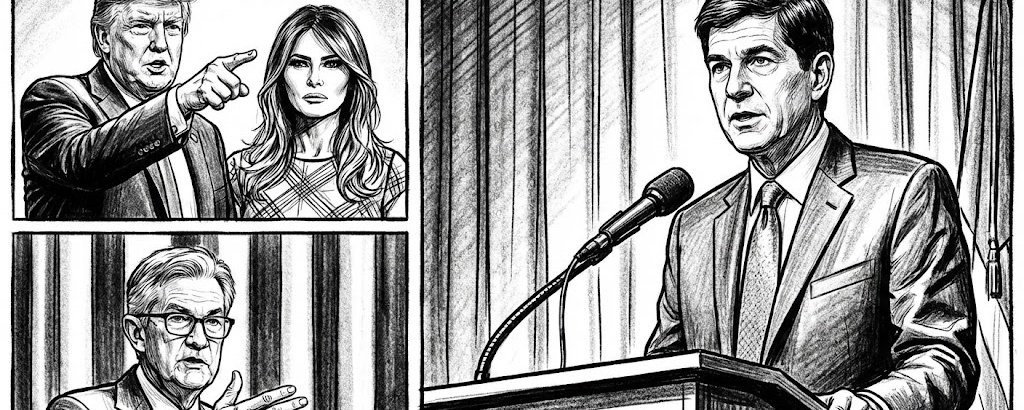
The Era Without Good Answers: Understanding Warsh, Trump, and the Next Four Years of a New Era

marsbitPublicado a 2026-02-02Actualizado a 2026-02-02

Resumen

The article "An Era Without Good Answers: Understanding Warsh, Trump, and the Next Four Years" analyzes the potential implications of Kevin Warsh becoming the next Federal Reserve Chair under a Trump administration. It argues that Warsh represents not just a shift from dovish to hawkish policy, but a fundamental redefinition of the Fed's role. His appointment signals a move away from the Fed acting as a perpetual backstop for markets and government debt—a role perfected by Chair Powell during crises like the pandemic. Instead, Warsh advocates for monetary and fiscal discipline, opposing unconditional quantitative easing and emphasizing market rules over intervention. However, the US economy's reality—characterized by massive debt, deficit spending, and market dependence on low rates—severely limits any radical change. Warsh's proposed policies of raising rates and reducing the Fed's balance sheet risk triggering market volatility, higher borrowing costs, and political backlash, likely forcing a retreat to familiar stimulus measures. From Trump’s perspective, Warsh is a "controllable reformer" who can publicly push for fiscal restraint, forcing Congress to address unsustainable spending—while also serving as a convenient scapegoat if reforms fail. Ultimately, the core constraint remains America’s debt-dominated economy, which eliminates any possibility of a definitive solution. The coming years will involve managing, not solving, these problems through a painful and iterat...

Author: Iron Pillar Brother in CRYPTO

Many years from now, facing the newly appointed Kevin Warsh and the continuous public pressure from Trump, Powell might recall the morning he first walked into the Federal Reserve Chairman's office.

It was an era where everything still seemed controllable, even though the world's rightward turn was already inevitable.

At the time, the 64-year-old Powell did not know that he was about to become the longest-serving Fed Chair in history to operate in an abnormal state: he would face the pandemic, unprecedented fiscal expansion, runaway inflation, asset bubbles, and geopolitical fractures. He would also be forced, time and again during crises, to push the Fed into the spotlight.

I. Redefining the Fed: Farewell to Backstopping—Dovish or Hawkish?

For a long time, the Fed was no longer just a central bank. It became the buyer of last resort for markets, a shadow ally of fiscal policy, the lender of last resort for banks, and the ultimate backstop.

And Powell, gradually, was shaped by circumstances from a technocrat known for his steadiness and skill in managing expectations into the guardian of this vast and bloated system.
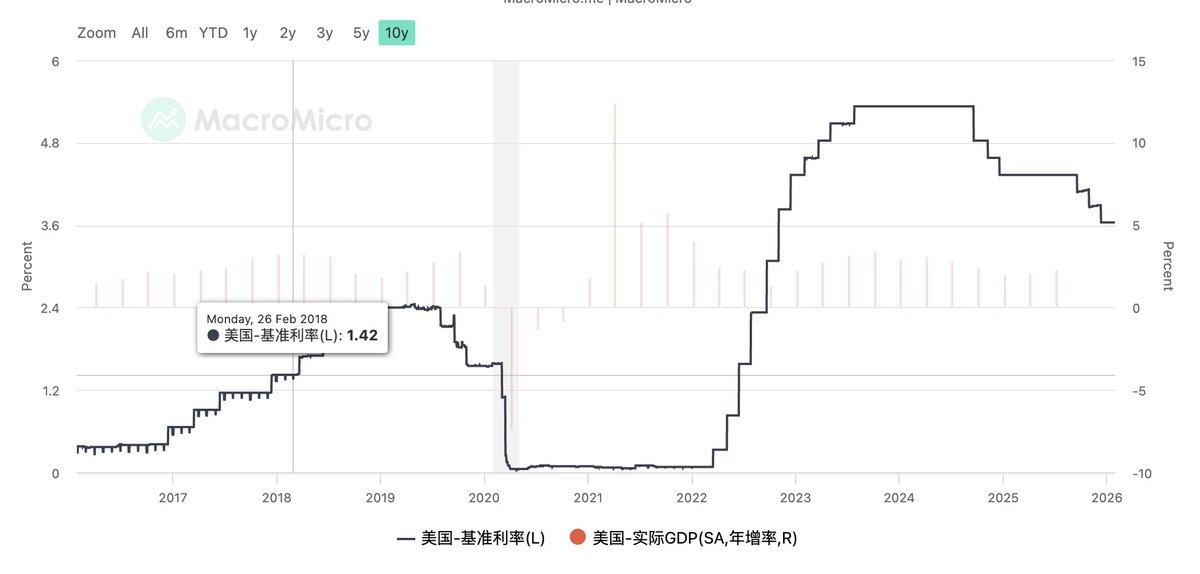
The起伏 (fluctuations) of interest rates during Powell's 8-year tenure

Until today.

As Kevin Warsh's name emerges as the next Fed Chair, what is truly changing is not merely a label of hawk or dove, but a redefinition of the Fed's role for a new era.

Warsh is not a traditional hawk obsessed with balance sheet reduction, nor a dove who only knows how to cut rates to nurture markets, nor simply an anti-establishment figure.

What he truly represents is an answer that the Fed of the new era must provide against a backdrop of growing market skepticism about the sustainability of the massive national debt: should the Fed continue to bear the responsibility of backstopping all debt problems?

In Warsh's proposals, he repeatedly mentions thorough reform—not just changes in the rate path or adjustments to the balance sheet size, but a systematic reflection on the logic of monetary policy over the past fifteen years. This extreme form of distorted Keynesianism is coming to an end.

The history centered on demand management, using asset price prosperity to mask productivity stagnation, has reached a dead end.

For Trump, Warsh is a controllable reformer: willing to cut rates, understanding debt realities, and unlike Hassett, not carrying strong political baggage, thus maintaining the necessary independence and dignity of the central bank.

For Wall Street, Warsh is a rule-abider: emphasizing monetary and fiscal discipline, opposing unconditional QE, and preferring institutional adjustments over monetary policy interventions to manage markets.

As mentioned previously in a shared space, perhaps the Fed Put will cease to exist in the next four years. It may be replaced by a more restrained central bank, clearer boundaries of responsibility, and more frequent, yet more genuine, market fluctuations. This will bring an uncomfortable adjustment period for all market participants.

II. The Gravitational Field of Reality: How Long Until a True Return, and Is It Even Possible?

Before Warsh takes office, the prevailing mood is pessimistic. After all, according to Warsh's philosophy, there should be significant balance sheet reduction and a strong fight against inflation.
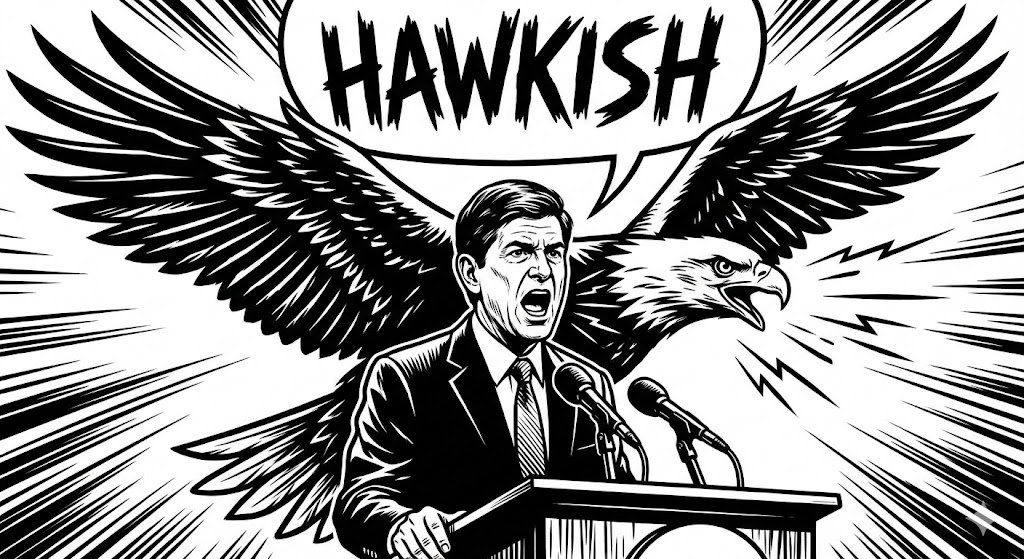
However, the current U.S. economy is in a state of fragility yet极度依赖 (heavily reliant on) a stable narrative: fiscal deficits are high, debt interest payments are nearing the brink of失控 (being out of control), real estate and medium-to-long-term financing are highly dependent on long-term rates, and capital markets are accustomed to policy backstopping.

What Warsh advocates—rate cuts + balance sheet reduction + a smaller central bank—means: it requires fiscal policy to重新面对成本 (face costs again) and exercise discipline; it requires markets to独自承担风险 (bear risks alone); and it requires the Fed to relinquish the backstopping power accumulated over the past fifteen years.

This path is not impossible; it makes logical sense and aligns with common sense. But realistically, the margin for error left for Warsh is not large, and it highly tests his control over the pace.

If balance sheet reduction pushes up term premiums, raising medium-to-long-term rates, thereby suppressing housing, investment, and employment;

If markets experience剧烈波动 (violent fluctuations) during the process of the central bank no longer backstopping;

If voters feel the real costs brought by this so-called return to discipline.

Political pressure on the Fed will quickly revert to the familiar direction: stop balance sheet reduction, slow down reforms, prioritize stabilizing growth.

Over the years, both voters and capital markets have developed a strong path dependency through repeated crises. This inertia cannot be彻底打破 (completely broken) by a single personnel change.

A more realistic assessment is: Warsh may push for a change in direction, but a true return is unlikely to happen in one step.

III. From Trump's Perspective: Another Solution Behind Warsh's Appointment

As is well known, Trump has always needed low interest rates.

But at the same time, early in his term, he flamboyantly adopted Musk-style efficiency reforms, attempting to drastically cut government spending and reshape fiscal discipline. These two goals—low rates and spending cuts—are inherently conflicting within the traditional framework.

Thus, a more interesting question arises: if Trump is unwilling to fully rely on a dovish central bank backstop, yet is aware that fiscal conditions are nearing失控边缘 (the edge of being out of control), then is choosing Warsh itself a non-traditional solution?

At this stage, the U.S. fiscal deficit rate and debt scale are approaching a critical inflection point. Continuing down the dovish path of the past fifteen years—more aggressive rate cuts, more direct central bank intervention, blurrier monetary and fiscal boundaries—might seem to buy短暂稳定 (brief stability), but in reality, it continuously透支 (overdraws) dollar credibility and exacerbates inflation problems.

The political comfort period for this path is very short, and the probability of failure is extremely high. Once inflation rebounds and long-term rates spiral out of control, the responsibility will almost certainly fall back on the White House itself.

We must always understand: Trump is, from start to finish, a master of passing the buck. And Warsh's value lies precisely not in his apparent difficulty to use, but in the ability to use Warsh's hand to pressure Congress.

If the Fed, under Warsh's leadership, clearly refuses to continue backstopping fiscal policy and refuses to unconditionally suppress term premiums, then rising interest rates, exposed financing costs, and显性化 (becoming apparent) fiscal pressure will no longer be the direct consequence of political decisions, but the natural outcome of market discipline.

What would this lead to? For Congress, continuing unconstrained spending expansion would quickly become unsustainable; for the fiscal system, cutting welfare and compressing deep budgets would, for the first time, have a被迫发生的 (forced)现实基础 (realistic basis); instead of relying on Musk-style plugging of leaks.

Even if this path fails, even if market reactions are excessive and the reform pace is forced to slow, Warsh remains a perfect scapegoat.

Or, Warsh doesn't even need the reform to succeed; he just needs to fully expose the problems to change the current state of博弈 (game theory) between Trump, Congress, and the Democrats.

This, perhaps, is the most realistic, and also most brutal, political significance of Warsh's appointment.

IV. Facing the Future of Debt: Buying Time, No One-Size-Fits-All Solution

Pulling the perspective even higher, one finds that both Warsh's reform vision and Trump's political布局 (layout) cannot escape the same现实约束 (realistic constraint): the U.S. has entered a debt-dominated era.
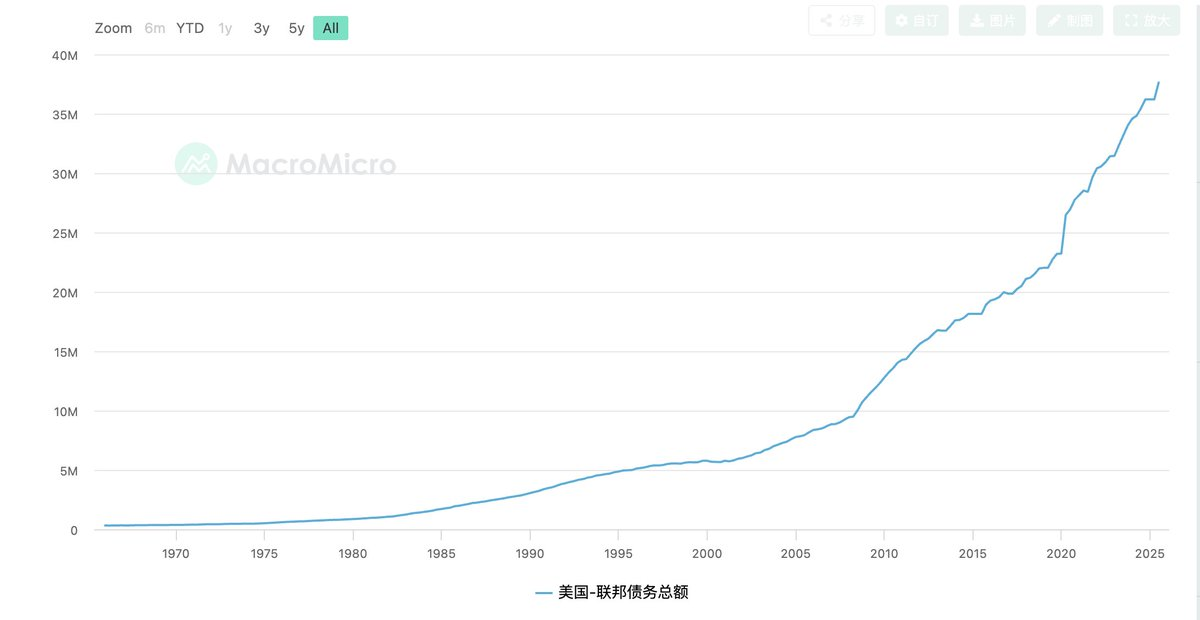
The scale of debt dictates a brutal fact: the U.S. no longer has the policy freedom for thorough correction,只剩下 (only left with) choices of how to delay and how to转移 (transfer/shift).

This is why buying time has become the only feasible, yet least dignified, path. Rate cuts use future inflation risk to alleviate current interest pressure; balance sheet reduction attempts to use institutional discipline to修复 (repair) central bank credibility; fiscal reform uses political conflict and electoral costs to temporarily smooth the debt curve.

But these choices conflict with and constrain each other; none can form a complete闭环 (closed loop) independently.

What Warsh truly faces is not the question of whether to reform, but:

In a highly financialized, politically polarized, debt-inflated system, how much real cost can reform bear (withstand)?

From this angle, no matter who comes up, they cannot provide a one-size-fits-all solution.

This also means that in the next four years, what markets need to adapt to is not a single policy shift, but a longer-term, more反复的 (repetitive/volatile) state. Interest rates will not return to the zero comfort zone, but也难以长期维持高位 (will also find it difficult to maintain high levels long-term); the central bank will not backstop unconditionally, but也不可能真正放手不管 (cannot truly let go completely either; crises will not be彻底避免 (completely avoided), only postponed and拆分 (broken down).

In such a world, macroeconomic policy no longer solves problems; it only manages them.

And this, perhaps, is the final point for understanding Kevin Warsh and Trump's布局 (layout): they are not competing for a better answer, but in an era without good answers, fighting over who decides how the costs of the past are allocated now.

This is not a story about prosperity.

It is merely the beginning of an era where reality, debt, and supply constraints become apparent again.


Criptos en tendencia

Preguntas relacionadas

QWhat is the main theme of the article regarding the Federal Reserve's role under potential new leadership?

AThe article argues that the main theme is a fundamental redefinition of the Federal Reserve's role, moving away from being the ultimate backstop for markets and government debt. It suggests that Kevin Warsh represents a shift towards a more rules-based, disciplined central bank that will no longer unconditionally underwrite fiscal spending, leading to greater market volatility and a painful adjustment period.

QAccording to the author, what is the key constraint facing any U.S. economic policy, including those proposed by Trump or Warsh?

AThe author identifies the overwhelming scale of U.S. national debt as the key and brutal constraint. This debt level means the U.S. has lost the policy freedom for a complete correction and is left only with choices about how to delay problems or transfer costs, making 'time for space' the only viable, albeit ungraceful, path.

QHow does the article interpret Donald Trump's potential motivation for selecting a figure like Kevin Warsh as Fed Chair?

AThe article suggests Trump's selection of Warsh is a 'non-traditional solution.' It posits that Trump, a 'master of blame-shifting,' could use Warsh's discipline to force Congress's hand on fiscal reform by exposing the true cost of debt. If the market reacts poorly, Warsh also serves as a perfect scapegoat, allowing Trump to avoid direct blame.

QWhat does the phrase 'Fed Put' refer to in the context of the article, and what is its predicted future?

AThe 'Fed Put' refers to the market's long-held belief that the Federal Reserve would intervene to support asset prices and backstop markets during downturns. The article predicts that under Kevin Warsh, the 'Fed Put' will cease to exist, replaced by a more restrained central bank that allows for more frequent and genuine market volatility.

QWhat is the author's overall conclusion about the possibility of finding a definitive solution to the current economic challenges?

AThe author concludes that there is no definitive, one-size-fits-all solution ('no good answers'). Macro policy will not solve the underlying problems but will only manage them. The political struggle is not about creating prosperity but about deciding how the costs of past decisions will be distributed in a new era of reality, debt, and resurgent supply constraints.

Lecturas Relacionadas

7 Months After the Collapse of Huiwang, Southeast Asia's Escrow Platforms Undergo a Major Reshuffle

Following the collapse of Huione Pay—dubbed the "Alipay of Southeast Asia"—seven months ago, the region's underground financial guarantee platform sector is undergoing a significant reshuffle. This power vacuum has been swiftly filled by emerging platforms such as XinBi, Tiger/Navigator, JinBei (renamed JinBo), Dali/Tiancheng, and FullyLight. These platforms, operating largely via Telegram and offering services like escrow for illicit transactions, have absorbed the vast user base and markets left behind by Huione. While positioning themselves as "trust intermediaries," their primary clientele consists of networks involved in online scams, money laundering, illegal gambling, and even human trafficking. For instance, the Tiger/Navigator platform explicitly provides "escrow" services for kidnapping-for-ransom operations ("强押车交易"). Data underscores the immense scale: Huione alone processed over $103 billion in cryptocurrency payments and facilitated over $31 billion through its escrow market before its downfall, linking it to Cambodia's notorious Prince Group. Since its collapse, competitors have seen explosive growth. For example, the XinBi platform has accumulated over $1.6 billion in total USDT revenue, while platforms like NewPay, OkPay (under Dali), and FullyLight Wallet collectively processed over $4.8 billion in USDT in a single year. This ecosystem thrives in regions like Cambodia and Myanmar, where regulatory gaps allow these platforms to act as critical financial infrastructure for sprawling cybercrime industries, from scam compounds to online casinos. The article concludes that the moniker "Southeast Asian Alipay" is a misnomer, obscuring the platforms' fundamental role in enabling serious criminal enterprises rather than representing legitimate financial innovation.

Odaily星球日报Hace 42 min(s)

7 Months After the Collapse of Huiwang, Southeast Asia's Escrow Platforms Undergo a Major Reshuffle

Odaily星球日报Hace 42 min(s)

The Changing Landscape: What Are Crypto VCs Experiencing?

Title: The Shifting Landscape of Crypto Venture Capital The era of dedicated crypto venture capital funds is undergoing a significant transformation. Once essential for navigating the sector's complexity and high risk, these specialized funds are now facing an identity crisis as the market matures. This shift mirrors historical patterns in other specialized investment classes like cleantech and SPACs, where initial information advantages dissipate as technologies become mainstream and integrated into existing industry frameworks. The article argues that crypto is reaching a critical inflection point, transitioning from a "building phase" to an "integration phase." Major players like Stripe, BlackRock, and Visa now engage with crypto not for its novel mechanics but as a foundational financial infrastructure. Their needs—regulatory compliance, banking partnerships, distribution channels—align with traditional fintech, a domain easily understood by large, generalist funds like Sequoia and Founders Fund. This evolution creates a "barbell effect" within the VC landscape. On one end are massive, diversified platforms that can incorporate crypto as one vertical among many. On the other are small, nimble funds focused on niche, experimental projects. The middle ground—medium-sized dedicated crypto funds—is being squeezed out. Their typical fund size makes it impossible to generate sufficient returns solely from early-stage crypto bets, yet they cannot compete with giants for later-stage deals. Consequently, leading crypto-native firms like Paradigm and Framework Ventures are expanding into AI, robotics, and other sectors, driven partly by LP pressure for better returns amid a broader VC DPI crisis. Others, like Dragonfly and a16z, have narrowed their crypto focus predominantly to financial infrastructure like stablecoins, reframing the sector's core narrative. For crypto entrepreneurs, this consolidation presents challenges. While generalist funds offer larger checks and broader resources, crypto projects now compete fiercely with AI for attention and capital within these firms. Furthermore, the long-term, non-commercial foundational work that built the ecosystem—funded by dedicated crypto VCs—is less likely to attract generalist capital focused on direct returns. The conclusion is that "crypto investor" as a standalone category is becoming obsolete, akin to "internet investor." Crypto is becoming a baseline infrastructure layer. The future will see a barbell structure: large-scale growth financing handled by generalist funds, while pioneering, speculative projects are funded by small, specialized vehicles. The dedicated crypto funds of the 2017-2021 boom, which incubated core infrastructure, are giving way to this new, bifurcated reality.

Foresight NewsHace 1 hora(s)

The Changing Landscape: What Are Crypto VCs Experiencing?

Foresight NewsHace 1 hora(s)

As Consensus Accelerates, What Are Young Investors Betting On?

Title: As Consensus Forms Faster, What Are Young Investors Betting On? In the rapid evolution of tech investment, a new generation of young investors is navigating a landscape where AI, robotics, commercial aerospace, and quantum computing are advancing simultaneously. Traditional investment logic based on financial models is giving way to a need for deep technical understanding and the ability to act before industry consensus forms. An analysis of trends from the "WAIC FUTURE TECH" list of young investment leaders reveals key shifts in focus. The first major trend is the movement of AI from the digital screen into the physical world. Investment is shifting from large language models and chatbots towards embodied AI, robotics, AI hardware, and edge computing. While demonstrations generate excitement, the real challenge lies in achieving scalable, reliable, and cost-effective delivery in complex real-world environments like factories and logistics. Success depends not just on algorithms but on the integration of sensors, actuators, and control systems. Second, the competitive focus for large models is moving beyond raw capability toward building an "intelligence flywheel." The goal is to create self-reinforcing systems where user interaction generates data, improving the model, which in turn enhances the user experience and attracts more engagement. Companies that successfully embed AI into workflows to create these closed-loop systems can build lasting value that isn't easily erased by the next model upgrade. Third, facing a potential bottleneck in high-quality human-generated data, investors are looking at new underlying technologies. Reinforcement learning and self-play, as demonstrated by AlphaGo Zero, offer paths for AI to generate its own experience. Scientific foundation models, which aim to build general AI capabilities for fields like life sciences and materials discovery, represent a non-consensus direction that could unlock new frontiers of knowledge and data. Finally, in deep-tech areas like quantum computing, commercial aerospace, and space-based infrastructure, patient capital is essential. These fields have long, uncertain development and validation cycles involving complex engineering, supply chains, and regulations. Investment here requires a long-term view, focusing on foundational team capabilities and the eventual emergence of market demand, even if commercial returns are distant. Collectively, these trends illustrate how young investors are adapting to a new era. They are learning to make earlier, technically-informed judgments, balance hype with real-world viability, and provide the patient capital needed to build the deep-tech foundations of the future.

marsbitHace 1 hora(s)

As Consensus Accelerates, What Are Young Investors Betting On?

marsbitHace 1 hora(s)

Trading

Spot

Artículos destacados

Cómo comprar ERA

¡Bienvenido a HTX.com! Hemos hecho que comprar Caldera (ERA) sea simple y conveniente. Sigue nuestra guía paso a paso para iniciar tu viaje de criptos.Paso 1: crea tu cuenta HTXUtiliza tu correo electrónico o número de teléfono para registrarte y obtener una cuenta gratuita en HTX. Experimenta un proceso de registro sin complicaciones y desbloquea todas las funciones.Obtener mi cuentaPaso 2: ve a Comprar cripto y elige tu método de pagoTarjeta de crédito/débito: usa tu Visa o Mastercard para comprar Caldera (ERA) al instante.Saldo: utiliza fondos del saldo de tu cuenta HTX para tradear sin problemas.Terceros: hemos agregado métodos de pago populares como Google Pay y Apple Pay para mejorar la comodidad.P2P: tradear directamente con otros usuarios en HTX.Over-the-Counter (OTC): ofrecemos servicios personalizados y tipos de cambio competitivos para los traders.Paso 3: guarda tu Caldera (ERA)Después de comprar tu Caldera (ERA), guárdalo en tu cuenta HTX. Alternativamente, puedes enviarlo a otro lugar mediante transferencia blockchain o utilizarlo para tradear otras criptomonedas.Paso 4: tradear Caldera (ERA)Tradear fácilmente con Caldera (ERA) en HTX's mercado spot. Simplemente accede a tu cuenta, selecciona tu par de trading, ejecuta tus trades y monitorea en tiempo real. Ofrecemos una experiencia fácil de usar tanto para principiantes como para traders experimentados.

421 Vistas totalesPublicado en 2025.07.17Actualizado en 2026.06.02

Cómo comprar ERA

Discusiones

Bienvenido a la comunidad de HTX. Aquí puedes mantenerte informado sobre los últimos desarrollos de la plataforma y acceder a análisis profesionales del mercado. A continuación se presentan las opiniones de los usuarios sobre el precio de ERA (ERA).

活动图片












