Tariff Threat Shocks Market: Trump's Post Triggers Bitcoin Safe-Haven Sell-off

比推Publicado a 2026-01-19Actualizado a 2026-01-19

Resumen

Cryptocurrency markets experienced a sharp sell-off on the morning of January 19, with Bitcoin dropping from $95,531 to a low of $91,910. Ethereum and Solana also saw significant declines, along with several altcoins falling over 10%. The sell-off resulted in $830 million in liquidations over 12 hours, predominantly long positions. The downturn was triggered by former U.S. President Donald Trump’s announcement on Truth Social that the U.S. would impose tariffs—starting at 10% on February 1 and rising to 25% by June—on imports from eight European countries, including Denmark, Germany, and the UK. The move is tied to Trump’s demand for a “complete and total purchase of Greenland,” citing unspecified security concerns. European leaders strongly opposed the tariffs, warning of strained transatlantic relations and potential benefits to geopolitical rivals like China and Russia. Meanwhile, traditional safe-haven assets like gold and silver surged to record highs amid the geopolitical tension and market uncertainty. With a 96% probability that the Federal Reserve will hold interest rates steady, risk assets faced additional pressure. Market analysts suggested that investors take profits and await clearer signals, though some remain optimistic about Bitcoin’s long-term potential, citing macroeconomic trends and increasing demand.

Author: Ma He, Foresight News

Original Title: Trump Stirs Trouble Again: An Island Causes Bitcoin to Plunge by $3,000


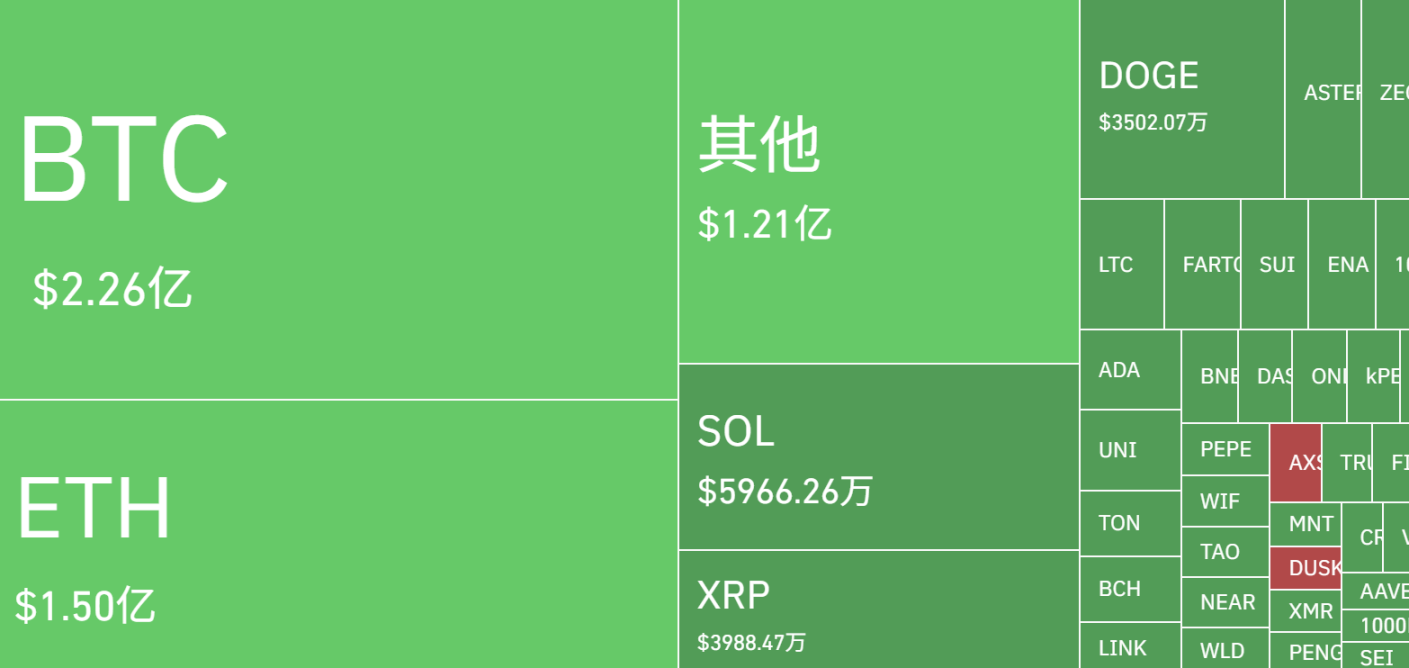
At around 7:00 AM on January 19, the cryptocurrency market experienced a sudden flash crash. The price of BTC plummeted sharply in a short period, dropping from $95,531 to a low of $91,910. ETH fell from $3,350 to a low of $3,177, and SOL dropped from $143 to a low of $130. Some altcoins like SUI, XPL, and ASTER saw declines of over 10% in 24-hour period.

According to Coinglass data, over the past 12 hours, $830 million was liquidated across the network, with long positions accounting for $764 million of that. In the past 24 hours, the largest single liquidation order occurred on Hyperliquid for a BTC-USDT perpetual contract worth $25.8337 million.
Meanwhile, traditional safe-haven assets like gold and silver bucked the trend and surged to record highs. Spot gold broke through the $4,690 per ounce mark,刷新历史高点, with a daily increase of over 2%. Spot silver broke through the $94 per ounce mark, hitting a record high, with a daily gain of over 4%.

U.S. stock markets are closed today. The U.S. Dollar Index fell 0.26% to 99.14. U.S. stock futures opened lower, with S&P 500 futures down 0.71% and Nasdaq futures down as much as 1.1% at one point. U.S. 10-year Treasury futures rose 5 ticks, and 30-year Treasury futures also rose 5 ticks.

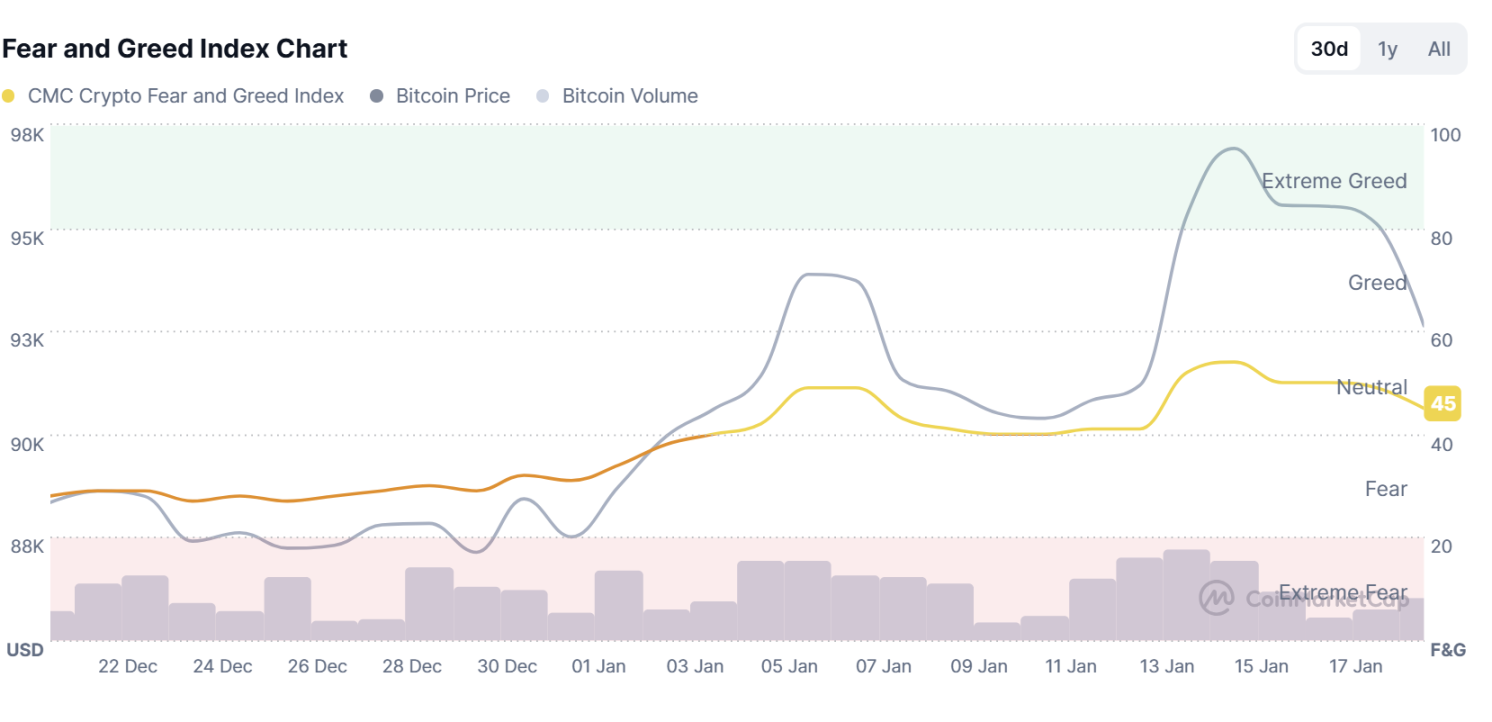
The Crypto Fear & Greed Index has currently retreated to 45.
This event is not isolated but the result of intertwined macroeconomic factors and geopolitical tensions.

Trump Wields Tariff Stick Again, Imposing Tariffs on 8 European Countries Starting February 1st

Last year, the trigger for the crypto market's "1011暴跌" (October 11th crash) was Trump wielding tariff threats against China. Now, this scene is repeating itself.

On January 18, Trump posted on Truth Social, stating that due to the Greenland issue, starting February 1st of this year, all goods exported to the U.S. from Denmark, Norway, Sweden, France, Germany, the UK, the Netherlands, and Finland will be subject to an additional 10% tariff. By June 1st of this year, the tariff will increase to 25%. These tariffs are to be paid continuously until an agreement on the "comprehensive and thorough purchase of Greenland" is reached.

In his post, Trump stated, "These countries—Denmark, Norway, Sweden, France, Germany, the UK, the Netherlands, and Finland—have all gone to Greenland for unknown purposes. This poses a very dangerous situation for the safety, security, and survival of our planet. These countries are playing an extremely dangerous game, and the level of risk they bring is intolerable and unsustainable. Therefore, to protect global peace and security, strong measures must be taken to bring this potential dangerous situation to a swift and indisputable end."

Furthermore, according to CNBC, after Trump issued tariff threats against European allies over the "Greenland issue," several European leaders responded强硬ly, emphasizing that Greenland's sovereignty is non-negotiable and warning that this move would further撕裂 transatlantic relations.

European Commission President Ursula von der Leyen and European Council President António Costa stated that pressuring allies with tariffs would damage EU-US relations and could trigger a "dangerous vicious cycle"; EU High Representative for Foreign Affairs and Security Policy Kaja Kallas said that tariffs would only harm shared prosperity, divert Europe's priorities on Ukraine, and allow rivals like Russia and China to "reap the benefits." Additionally, Spanish Prime Minister Pedro Sánchez warned that more激进 U.S. actions on Greenland would have a major impact on NATO. EU ambassadors from 27 countries plan to hold an emergency meeting to coordinate their response.

That day, according to Bloomberg, Senate Democrats plan to introduce legislation to阻止 Trump from imposing tariffs on European countries that oppose the U.S. annexation of Greenland. Previously, Senate Minority Leader Chuck Schumer criticized the move for harming the U.S. economy and relations with allies.

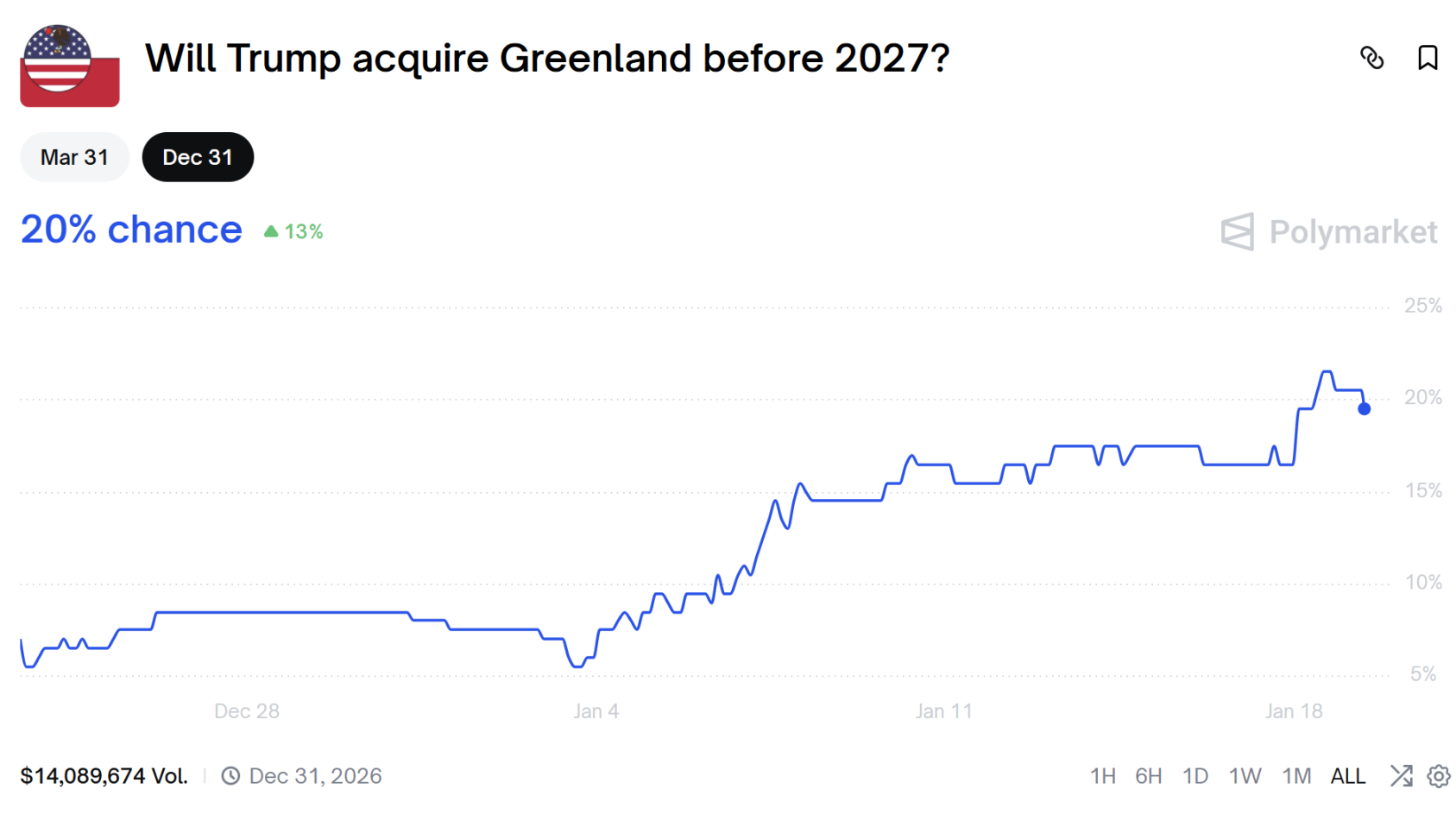
Latest data from Polymarket shows the market is betting a 20% probability that Trump will acquire Greenland by 2027.

Tariffs and geopolitical concerns have caused investors to turn to gold and silver for safety, leading to an outflow of funds from crypto.

Additionally, the probability of the Federal Reserve holding rates steady this January is extremely high. According to Polymarket data, the market's bet on no rate cut has now risen to 96%, putting pressure on risk assets.

On the evening of January 18, crypto trading indicator analysis platform CoinKarma posted, stating, "BTC rose to nearly $98,000 this week, but when it reached that price level, the market saw the most significant selling pressure in recent weeks, causing a slight pullback. However, the overall liquidity between buyers and sellers has not shown a significant imbalance and remains relatively balanced. Other key market indicators have not yet given clear signals. Based on the current situation, long position holders who entered at the relatively low points at the beginning of the year may consider taking profits, either fully or partially closing their positions, and waiting for clearer signals before re-entering the market."

Seasoned crypto investor Dan Tapiero stated: "If investing $10,000 in crypto assets in 2026, I think you can directly allocate funds to Bitcoin, Ethereum, and Solana. As for the specific allocation, it depends on your preference."

Dan Tapiero believes that the biggest opportunities in the cryptocurrency space in 2026 lie in infrastructure and the adoption of stablecoins. Tapiero stated that he expects Bitcoin to rise to $180,000 in this cycle, citing the combined effect of growing demand and a shift in global monetary policy. Falling interest rates and massive government investment in AI infrastructure will bring strong positive factors. This global push is leading to the devaluation of all fiat currencies, including the U.S. dollar. This is very favorable for Bitcoin.


Twitter:https://twitter.com/BitpushNewsCN

Bitpush TG Discussion Group:https://t.me/BitPushCommunity

Bitpush TG Subscription: https://t.me/bitpush

Original article link:https://www.bitpush.news/articles/7604166

Preguntas relacionadas

QWhat was the immediate impact of Trump's tariff threat on cryptocurrency markets?

ACryptocurrency markets experienced a sharp flash crash, with Bitcoin dropping from $95,531 to a low of $91,910, Ethereum falling from $3,350 to $3,177, and Solana declining from $143 to $130 within a short period.

QWhich traditional safe-haven assets saw price increases following the geopolitical tension?

ATraditional safe-haven assets like gold and silver surged to record highs, with spot gold rising over 2% to above $4,690 per ounce and spot silver increasing over 4% to above $94 per ounce.

QWhich European countries did Trump threaten with tariffs starting February 1st, and why?

ATrump threatened to impose tariffs on Denmark, Norway, Sweden, France, Germany, the UK, the Netherlands, and Finland, citing their activities in Greenland as a 'very dangerous situation' for global security and demanding a agreement for the 'complete and total purchase of Greenland'.

QHow did European leaders respond to Trump's tariff threat over Greenland?

AEuropean leaders strongly opposed the move, emphasizing Greenland's sovereignty is non-negotiable. EU officials warned it would damage transatlantic relations and could create a 'vicious cycle,' while some leaders cautioned it would benefit rivals like Russia and China and impact NATO.

QWhat was the market's probability assessment of Trump acquiring Greenland by 2027 according to Polymarket?

APolymarket data showed a 20% probability that Trump would acquire Greenland by 2027.

Lecturas Relacionadas

Bank of America Quietly Positions: Could $6 Trillion in Bank Deposits Flow into Stablecoins?

Bank of America (BofA) is making strategic moves in digital assets, appointing senior leaders to advance a platform covering stablecoins, tokenized deposits, custody, and crypto settlement. This comes amid a broader discussion about the potential migration of trillions in bank deposits to stablecoins. A cited TBAC report estimated up to $6.6 trillion in transactional deposits could be at risk of moving to stablecoins long-term, a point BofA's CEO previously conditioned on stablecoins being allowed to pay interest. The regulatory landscape is evolving, with the GENIUS Act setting a final implementation deadline for January 2027. Major banks, however, are not waiting; JPMorgan, Citi, BofA, and others are already developing tokenized deposit networks and services. Industry observers note that while retail crypto trading is sluggish, institutional adoption of stablecoins for real-world use cases is driving growth. Despite the activity, some analysts remain cautious, noting banks have a long history of blockchain announcements and that true structural change is slow. The stablecoin market itself has seen a recent dip from its peak. Optimistic projections, however, foresee significant growth, with stablecoin settlement volume already reaching $33 trillion in 2025. The race is on for the post-January 2027 landscape, where regulatory clarity is expected to accelerate the fusion of traditional finance and crypto.

marsbitHace 2 min(s)

Bank of America Quietly Positions: Could $6 Trillion in Bank Deposits Flow into Stablecoins?

marsbitHace 2 min(s)

STAR 50 Soars 10.73%, Why Did A-Shares Stage a "V-Shaped Reversal"?

After a prolonged decline, the Chinese A-share market staged a strong rally on July 21. The STAR 50 index surged 10.73%, its largest single-day gain in nearly a year, leading a broad-based "V-shaped" reversal. The Shanghai Composite Index rose 1.79%, the Shenzhen Component Index gained 4.81%, and the ChiNext Index jumped 7.05%. Total market turnover reached 2.97 trillion yuan, an increase of 256.1 billion yuan from the previous session, with over 3,100 stocks advancing. The semiconductor sector spearheaded the rebound, with related ETFs posting significant gains. Analysts attribute the surge to three converging factors. First, coordinated capital inflows from "national team" institutions, insurance funds, listed company buybacks, and fund house self-purchases have bolstered market liquidity and confidence. Second, supportive policy signals, including commitments from regulators to ensure stable market operations, provided a favorable backdrop. Third, a stabilization and recovery in overseas markets, notably South Korea, created a positive external environment. Institutions suggest the most severe panic selling phase for the tech sector has likely passed, following a significant digestion of crowded positions and leveraged funds. While short-term volatility may persist, the medium to long-term outlook remains underpinned by enduring trends like AI computing demand expansion and semiconductor localization. The market's focus now shifts to the sustainability of supportive fund flows, earnings reports, and upcoming catalysts from the global AI industry chain.

marsbitHace 40 min(s)

STAR 50 Soars 10.73%, Why Did A-Shares Stage a "V-Shaped Reversal"?

marsbitHace 40 min(s)

U.S. Tech Momentum Stocks Post Largest Single-Day Gain Ever, But Is the Plunge Over?

US tech momentum stocks staged a sharp rebound on Tuesday (July 21st). Morgan Stanley's TMT Momentum Factor surged over 12%, marking its largest single-day gain on record, exceeding even peaks from the 2000 dot-com bubble. Key momentum indices from Goldman Sachs also posted their strongest daily performances in years. The rally was led by semiconductors, with the Philadelphia Semiconductor Index jumping 4.6%. This rebound followed three consecutive down days and a cumulative 33% plunge in momentum stocks, one of the steepest drawdowns since the dot-com era. Analysts attribute the surge largely to a short squeeze. Heavy selling had pushed high-beta momentum stocks into deeply oversold territory, forcing many short sellers, particularly in Asia, to cover their positions, creating a self-reinforcing buying spiral. However, the rebound's internals appear weak. Trading volume was notably low, and advancing stocks still lagged decliners on the S&P 500, indicating a narrow, concentrated rally rather than broad market participation. Diverging views emerge on the outlook. BTIG warns the bounce has hit key resistance and recommends selling into strength, citing extreme volatility and historical parallels to past market tops. Conversely, Goldman Sachs and UBS believe the momentum unwind is nearing its end, suggesting it may be time to gradually add exposure, as positioning has been significantly reduced. They caution, however, that high volatility warrants a measured approach, potentially using defined-risk strategies. The upcoming earnings season, particularly reports from major tech firms like Alphabet, is seen as a critical test for the rally's sustainability. Simultaneously, bond markets flashed a warning, with yields rising partly due to spiking oil prices. Analysts note that if long-term Treasury yields break decisively higher, it could pose a significant headwind for equities, especially growth stocks.

marsbitHace 47 min(s)

U.S. Tech Momentum Stocks Post Largest Single-Day Gain Ever, But Is the Plunge Over?

marsbitHace 47 min(s)

U.S. Tech Momentum Stocks Record Largest Single-Day Gain Ever, but Has the Rout Ended?

U.S. tech momentum stocks staged a dramatic rebound on Tuesday, July 21st. Key momentum indices like the Morgan Stanley TMT Momentum Factor and Goldman Sachs' High Beta Momentum Long Index posted historic or near-historic single-day gains, fueled largely by semiconductor stocks. This sharp rally followed a severe three-day sell-off that saw momentum stocks plunge 33%, marking one of the steepest pullbacks since the dot-com bubble. Analysts attribute the bounce primarily to a short squeeze, as forced covering from over-leveraged traders, particularly in Asia, created a buying spiral. However, the rally's health is questioned due to weak market breadth—overall trading volume was low, and decliners outnumbered advancers in the S&P 500 despite the index's gain—suggesting a narrow, concentrated surge rather than broad recovery. Opinions on the sustainability diverge. BTIG strategists warn the rebound has hit key resistance levels, citing extreme volatility and historic stock dispersion as signs of an ongoing broader correction, and recommend selling into strength. Conversely, Goldman Sachs and UBS view the aggressive momentum unwinding as nearing its end, noting reduced positioning and a lack of new fundamental catalysts. They suggest the sell-off presents a selective opportunity to add exposure, albeit cautiously and gradually using defined-risk strategies. The immediate trajectory hinges on the ongoing earnings season, with market focus on Alphabet's capital expenditure guidance for AI investment clarity. Meanwhile, bond markets present a risk, with rising Treasury yields—potentially heading toward 5.5%—and widening credit spreads for mega-cap tech companies posing a threat to equity valuations. The combination of technical factors, earnings results, and macro conditions leaves the durability of the rebound in doubt.

链捕手Hace 50 min(s)

U.S. Tech Momentum Stocks Record Largest Single-Day Gain Ever, but Has the Rout Ended?

链捕手Hace 50 min(s)

Trading

Spot
活动图片