Artículos Relacionados con Transformation

El Centro de Noticias de HTX ofrece los artículos más recientes y un análisis profundo sobre "Transformation", cubriendo tendencias del mercado, actualizaciones de proyectos, desarrollos tecnológicos y políticas regulatorias en la industria de cripto.

From "Silicon Valley's Sacred Shoes" to "GPU Computing Power": The Absurdity and Logic Behind Allbirds Renaming to NewBird AI

From "Silicon Valley's Favorite Shoe" to "GPU Computing Power": The Absurdity and Logic Behind Allbirds' Rebranding to NewBird AI On April 15, Allbirds, the maker of merino wool running shoes, announced a radical pivot from footwear to AI compute, rebranding as "NewBird AI." The move triggered a 582% surge in its stock price the same day. This followed the sale of its shoe business for $39 million—a fraction of its $4 billion IPO valuation in 2021. Allbirds rose to fame in 2016 with its comfortable, eco-friendly minimalist shoes, becoming a status symbol in tech circles. But after rapid expansion and failed attempts to attract Gen Z, revenue declined, losses mounted, and its value plummeted. By early 2026, all its U.S. stores had closed. Now, under CEO Joe Vernachio, the company is attempting a reboot. It secured $50 million in convertible notes from an undisclosed investor to purchase high-performance GPUs and offer "GPU-as-a-service" to AI developers. The company cites real market shortages in compute capacity, but questions remain about how a $50 million entry can compete in a capital-intensive industry dominated by giants like NVIDIA and CoreWeave. The move echoes past market frenzies, such as Long Island Iced Tea’s pivot to blockchain in 2017—a hype-driven strategy that ended in delisting and SEC action. While AI compute demand is real, NewBird AI’s operational capacity and execution plan remain unproven. The timing is suggestive: the stock soared based on a narrative, before any shareholder vote or operational results. The company plans a special dividend in Q3, raising questions about who benefits from the short-term market enthusiasm. NewBird AI exemplifies a broader trend: companies with broken business models turning to AI for revival. Whether this is a legitimate transformation or a market play remains to be seen.

marsbitAyer 04:52

From "Silicon Valley's Sacred Shoes" to "GPU Computing Power": The Absurdity and Logic Behind Allbirds Renaming to NewBird AI

marsbitAyer 04:52

Robinhood's Wealth Management Business Transformation Journey

Robinhood's 2025 Wealth Management Transformation: A Case Study Robinhood successfully pivoted its business model in 2025, transitioning from a platform known for speculative trading to a comprehensive wealth management service. This strategic shift was driven by launching disruptive products like a high-match-rate IRA, a high-yield cash sweep program, and full-service banking, effectively guiding its young user base toward long-term saving and investing. Key to this success was an aggressive, internet-native customer acquisition strategy. Robinhood used cash match bonuses (up to 3% for Gold members) to lower the barrier for users to transfer retirement assets (e.g., 401(k) rollovers), calculating that the high lifetime value (LTV) of these sticky assets would far exceed the customer acquisition cost (CAC). The company's revenue model evolved significantly. It reduced reliance on volatile payment for order flow (PFOF) by building a robust base of Net Interest Income (NIM) from its high-yield cash product and growing recurring revenue from its SaaS-like Robinhood Gold service, which saw subscriber count soar to 4.2 million. Robinhood built a powerful ecosystem, seamlessly connecting high-frequency trading (stocks, crypto) with low-frequency, high-value activities (retirement investing, banking, spending with its cash-back card). This created a sticky super-app experience. The strategy was underpinned by a low-cost operational structure, enabled by a self-clearing platform and automated services, leading to high revenue per employee. Robinhood's young user base (median age ~32-35) represents a structural advantage, positioning it to capture what is expected to be the largest intergenerational wealth transfer in history as these users age and accumulate more assets.

marsbitHace 2 días 00:07

Robinhood's Wealth Management Business Transformation Journey

marsbitHace 2 días 00:07

Robinhood's Wealth Management Business Transformation Journey

Robinhood's 2025 Wealth Management Transformation: A Summary In 2025, Robinhood successfully pivoted its business model by aggressively expanding its wealth management services. This strategic shift, marked by the launch of disruptive products like a high-match-rate IRA, high-yield cash accounts, and comprehensive banking services, effectively guided its young user base from speculative trading toward long-term saving and investing. Key to this success was a highly internet-native customer acquisition strategy. Robinhood used aggressive cash match incentives (up to 3% for Gold members) to drastically lower the barrier for users to transfer retirement assets (e.g., 401(k) rollovers), effectively "buying" AUM with a high lifetime value. This was paired with a seamless, tech-driven transfer process. The company's revenue model evolved from a heavy reliance on volatile payment for order flow (PFOF) to more stable, recurring income streams. This included substantial net interest income from its massive cash sweep balances and a growing, high-margin subscription business from its Robinhood Gold program, which saw 4.2 million subscribers by Q4 2025. Robinhood built a powerful ecosystem, creating a super-app that seamlessly connects high-frequency trading (stocks, crypto) with low-frequency, sticky products (IRA, automated investing) and daily spending (credit card, banking). This allows for efficient cross-selling and user retention. To build trust for managing long-term savings, Robinhood leveraged traditional finance's safety nets, emphasizing SIPC protection for securities and partnering with banks to offer FDIC insurance on cash deposits far exceeding standard limits. This transformation was underpinned by an extremely efficient, tech-driven cost structure. With a self-clearing platform and automated services, Robinhood achieved a high revenue-per-employee ratio, allowing it to offer competitive pricing like a $250 annual cap on robo-advisory fees. The strategy is powered by a profound shift in its young user base (median age ~32-35). Data shows Gen Z users are increasingly adopting long-term, tax-optimized retirement investing. By capturing this demographic early, Robinhood is strategically positioned to benefit from the largest intergenerational wealth transfer in history, as these users inherit assets and keep them within the familiar Robinhood ecosystem.

marsbit04/14 06:47

Robinhood's Wealth Management Business Transformation Journey

marsbit04/14 06:47

After Laying Off 30,000 Employees, Oracle Hires a CFO Who Managed Power Plants

Oracle, the global enterprise database giant, laid off approximately 30,000 employees, sparking widespread discussion. Shortly after, the company appointed Hilary Maxson as its new CFO with a compensation package of $297 million. Maxson’s background is notable: she spent nearly a decade as group CFO at Schneider Electric, a major energy management firm, and previously worked for 12 years at AES Corporation, a U.S. power company. Her entire career has revolved around the energy sector—managing power plants, grids, and data center energy solutions. This appointment signals a strategic shift for Oracle. After 12 without a dedicated CFO, the company is pivoting from its traditional software business toward cloud and AI infrastructure. Oracle’s cloud infrastructure revenue surged 84% year-over-year, with a capital expenditure budget of around $50 billion this year—almost entirely allocated to AI data center construction. The company has secured massive contracts, including one with OpenAI exceeding $300 billion, contributing to a total backlog of $553 billion. Data centers, especially at the gigawatt scale, require enormous power—equivalent to a nuclear power plant’s output—making energy management critical. Oracle is no longer just a software company; it’s transforming into an energy-intensive infrastructure provider. While Wall Street remains optimistic, the stock has fallen about 24% this year, reflecting investor concerns over this high-cost, capital-intensive transition. The hiring of an energy-focused CFO underscores Oracle’s new direction.

marsbit04/08 05:23

After Laying Off 30,000 Employees, Oracle Hires a CFO Who Managed Power Plants

marsbit04/08 05:23

Bitcoin Mining Companies Flee for the Nth Time

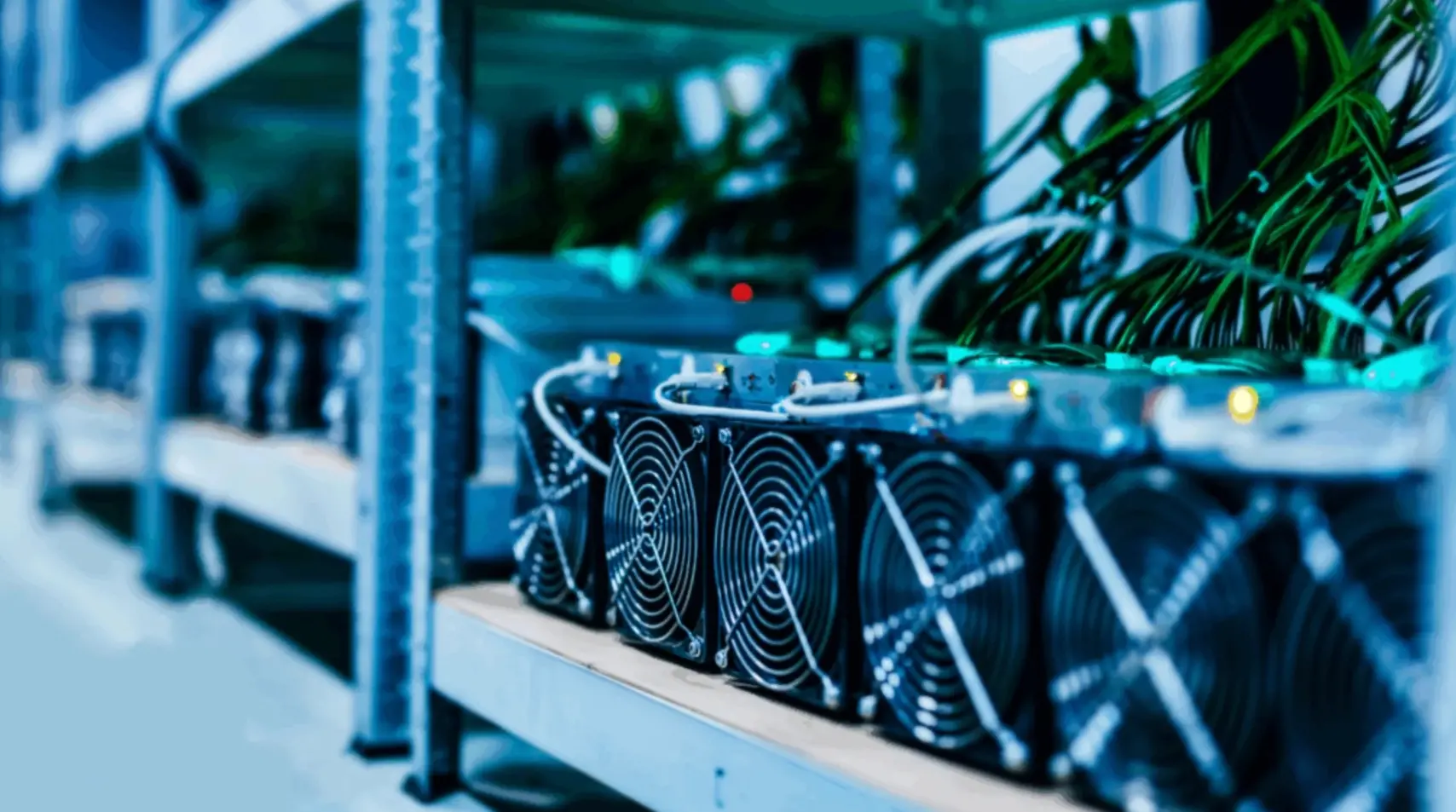
Since late last year, major publicly traded Bitcoin mining companies have initiated a significant wave of Bitcoin (BTC) sell-offs. Cango sold about 60% of its holdings (4,451 BTC) in February, Bitdeer liquidated its entire Bitcoin inventory in January, Riot Platforms sold 3,778 BTC in the first quarter, and Core Scientific planned to sell approximately 2,500 BTC. Notably, Marathon Digital (MARA) sold 15,133 BTC in just three weeks in March, cashing out over $1 billion, while also cutting 15% of its workforce as part of a strategic shift toward becoming an energy and digital infrastructure company. This collective divestment is driven by three primary motives. First, mining has become unprofitable for many; the average cash cost to mine one BTC is approximately $79,995, while BTC trades around $68,000–70,000, resulting in an average loss of about $19,000 per coin. Second, AI data centers offer a more stable and lucrative alternative, with tech giants like Google, Microsoft, and financial institutions like Morgan Stanley providing substantial backing and contracts. Mining companies are repurposing their existing infrastructure—cheap power contracts, data centers, and cooling systems—toward AI, which promises higher, predictable margins. Third, some firms are using BTC sales to optimize their balance sheets, such as repurchasing convertible debt at a discount to reduce liabilities and avoid equity dilution. The industry is diverging into three paths: some, like CleanSpark and HIVE, are坚守 (holding fast) to mining, betting on a cyclical recovery; others, like MARA and Riot, are pursuing a dual strategy of maintaining BTC holdings while expanding into AI; and a third group, including Core Scientific and TeraWulf, is undergoing a full pivot to AI, where mining may become a secondary operation. The future of these companies heavily depends on Bitcoin’s price trajectory. If BTC surpasses $100,000 by late 2026, mining profitability could recover. If it remains below $80,000, high-cost miners may continue to exit. If it breaks all-time highs, the industry could see another expansion cycle. Ultimately, this shift raises a broader question about Bitcoin’s security budget, as miners redirect resources to AI, the long-term cost of securing the Bitcoin network may become a growing concern. However, historically, the network has emerged stronger after each mining shake-out, though this time the transition is structural and could have lasting implications.

marsbit04/03 09:09

Bitcoin Mining Companies Flee for the Nth Time

marsbit04/03 09:09

People Laid Off by AI Won't Disappear; They Will Become the Creators of the Next Economy

The article argues that the real question surrounding AI is not whether it will cause unemployment, but what happens to the people displaced. AI is replacing not humans, but the standardized, replicable, and automatable parts of human work. This follows historical patterns where technological revolutions, from stone tools to computers, made old skills obsolete and dissolved old structures—but humanity adapted and reorganized. The author draws a parallel to China’s large-scale layoffs during state-owned enterprise reforms 30 years ago, which initially seemed catastrophic but eventually fueled the growth of a new private economy, new companies, and new types of jobs. Engineers, though among the first impacted, are also positioned to recover fastest. Their systemic understanding and proximity to new productive forces make them ideal candidates to adapt and create in the new economy. More importantly, AI is reshaping companies themselves—reducing organizational bloat, communication costs, and bureaucracy. This enables smaller, more agile teams and empowers strong creators who may have previously struggled with management rather than innovation. The core issue is not job loss, but self-definition: will individuals wait to be reassigned by the old system, or use new tools to reorganize production? AI accelerates differentiation—eliminating some jobs, shattering illusions for some, and offering others a chance to leap forward. The author’s view is that AI is dismantling an entire generation’s belief in stable career paths. Those laid off won’t vanish; instead, many will reinvent themselves—transitioning from employees in old systems to creators of the next economy. Every productivity revolution淘汰 (eliminates) not people, but those who refuse to rewrite themselves. The first to accept this and start building the new world will succeed.

marsbit03/23 10:31

People Laid Off by AI Won't Disappear; They Will Become the Creators of the Next Economy

marsbit03/23 10:31

Reevaluating the Public Blockchain Ecosystem with the Logic of Governance: Examining Solana's Ecological Transformation through Singapore's Prosperity and Costs

This article draws a parallel between the development of the Solana blockchain and the nation-building journey of Singapore, arguing that managing a public blockchain is akin to governing a digital nation. The analysis is structured in six chapters. It begins by comparing Solana's initial heavy reliance on Sam Bankman-Fried and FTX for growth and credibility to Singapore's post-independence dependence on British military spending. The sudden collapse of FTX in 2022 is framed as Solana's pivotal crisis moment, forcing it to find a new path for survival, much like when Britain withdrew its forces from Singapore's sole innate resource was its strategic geographic location, which it leveraged to become a trade hub. Similarly, Solana's foundational resource is its high-performance architecture, enabling fast and cheap transactions, which is its competitive advantage for attracting users and developers. The article then examines a "grey" survival phase. Post-FTX, Solana experienced a boom in meme coin trading, facilitated by platforms like Pump.fun. This is compared to Singapore's pragmatic acceptance of capital from questionable sources during its early development to build its financial reserves and user base. The key insight is that while this activity was speculative and chaotic, it provided essential transaction volume, new adopters, and stress-tested the network's infrastructure, all while more substantial development continued underneath. A core section explores monetary policy. Singapore's unique approach of managing its economy through controlling its currency's exchange rate is presented as a model. The author argues that Solana's tokenomics, with its fixed inflation schedule and transaction fee burn mechanism, lacks a similar dynamic, responsive "central bank" governance model to intelligently adjust for different economic cycles on the chain. The concept of national unity is explored through Singapore's "HDB" public housing policy, which gave citizens a tangible asset stake in the country's success and enforced racial integration. For Solana, the community is fractured into distinct groups: speculators, builders, and validators. The article suggests Solana needs a more systematic "asset-binding" mechanism, like improved staking or airdrops, to better align the interests of these disparate groups and turn them into long-term stakeholders. Finally, the piece places Solana at a critical juncture, analogous to the end of Singapore's second phase of development. It has survived its crisis and leveraged a meme-driven phase for growth, but must now transition to a more mature, sustainable economy built on deeper fundamentals—such as robust governance, true decentralization, and valuable core applications—or risk being relegated as a mere "casino chain." The long-term competition between blockchains, the article concludes, will ultimately be determined by the quality of their governance.

marsbit03/20 06:17

Reevaluating the Public Blockchain Ecosystem with the Logic of Governance: Examining Solana's Ecological Transformation through Singapore's Prosperity and Costs

marsbit03/20 06:17

活动图片