Artículos Relacionados con tools

El Centro de Noticias de HTX ofrece los artículos más recientes y un análisis profundo sobre "tools", cubriendo tendencias del mercado, actualizaciones de proyectos, desarrollos tecnológicos y políticas regulatorias en la industria de cripto.

Why Not Short Even When Bearish? Munger Did the Math on a 'Losing Trade'

Why Not Short Even When Bearish? Charlie Munger's Calculated "Loss-Making Account" Many traders, drawn to speculative tools like futures contracts, often face repeated failures. As the article notes, unless one is a genius, such instruments should be avoided for long-term profit-seeking. Similarly, the practice of short selling is viewed with caution. The author firmly states a policy of not shorting, even when bearish, preferring to simply wait. The core reason? Successful short selling requires exceptionally difficult conditions to profit. Legendary investors Warren Buffett and Charlie Munger have themselves reflected on painful short-selling experiences. Munger highlights two critical flaws in the mathematical logic of shorting: 1. Asymmetrical Risk/Reward: A long position has a maximum loss of 100% but unlimited upside. A short position caps profit at 100% (if a stock falls to zero) but carries theoretically unlimited loss potential. 2. The "Promoter" Problem: Fraudulent or struggling companies can prolong their decline. As Munger said, "You can run out of money before the promoter runs out of ideas," meaning short sellers may be forced to cover positions at a loss before the company's true fate unfolds. The article cites Stanley Druckenmiller, a famed hedge fund manager. He once shorted 12 companies that all eventually went bankrupt. However, intense market rallies forced him to cover his positions within three weeks, resulting in massive losses—$200 million of his capital plus an additional $600 million. He concluded he likely never made money shorting in his career. His experience perfectly illustrates Munger's points: facing unlimited losses and being wiped out before being proven right. The conclusion is clear: for most investors, complex instruments like short selling and derivatives are not viable paths to stable, long-term gains. Self-reflection is advised before repeatedly wasting time and capital on such speculative strategies.

marsbit06/03 02:35

Why Not Short Even When Bearish? Munger Did the Math on a 'Losing Trade'

marsbit06/03 02:35

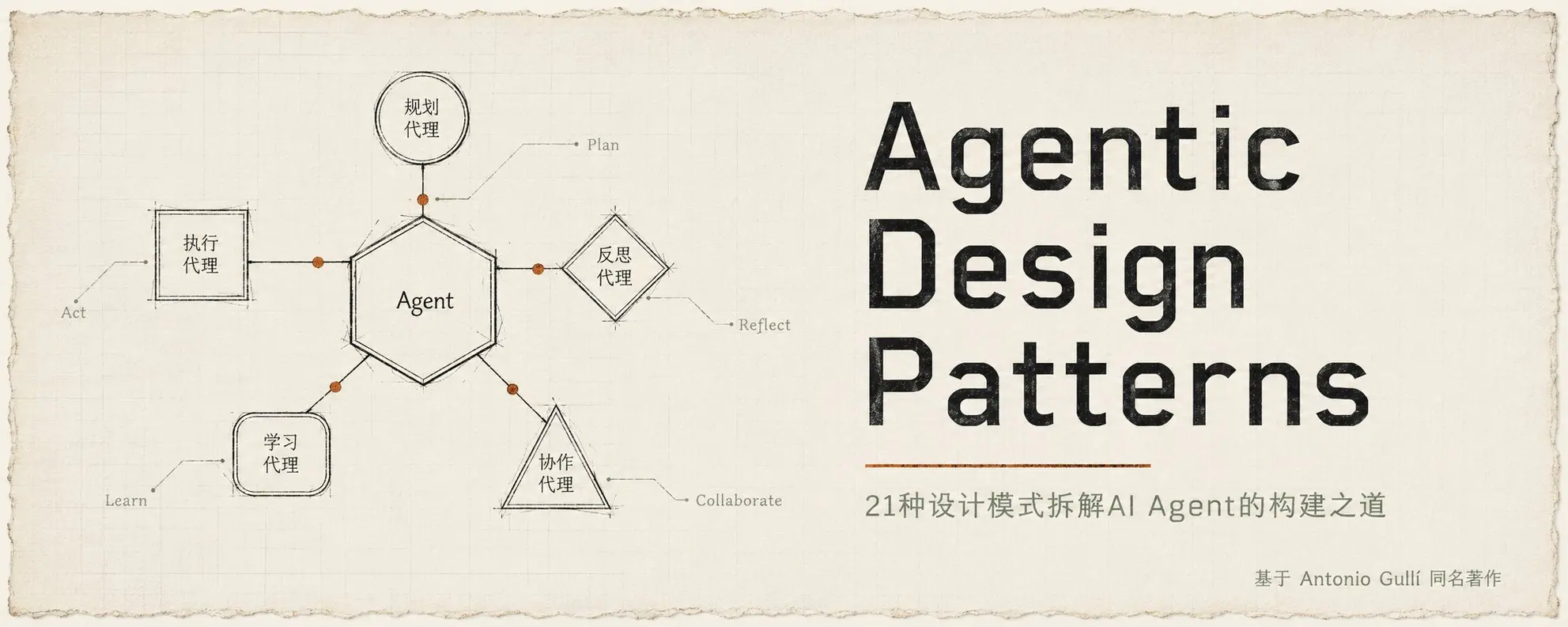
Agentic Design Patterns: A Book That Made Me Re-Understand "What Is an Agent, Really?"

"Agentic Design Patterns" is a 2025 book by Antonio Gullí, a Google engineering director, which offers a systematic framework for AI Agent development through 21 design patterns. A core contribution is the "Four Levels of Agency": Level 0 (bare LLMs) are not true agents. Level 1 agents actively decide when and how to use tools. Level 2 agents engage in strategic planning, context engineering (curating and filtering information), and self-reflection. Level 3 involves multi-agent collaboration with defined communication topologies. The book introduces **Context Engineering** as a superset of prompt engineering, managing four layers of information for the agent: system prompts, external data, implicit context (user history, environment), and feedback loops for automated optimization. A key pattern is **Reflection (Producer-Critic)**, where two distinct agents with different prompts collaborate iteratively—one produces output, the other critiques it—until quality is satisfactory or a max iteration limit is reached. For **Memory**, a three-layer model is proposed: Session (ephemeral conversation context), State (temporary task data), and Memory (persistent, long-term storage). Regarding **Multi-Agent Systems**, the book advises against unnecessary complexity, recommending simple topologies like Supervisor or Peer-to-Peer based on task needs. It emphasizes perfecting a single Level 2 agent before moving to multi-agent setups. The author concludes with three actionable takeaways: 1) Add a Critic agent to existing workflows, 2) Practice Context Engineering beyond simple prompts, and 3) Avoid premature multi-agent complexity; first master a robust single agent. The book provides a practical map, codifying common challenges like reflection, memory, and coordination into reusable patterns, saving developers from reinventing foundational solutions.

链捕手05/25 04:43

Agentic Design Patterns: A Book That Made Me Re-Understand "What Is an Agent, Really?"

链捕手05/25 04:43

Chinese Young Man's AI Short Goes Viral Abroad! Hollywood Director Searches Online: Wants to Hire Him

A young Chinese creator, Mx-Shell, an amateur filmmaker from Yunnan with no formal film training, has gone viral internationally with his AI-generated short film "Zombie Scavenger." Created independently in about 10 days using the Chinese AI video tool Seedance 2.0 at a minimal cost, the film features a robot cowboy in a post-apocalyptic world. Its unique atomic-punk style and cinematic quality caught the attention of Hollywood. The film initially gained little traction on Chinese platform Bilibili. However, after PJ Ace, founder of LA-based AI studio Genre.ai, shared it on X (formerly Twitter), praising it as "one of the best short films I've seen in recent years," it quickly garnered millions of views overseas. PJ Ace then publicly sought to hire the unknown director, sparking a cross-platform search. The creator, who doesn't speak English, was unaware of the overseas buzz until Chinese internet users relayed the message. Connection was eventually made via a QQ email address shared in Bilibili comments, and Mx-Shell received a job offer from the Hollywood director. The article highlights this as a case of "talent export." It argues that while China's competitive AI tool market lowers technical barriers, true success still relies on individual creativity, aesthetic judgment, and narrative skill—qualities Mx-Shell demonstrated. His story exemplifies how AI tools can empower previously unseen creators with compelling ideas to reach a global audience, even if initial recognition sometimes comes from abroad before reverberating back home.

marsbit05/14 07:33

Chinese Young Man's AI Short Goes Viral Abroad! Hollywood Director Searches Online: Wants to Hire Him

marsbit05/14 07:33

The More Frequently They Are Updated, the More Similar Claude Code and Codex Become

OpenAI's recent release of GPT-5.4-Cyber demonstrates a striking convergence with Anthropic's Claude Mythos, reflecting a broader trend of product and strategic alignment between the two AI giants. This is particularly evident in their flagship coding assistants, Codex and Claude Code, which have evolved from distinct philosophies into increasingly similar tools. Initially, Codex emphasized speed and real-time interaction, acting like a fast, junior developer, while Claude Code focused on handling extreme complexity with methodical, large-context analysis. However, both have adopted near-identical solutions to core challenges, such as using isolated sub-tasks or agent teams to prevent context pollution during large-scale code modifications. Benchmark results show a tight race: Codex leads in terminal tasks, while Claude Code excels in complex software engineering benchmarks. Community feedback highlights nuanced differences; Claude Code is faster but can accumulate technical debt, whereas Codex is slower but more deliberate and autonomous. The open-source framework OpenClaw has accelerated this homogenization by standardizing workflows, eroding proprietary advantages. Ultimately, the competition has shifted from pure capability to ecosystem strategy, pricing, and user experience. As these tools become ubiquitous, the developer's role evolves toward higher-level problem definition and architectural thinking, beyond automated code generation.

marsbit04/19 23:55

The More Frequently They Are Updated, the More Similar Claude Code and Codex Become

marsbit04/19 23:55

Hermes Agent Guide: Surpassing OpenClaw, Boosting Productivity by 100x

A guide to Hermes Agent, an open-source AI agent framework by Nous Research, positioned as a powerful alternative to OpenClaw. It is described as a self-evolving agent with a built-in learning loop that autonomously creates skills from experience, continuously improves them, and solidifies knowledge into reusable assets. Its core features include a memory system (storing environment info and user preferences in MEMORY.md and USER.md) and a skill system that generates structured documentation for complex tasks. The agent boasts over 40 built-in tools for web search, browser automation, vision, image generation, and text-to-speech. It supports scheduling automated tasks and can run on various infrastructures, from a $5 VPS to GPU clusters. Popular tools within its ecosystem include the Hindsight memory plugin, the Anthropic Cybersecurity Skills pack, and the mission-control dashboard for agent orchestration. Key differentiators from OpenClaw are its architecture philosophy—centered on the agent's own execution loop rather than a central controller—and its autonomous skill generation versus OpenClaw's manually written skills. Installation is a one-line command, and setup is guided. It integrates with messaging platforms like Telegram, Discord, and Slack. It's suited for scenarios requiring a persistent, context-aware assistant that improves over time, automates workflows, and operates across various deployment environments.

marsbit04/13 13:11

Hermes Agent Guide: Surpassing OpenClaw, Boosting Productivity by 100x

marsbit04/13 13:11

Recalling 10 Little-Known Key Contributions of the Early TON Core Team

Despite TON Foundation being widely recognized, the early contributions of the NEWTON team—TON's core developers—are less known. As an early member, Dr. Awesome Doge recounts their pivotal role in maintaining TON testnet2 and enhancing developer tools before Telegram’s official endorsement in 2021, marking a historic community-led takeover. Key contributions include: 1. **mytonctrl**: An automated node management tool for validator setup, wallet creation, and DNS registration. 2. **tonmon**: A monitoring tool for blockchain health, tracking metrics like block time and validator status. 3. **tonmine**: A system to monitor Giver contracts, which distributed ~200,000 $TON daily. 4. **Cross-chain bridge**: Enabled transfers between TON, Ethereum, and BSC before jetton standards existed. 5. **cryptobot**: An early Telegram wallet supporting multiple cryptocurrencies. 6. **toncenter**: A public API simplifying blockchain data access for developers. 7. **explorer.toncoin.org**: TON’s first technical blockchain explorer. 8. **ton.sh**: A user-friendly blockchain explorer focusing on wallet balances and transaction memos. 9. **TonWeb**: A JavaScript SDK to simplify interactions with TON’s complex smart contract languages. 10. **ton wallet**: An early functional wallet that remains operational. In June 2021, NEWTON’s public letter to Telegram led to official recognition and GitHub access, catalyzing TON’s growth. These foundational efforts underscore the team’s belief in TON’s potential, now realized through its expanding ecosystem and developer community.

marsbit03/15 02:18

Recalling 10 Little-Known Key Contributions of the Early TON Core Team

marsbit03/15 02:18

In a World of Dramatic Change, How Should Humanities Workers Better Use AI?

In a rapidly changing landscape, humanities professionals are increasingly turning to AI not as a magic solution, but as a practical tool integrated into their research, writing workflows. This guide outlines key principles for effectively using AI, moving beyond simple "prompts" to a systematic, controllable methodology. The approach is built on three core tenets: processes must be traceable, verifiable, and supervised; the user must remain in control; and the final output must be something the creator is willing to sign their name to. Key principles include: * **Treat AI as a workbench, not a wish-granter:** Clearly define tasks, audiences, and standards instead of making vague requests. * **You are the responsible agent:** Provide clear context, constraints, and executable steps. Dissatisfaction often stems from unclear instructions, not AI failure. * **Compare multiple models:** Different AIs have different strengths (writing, reasoning, coding); use them like a team. * **Manage expectations:** Assume AI has the knowledge level of a top undergraduate; provide examples and standards for specialized tasks. * **Break tasks into steps:** A white-box process of small, reliable steps is better than a single, error-prone black-box request. * **Industrialize first, then automate:** Define and structure your workflow into reproducible steps before assigning sub-tasks to AI. * **Anticipate AI's laziness:** Remove format barriers (e.g., clean text from PDFs/websites) to focus its effort on comprehension. * **Prioritize compression over expansion:** It's more reliable to condense large amounts of provided material than to ask AI to generate content from little context. * **Iterate on the pipeline, not the output:** Aim for a system that consistently produces good-enough drafts (e.g., 75/100) rather than manually perfecting each result. * **Generate quantity to find quality:** Request multiple versions (e.g., 5 summaries, 50 headlines) to combat mediocrity and discover excellent samples. * **Act as a head chef:** Provide clear feedback for revisions instead of rewriting the output yourself. The ultimate quality of work depends on **materials × taste**. AI enhances interaction with materials, but genuine research, unique sources, and cultivated judgment remain irreplaceable. The goal is to replace anxiety with practical skill by engineering tasks, making processes transparent, and integrating AI as a verb within a credible,署名-worthy creative process.

marsbit03/05 05:20

In a World of Dramatic Change, How Should Humanities Workers Better Use AI?

marsbit03/05 05:20

活动图片