Artículos Relacionados con Team

El Centro de Noticias de HTX ofrece los artículos más recientes y un análisis profundo sobre "Team", cubriendo tendencias del mercado, actualizaciones de proyectos, desarrollos tecnológicos y políticas regulatorias en la industria de cripto.

Dialogue with KK, Founder of Hash Global: Do VCs Still Invest in Blockchain Games Now? What Kind of Projects Can Still Get Funding?

**Title: Dialogue with KK, Founder of Hash Global: Do VCs Still Invest in Blockchain Games? What Kind of Projects Can Still Get Funding?** **Summary:** KK, partner at Hash Global, discussed the evolving landscape of Web3 investment and blockchain games in a recent interview. He noted that the industry has moved past its initial hype phase into a more sober "second half," where VCs now prioritize core questions: Is the game actually fun? Does it have real users? Can it generate revenue? Key insights include: * **Web3 Investment Evolution:** The sector is increasingly adopting traditional investment logic, focusing on business models, value capture, and tangible worth over pure narrative. * **Blockchain Game Fundamentals:** The paramount criterion for any game is being genuinely fun and engaging. Web3 elements (like asset issuance and value distribution) should enhance an already solid product, not be a substitute for poor gameplay. Play-to-Earn is seen as a potential final stage, not a starting point. * **Current Investment Thesis:** Hash Global remains active in gaming, favoring projects with low barriers to entry, strong social/competitive elements, and the ability to generate real revenue (e.g., through ads, skins) like traditional Web2 games before scaling. Essential criteria are: 1) A fun core loop understandable without Web3 knowledge, 2) Web3 mechanisms that genuinely improve asset distribution and community participation, and 3) A capable, long-term-focused team with proven product-building experience. * **Team Focus:** The firm concentrates on investing in Chinese teams, leveraging cultural familiarity and judgment. * **Web3 Application Outlook:** Large-scale adoption may be accelerated by AI in areas with significant pain points in distribution (e.g., creator economy) or in "Non-Financial RWA" sectors like entertainment/culture. * **BNB Ecosystem:** Hash Global is bullish on BNB, viewing its ecosystem as significantly undervalued, with real users and global capital access. * **Investor Advice:** In the current bear market, KK expresses respect for new institutional investors entering Web3, as it indicates deep research rather than hype-chasing. A key lesson is managing pace—maintaining optimism tempered with realism to ensure longevity.

marsbit06/22 09:16
Dialogue with KK, Founder of Hash Global: Do VCs Still Invest in Blockchain Games Now? What Kind of Projects Can Still Get Funding?

marsbit06/22 09:16

The Last Time I'll Talk About Backpack, and Also Discussing My Airdrop Farming Principles

The author outlines two primary approaches to airdrop farming (referred to as "撸毛"): a labor-intensive" method of mass participation in many projects, and their own "sniper" method. The sniper approach relies on a rigorous four-point checklist to filter projects and avoid "industrial garbage." The checklist evaluates: 1. **Team (People):** Founders must be intelligent, have strong execution skills, and be genuinely well-intentioned. This is assessed through their social media content and, if possible, personal interactions. 2. **Product (Product-Market Fit):** The product must have a clear market fit, be delivered competently, and the team must show a responsible attitude towards its quality, avoiding releases full of basic errors. 3. **Narrative (Story):** The project should operate in a promising, unproven narrative within Web3 that also aligns with major investment trends in Web2 (e.g., AI). 4. **Timing & Cost (Market Conditions):** Avoid participating when market sentiment is overly FOMO-driven and participation costs are high. If an opportunity causes hesitation, it's best to skip it, as overcrowded airdrops yield minimal or negative returns. Applying this framework, the author explains why they avoided heavily farming the Backpack exchange airdrop: * **Narrative:** They are skeptical of the "compliant CEX" narrative, questioning its unique selling point against giants like Binance and OKX. * **Product:** They criticize Backpack's frequent technical failures, rollbacks, and what they perceive as a lack of product development rigor, comparing it unfavorably to competitors like Hyperliquid. * **Timing & Cost:** The participation cost was high compared to zero-fee alternatives available at the time. The author concludes that Backpack lacks the technical and operational prowess of a serious exchange and views its token more as a "VC-backed meme coin" for secondary market speculation rather than a worthwhile airdrop target.

比推03/23 20:38

The Last Time I'll Talk About Backpack, and Also Discussing My Airdrop Farming Principles

比推03/23 20:38

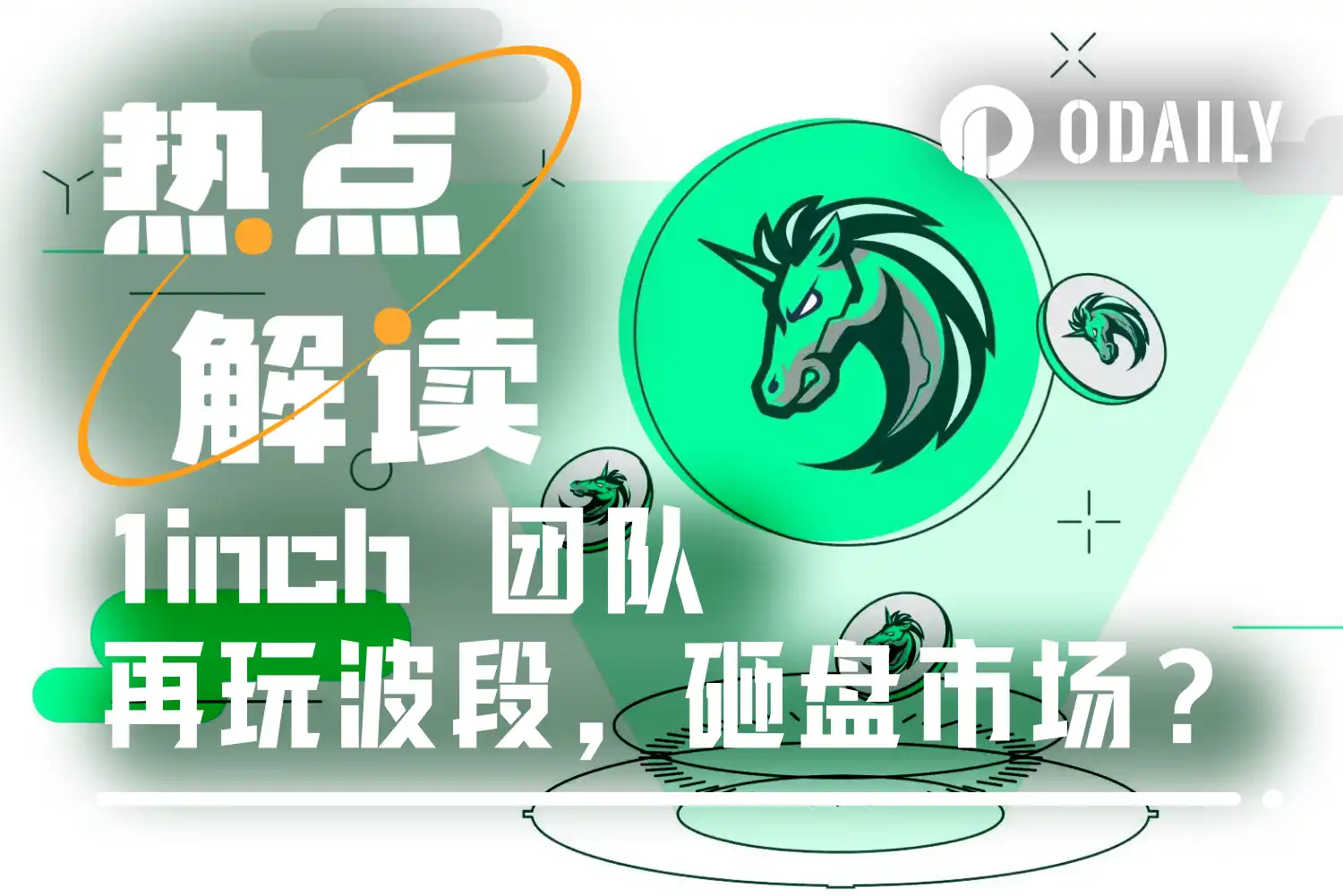
1inch Team Accused of Dumping, On-Chain Data Reveals Sophisticated Trading Strategies of Large Positions

Recent on-chain data from ARKHAM indicated that three wallets labeled as "1inch Team" sold 36.36 million 1INCH tokens, worth $5.04 million, causing the token's price to drop by 16.7% to around $0.1155. The tokens were initially acquired in late 2024 at approximately $0.42 each, meaning the sale resulted in a loss of over $10 million for the seller. This event sparked criticism and raised questions about whether the 1inch team was intentionally dumping tokens. However, the team’s historical trading behavior shows a pattern of strategic accumulation during market lows and gradual profit-taking during highs—not large-scale selling at a loss. For instance, earlier in the year, the team accumulated 1INCH at around $0.20 and sold portions at higher prices, realizing significant profits on 1INCH, ETH, and BTC positions. 1inch officially denied involvement, clarifying that the wallets in question were not controlled by the team or its multisig treasury and that the sell-off was likely executed by a third-party holder. The team emphasized that it does not influence independent token holders' decisions. Despite the clarification, the sell-off exacerbated the token’s already weak market performance. 1INCH has been in a prolonged downtrend since its all-time high of $6, now trading near $0.11. The incident highlights how on-chain labels can be misleading and how low liquidity magnifies the impact of large sales—often harming retail investors the most.

marsbit01/29 04:58

1inch Team Accused of Dumping, On-Chain Data Reveals Sophisticated Trading Strategies of Large Positions

marsbit01/29 04:58

6th Man Ventures Founder: Forget the 'Token vs. Equity' Debate, What Really Needs to Be Trusted?

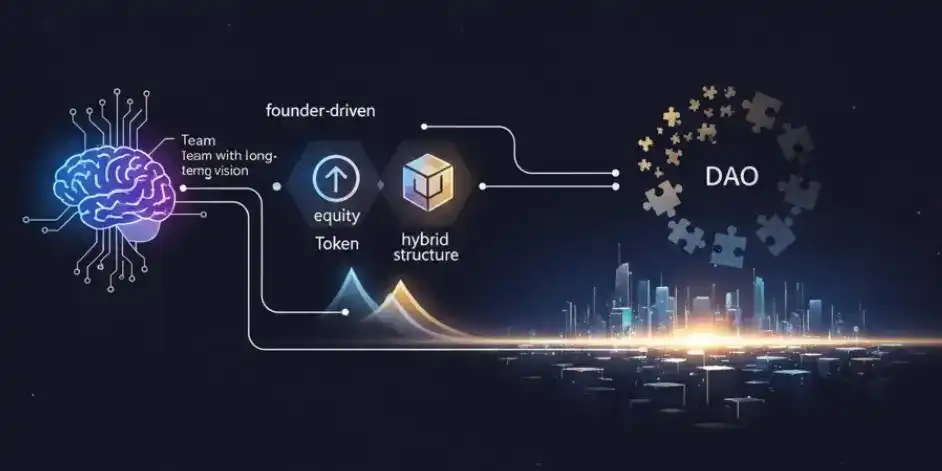
Mike Dudas, founder of The Block and 6th Man Ventures, argues that the debate between tokens and equity misses the point: the real question is what deserves trust. He suggests there is no one-size-fits-all answer to whether a "dual token + equity" structure works. Instead, the core principle is trusting a team that is not only exceptional but also long-term oriented, committed to building a founder-led, enduring business like Binance. Dudas notes that for application-layer projects requiring sustained leadership, tokens often underperform compared to equity. Many DeFi 1.0 founders have left their projects, which are now maintained by DAOs in "maintenance mode," struggling with slow and ineffective decision-making. Pure equity isn’t always superior either—tokens enable functions like fee discounts, staking for airdrops, and access rights, which equity can’t easily replicate. He proposes a hybrid model: an equity entity operates on a "cost-plus" basis to serve a token-driven protocol, aiming not to maximize its own profits but to maximize the token’s and ecosystem’s value. This requires high trust in the team, as token holders lack strong legal rights. Ultimately, success depends on the team’s capability, credibility, execution, vision, and action. The best tokens will thrive by 2026 if teams communicate well, conduct buybacks, enable substantive governance, and direct value to the token through utility.

marsbit01/12 08:09

6th Man Ventures Founder: Forget the 'Token vs. Equity' Debate, What Really Needs to Be Trusted?

marsbit01/12 08:09

6th Man Ventures Founder: How to Find the Most Valuable Crypto Projects?

Founder of 6th Man Ventures discusses the viability of the "dual-token + equity" structure, emphasizing that there is no one-size-fits-all answer. The key is backing an exceptional, long-term-focused team committed to building a founder-led, enduring enterprise, similar to Binance’s Changpeng Zhao. He argues that for application-layer projects requiring sustained leadership, tokens often underperform equity. Many DeFi 1.0 founders have departed, leaving DAOs and part-time contributors in "maintenance mode," struggling with slow and ineffective decision-making. In contrast, equity isn’t always superior—tokens enable unique utilities like fee discounts, staking for airdrops, and access rights, which equity cannot easily replicate. "Ownership tokens" currently face limitations in product integration and legal recognition in the U.S. due to regulatory gaps. However, a hybrid model is proposed: an equity entity operates on a "cost-plus" basis to serve a token-driven protocol, aiming to maximize token and ecosystem value rather than corporate profits. This structure benefits token holders with a well-funded Labs entity for development and a core team heavily incentivized via token holdings. Success hinges on trust in the team’s execution and vision, as token holders lack strong legal protections. Ultimately, team quality, credibility, and execution determine value. Over time, consistent delivery and clear value accrual to tokens—through buybacks, governance, and utility—will allow the best tokens to thrive by 2026, even with equity/Labs entities.

marsbit01/08 08:59

6th Man Ventures Founder: How to Find the Most Valuable Crypto Projects?

marsbit01/08 08:59

活动图片