Artículos Relacionados con Supply

El Centro de Noticias de HTX ofrece los artículos más recientes y un análisis profundo sobre "Supply", cubriendo tendencias del mercado, actualizaciones de proyectos, desarrollos tecnológicos y políticas regulatorias en la industria de cripto.

After ZEC Surged into Top Ten, All Old Grudges Resurfaced

Following ZEC's price surge of over 150% to above $1,200, propelling it into the top 10 cryptocurrencies by market cap, several longstanding criticisms of the Zcash project have resurfaced. Critics point to four main issues: 1) A controversial 20% block reward allocation, initially a "Founder's Reward" and later a "Development Fund," which continues to divert new coins from miners. 2) Its "opt-in" privacy model, where shielded transactions are not the default, creating a gap between its privacy potential and typical usage. 3) Governance instability, highlighted by the 2026 collective departure of the core Electric Coin Company development team due to clashes with the governing Bootstrap board. 4) A critical security vulnerability discovered in May 2026 within the Orchard shielded pool's zk-SNARK circuit, which, while patched, raised unprovable doubts about potential past exploitation and the integrity of ZEC's 21 million supply cap. The price rally has intensified a fundamental debate between bulls and bears. Bulls cite positive regulatory developments, such as the SEC closing its investigation, and significant market potential relative to Bitcoin. Bears, including prominent figures who have publicly shorted ZEC, argue the rise is purely narrative-driven and that the project's foundational flaws make it unworthy of its current valuation. The article concludes that ZEC's recent re-pricing has not resolved its historical controversies, and the true test will be whether its price can be sustained once current market pressures subside, determining if the influx of capital is betting on a genuine future for privacy assets or merely a reheated old story.

marsbitAyer 04:01

After ZEC Surged into Top Ten, All Old Grudges Resurfaced

marsbitAyer 04:01

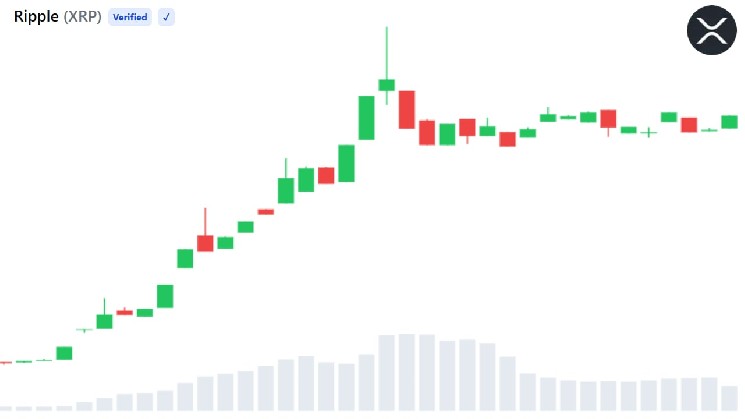
Report on XRP by One of the Most Authoritative Companies: 'The Most Misunderstood Altcoin'

21Shares, a prominent crypto asset management firm, published a report describing XRP as potentially one of the most misunderstood cryptocurrencies. It challenges the widespread perception that Ripple controls the XRP Ledger (XRPL), highlighting that XRPL is an open, decentralized blockchain network. The report notes that XRP was launched in 2012 with the core purpose of enabling fast, low-cost, and reliable value transfer, settling transactions in 3-5 seconds for an average fee of $0.0002. All 100 billion XRP were created at launch, with no new supply possible. The total supply is deflationary, as a small amount of XRP is burned with each transaction—over 14 million have been destroyed to date. 21Shares clarifies the distinction between XRP, XRPL, and Ripple. Ripple is a private tech company developing payment infrastructure on XRPL but reportedly controls only 1 of 35 validators in the default Unique Node List. The ecosystem includes various independent validators and developers. Initially, 80 billion XRP were allocated to Ripple to foster ecosystem growth. In 2017, Ripple placed 55 billion into escrow, with approximately 34 billion remaining, released according to a public schedule. The primary use case for XRP is as a bridge asset for cross-border payments, utilized by companies like SBI Holdings and Tranglo. However, XRPL's ecosystem has expanded to include a native decentralized exchange, token issuance, stablecoins (like Ripple's RLUSD at ~$1.6B), and tokenized real-world assets (totaling ~$4B). While assets on XRPL don't have to trade directly in XRP, every network transaction requires a fee paid and burned in XRP. The report concludes by contrasting XRP with Bitcoin: Bitcoin is a digital store of value, while XRP aims to integrate into the existing financial system's money transfer infrastructure, a crucial distinction for investor understanding.

cryptonews.ru09/09 10:41

Report on XRP by One of the Most Authoritative Companies: 'The Most Misunderstood Altcoin'

cryptonews.ru09/09 10:41

Meme from a Macro-Cycle Perspective: Similarities and Differences with Previous Rounds

From a macro-cycle perspective on meme coins, this article analyzes their evolving role across three crypto bull markets (2016-2018, 2020-2022, 2023-2025). It observes that meme presence and influence have grown significantly, becoming a central narrative in the most recent cycle. The author posits a binary classification for crypto assets: 'business/production' assets (valued for fundamentals like PMF, revenue) and 'meme' assets (valued primarily for social consensus and narrative strength). The core thesis is that the prominence of memes in any cycle is inversely related to the supply and quality of compelling business-model narratives; when the latter is weak, speculative capital flows into meme assets. The current cycle is seen as similar to the last, with a continued scarcity of strong business narratives (e.g., RWA). However, new challenges exist: a highly industrialized, near-infinite supply of new meme coins and a more fragile, short-term oriented investor base from previous cycles, making consistent outperformance harder. A new 'stock meme' narrative on Robinhood (e.g., AI/Artificial Inu paired with NVDA stock) is examined but deemed fragile due to reliance on temporary arbitrage inefficiencies. Finally, the article outlines the profile of a successful meme speculator: high energy, narrative sensitivity, constant on-chain engagement, part of a tight-knit information circle, and a systematic, adaptable framework. It contrasts this with a value investor's temperament, concluding that success in either field requires playing to one's innate strengths and avoiding incompatible strategies.

marsbit09/02 08:26

Meme from a Macro-Cycle Perspective: Similarities and Differences with Previous Rounds

marsbit09/02 08:26

Saying Goodbye to "Shitcoins": The Crypto Industry Embarks on a Wave of Tokenomics Reform

**Summary:** The crypto industry is undergoing a significant shift away from "airdrop tokens" with weak fundamentals, as projects reform their tokenomics to establish direct links between protocol revenue and token value. Key trends include reducing inflation, implementing buyback-and-burn mechanisms, optimizing vesting schedules, and redesigning staking rewards to be backed by real income rather than token issuance. A PANews analysis highlights 15 major projects—including Solana, NEAR, Aptos, Ethena, and SushiSwap—leading this charge. Their reforms converge on four main strategies: public chains are capping supply and ending inflationary subsidies; application-layer protocols are channeling platform fees or off-chain revenue into buybacks; projects are restructuring token unlocks to mitigate sell pressure; and staking systems are being overhauled to derive rewards from actual protocol earnings. This year, crypto project buybacks have surged to nearly $640 million, heavily driven by top protocols like Hyperliquid and pump.fun. However, the article cautions that buybacks alone are not a guarantee of price appreciation, as seen with tokens like Chainlink and Jupiter, which fell despite repurchase programs. True value creation depends on sustainable organic growth and revenue, not just supply reduction. The core challenge remains: whether token price increases stem from genuine economic expansion or merely from artificial scarcity.

marsbit09/02 08:11

Saying Goodbye to "Shitcoins": The Crypto Industry Embarks on a Wave of Tokenomics Reform

marsbit09/02 08:11

活动图片