Artículos Relacionados con Stocks

El Centro de Noticias de HTX ofrece los artículos más recientes y un análisis profundo sobre "Stocks", cubriendo tendencias del mercado, actualizaciones de proyectos, desarrollos tecnológicos y políticas regulatorias en la industria de cripto.

The Other Side of the Stock Market Rally: Energy Restructuring, Bitcoin Squeeze, and Market Mismatch

The article examines the complex and seemingly contradictory signals in global markets, where rising equities, falling oil prices, and cooling inflation expectations coexist with unresolved structural tensions. In digital assets, a major corporate strategy added nearly $1 billion in Bitcoin, increasing its holdings significantly, while Bitcoin's price action is seen as less important than the persistent negative funding rates, indicating a crowded short position that could lead to a sharp upward repricing. The global oil trade is rapidly rewiring, with the U.S. Gulf Coast becoming a key supplier to Europe and Asia amid Middle East disruptions. However, the article warns that such supply shocks can lead to permanent demand destruction as consumers and governments adapt. U.S. equities rose on optimism over potential geopolitical de-escalation and softer PPI data, led by tech stocks like NVIDIA. Meanwhile, the U.S. Federal Reserve maintains a wait-and-see stance on rates. Geopolitically, U.S.-Iran negotiations are ongoing alongside a maritime blockade, which has disrupted energy infrastructure and supply chains. Finally, the push for supply chain reshoring, particularly in critical minerals and defense, is accelerating but faces significant execution challenges related to permitting, financing, and labor, moving the issue from cost to one of strategic necessity.

marsbitHace 2 días 07:53

The Other Side of the Stock Market Rally: Energy Restructuring, Bitcoin Squeeze, and Market Mismatch

marsbitHace 2 días 07:53

US Stocks Hit Record Highs: Why Isn't the Market Afraid of the Flames of War?

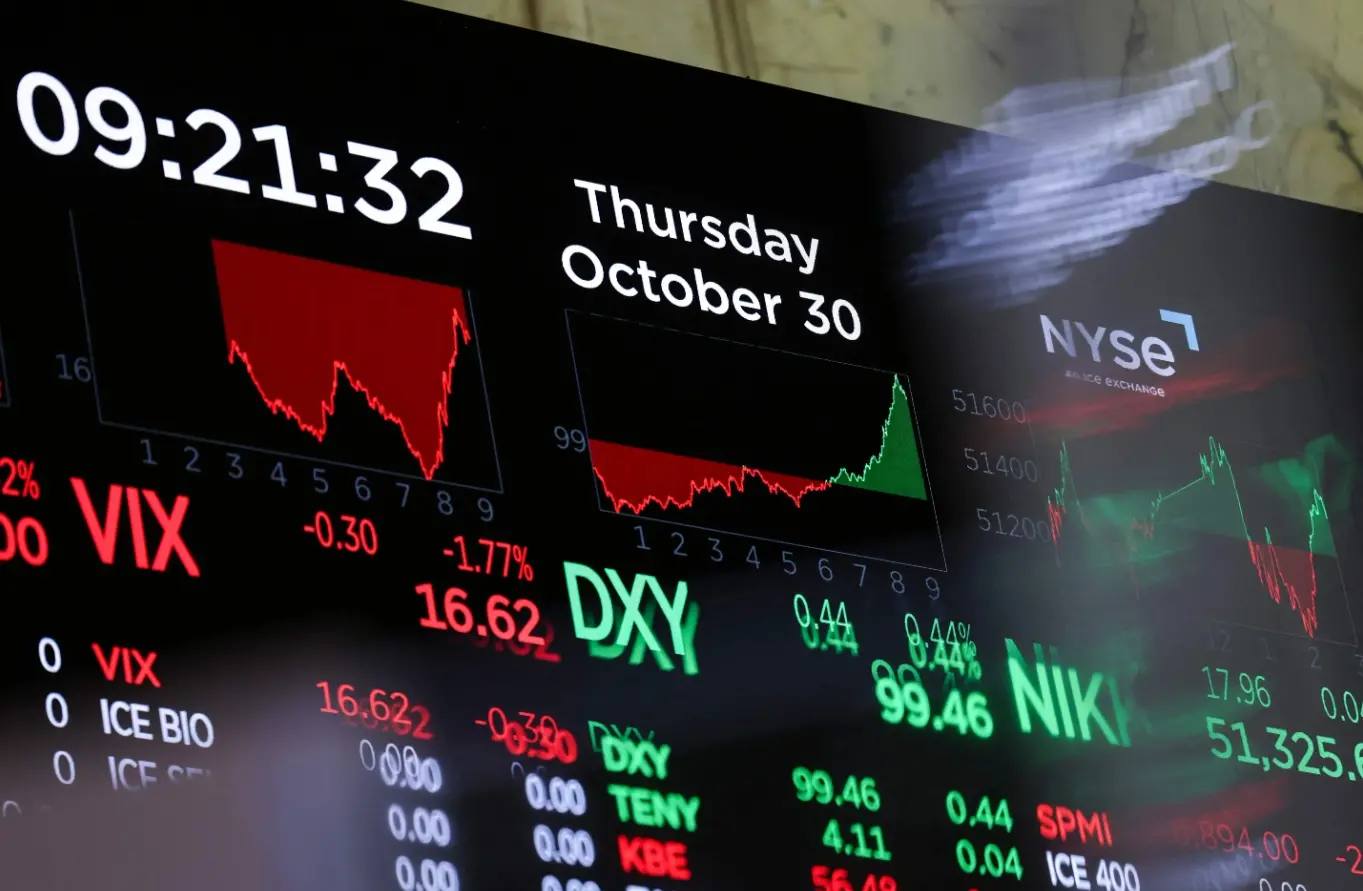
U.S. stocks hit a record high on April 15, with the S&P 500 closing at 7,022.95, just 77 days after its previous peak. This rebound occurred in only 11 trading days—far faster than recoveries following past crises like the COVID-19 pandemic (103 days) or the 2011 debt crisis (106 days). The market's rapid recovery is attributed to "ceasefire expectations" rather than deteriorating economic fundamentals. During the sell-off triggered by the U.S.-Israel military action against Iran in late February, the S&P 500 fell nearly 10%. However, the market rallied twice on ceasefire rumors—first on March 24 and again on April 8—even before any permanent peace deal was signed. Notably, the VIX fear index fell below pre-war levels, indicating that the market had repriced the conflict from an uncertainty to a calculable risk. Major financial institutions like JPMorgan reported record trading revenues of $11.6 billion in Q1 2026, largely driven by volatility in commodities and emerging markets. Hedge funds turned net long for the first time since late 2025, while margin debt hit a record $1.28 trillion. This reflects a financial system that commercializes volatility, treating geopolitical shocks as tradable opportunities rather than systemic threats. However, the current optimism relies on assumptions of a sustained ceasefire and stable oil prices, leaving the market vulnerable if these conditions change.

marsbit04/16 07:13

US Stocks Hit Record Highs: Why Isn't the Market Afraid of the Flames of War?

marsbit04/16 07:13

Understanding Stock Tokenization in One Article: Who's Doing It, How to Buy, and What Are the Risks?

In the past 60 days, the U.S. capital market has undergone structural changes surpassing the last decade. The SEC outlined a blueprint for tokenized securities, Nasdaq received approval for token settlement, and NYSE partnered with Securitize to launch a tokenization platform. Despite a global equity market worth ~$140 trillion, tokenized stocks represent only ~$890 million—a 0.0007% penetration. The SEC’s January 2026 statement classified tokenized securities into four models: - **Model A (Issuer-Sponsored)**: Direct on-chain ownership (e.g., Galaxy Digital tokenizing its own stock). - **Model B (Tokenized Securities)**: Intermediated custody with blockchain settlement (adopted by Nasdaq, NYSE, DTC). - **Model C (Pegged Securities)**: Synthetic claims via omnibus accounts (e.g., Ondo Finance, xStocks, Dinari—dominant with ~$650M TVL). - **Model D (Derivative Contracts)**: Pure synthetic exposure (e.g., Ventuals’ perpetual swaps on Hyperliquid). For public stocks, Models C and B lead, but face challenges: Model C introduces counterparty risk (no SIPC insurance), while Model A requires issuer participation. Private market tokenization is more transformative, addressing illiquidity and high barriers in the $7T private equity space. Platforms like PreStocks and Jarsy offer 24/7 tokenized access to pre-IPO stocks (e.g., SpaceX, OpenAI) but lack direct ownership rights. Traditional private equity platforms (Forge, EquityZen) are regulated but slow and expensive. Key risks include fee stacking in SPV structures, regulatory uncertainty, and synthetic products’ high funding rates (e.g., Ventuals’ 54% annualized cost for long positions). Infrastructure players (e.g., Securitize, Berry) are advancing models with independent custody to mitigate risks. The convergence of institutional adoption and retail demand signals a foundational shift in market structure, though scalability and transparency remain critical hurdles.

marsbit04/16 03:25

Understanding Stock Tokenization in One Article: Who's Doing It, How to Buy, and What Are the Risks?

marsbit04/16 03:25

活动图片