Artículos Relacionados con Startup

El Centro de Noticias de HTX ofrece los artículos más recientes y un análisis profundo sobre "Startup", cubriendo tendencias del mercado, actualizaciones de proyectos, desarrollos tecnológicos y políticas regulatorias en la industria de cripto.

Just Now, Peking University Alumna Lilian Weng Announces Resignation: The Best 'Alignment' in the AI Era Is Taking Care of Yourself

Lilian Weng, a Peking University alumnus and former OpenAI executive, has announced her departure from Thinking Machines Lab, the AI startup she co-founded with ex-OpenAI CTO Mira Murati 20 months ago. Her resignation comes shortly after the company released its first open-source model, Inkling. In her farewell message, Weng cited health reasons as the primary factor, stating that the past seven months involved more illness than any other period in her life. The intense pressure and guilt of being unable to work during critical periods, like the Inkling launch, became unsustainable. She expressed that she could not continue in a role where she felt unable to give her full effort. Weng joined OpenAI in 2018, contributing to projects like the Dactyl robotic hand and later building the Safety Systems team from scratch. She is also widely known for her influential technical blog, Lil'Log. Her departure follows a period of high expectations and challenges for Thinking Machines, which secured a record $20 billion seed round at a $120 billion valuation in 2025 but has since seen fluctuations in its valuation and the departure of other key co-founders. Weng emphasized that she remains passionate about AI but needs a more predictable and defined role without the relentless pressure of a co-founder. Her exit highlights the immense personal toll and speed of competition in the AI industry, where the drive for progress often clashes with human limits. Her decision underscores that stepping back to prioritize well-being can be an act of courage.

marsbitHace 21 hora(s)

Just Now, Peking University Alumna Lilian Weng Announces Resignation: The Best 'Alignment' in the AI Era Is Taking Care of Yourself

marsbitHace 21 hora(s)

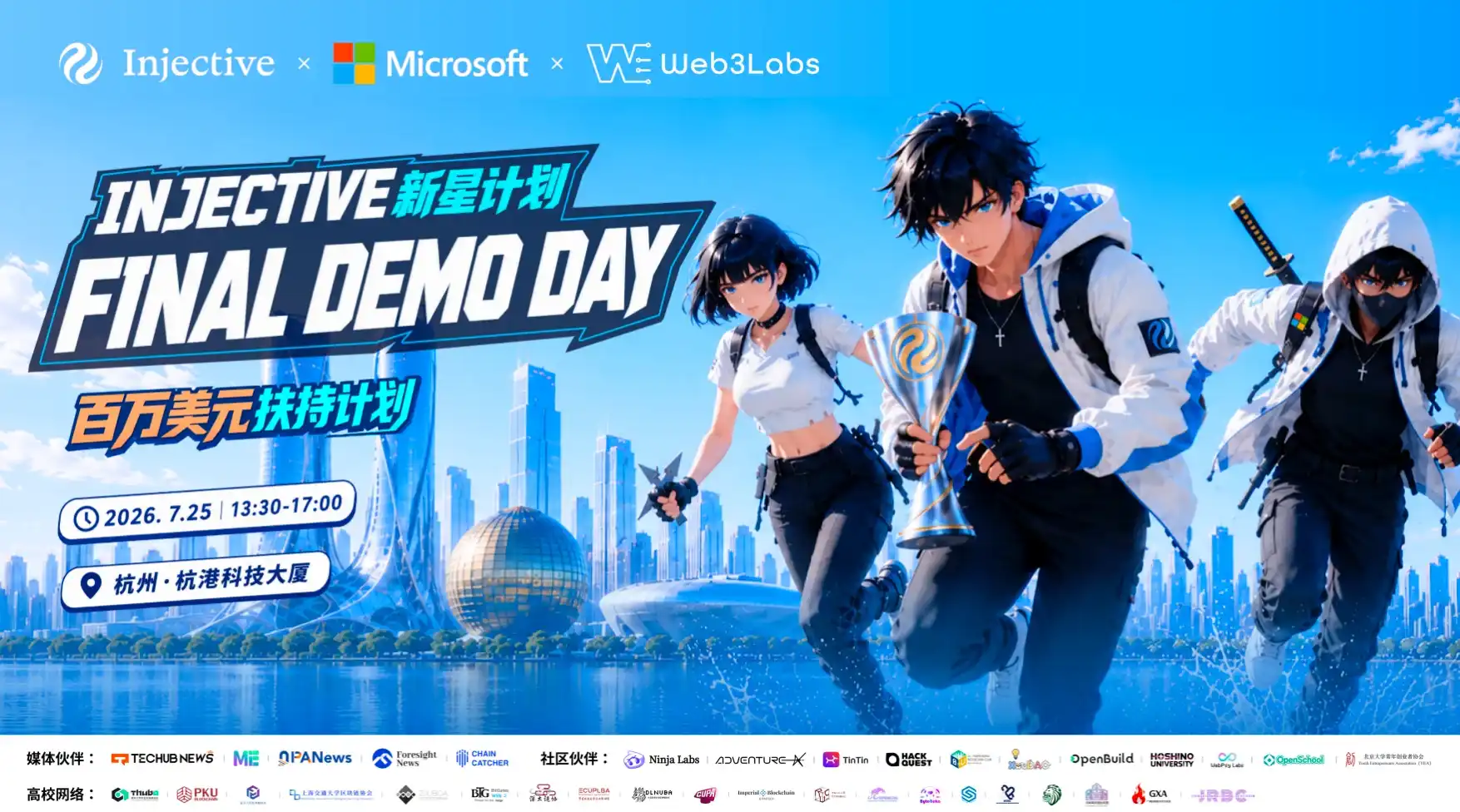
"Injective Nova Program" Final Demo Day Summit Finals Successfully Concluded: TOP3 Teams Announced, Co-creating a New Paradigm of AI × Web3

"Injective Nova Program" Final Demo Day Successfully Concludes in Hangzhou: Top 3 Teams Announced, Shaping the New Paradigm of AI × Web3 On July 25, 2026, the Final Demo Day of the "Injective Nova Program," jointly launched by Injective, Microsoft, and Web3Labs, was successfully held in Hangzhou. The event gathered global blockchain experts, AI developers, top VC representatives, and ecosystem partners to witness innovations at the intersection of AI and decentralized networks. The program generated significant global interest, receiving 89 applications from over 10 countries and achieving over 1,000,000 ecosystem impressions. After a rigorous review, a global Top 10 was announced on July 10. These teams participated in an exclusive visit to Microsoft's Beijing headquarters for deep technical exchanges on July 16. At the final demo day, the Top 10 teams delivered live presentations. The jury evaluated projects based on technological innovation, commercial potential, and synergy with the Injective ecosystem, ultimately awarding the top three positions. All winning and shortlisted projects will receive comprehensive incubation support, technical resources, and capital access from Injective, Microsoft, and Web3Labs. The successful conclusion of the Final Demo Day marks a significant milestone for the first phase of the Injective Nova Program. The organizers plan to continue supporting global builders and exploring the limitless possibilities of AI and decentralized technology integration.

marsbitAyer 11:27

"Injective Nova Program" Final Demo Day Summit Finals Successfully Concluded: TOP3 Teams Announced, Co-creating a New Paradigm of AI × Web3

marsbitAyer 11:27

How Has Beijing Become a 'Global High Ground'?

How did Beijing become a "global highland"? In the first half of the year, Beijing's GDP grew by 5.4%, with growth in Q1 reaching 5.9%. Key drivers were not consumption or real estate, but hardcore sectors like chips, robotics, computing power, and large AI models. Investment concentrated sharply in tech, with high-tech manufacturing investment up 36% and technology services investment up 87.2%. Nearly 90% of venture capital flowed into hard tech. Output figures were strong: integrated circuit production rose 17.8%, industrial robots 75.5%, and service robots surged 230%. Companies like Qianxun AI and Galaxy General Robotics are deploying robots in real-world logistics and manufacturing, moving beyond demonstrations. The services sector is also being reshaped by tech, with software, IT, and finance growing faster than the sector average. Beijing leads in AI and embodied intelligence. Galaxy General Robotics secured significant funding, including from state-backed funds. The city released foundational AI models and its independent AI ecosystem, FlagOS, is expanding. Companies like Jiuzhang Yunjie provide neutral computing power and base models, supporting the broader ecosystem. Infrastructure is expanding, with Beijing aiming to add over 70,000 Petaflops of intelligent computing power annually. A "Beijing R&D, surrounding training" model is emerging, with computing resources being allocated to regions like Hebei and Tianjin. Efforts to deepen integration within the Beijing-Tianjin-Hebei region include industrial relocation and improved transport links. To bridge the gap between lab and market, Beijing is establishing pilot-scale production platforms. The underlying trend is the convergence of computing power, capital, talent, and real-world applications. While challenges remain in commercialization and regional integration, Beijing's focus on strengthening these interconnected elements is building the foundation for its claim as a global innovation hub.

marsbitAyer 10:22

How Has Beijing Become a 'Global High Ground'?

marsbitAyer 10:22

The Changing Landscape: What Are Crypto VCs Experiencing?

Title: The Shifting Landscape of Crypto Venture Capital The era of dedicated crypto venture capital funds is undergoing a significant transformation. Once essential for navigating the sector's complexity and high risk, these specialized funds are now facing an identity crisis as the market matures. This shift mirrors historical patterns in other specialized investment classes like cleantech and SPACs, where initial information advantages dissipate as technologies become mainstream and integrated into existing industry frameworks. The article argues that crypto is reaching a critical inflection point, transitioning from a "building phase" to an "integration phase." Major players like Stripe, BlackRock, and Visa now engage with crypto not for its novel mechanics but as a foundational financial infrastructure. Their needs—regulatory compliance, banking partnerships, distribution channels—align with traditional fintech, a domain easily understood by large, generalist funds like Sequoia and Founders Fund. This evolution creates a "barbell effect" within the VC landscape. On one end are massive, diversified platforms that can incorporate crypto as one vertical among many. On the other are small, nimble funds focused on niche, experimental projects. The middle ground—medium-sized dedicated crypto funds—is being squeezed out. Their typical fund size makes it impossible to generate sufficient returns solely from early-stage crypto bets, yet they cannot compete with giants for later-stage deals. Consequently, leading crypto-native firms like Paradigm and Framework Ventures are expanding into AI, robotics, and other sectors, driven partly by LP pressure for better returns amid a broader VC DPI crisis. Others, like Dragonfly and a16z, have narrowed their crypto focus predominantly to financial infrastructure like stablecoins, reframing the sector's core narrative. For crypto entrepreneurs, this consolidation presents challenges. While generalist funds offer larger checks and broader resources, crypto projects now compete fiercely with AI for attention and capital within these firms. Furthermore, the long-term, non-commercial foundational work that built the ecosystem—funded by dedicated crypto VCs—is less likely to attract generalist capital focused on direct returns. The conclusion is that "crypto investor" as a standalone category is becoming obsolete, akin to "internet investor." Crypto is becoming a baseline infrastructure layer. The future will see a barbell structure: large-scale growth financing handled by generalist funds, while pioneering, speculative projects are funded by small, specialized vehicles. The dedicated crypto funds of the 2017-2021 boom, which incubated core infrastructure, are giving way to this new, bifurcated reality.

Foresight News07/22 04:02

The Changing Landscape: What Are Crypto VCs Experiencing?

Foresight News07/22 04:02

Zhongji Innolight Leads Investment in a Tsinghua '90s Postgraduate

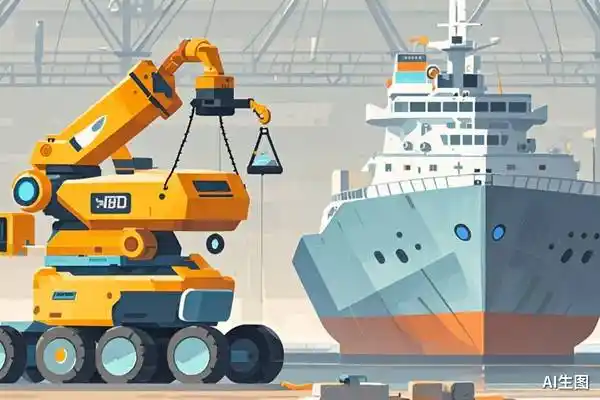
Shihe Robotics, a Chinese intelligent high-altitude robotics company, has completed a Series C financing round worth hundreds of millions of RMB. The round was jointly led by Qianggang Capital and Zhongji InnoLight, with participation from Guangxi Investment Capital, Guohai Securities, Junton Capital, and existing investor Fosun RuiZheng. Founded around 2015 by Xu Huayang, a Tsinghua University Ph.D. graduate, the company has spent nearly a decade focusing on robotics for high-risk, high-altitude maintenance work. Starting from a specific application in ship hull derusting, which has achieved a dominant market share in China, Shihe has expanded into a wider product matrix serving scenarios in petrochemical storage tank maintenance, energy facility inspection, bridge infrastructure, and building façade cleaning. CEO Xu Huayang emphasizes a hardware-first, commercialization-focused philosophy for the robotics industry. The company's strategy revolves around "one machine, multiple uses; complete process closure," aiming to deliver reliable value in real industrial settings rather than pursuing demos. It has served major domestic clients like COSCO, China State Shipbuilding Corporation, Sinopec, and Saudi Aramco. Shihe is building its technological edge by leveraging vast, high-fidelity industrial data collected during operations. It is developing a vertical "Industrial World Model" in collaboration with top university labs. This model is tailored for complex, hazardous industrial environments, enabling robots to progress towards greater autonomy in perception, decision-making, and task execution. In the context of the booming "embodied AI" field, Shihe positions its path as starting from structured, specialized industrial scenarios before moving to more complex environments. Concurrently, the company is accelerating its global expansion, with overseas revenue growing tenfold over two years. Xu aims for international markets to contribute half of the company's revenue within five years. The latest funding will support further technological development, product matrix expansion, and global market penetration.

marsbit07/21 02:42

Zhongji Innolight Leads Investment in a Tsinghua '90s Postgraduate

marsbit07/21 02:42

From StepFun to Galaxy Robots: The Capital Migration Path Behind WAIC Exhibiting Companies

From Stellar Steps to Galactic Generals: The Capital Migration Route Behind WAIC 2026 Exhibiting Enterprises The 2026 World Artificial Intelligence Conference (WAIC) in Shanghai showcased over 1100 exhibitors. Analyzing their financing activities over the past 18 months reveals key capital trends in China's AI industry, with the total raised exceeding 100 billion RMB. **Large Language Models: IPO Window Opens, Capital Concentrates on Leaders** This sector attracted the most capital. Companies like Zhipu and MiniMax have completed Hong Kong IPOs, setting exit benchmarks. StepFun (Stellar Steps), a star example, saw its valuation soar to an estimated $12B through rapid, escalating funding rounds—from millions in 2023 to a $2.5B Pre-IPO round in mid-2026 led by industrial players like ZTE. The trend shows a shift: IPO paths are clear, industrial capital is entering for strategic deployment, and large, concentrated funding rounds favor commercially viable leaders. **Embodied AI: Hyper-Compressed Financing Cycles** This field entered a capital explosion phase. Companies like Galbot (Galactic General) epitomize the trend, raising over 7B RMB across 5 rounds in under 2 years. Early VC backing quickly gave way to investments from industrial giants (Meituan, CATL, SAIC) and finally "national team" funds, signaling its status as a strategic industry. The compressed fundraising pace, as seen with other leaders, indicates high consensus on the sector's potential and intense competition. **AI Chips: Domestic Substitution Enters Deep Waters** Represented by companies like Moore Threads (which completed an 8B RMB IPO as the "first domestic GPU stock"), this sector differs. It faces longer R&D cycles, higher capital thresholds, and stronger policy reliance. Funding often involves state-backed capital and telecom operators, with lower VC participation compared to other AI sectors, reflecting the industry's inherent challenges. **Capital Flow Panorama: Five Key Trends** 1. **Winner-Takes-Most:** Funding is highly concentrated in top players within each sector. 2. **Embodied AI as a New Growth Pole:** It attracts rapid, large-scale funding from industrial chains, akin to the automotive sector. 3. **Industrial Capital Ascendancy:** Strategic investors like ZTE and SAIC are replacing pure financial VCs for technology synergy. 4. **"National Team" Prominence:** State-guided investment funds are actively co-investing, aligning AI with national strategy. 5. **Diversified Exit Paths:** Beyond IPOs, options like M&A and strategic investment are increasing. **Conclusion: Capital is Not Omnipotent** While massive capital influx signals strong market confidence in China's AI outlook, it brings risks: reduced ecosystem diversity due to concentration, potential compromise of corporate independence, and valuation bubble concerns amidst compressed financing. The investor's motive behind a company often reveals more than its technical specs.

marsbit07/17 12:11

From StepFun to Galaxy Robots: The Capital Migration Path Behind WAIC Exhibiting Companies

marsbit07/17 12:11

Why is Step Fun So Perfect?

The article analyzes StepFun's recent, meticulously orchestrated product launch on July 13th, framing it as a strategic maneuver rather than a conventional unveiling. Facing intense pressure in China's AI landscape, the startup preemptively announced its AI terminal brand STEPX, Step AOS operating system, Amoo personal agent, and the "world's first" Agent Phone, STEPX Neo—just days before a major competitor's launch at WAIC. The author argues this "perfect" presentation, addressing prior industry critiques around agent security, permissions, and ecosystem partnerships upfront, serves as a "perfect defense" aimed at regulators, investors, and the market. Its core purpose is to seize the narrative and define standards for the emerging "Agent Phone" category before giants like ByteDance (with its Doubao phone), Apple, or Huawei solidify control. Behind this move lies StepFun's precarious position. Despite a high valuation and revenue from supplying AI models to phone makers, its business is seen as vulnerable—akin to a "MediaTek of AI," with little pricing power as capabilities commoditize. CEO Yin Qi, drawing from his experience at Megvii, is betting that transitioning from a pure AI model supplier to an integrated "terminal platform" with its own hardware, OS, and ecosystem is essential for survival and sustaining its valuation narrative ahead of a potential IPO. The article concludes that StepFun's launch is a symptom of a broader trend: AI startups are forced to "release the future" and sell ambitious platform visions, often with products still in development, because "today" (current metrics, API revenue) has diminishing value in a market racing toward oligopoly. The very perfection of the presentation underscores the urgency of their fight for a seat at the table.

marsbit07/15 02:06

Why is Step Fun So Perfect?

marsbit07/15 02:06

AI Token Factory Explosion: Tsinghua University Team Raises 10 Billion in Half a Year

Qijing Tech, a company founded by a Tsinghua University team of faculty and students, has rapidly become a significant player in China's AI infrastructure sector, focusing on high-quality AI token production. Over the past six months, the startup has secured over 1 billion RMB in funding. The company specializes in AI inference—the efficient use of AI models—positioning itself as a "high-quality AI token factory." Unlike many competitors initially focused on model training, Qijing Tech believes inference is where real economic value is generated. Its core technology optimizes the entire AI token production chain through innovations like "full-system heterogeneous collaboration," aiming for stable, efficient, and low-cost output suitable for enterprise use. This strategy has attracted significant investor interest. Major funding rounds have been led by institutions such as Henan Investment Group Huirong Fund, with continued backing from existing investors. The company's "less models, deeper optimization" approach, concentrating resources on key models and high-value scenarios, is resonating in a market where a few top models dominate token usage. The results are promising. Since early 2026, Qijing Tech reports a threefold increase in token production efficiency per unit of computing power and a thirtyfold increase in total high-quality token output. Monthly revenue for June 2026 alone surpassed its entire 2025 revenue. Operating on a "Token as a Service" (TaaS) model, Qijing Tech engages in both direct token sales and collaborative operations, helping partners like state-owned enterprises transition from traditional computing power leasing to high-value token production. As AI token usage in China surges, Qijing Tech aims to be a key enabler in the emerging AI token economy, building the essential infrastructure for the AI era.

marsbit07/13 03:42

AI Token Factory Explosion: Tsinghua University Team Raises 10 Billion in Half a Year

marsbit07/13 03:42

活动图片