Artículos Relacionados con Scarcity

El Centro de Noticias de HTX ofrece los artículos más recientes y un análisis profundo sobre "Scarcity", cubriendo tendencias del mercado, actualizaciones de proyectos, desarrollos tecnológicos y políticas regulatorias en la industria de cripto.

AI Reshapes the Semiconductor "Smile Curve": The Rising Logic Behind the Global Distributed Bull Market

The Philadelphia Semiconductor Index (SOX) has hit a historic high above 14,000 points, driven by a concentrated AI-fueled semiconductor rally. Key drivers are extreme scarcity and pricing power in critical bottlenecks of the AI data center supply chain. Unlike traditional models where manufacturing held lower profits, AI has reshaped the "Smile Curve." Highly complex manufacturing and advanced packaging nodes—like TSMC's CoWoS, SK Hynix's HBM, and ASML's EUV lithography—have become exceptionally scarce and high-margin, rivaling design-side profitability. The market rewards those controlling irreplaceable segments: U.S. firms lead in AI chip design and cloud services; Taiwan and Korea dominate advanced foundry/logic and memory/HBM respectively; Japan and the Netherlands supply vital materials and equipment. Storage, particularly HBM, is the tightest bottleneck, with severe shortages predicted through 2027. While bullish analysts project sustained AI infrastructure spending growth, notable bears like Michael Burry warn of bubble-like exuberance reminiscent of the dot-com era, citing overleveraged private financing for data centers. Key near-term catalysts include earnings guidance from Micron and Nvidia, while longer-term risks hinge on the 2027-2028 capacity expansion wave and persistent geopolitical tensions in concentrated supply chains.

marsbit06/17 04:30

AI Reshapes the Semiconductor "Smile Curve": The Rising Logic Behind the Global Distributed Bull Market

marsbit06/17 04:30

Variant: Three L1 Assets That Could Become Primary Stores of Value

The core belief at Variant is that individuals should own their money, identity, and data. A key framework for evaluating first-layer blockchain (L1) networks is viewing their native tokens as potential stores of value (SOV). A good SOV asset is defined by several key attributes: technical durability (its likelihood to exist and function in 5-10 years), scarcity and predictable inflation, censorship resistance, economic productivity (its utility in facilitating economic activity), memetic strength (widespread social consensus on its value), and liquidity. Based on this framework, three L1 assets are highlighted as leading contenders for becoming major SOVs, each excelling in different dimensions: * **Bitcoin (BTC)** is dominant in memetic strength, widely recognized as "digital gold." Its growing belief network among individuals and institutions reinforces its SOV status. * **Ethereum (ETH)** excels in technical durability and adaptability. Its ability to upgrade and a transparent roadmap provide confidence in its long-term resilience against future challenges. * **Zcash (ZEC)** offers superior censorship resistance and privacy through its shielded pools. This provides individuals with a long-term option to protect assets from confiscation or surveillance. The total market for SOV assets like gold is immense (gold's market cap is ~$31T). Despite often surpassing traditional SOVs on these fundamental metrics, digital assets currently capture only a small fraction of this market, representing a significant opportunity for growth. The article posits that multiple digital SOVs can coexist in this expanding space.

链捕手06/02 05:13

Variant: Three L1 Assets That Could Become Primary Stores of Value

链捕手06/02 05:13

Investors Frantically Snap Up AI Firms with 'No Profits': A High-Stakes Gamble on 'the Right to Define the Future'

"Investors are pouring billions into Chinese AI startups with no profits, betting on the future of the industry. A state-backed fund is reportedly in talks to lead DeepSeek's funding at a $45B valuation, just weeks after it was valued at $10B. Along with companies like Zhipu AI, MiniMax, and Kimi (backed by Meituan and Alibaba), their combined valuation exceeds $140B. This isn't a typical venture capital play. Investors are paying for 'future definition rights'—a chance to set the standards for the next tech era. Morgan Stanley notes a 6-12 month window for this scarcity premium before more AI companies go public. Despite massive losses, these companies show strong growth. Zhipu AI's API revenue grew 60x, Kimi's annual recurring revenue doubled to $200M in a month, and MiniMax turned its gross margin positive, with over 70% of revenue from overseas. Their valuations vastly exceed profitable firms like iFlytek. Crucially, technical progress underpins this growth. DeepSeek's latest model boasts costs just 1% of a leading competitor's, while Zhipu AI has raised API prices due to high demand. However, gaps with top global models remain. Tech giants like Tencent and Alibaba, investing heavily while describing their own AI efforts as 'leaky boats,' are also investing in these startups as a hedge. Key risks loom: the closing scarcity window, computing power bottlenecks limiting growth, and the sustainability of DeepSeek's cost-advantage model. With state capital now a major player, the success of these companies has become a strategic national concern. The next year will test if their soaring valuations can be justified by future profits."

marsbit05/26 02:06

Investors Frantically Snap Up AI Firms with 'No Profits': A High-Stakes Gamble on 'the Right to Define the Future'

marsbit05/26 02:06

The World Cup is Approaching: Sports Entering the Era of 'Fragmented Finance'

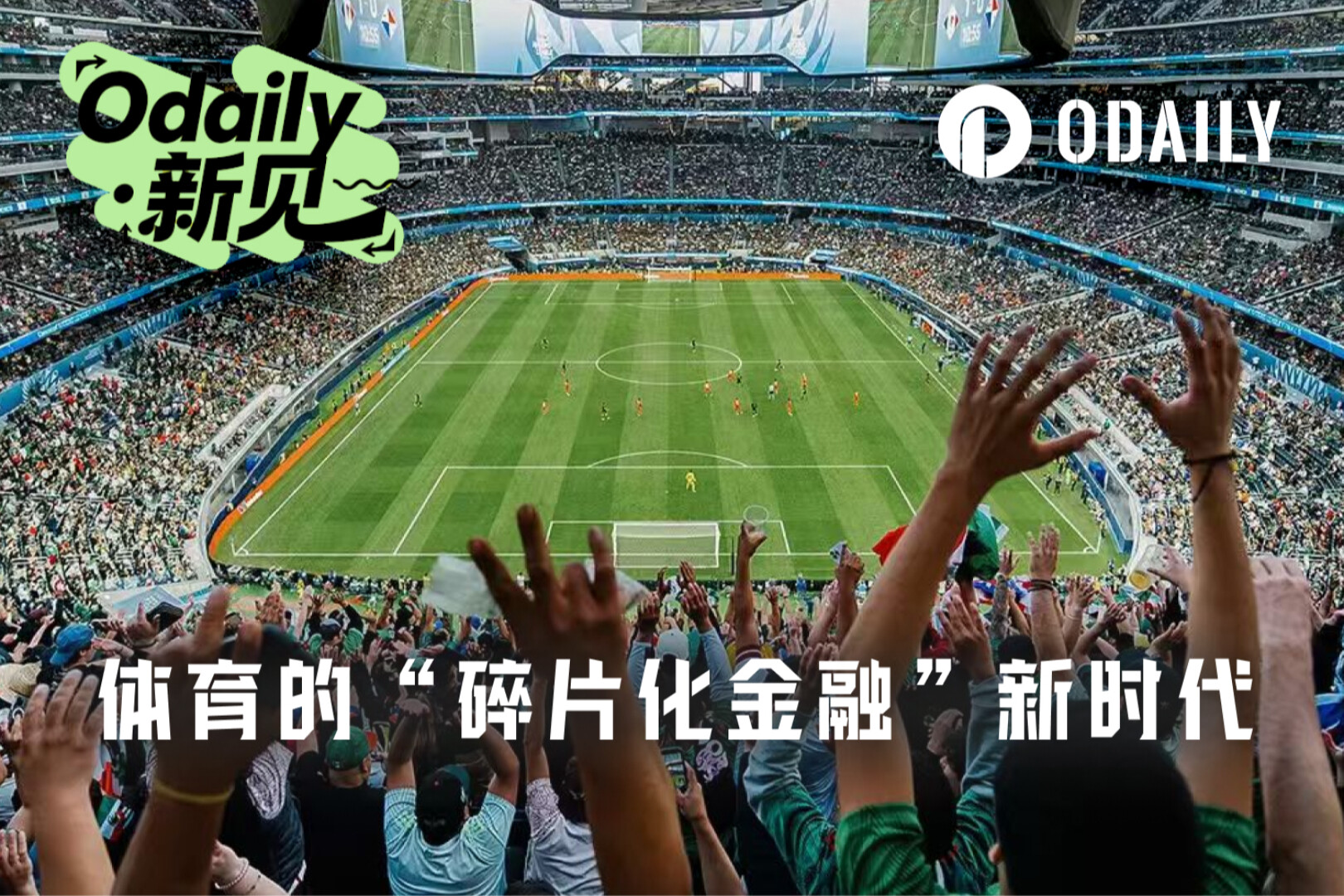
With the approaching World Cup, sports are entering an era of "fragmented finance." This shift is exemplified by FIFA's new rule requiring debutant players to wear a special "World Cup debut patch." Post-tournament, these patches will be authenticated, cut, and embedded into collectible cards, potentially transforming into high-value assets. The global sports trading card market, valued at over $11.5 billion, represents a sophisticated alternative asset class with deep secondary markets and distinct bull/bear cycles. While football has a massive fanbase, its card market has historically lacked the liquidity and unified narrative of the NBA's system. The NBA's success stems from its centralized, star-driven storytelling—from draft nights to championships—which perfectly fuels financialization. The World Cup patch initiative is FIFA's attempt to create similar "financial raw material" for football. The NBA card market, evolving over 70 years, has matured into a financial ecosystem. After a 1990s crash due to overproduction, the industry rebounded by embracing scarcity: limited editions, autographs, game-worn memorabilia (patches), and serial numbering. Today, it features professional grading (e.g., PSA, BGS), auction platforms, live "break" streams, and dedicated marketplaces, mirroring aspects of cryptocurrency markets with their volatility, speculation, and community-driven trading. The core driver is narrative. A card's value is tied to a specific historic moment or player potential—like Stephen Curry's 1/1 card commemorating his Olympic game-winning shot selling for $518,500. This trade in "ownership of history" or "future greatness" parallels prediction markets, both monetizing collective emotion. Unlike many NFT projects that struggle to generate sustained narratives, sports are a perpetual emotion-generating machine. Leagues like the NBA and UFC constantly produce real-world drama—rivalries, comebacks, and triumphs—that fuels ongoing interest and investment. For younger audiences consuming sports via highlights and social media clips, trading cards become a direct financial instrument for engaging with these narratives. Thus, traditional sports leagues are leading the charge in assetization, leveraging their unique advantages: real events, global fan consensus, and endless storytelling. They are becoming platforms for issuing financial assets, turning fragments of history—a patch, a signature, a moment—into tradable commodities.

Odaily星球日报05/19 10:42

The World Cup is Approaching: Sports Entering the Era of 'Fragmented Finance'

Odaily星球日报05/19 10:42

活动图片