Turn Off AI Before the Interview: What Kind of People is Anthropic Looking For?

marsbitPublicado a 2026-06-08Actualizado a 2026-06-08

Resumen

"Shut Off AI Before the Interview: What Kind of People Anthropic Is Screening For" Anthropic, now the world's most valuable AI startup, has an exceptionally competitive hiring process. A key and distinctive element is its mandatory "culture interview," conducted without AI assistance. This interview focuses not on technical skills, but on assessing a candidate's core values, worldview, and perspective on long-term AI risks. Questions delve deeply into personal ethics, "unusual beliefs," and the candidate's willingness to thoughtfully critique Anthropic's own mission. The goal is to evaluate whether someone's convictions are genuinely their own and if they can articulate and defend them under pressure. A poor score here can veto otherwise successful technical interviews. This approach starkly contrasts with companies like Google, which now encourages using AI in interviews to assess "AI fluency." Anthropic's philosophy suggests that in an era where AI makes execution cheap and the generation of opinions nearly free, true scarcity lies in original, deeply held thought. The company seeks individuals who possess substance "after turning off the AI"—those who haven't outsourced their core thinking. This focus on aligning fundamental values contributes to Anthropic's high employee retention rate in a fast-moving industry.

Don't outsource your brain.

The other day, Anthropic just announced the completion of its H round of financing at $650 billion, with a valuation of $9.65 trillion, surpassing OpenAI ($8.52 trillion) to become the world's most valuable AI startup.

The bar for entering this company is visibly rising. Last year, Peter Bailis, CTO of Workday, gave up his CTO title to become an ordinary engineer at Anthropic.

In February this year, an HR professional in London joined Anthropic. She posted an announcement on LinkedIn about her new job, and subsequently received over 1,000 connection requests and more than 200 private messages. She had to post again publicly, asking candidates to stop calling her mobile number.

In May, Anthropic announced another bombshell: OpenAI co-founder Andrej Karpathy joined Anthropic's pretraining team.

Everyone wants to get into Anthropic.

But the way in, is to turn the AI off first.

01 "Interviewing Like a Psychotherapy Session"

Anthropic's interviews have 5 rounds, and AI is prohibited in every single one.

The most critical round is called the "Culture Interview". It has nothing to do with technical skills, only assessing the candidate's values, worldview, and views on AI risk.

Kevin Landucci, a career trainer in California who has worked with many candidates, says people generally find the interview "invasive, completely unlike a job interview, different from any previous one."

A person who did recruitment for Anthropic last year would particularly remind candidates to take this round seriously, because company leadership views AI safety as a long-term strategic issue, not just a business consideration.

The scoring method is even more unique. The culture interview can be conducted by anyone from any department. A candidate for an engineering role might be scored by someone from the marketing department. And they have veto power; even if all technical interviews are passed, a low score in this round will get the candidate rejected.

The questions get increasingly personal. Anthropic President Daniela Amodei described her classic question in a podcast:

What unusual beliefs do you hold? In what uncomfortable situation have you stood by one? She doesn't care *what* the candidate believes. She cares whether the person can maintain their stance when challenged and explain why.

Professional ethical dilemmas are a frequent topic in the culture interview. Landucci says interviewers will peel back the layers:

What were you thinking then, what did you do, how do you evaluate it looking back now? His advice is to show genuine discomfort, letting the interviewer see you really struggled with it. He recommends candidates discuss ethical dilemmas that are "significant enough to cause hesitation but not enough to shake the company's foundation," such as controversial decisions involving user data.

Most companies say they value candor and oppose flattery, but Anthropic has truly built this into its hiring system. Landucci reveals that the culture interview tests whether candidates dare to question the company itself, and the way it pursues its mission. Reasoned, evidence-based questioning scores very well.

A researcher who interviewed last year experienced a different flavor. He said the interviewer's questions came one after another, and he was interrupted whenever his answers stopped providing new information. This researcher talked about concrete, immediate risks, like the danger of people developing emotional dependence on chatbots.

The interviewer clearly felt these concerns were too superficial. He did not pass.

This detail is worth pondering. Emotional dependence is a real problem, and there has been plenty of public discussion about it. But in Anthropic's context, this might be seen as "superficial." It's a side effect of AI, not a fundamental AI risk.

Anthropic's founding team broke away from OpenAI, with the core motivation being their belief that AI could have overly profound impacts. A candidate who only focuses on product-level risks and doesn't demonstrate the ability to think about larger-scale issues will fall short in this evaluation system.

CEO Dario Amodei claims to spend 30% to 40% of his time managing company culture. For a company with over 3,000 employees, having added about 1,000 in the past six months, this is almost the most expensive investment a founder can make. He wants to ensure that everyone who comes in shares values aligned with Anthropic's.

Thus, in the fast-moving AI industry, Anthropic's two-year employee retention rate reaches 80%, the highest among peers. The probability of an engineer moving from OpenAI to Anthropic is 8 times the reverse, and from DeepMind it's 11 times. (Source: VC firm SignalFire)

02 When Execution Becomes Free, What Becomes Expensive Instead?

Even in Silicon Valley, Anthropic's approach is an outlier.

This year, Google announced an opposite reform to its interviews: candidates can use Gemini in technical interviews, and interviewers will directly assess their "AI fluency". Brian Ong, Google's VP of Hiring, said this is to make interviews more closely reflect real work scenarios.

Google CEO Sundar Pichai revealed in April this year that 75% of the company's new code is already AI-generated and reviewed by engineers.

Google's logic is: since daily work is human-AI collaboration, interviews should be too.

Faced with the same question of the AI era, two top AI companies give completely different answers. Anthropic believes the interview is precisely the time when AI needs to be taken away.

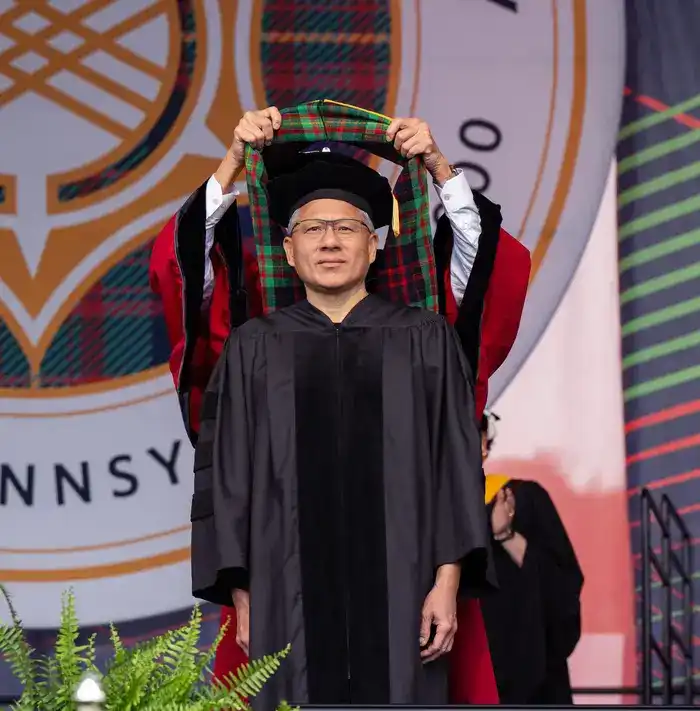
Jensen Huang's 2026 Carnegie Mellon University commencement speech contained a widely circulated line: "It's unlikely that AI will replace you, but a person who uses AI better than you might replace you". This phrase has been repeatedly quoted because it precisely taps into people's fear of AI while offering a way out: go learn AI.

The problem with this statement is that it anchors a person's value to their relationship with a tool, implying the logic that you must change as the tool changes, otherwise you'll be eliminated.
But a more worthwhile question is the reverse:

When execution becomes cheaper and cheaper, what becomes expensive instead?

03 What Anthropic is Selecting For

Anthropic's interviews offer one answer.

Daniela Amodei asking candidates "what unusual beliefs do you hold," interviewers encouraging you to question Anthropic itself—they are essentially assessing the same thing.

Today, the "production" of viewpoints is almost free. AI can generate arguments for any position; it can write well-reasoned articles supporting a direction, and can immediately write equally well-reasoned articles opposing it.

But precisely because of this, the gap between "holding" a position and "owning" a position is widening. Holding is a choice, while owning is who you fundamentally are.

Anthropic prohibiting AI use in interviews, and the culture interview's relentless probing for your genuine thoughts like a psychotherapy session, are both meant to confirm: the judgments and beliefs in your mind grew there on their own.

In other words, you haven't outsourced your thinking.

"A person who uses AI better than you might replace you" is correct at the execution level. But if taken as the whole answer, it leads people down an increasingly narrow path: constantly chasing what AI can do, then doing the part AI can't yet do, until that part is also learned by AI.

Anthropic's hiring logic points in another direction. It believes what is truly scarce in the AI era is not people who can harness AI, but people who still have something left after turning the AI off.


Criptos en tendencia

Preguntas relacionadas

QWhat is the key difference between Google's and Anthropic's approaches to using AI in job interviews?

AGoogle has reformed its interview process to allow candidates to use Gemini in technical interviews, assessing their 'AI fluency' to mirror real work scenarios. In contrast, Anthropic explicitly prohibits the use of AI in all five rounds of its interviews, believing the interview is precisely when AI must be removed to evaluate the candidate's intrinsic qualities.

QAccording to the article, what is the core purpose of Anthropic's 'culture interview'?

AThe core purpose of Anthropic's 'culture interview' is to assess a candidate's values, worldview, and perspective on AI risks. It is not related to technical skills and focuses on whether the candidate's fundamental beliefs align with Anthropic's. A low score in this round can lead to rejection, even if all technical interviews are passed.

QWhat does the example of a researcher who discussed 'emotional dependency on chatbots' illustrate about Anthropic's evaluation criteria?

AThis example illustrates that Anthropic looks for candidates who think about fundamental, large-scale risks of AI, not just product-level or secondary effects. The researcher's focus on 'emotional dependency' was likely deemed too superficial, showing that Anthropic's evaluation system favors those capable of contemplating AI's more profound and existential impacts.

QWhat does the article suggest becomes more valuable when execution becomes cheap due to AI?

AThe article suggests that when AI makes execution cheap, what becomes more valuable is genuine, independent thought and deeply held convictions. It highlights the growing gap between merely 'holding' a position (a choice) and 'owning' it (an intrinsic part of one's identity). Anthropic seeks individuals who have not outsourced their thinking.

QHow does the article contrast Jensen Huang's famous quote with Anthropic's hiring philosophy?

AThe article contrasts them by stating that Jensen Huang's quote ('AI won't take your job, someone using AI will') anchors human value to the relationship with a tool, implying one must constantly adapt to what AI can do. Anthropic's philosophy points in the opposite direction: it believes true scarcity in the AI era is not people who can use AI, but people who still have substance left when AI is turned off—those with intrinsic, non-outsourced judgment and belief.

Lecturas Relacionadas

In Conversation with Ray Dalio: We Are Currently in an AI Bubble, with 1% of My Portfolio in Bitcoin

Ray Dalio, founder of Bridgewater Associates, warns in an interview that the current AI boom shows classic bubble characteristics, which could lead to significant economic downturns as seen in past cycles like 1929 or 2000. He explains that speculative enthusiasm, fueled by debt and overvaluation, often precedes a crash when rising rates or taxation force asset sales, causing widespread losses and recession. Dalio also outlines his "Big Cycle" theory, describing an approximate 80-year pattern where widening wealth gaps, massive government deficits, and shifting geopolitical power (like China's rise) create internal conflict and global instability. He emphasizes that we are in a late-cycle, transitional phase where traditional powers like the US and UK face decline. For personal wealth protection, Dalio advises diversification beyond cash into assets like stocks, bonds, real estate, and particularly gold, which he prefers over Bitcoin. While he holds about 1% of his portfolio in Bitcoin as a non-printable hard asset, he views gold as more secure from technological or governmental threats. Regarding AI's impact, Dalio believes it will disproportionately benefit capital owners, worsening inequality by replacing both physical and cognitive labor. He suggests that human intuition and emotional intelligence, combined with AI, will be key for future workers. On taxation, Dalio argues that wealth taxes are impractical and risk triggering asset sell-offs, reducing productive investment. He points to the UK as a cautionary example of debt, low productivity, and political strife. Geopolitically, Dalio foresees a more regionalized world, with the US showing weakness in prolonged conflicts like with Iran, akin to past imperial declines. The ideal outcome, he suggests, is coexisting powerful blocs (e.g., Americas, China-Asia Pacific) without major war.

marsbitHace 2 hora(s)

In Conversation with Ray Dalio: We Are Currently in an AI Bubble, with 1% of My Portfolio in Bitcoin

marsbitHace 2 hora(s)

Daily 7.2 Trillion KRW: Foreign Capital's Record Net Buying on Friday! Wall Street Says Headwinds for Korean Stock Fund Flows Have Subsided

South Korean stock market sees a dramatic shift in fund flows. On July 31, foreign investors made a record net purchase of approximately KRW 7.2 trillion in KOSPI stocks, marking a fundamental reversal from the persistent large-scale net outflows seen in previous months. This contributed to a significant narrowing of foreign net selling in July to KRW 9.8 trillion, down sharply from KRW 48.4 trillion in June and KRW 44.5 trillion in May. Simultaneously, domestic institutional pressure eased. South Korean pension funds and asset managers turned to a net buying position in July, purchasing KRW 1.0 trillion worth of KOSPI shares, contrasting with net sales in May and June. Market volatility is expected to be dampened by new financial regulations. Effective July 31, the Financial Services Commission tightened access for retail investors to single-stock leveraged ETFs by raising the minimum cash deposit requirement. Trading volumes for these products subsequently dropped to about 50% of their monthly average. Citigroup Research maintains its year-end KOSPI target of 10,000 points. The firm cites several supportive factors: the substantial easing of headwinds from capital outflows, a robust fundamental outlook for the semiconductor sector, historically low market valuations, strong economic fundamentals, and the potential for policy support from financial authorities if needed.

marsbitHace 2 hora(s)

Daily 7.2 Trillion KRW: Foreign Capital's Record Net Buying on Friday! Wall Street Says Headwinds for Korean Stock Fund Flows Have Subsided

marsbitHace 2 hora(s)

Thanks to Dice Rolls, Bitcoin Keys Are Stored Offline, But Not Everyone Will Do It

The article discusses using dice rolls to generate secure Bitcoin wallet seeds, providing entropy independent of potentially flawed hardware random number generators. It explains that each fair dice roll offers about 2.585 bits of entropy, with around 50 rolls needed for a standard 12-word seed phrase and 99+ recommended for higher security. This method gained attention after a vulnerability was revealed in some Coldcard hardware wallets, where a faulty firmware RNG (dating back to 2021) compromised generated keys. The analysis notes that while a dice-generated main seed was safe from this specific flaw, other Coldcard functions (like creating paper wallets, backup keys, or passwords) could still be vulnerable if they used the defective RNG. The piece argues that while dice-based entropy is technically robust, the manual process is error-prone, tedious, and unrealistic for most new users, who might make mistakes in recording or inputting rolls. It concludes that while manual entropy generation should remain an option for advanced users, the long-term goal is to develop reliable, user-friendly hardware and software that securely generates randomness without requiring specialized knowledge. Coldcard users are advised to check their firmware version and replace any secondary secrets (like paper wallet keys) created with vulnerable devices, while also considering multi-signature setups with devices from different manufacturers for added security.

cryptonews.ruHace 7 hora(s)

Thanks to Dice Rolls, Bitcoin Keys Are Stored Offline, But Not Everyone Will Do It

cryptonews.ruHace 7 hora(s)

Trading

Spot

Artículos destacados

Cómo comprar PEOPLE

¡Bienvenido a HTX.com! Hemos hecho que comprar ConstitutionDAO (PEOPLE) sea simple y conveniente. Sigue nuestra guía paso a paso para iniciar tu viaje de criptos.Paso 1: crea tu cuenta HTXUtiliza tu correo electrónico o número de teléfono para registrarte y obtener una cuenta gratuita en HTX. Experimenta un proceso de registro sin complicaciones y desbloquea todas las funciones.Obtener mi cuentaPaso 2: ve a Comprar cripto y elige tu método de pagoTarjeta de crédito/débito: usa tu Visa o Mastercard para comprar ConstitutionDAO (PEOPLE) al instante.Saldo: utiliza fondos del saldo de tu cuenta HTX para tradear sin problemas.Terceros: hemos agregado métodos de pago populares como Google Pay y Apple Pay para mejorar la comodidad.P2P: tradear directamente con otros usuarios en HTX.Over-the-Counter (OTC): ofrecemos servicios personalizados y tipos de cambio competitivos para los traders.Paso 3: guarda tu ConstitutionDAO (PEOPLE)Después de comprar tu ConstitutionDAO (PEOPLE), guárdalo en tu cuenta HTX. Alternativamente, puedes enviarlo a otro lugar mediante transferencia blockchain o utilizarlo para tradear otras criptomonedas.Paso 4: tradear ConstitutionDAO (PEOPLE)Tradear fácilmente con ConstitutionDAO (PEOPLE) en HTX's mercado spot. Simplemente accede a tu cuenta, selecciona tu par de trading, ejecuta tus trades y monitorea en tiempo real. Ofrecemos una experiencia fácil de usar tanto para principiantes como para traders experimentados.

552 Vistas totalesPublicado en 2024.12.12Actualizado en 2026.06.02

Cómo comprar PEOPLE

Discusiones

Bienvenido a la comunidad de HTX. Aquí puedes mantenerte informado sobre los últimos desarrollos de la plataforma y acceder a análisis profesionales del mercado. A continuación se presentan las opiniones de los usuarios sobre el precio de PEOPLE (PEOPLE).

活动图片












