Artículos Relacionados con Reflection

El Centro de Noticias de HTX ofrece los artículos más recientes y un análisis profundo sobre "Reflection", cubriendo tendencias del mercado, actualizaciones de proyectos, desarrollos tecnológicos y políticas regulatorias en la industria de cripto.

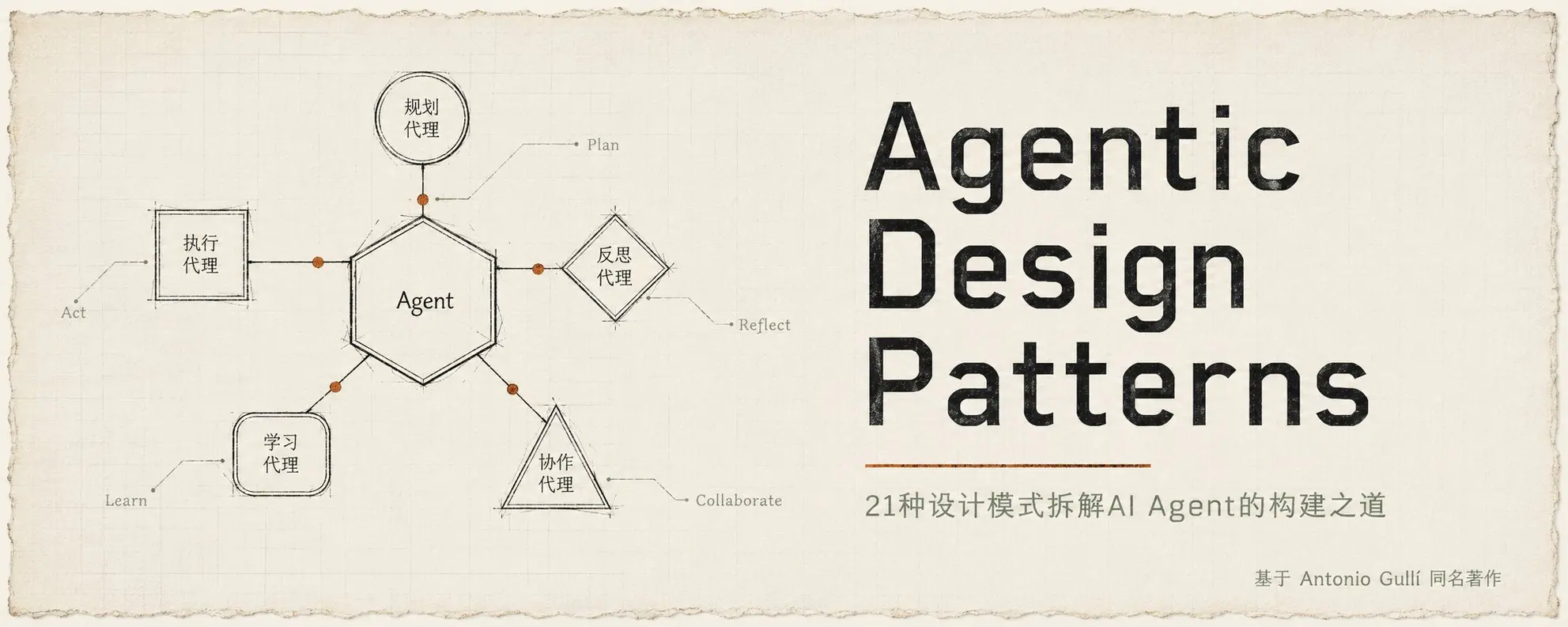
Agentic Design Patterns: A Book That Made Me Re-Understand "What Is an Agent, Really?"

"Agentic Design Patterns" is a 2025 book by Antonio Gullí, a Google engineering director, which offers a systematic framework for AI Agent development through 21 design patterns. A core contribution is the "Four Levels of Agency": Level 0 (bare LLMs) are not true agents. Level 1 agents actively decide when and how to use tools. Level 2 agents engage in strategic planning, context engineering (curating and filtering information), and self-reflection. Level 3 involves multi-agent collaboration with defined communication topologies. The book introduces **Context Engineering** as a superset of prompt engineering, managing four layers of information for the agent: system prompts, external data, implicit context (user history, environment), and feedback loops for automated optimization. A key pattern is **Reflection (Producer-Critic)**, where two distinct agents with different prompts collaborate iteratively—one produces output, the other critiques it—until quality is satisfactory or a max iteration limit is reached. For **Memory**, a three-layer model is proposed: Session (ephemeral conversation context), State (temporary task data), and Memory (persistent, long-term storage). Regarding **Multi-Agent Systems**, the book advises against unnecessary complexity, recommending simple topologies like Supervisor or Peer-to-Peer based on task needs. It emphasizes perfecting a single Level 2 agent before moving to multi-agent setups. The author concludes with three actionable takeaways: 1) Add a Critic agent to existing workflows, 2) Practice Context Engineering beyond simple prompts, and 3) Avoid premature multi-agent complexity; first master a robust single agent. The book provides a practical map, codifying common challenges like reflection, memory, and coordination into reusable patterns, saving developers from reinventing foundational solutions.

链捕手05/25 04:43

Agentic Design Patterns: A Book That Made Me Re-Understand "What Is an Agent, Really?"

链捕手05/25 04:43

IOSG Founder: Please Tell Vitalik the Truth, May the OGs Who Enjoyed the Industry's Dividends Illuminate the Young

**Summary: An Urgent Call for Leadership and Renewal in Web3** In a candid and urgent article, the founder of IOSG Ventures voices deep concerns about the current state and future of the Web3 ecosystem, framing it as a critical turning point. The author's recent experience at a global tech conference highlighted a concerning trend: many former crypto professionals are now rebranding as founders in AI, biotech, and robotics, representing a "great self-rescue" but also a potential exodus. Key problems identified include a broken feedback loop within the ecosystem, a mass departure of developers to AI, and a severe lack of positive societal recognition for Web3, making it difficult for practitioners to take pride in their work. The author expresses worry that Ethereum, despite its foundational role, missed crucial windows for building mainstream applications by over-focusing on technical narratives like ZK and L2 during the last bull market. A significant concern is that **Vitalik Buterin might be living in an information bubble**, shielded from the community's real struggles by those with vested interests, hindering necessary reforms. The piece draws a stark contrast between U.S. and Chinese "OGs" (industry veterans). While many American OGs continue to reinvest their wealth and efforts into building the ecosystem, the author observes that a significant portion of Chinese OGs have cashed out or pivoted to other sectors like AI, leaving the Asian Web3 ecosystem with a severe funding crisis and weakened "blood-making" capacity. The central appeal is a call to action. The author urges **OGs who have benefited from the industry's growth to "light the way" for the next generation** through mentorship, grants, and direct support—not just large investments, but practical help like referrals, mailing list access, or small grants. Buterin is asked to re-engage with the grassroots, break out of his information bubble, and lead the community through this challenging bear market, which is described as the best time to build the next foundational product. For current builders and founders, the advice is to find their "why," build alliances for mutual support, continue learning (including about AI), and maintain personal well-being without letting token prices define self-worth. The author concludes that the industry's survival depends not on any single leader, but on every remaining believer becoming a "lighthouse" to guide others, ensuring the ecosystem has a future worth building for.

链捕手05/22 00:24

IOSG Founder: Please Tell Vitalik the Truth, May the OGs Who Enjoyed the Industry's Dividends Illuminate the Young

链捕手05/22 00:24

MegaETH Co-founder: The 48 Hours Escaping Dubai Made Me Rethink the Entire Crypto World

MegaETH co-founder shares a personal reflection after fleeing Dubai amid regional tensions, using the experience to critique the current state of the crypto industry. Witnessing missile defense systems in action provided a new perspective on technology’s dual role: it amplifies civilization’s trajectory, acting as a lever rather than a fundamental upgrade. In healthy cycles, tech enhances productivity and collaboration, as early internet forums did. In decline, it becomes a weapon of attention or control. The author argues crypto was meant to be a parallel system—a way to rearchitect finance with fewer borders, lower collaboration costs, and flexible exit mechanisms. Instead, the pursuit of legitimacy led to integration with traditional power structures, sidelining foundational ideals like undercollateralized loans, pension structures, and cross-border savings. Stablecoins, while functional, often just repackage sovereign currency rather than create independent monetary systems. The author calls for honesty: backend integration isn’t reinvention. The disappointment in crypto stems not from price volatility, but from misaligned priorities—choosing attention and valuation over structurally meaningful, albeit “boring,” innovations. The conclusion urges the community to reclaim its agency: build tools for real sovereignty, not amplification of insecurity. Avoid cowardice, sharpen the blade, and forge a parallel system through verification and conviction. QED.

marsbit03/03 04:58

MegaETH Co-founder: The 48 Hours Escaping Dubai Made Me Rethink the Entire Crypto World

marsbit03/03 04:58

Fallen Blossoms, Alone in the End: The Facade, Backdoor, and Settler of the Crypto World

"Flowers Fall, One Remains: The Facade, Backdoor, and Bill-Payer of the Crypto World" This article uses the allegory of 1990s Shanghai's Huanghe Road—a street of lavish restaurants and fierce competition, reminiscent of the hit TV series "Blossoms Shanghai"—to analyze the current predicament of the cryptocurrency exchange Binance and the broader crypto industry. The core argument is that exchanges, like the show's restaurant "Zhi Zhen Yuan," profit from "taking a cut" (transaction fees) during bull markets, which is tolerated when everyone is making money. However, following a major market crash (a fictional "1011" event where $20B evaporated), this practice becomes a target for blame. The author posits that the subsequent regulatory scrutiny and public outcry against Binance are an inevitable "settling of accounts," where散户 (retail investors) need a scapegoat, competitors see an opportunity, and regulators demand a high-profile sacrifice. The piece argues that while the attack appears political, it is fundamentally about business and survival in a harsh new climate. The industry's "Zhi Zhen Yuan" (Binance) is targeted not necessarily because it did something wrong, but because it is the biggest and most visible success story. The author warns that the industry's infighting and desire to see a giant fall is short-sighted; if the leading light (Binance) is extinguished, the entire street (the crypto ecosystem) loses its luster and could regress. Ultimately, the crisis is framed as a painful but necessary rite of passage for the entire industry. The true "宝总" (a successful character from the show) is not a single savior but every believer who holds onto their conviction (e.g., "one person, one Bitcoin") even after the "flowers have fallen" and the prosperity is gone. The conclusion is a call for unity, suggesting that without it, the industry risks collapsing into irrelevance, leaving behind only "scraps of paper and a cold wind."

marsbit02/03 08:40

Fallen Blossoms, Alone in the End: The Facade, Backdoor, and Settler of the Crypto World

marsbit02/03 08:40

Why Do We Need an Annual Summary in the Crypto Industry?

Amidst the flood of annual reports from platforms like Douban and Alibaba, the crypto industry finds particular value in such retrospectives. For participants in this space, a year-end summary is not only a reflection of past market performance but also a foundation for the coming year. Major exchanges, including OKX, now provide detailed annual reports featuring metrics like asset size, profitability, trading frequency, risk control, and sensitivity to market trends. These insights, visualized through data radars, help traders assess their performance objectively. Key takeaways include the importance of trend sensitivity—critical in a year without a broad altcoin bull market but with selective sector rotations—and risk management, which could have mitigated losses during sharp downturns like the October 11 crash. Beyond data, reflecting on personal and professional narratives within the industry is encouraged. Founders, in particular, can use annual summaries for brand building and communication, as demonstrated by OKX CEO Star’s essay, “2025: Steadily Advancing Toward Financial Freedom.” The piece emphasizes that financial freedom is not about lawlessness but about having choices backed by proven systems. This philosophy underscores the need for rule-based participation to avoid systemic failures that impact all stakeholders. As 2026 approaches, the industry continues to evolve. The closing note: “When you really want something, the whole universe conspires to help you achieve it.”

marsbit12/31 06:12

Why Do We Need an Annual Summary in the Crypto Industry?

marsbit12/31 06:12

活动图片