Artículos Relacionados con QE

El Centro de Noticias de HTX ofrece los artículos más recientes y un análisis profundo sobre "QE", cubriendo tendencias del mercado, actualizaciones de proyectos, desarrollos tecnológicos y políticas regulatorias en la industria de cripto.

After 'Bessent Put', How Far Is the U.S. from Restarting QE?

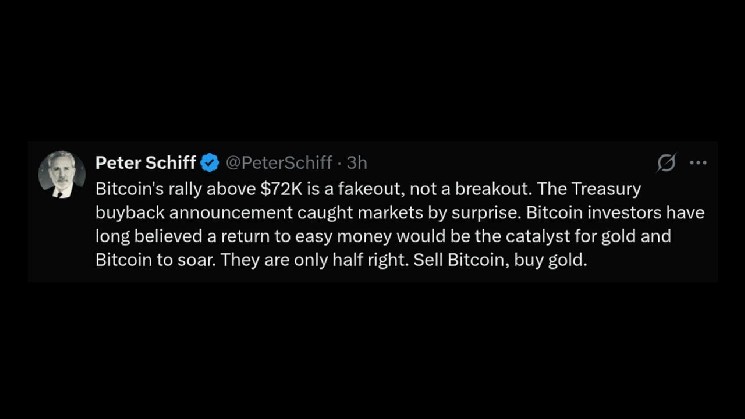
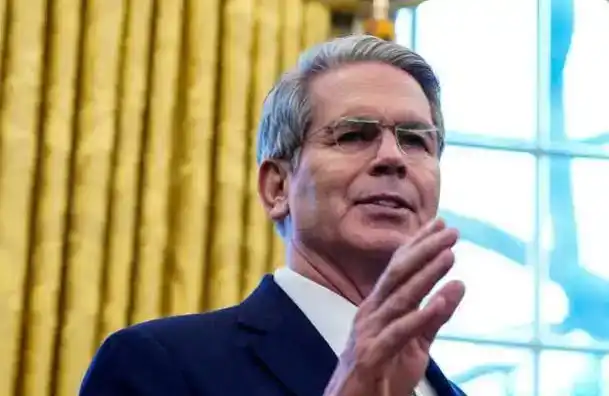
Following an unscheduled announcement from the U.S. Treasury Department on August 19th, investor discussions have intensified regarding the potential for future policy interventions in long-term bond markets. The Treasury increased the maximum size of its regular buyback operations for 10-to-30 year bonds from $2 billion to $4 billion, citing a desire to improve liquidity. This move came shortly after a surge in long-term yields, with the 30-year Treasury yield briefly touching 5.34%. Market analysts, rather than focusing on the modest operational size, have interpreted the timing—outside the normal quarterly communication window—as a significant signal. The move has been dubbed the "Bessent Put," implying the market's growing expectation that Treasury officials, led by Deputy Secretary Josh Bessent, may act to prevent a disorderly rise in long-term borrowing costs. This perception represents a potential shift in the market's view of the government's "policy reaction function." The underlying pressures on long-term bonds are multifaceted, including large fiscal deficits, increased Treasury supply, a rise in corporate debt issuance for AI infrastructure (creating a "crowding out" effect), and uncertainty around foreign holdings, particularly from Japan. Geopolitical risks in the Middle East further complicate the policy landscape, potentially creating conflicting pressures between fighting inflation and managing financing costs. However, the article clarifies that this Treasury buyback program is distinct from Quantitative Easing (QE). It is a debt management operation, not a Federal Reserve balance sheet expansion. While the announcement opens the door for market speculation about more forceful tools like Yield Curve Control (YCC) or a return to QE, analysts note that conditions would need to deteriorate significantly for such measures to be implemented. For now, the "Bessent Put" reflects a change in market expectations about possible policy boundaries, not an imminent launch of new monetary stimulus.

marsbit08/21 10:15

After 'Bessent Put', How Far Is the U.S. from Restarting QE?

marsbit08/21 10:15

U.S. Liquidity Support Has Arrived, This is the Core Positive Catalyst

The U.S. Treasury announced on August 19th an expansion of its liquidity support repurchase operations for long-term bonds. The single-operation limit for older, off-the-run nominal coupon securities in the 10-20 year and 20-30 year maturities will be increased from $2 billion to at least $4 billion, effective from September 9th until the end of the current quarterly refunding on November 4th. The market reacted positively to the news, with yields on 10-year and 30-year Treasury notes falling. This action is seen as a key relief for assets like tech stocks, long-term bonds, gold, and cryptocurrencies, as a lower long-end yield reduces discount rate pressure on valuations. However, analysts caution against interpreting this as a form of quantitative easing (QE). The operation specifically targets less liquid older bonds to improve market functioning, unlike QE which involves the Federal Reserve expanding its balance sheet. The move is viewed primarily as a signal that the Treasury is unwilling to let liquidity deteriorate in the long-end of the bond market, prompting short-covering and a relief rally. Its impact is constrained by the scale (a potential maximum of around $14 billion in additional repurchases this quarter), funding sources that may shift pressure to other maturities, and overarching macro factors like inflation and Fed policy. The sustainability of the resulting market rebound will be tested by the Treasury's November quarterly refunding statement. If it includes sustained repurchases and a slowdown in long-term net issuance, the valuation support for long-duration assets could persist. If not, the operation may prove to be merely a tactical measure to reduce short-term volatility without altering the long-term pressures from deficits and inflation.

marsbit08/20 14:35

U.S. Liquidity Support Has Arrived, This is the Core Positive Catalyst

marsbit08/20 14:35

Ministry of Finance Doubles Long-Term Bond Buyback Volume Amid Bitcoin and US Stock Rally

The U.S. Treasury Department has doubled the purchase limit for long-term bond buybacks aimed at supporting liquidity in the 10-to-20-year and 20-to-30-year Treasury segments. The new rules, effective from September 9, will be in place for the current refunding quarter ending November 4. This move responds to sustained high activity and high-quality market offerings for longer-dated securities. The program targets older, less liquid "off-the-run" bonds to improve secondary market trading without significantly reducing overall debt, as the Treasury continues issuing new debt to fund the government. The expansion follows a sharp rise in long-term Treasury yields, with the 30-year yield recently exceeding 5.33%, a level not seen since 2007. In immediate reaction, the 10-year yield fell about 6 basis points to around 4.647%, and the 30-year yield dropped roughly 9 basis points to around 5.196%. Market observers quickly termed the larger buybacks a "mini-QE," noting their potential to reduce the supply of long-term bonds that private investors must absorb. Amid the yield decline, U.S. stock indices like the Dow Jones and S&P 500 traded higher, while Bitcoin rebounded to trade around $65,000, supported by spot ETF inflows and derivatives market dynamics. Lower yields can reduce the appeal of safe dollar assets, potentially supporting Bitcoin, though it faces resistance near $65,600-$66,000. The Treasury will decide on November 4 whether to maintain, expand, or scale back the increased buyback volumes. Investors will watch for sustained high-quality bond market offerings, the trajectory of 30-year yields, and the durability of the rally in U.S. stocks and Bitcoin.

cryptonews.ru08/19 22:01
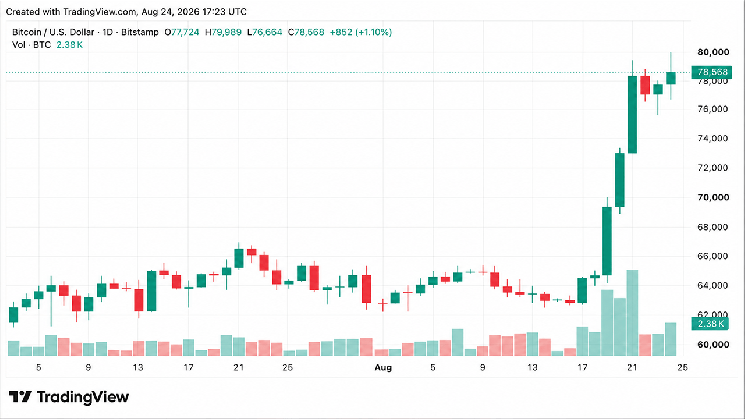
Ministry of Finance Doubles Long-Term Bond Buyback Volume Amid Bitcoin and US Stock Rally

cryptonews.ru08/19 22:01

ArthurHayes新文:押注日元升值,ENA未来几月或涨5至10倍

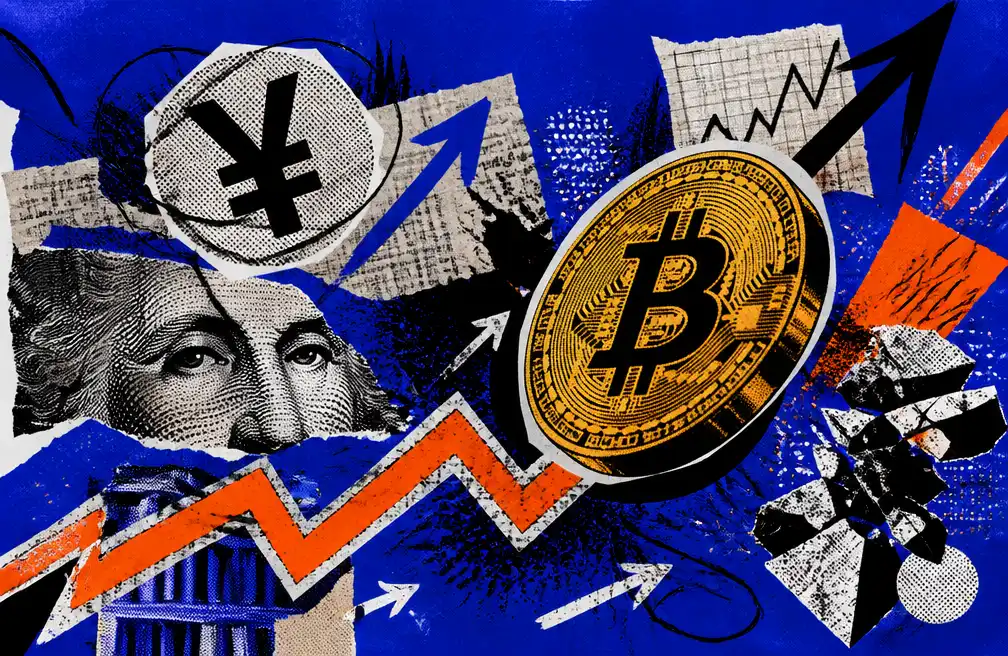
Arthur Hayes argues that the Japanese Yen is significantly undervalued and posits that its appreciation against the US Dollar is imminent. He outlines three potential mechanisms for this shift, dismissing the first two—the Bank of Japan raising interest rates and domestic institutions selling foreign assets—as politically or economically unfeasible. He identifies the third and preferred method: the Japanese Ministry of Finance (MOF) using its holdings of US Treasuries as collateral in the Fed's FIMA repo facility to borrow US dollars, then selling those dollars to buy Yen in the forex market. Hayes believes US Treasury Secretary Bessant has signaled support for this approach, which requires the Fed's Foreign Currency Subcommittee, led by Chairman Walsh, to remove lending limits on the FIMA tool. Hayes asserts that implementing this "Scheme 3" would lead to a significant expansion of US dollar liquidity. He predicts this surge in liquidity will act as a catalyst, driving up the prices of assets like Bitcoin and physical gold. Within the crypto space, he views Ethereum (ETH) as undervalued and singles out Ethena's ENA token as a speculative play with potential for 5-10x gains in the coming months, contingent on a recovery in Bitcoin basis trades that would boost demand for its USDe stablecoin. He concludes that investors should watch for the Fed's rule change as the key trigger for these market movements.

marsbit08/12 03:45

ArthurHayes新文:押注日元升值,ENA未来几月或涨5至10倍

marsbit08/12 03:45

Warsh Has Only Two Paths Ahead: Either Trigger "Financial Crisis 2.0" or Ignite "Dollar Crisis 1.0"?

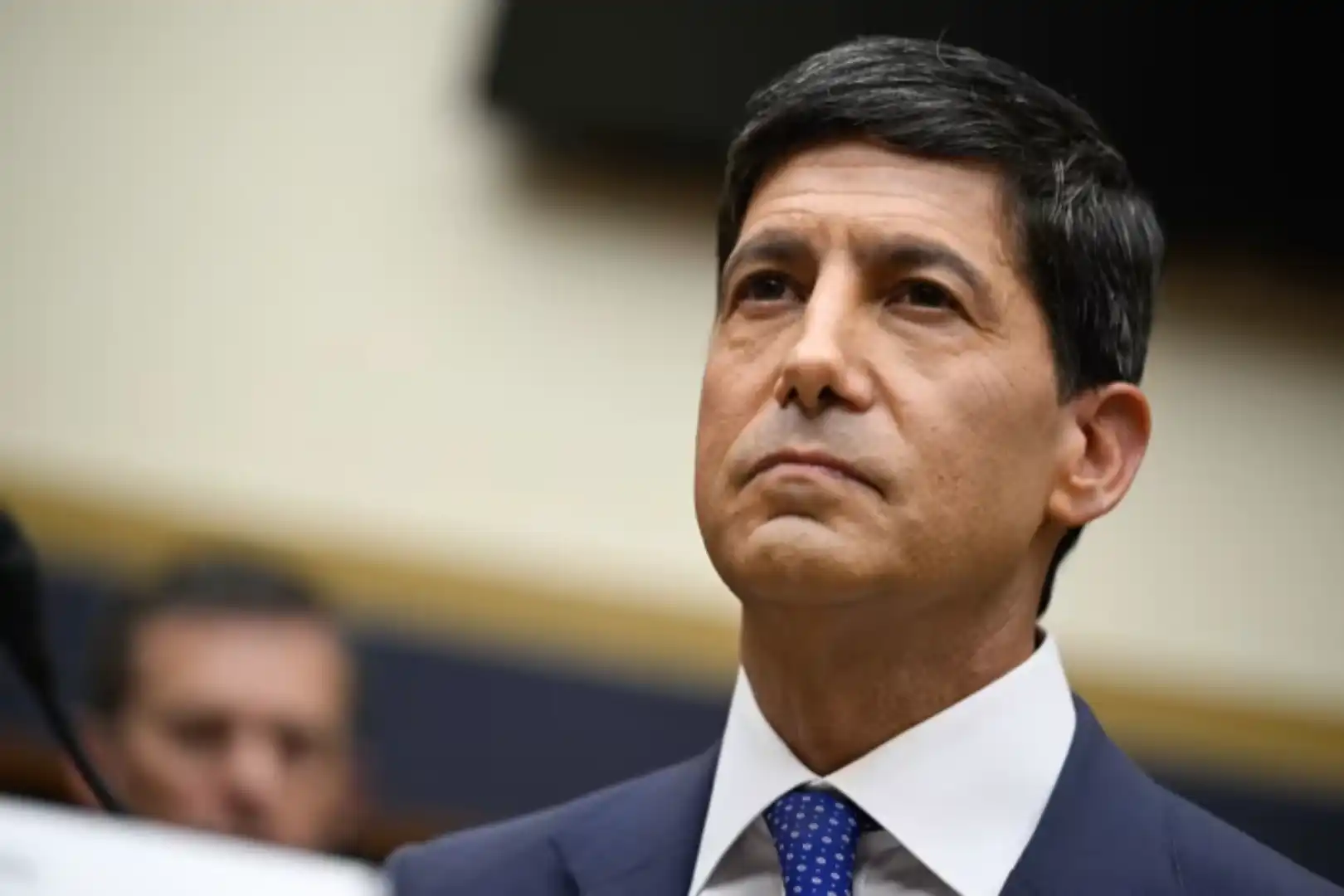
In a critical analysis, economist aka Shan argues that incoming Fed Chair Kevin Warsh faces two stark policy choices, either of which could lead to a severe economic crisis comparable to the Great Depression. Warsh has publicly committed to bringing inflation down to 2%, but with the US CPI averaging over 3% for the past decade, the task is monumental. Shan outlines two potential paths: First, maintaining a hawkish stance with continued rate hikes, quantitative tightening, and fiscal consolidation would pop the simultaneous and dangerously large AI, real estate, and private credit bubbles, triggering a "Global Financial Crisis 2.0" more severe than 2008. Second, caving to political pressure and reverting to zero-interest-rate policy and quantitative easing would accelerate the collapse of the dollar's purchasing power, leading to a "Global Currency Crisis 1.0." Shan emphasizes there is no middle ground. The analysis highlights the role of Cantillon Effects, explaining how money created from 2008-2020 flowed unevenly into financial assets, suppressing commodity prices. A critical shift occurred in 2022 as commodities began to catch up, locking in high inflation pressure for years. Given this backdrop and immense political pressure during a future "Lehman moment," Shan concludes the probability of Warsh sticking to a truly hawkish policy is "extremely low, close to zero." The more politically expedient path of renewed monetary easing, despite its long-term consequences for the dollar, is seen as the likely outcome.

marsbit08/05 11:06

Warsh Has Only Two Paths Ahead: Either Trigger "Financial Crisis 2.0" or Ignite "Dollar Crisis 1.0"?

marsbit08/05 11:06

活动图片