Artículos Relacionados con PYUSD

El Centro de Noticias de HTX ofrece los artículos más recientes y un análisis profundo sobre "PYUSD", cubriendo tendencias del mercado, actualizaciones de proyectos, desarrollos tecnológicos y políticas regulatorias en la industria de cripto.

The Person Who 'Killed' PayPal Wants to Buy It

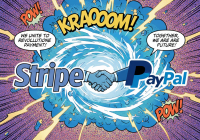
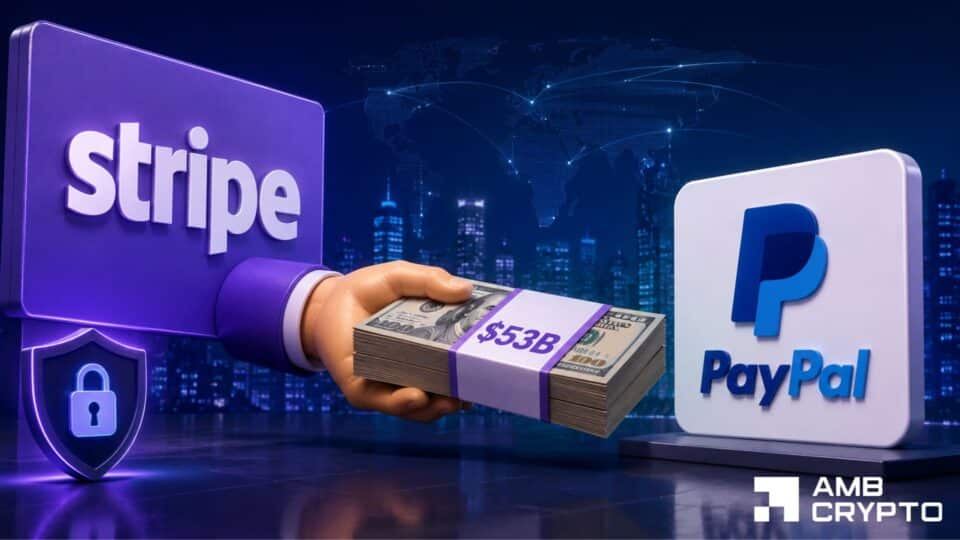
A potential acquisition that could reshape the global payments landscape is under discussion, as Stripe—valued at $159 billion—is reportedly considering acquiring all or parts of PayPal, which has a market cap of just $43 billion. The news drove PayPal’s stock up nearly 7%. PayPal has faced significant challenges: its stock fell 46% over the past year amid rising competition from Apple Pay, Google Pay, and agile rivals like Adyen and Stripe. Despite its vast user network of 438 million active accounts and strong presence in cross-border transactions, PayPal has struggled to keep pace with shifting user behaviors and the rise of embedded and social payments. However, PayPal retains valuable assets, including Braintree (processing around $700 billion annually), Venmo (with 100 million monthly active users), and a deeply entrenched global payments infrastructure. A key underlying motive for the deal is stablecoins. PayPal launched its own stablecoin, PYUSD, adopting a centralized approach to digital currency. In contrast, Stripe has pursued an infrastructure-focused strategy, acquiring stablecoin infrastructure firm Bridge and launching “Open Issuance”—a platform that enables businesses to issue their own stablecoins. Stripe is also developing Tempo, a Layer-1 blockchain aimed at challenging traditional settlement networks like SWIFT. A combined Stripe-PayPal entity could create a powerful Web3 payment ecosystem, integrating PYUSD with Tempo’s fast, low-cost transactions and leveraging Venmo’s user base. This could also support emerging use cases like AI Agent payments, where machines transact autonomously using crypto wallets. Regulatory and cultural hurdles remain significant, and the deal is still in early stages. But the talks signal a broader industry shift: future dominance in payments may belong to those who control next-generation infrastructure, not just scale.

比推02/24 23:42
The Person Who 'Killed' PayPal Wants to Buy It

比推02/24 23:42

The Payment Empire PayPal Might Be Bought Out

The once-dominant global payment giant PayPal is reportedly facing a potential acquisition, as its market value plummeted from a pandemic peak of $363 billion to a recent low of $38 billion—a nearly 90% drop over five years. Despite its pioneering role in enabling cross-border e-commerce, particularly for Chinese exporters in the mid-2000s, PayPal has struggled to keep pace with newer, more agile competitors like Stripe, Apple Pay, and various neobanks. Recent financial performance has been weak, with active user growth slowing to just 1% and transaction volume declining. The abrupt departure of its CEO and appointment of a new leader from HP—known for cost-cutting rather than product innovation—has fueled market skepticism. Critics, including former executive David Marcus, argue that PayPal lost its "mojo" by shifting from a product-driven to a finance-oriented culture, sacrificing long-term vision for short-term financial optimization. While subsidiary Venmo shows strong revenue growth and has become a verb among U.S. millennials, it faces challenges: user growth is stagnant, it remains confined to the U.S., and it lacks deeper integration like Stripe or the hardware-level ease of Apple Pay. PayPal’s bets on stablecoins (PYUSD) and AI-driven agentic payments are still unproven in highly competitive fields. Despite valuable assets—including Braintree’s infrastructure, a leading BNPL service, and 400 million active accounts—PayPal’s future as an independent company is uncertain. Market confidence now seems higher in a potential acquisition than in its standalone prospects, marking a dramatic fall for a former fintech disruptor.

marsbit02/24 11:44

The Payment Empire PayPal Might Be Bought Out

marsbit02/24 11:44

Outpacing PayPal and Breaking into the Top Five in Half a Year: Trump's Stablecoin 'Game of Thrones'

In just over six months, the Trump-affiliated stablecoin USD1, issued by World Liberty Financial (WLFI), has surpassed PayPal’s PYUSD in market capitalization, reaching $4.9 billion and entering the top five stablecoins. Its rapid growth stems from a strategic alliance with Binance, which launched high-yield incentive programs like "USD1 Booster" to drive liquidity and user adoption through subsidized returns and platform-wide integrations. USD1’s expansion extends beyond crypto markets. A memorandum with Pakistan’s central bank aims to integrate USD1 into cross-border payments, leveraging its low-cost efficiency for remittances. This move positions USD1 as a potential tool of "digital dollar hegemony," aligning with U.S. geopolitical interests. The project is deeply intertwined with Trump family influence and political networks. Key figures, including WLFI co-founder Eric Trump and Zach Witkoff, son of the U.S. envoy to Pakistan, facilitate these partnerships. The Trump family receives 75% of net profits from USD1 operations, raising concerns about conflicts of interest. Regulatory leniency under the Trump administration has benefited USD1 backers: the SEC dropped cases against Binance and others after significant investments in WLFI. However, USD1 faces risks due to opaque reserve management, delayed audits, and over-reliance on Binance for liquidity. Its stability is heavily tied to Trump’s political standing, making it vulnerable to future regulatory or political shifts.

marsbit01/28 02:32

Outpacing PayPal and Breaking into the Top Five in Half a Year: Trump's Stablecoin 'Game of Thrones'

marsbit01/28 02:32

Selling Assets While Racing for a Bank Charter: What's the Rush at PayPal?

Facing intense pressure from the shifting financial landscape, PayPal is making two seemingly contradictory moves: selling off $7 billion in "Buy Now, Pay Later" loan assets while simultaneously applying for an industrial bank charter (ILC) to establish "PayPal Bank." The core reason is a strategic pivot to escape the vulnerabilities of its current "rent-a-license" model. For years, PayPal's massive lending business relied on WebBank's charter, making it a "middleman" whose core operations were dependent on a partner. A recent crisis involving a similar intermediary, Synapse, which froze user funds, highlighted the extreme risk of this model. Furthermore, in a high-interest-rate environment, PayPal is missing out on billions in profit by parking its 430 million users' funds at partner banks instead of leveraging them as low-cost deposits to earn interest and lending revenue itself. The urgency is amplified by the existential threat of stablecoins. PayPal's own stablecoin, PYUSD, is issued by a partner, Paxos. As regulators move to grant such partners official banking status and new legislation like the GENIUS Act takes shape, control over stablecoin issuance—and its near-zero-fee model—is shifting to licensed entities. This directly threatens PayPal's core business, which relies on high transaction fees for e-commerce payments. To survive, PayPal must control the entire financial stack. The asset sale was a crucial prerequisite for the bank application. By offloading the risky loan assets, PayPal presented a "clean" balance sheet to regulators (the FDIC), drastically increasing its chances of approval for the highly coveted ILC charter. This charter is a rare "backdoor" that allows commercial companies like PayPal to operate a bank without the parent company becoming a heavily regulated bank holding company. PayPal is racing against time. Regulatory scrutiny on ILCs is increasing, and this window of opportunity may soon close. The bank charter is not just about loans; it's an option for the future—allowing PayPal to legally custody crypto assets, connect to DeFi protocols, and transform from a payment processor into a full-scale asset manager for the Web3 era. This is a desperate bid for survival: to become the J.P. Morgan of crypto or risk becoming a relic of the early internet.

marsbit12/17 10:15

Selling Assets While Racing for a Bank Charter: What's the Rush at PayPal?

marsbit12/17 10:15

活动图片