Selling Assets While Racing for a Bank Charter: What's the Rush at PayPal?

marsbitPublicado a 2025-12-17Actualizado a 2025-12-17

Resumen

Facing intense pressure from the shifting financial landscape, PayPal is making two seemingly contradictory moves: selling off $7 billion in "Buy Now, Pay Later" loan assets while simultaneously applying for an industrial bank charter (ILC) to establish "PayPal Bank." The core reason is a strategic pivot to escape the vulnerabilities of its current "rent-a-license" model. For years, PayPal's massive lending business relied on WebBank's charter, making it a "middleman" whose core operations were dependent on a partner. A recent crisis involving a similar intermediary, Synapse, which froze user funds, highlighted the extreme risk of this model. Furthermore, in a high-interest-rate environment, PayPal is missing out on billions in profit by parking its 430 million users' funds at partner banks instead of leveraging them as low-cost deposits to earn interest and lending revenue itself. The urgency is amplified by the existential threat of stablecoins. PayPal's own stablecoin, PYUSD, is issued by a partner, Paxos. As regulators move to grant such partners official banking status and new legislation like the GENIUS Act takes shape, control over stablecoin issuance—and its near-zero-fee model—is shifting to licensed entities. This directly threatens PayPal's core business, which relies on high transaction fees for e-commerce payments. To survive, PayPal must control the entire financial stack. The asset sale was a crucial prerequisite for the bank application. By offloading the r...

PayPal is starting a bank.

On December 15, the global payments giant with 430 million active users formally applied to the Federal Deposit Insurance Corporation (FDIC) and the Utah Department of Financial Institutions to establish an industrial bank (ILC) named "PayPal Bank".

However, just three months earlier, on September 24, PayPal had announced a major deal, selling off a massive $7 billion portfolio of "Buy Now, Pay Later" loan assets to the investment firm Blue Owl.

During the earnings call at that time, CFO Jamie Miller emphatically assured Wall Street that PayPal's strategy was to "maintain a light balance sheet," to free up capital and improve efficiency.

These two actions seem contradictory. On one hand, they pursue being "light," yet on the other, they apply for a bank charter. It's important to remember that running a bank is one of the "heaviest" businesses in the world—requiring massive capital reserves, submitting to the most stringent regulations, and bearing the risks of deposits and loans yourself.

Behind this convoluted decision must lie a compromise driven by some urgent necessity. This isn't a routine business expansion; it's more like a desperate beachhead assault on a regulatory red line.

PayPal's official reason for starting a bank is "to provide lower-cost loan funding to small businesses." But this justification doesn't hold up to scrutiny.

Data shows that since 2013, PayPal has cumulatively provided over $30 billion in loans to 420,000 small businesses worldwide. This means that for the past 12 years without a bank charter, PayPal has still managed to run a thriving lending business. So why choose this specific moment to apply for a bank charter?

To answer this, we first need to understand: Who actually issued those $30 billion in loans?

In Lending, PayPal is Just a "Sublessor"

PayPal's official press releases boast impressive lending data, but they often deliberately obscure a core fact. For every single one of those $30 billion in loans, the actual lender was not PayPal, but a bank based in Salt Lake City, Utah, called WebBank.

Most people have probably never heard of WebBank. This bank is extremely secretive; it doesn't operate consumer-facing branches, doesn't advertise, and even its website is minimal. But in the hidden corners of American fintech, it's an unavoidable behemoth.

The lending behind PayPal's Working Capital and Business Loan products, the installment plans from star company Affirm, and the personal loan platform Upgrade—all of these are backed by WebBank.

This involves a business model called "Banking as a Service" (BaaS): PayPal handles customer acquisition, risk control, and user experience, while WebBank is responsible for just one thing—providing the charter.

Using a more通俗的比喻, PayPal in this business is merely a "sublessor"; the actual property deed is held by WebBank.

For a tech company like PayPal, this was once a perfect solution. Applying for a bank charter is too difficult, slow, and expensive, and obtaining lending licenses in all 50 U.S. states is an administrative nightmare of epic proportions. Renting WebBank's charter was like a VIP fast pass.

But the biggest risk of "renting" to do business is that the landlord can stop renting at any time, or even sell or demolish the property.

In April 2024, a black swan event sent chills down the spines of all U.S. fintech companies. A BaaS intermediary company named Synapse suddenly filed for bankruptcy, directly leading to over 100,000 users having $265 million frozen, with even $96 million simply disappearing. Some people lost their life savings.

This disaster made everyone realize that the "sublessor" model has significant vulnerabilities. If something goes wrong in the middle of the chain, the user trust you've painstakingly built can collapse overnight. Regulatory agencies began严厉审查 the BaaS model, with several banks fined and restricted for BaaS compliance issues.

For PayPal, even though they partner with WebBank and not Synapse, the risk logic is the same. If WebBank has problems, PayPal's lending business is paralyzed; if WebBank adjusts合作条款, PayPal has no bargaining power; if regulators force WebBank to tighten cooperation, PayPal can only passively accept it. This is the "sublessor's" dilemma: you work hard to run the business, but your lifeline is in someone else's hands.

Beyond this, what made management下定决心 to go it alone was another, more赤裸的诱惑: the暴利 of the high-interest era.

During the decade of zero interest rates, being a bank wasn't a particularly sexy business because the net interest margin was too thin. But today, it's completely different.

Even though the Fed has started cutting rates, the U.S. benchmark interest rate remains at a historically high level around 4.5%. This means deposits themselves are a gold mine.
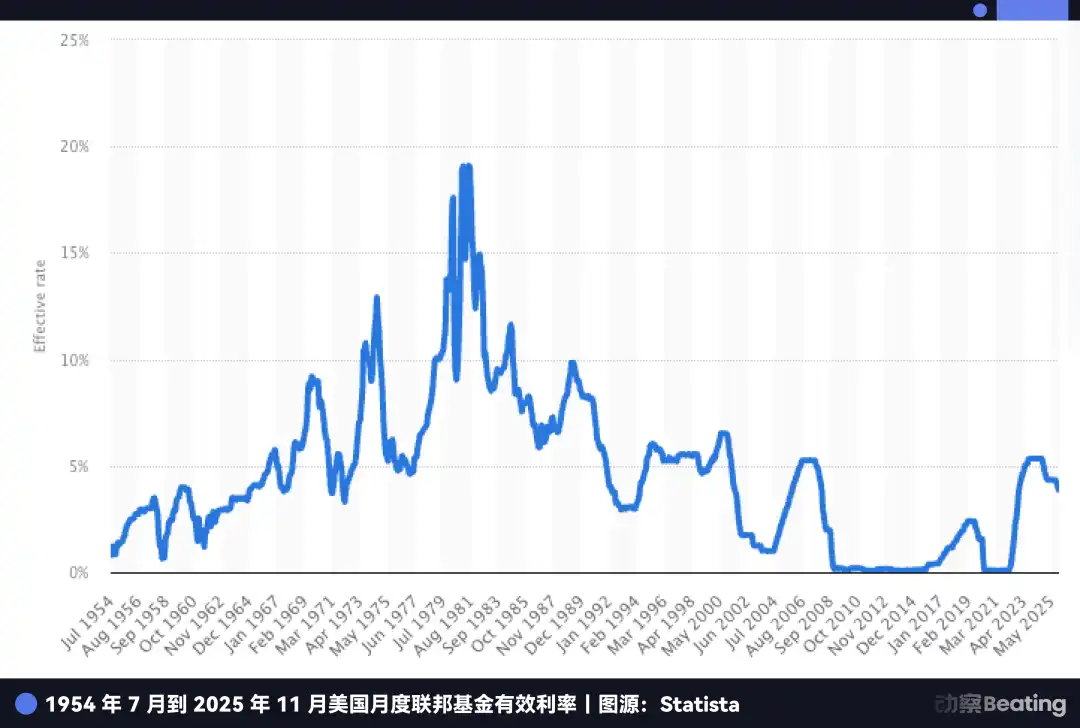
Look at PayPal's current awkward situation: It has a massive pool of funds from its 430 million active users. This money sits in users' PayPal accounts, and PayPal then has to deposit these funds with partner banks.

Those partner banks take this low-cost money and buy U.S. Treasuries yielding 5% or issue higher-interest loans, making enormous profits, while PayPal only gets scraps from the table.

If PayPal gets its own bank charter, it can directly turn the idle funds of those 430 million users into its own low-cost deposits. Then, it can buy Treasuries with one hand and issue loans with the other—keeping all the interest margin profits for itself. In the current high-interest window, this represents a difference of billions of dollars in profit.

But if the goal was just to break free from WebBank, PayPal should have acted long ago. Why wait until 2025?

This brings us to another, more urgent and potentially fatal anxiety deep within PayPal: stablecoins.

With Stablecoins, PayPal is Still a "Sublessor"

If being a "sublessor" in the lending business only meant PayPal made less money and worried more, in the stablecoin battlefield, this dependency is evolving into a genuine survival crisis.

In 2025, PayPal's stablecoin, PYUSD, experienced explosive growth, its market cap tripling in three months to soar to $3.8 billion. Even YouTube announced the integration of PYUSD payments in December.

But behind these lively battle reports is a fact PayPal similarly won't emphasize in its press releases: PYUSD is not issued by PayPal itself, but through a partnership with the New York-based company Paxos.

This is another familiar "white-label" story. PayPal is just the brand licensor—like Nike authorizing a factory to produce shoes instead of running its own factory.

In the past, this seemed more like a business division of labor: PayPal held the product and traffic, Paxos handled compliance and issuance. Everyone ate from their own plate.

But on December 12, 2025, this division began to change flavor. The Office of the Comptroller of the Currency (OCC) gave "conditional approval" for national trust bank charters to several institutions, including Paxos.

This isn't a traditional "commercial bank" that can take deposits and get FDIC insurance, but it signifies that Paxos is moving from being a contract manufacturer to a recognized issuer that can step into the spotlight.

Place this within the framework of the proposed《GENIUS Act》, and you understand why PayPal is急. The bill allows regulated banking systems to issue payment stablecoins through subsidiaries. The power to issue and the profit chain will increasingly concentrate in the hands of those "with a charter."

Before, PayPal could treat stablecoins as an outsourced module. Now, if the outsourcer gains a stronger regulatory身份, it's no longer just a supplier; it can become a replaceable partner, even a potential competitor.

PayPal's尴尬 lies in the fact that it controls neither the issuance infrastructure nor the regulatory身份.

The advancement of USDC and the OCC's move on trust charters are both reminders: the stablecoin battle won't ultimately be about who issues first, but about who can hold the reins of issuance, custody, settlement, and compliance in their own hands.

Therefore, PayPal's move is less about wanting to be a bank and more about acquiring an entry ticket. Otherwise, it risks being permanently left standing outside the arena.

Even more critically, stablecoins pose an existential threat to PayPal's core business.

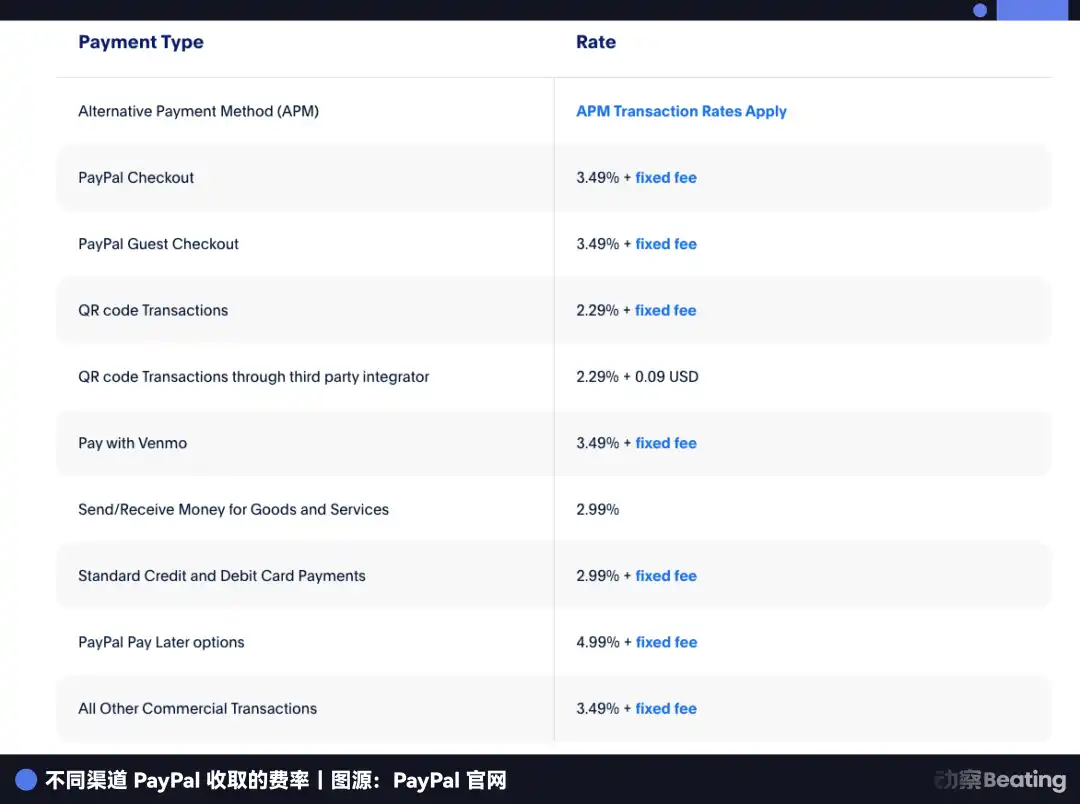
PayPal's most profitable business is e-commerce payments, relying on charging a 2.29~3.49% transaction fee. But the logic of stablecoins is completely different; they charge almost no transaction fees, making money from the interest earned on the Treasury holdings backing the user's deposited funds.

When Amazon starts accepting USDC, when Shopify enables stablecoin payments, merchants will face a simple calculation: if they can use near-zero-cost stablecoins, why pay PayPal a 2.5% toll?

Currently, e-commerce payments account for over half of PayPal's business revenue. Over the past two years, it has watched its market share slide from 54.8% to 40%. If it doesn't seize the initiative on stablecoins, PayPal's moat will be completely filled in.
PayPal's current situation is reminiscent of Apple when it launched its Apple Pay Later business. In 2024, Apple, lacking a bank charter, found itself constrained by Goldman Sachs at every turn and ultimately shut down the service, retreating to its core hardware domain. Apple could retreat because finance was just a nice-to-have; hardware is its core competency.

But PayPal has nowhere to retreat.

It has no phone, no operating system, no hardware ecosystem. Finance is its everything, its only granary. Apple's retreat was a strategic contraction; if PayPal dares to retreat, it faces death.

Therefore, PayPal must advance. It must obtain that bank charter and bring the issuance rights, control, and profit rights of stablecoins back under its own roof.

But starting a bank in the U.S. is incredibly difficult, especially for a tech company carrying $7 billion in loan assets. The regulatory审批门槛 is dauntingly high.

Thus, to obtain this ticket to the future, PayPal orchestrated a masterful piece of financial engineering.

PayPal's Cicada Shedding Its Shell

Now, let's return to the contradiction mentioned at the beginning of the article.

On September 24, PayPal announced the sale of $7 billion in "Buy Now, Pay Later" loans to Blue Owl, with the CFO loudly proclaiming the goal to "become lighter." At the time, most Wall Street analysts assumed this was just window dressing for the financial statements, to make the cash flow look prettier.

But if you view this event alongside the bank charter application three months later, you see it's not a contradiction but a carefully designed one-two punch.

If it hadn't sold those $7 billion in receivables, PayPal's chances of successfully obtaining a bank charter would have been almost zero.

Why? Because in the U.S., applying for a bank charter requires passing an extremely rigorous "physical exam." The regulator (FDIC) holds a ruler called the "capital adequacy ratio."

The logic is simple: the more high-risk assets (like loans) you have on your balance sheet, the more capital reserves you must hold to抵御风险.

Imagine if PayPal knocked on the FDIC's door carrying this $7 billion loan burden. The regulator would immediately see the heavy包袱: "You're carrying all these risky assets; what if they go bad? Do you have enough money to cover the losses?" This wouldn't just mean PayPal needing to post astronomical sums in保证金; it could directly lead to a rejected application.

Therefore, PayPal had to undergo a comprehensive瘦身 before the exam.

This sale to Blue Owl is known in financial jargon as a forward flow agreement. The design is very shrewd. PayPal offloaded the future receivables from loans issued over the next two years (the "printed money") and the default risk entirely onto Blue Owl. But it very cleverly retained the underwriting rights and customer relationships—it kept the "money printing press" for itself.

From the user's perspective, they are still borrowing from PayPal, still repaying through PayPal's App—the experience is unchanged. But on the FDIC's exam report, PayPal's balance sheet instantly appears clean and lean.

Through this move of the cicada shedding its shell, PayPal completed an identity transformation. It went from a lender burdened with heavy default risk to a mere passerby earning risk-free service fees.

This kind of deliberate asset shuffle to pass regulatory审批 isn't unheard of on Wall Street, but doing it so decisively and on such a scale is rare. It precisely proves the determination of PayPal's management: even if it means giving up the fat meat (loan interest) for others to eat, it must secure that longer-term meal ticket.

Moreover, the window for this gamble is closing fast. The reason PayPal is so urgent is that the "backdoor" it has its eye on is being closed, even welded shut, by regulators.

The Soon-to-Close Backdoor

The charter PayPal is applying for is called an "Industrial Loan Company" (ILC). If you're not deeply involved in finance, you've probably never heard of it. But it is the most bizarre and coveted entity in the U.S. financial regulatory system.

Looking at the list of companies with ILC charters creates a strong sense of incongruity: BMW, Toyota, Harley-Davidson, Target...

You might ask: Why are these car sellers and department stores opening banks?

This is the magic of the ILC. It is the only "regulatory loophole" in the U.S. legal system that allows non-financial giants to legally open a bank.

This loophole originated from the Competitive Equality Banking Act (CEBA) passed in 1987. Although the law is named "Equality," it left an extremely unequal privilege: it exempted the parent companies of ILCs from the obligation to register as "bank holding companies."

If you apply for a regular bank charter, the parent company must submit to the Fed's head-to-toe穿透式监管. But if you hold an ILC charter, the parent company (like PayPal) is not subject to Federal Reserve jurisdiction, needing only to answer to the FDIC and state-level regulation in Utah.

This means you enjoy the national-level privileges of a bank—taking deposits, accessing the federal payment system—while perfectly avoiding Fed interference in your commercial empire.

This is所谓的监管套利. Even more enticing is that it allows "mixed operation." This is how BMW and Harley-Davidson play it: vertical integration within their industry chain.

BMW Bank doesn't need physical counters because its business is perfectly embedded in the car-buying process. When you decide to buy a BMW, the sales system automatically connects to BMW Bank's loan services.

For BMW, it makes profit both from your car purchase and from the interest on the car loan. Harley-Davidson is even more so; its bank can even provide loans to motorcycle enthusiasts rejected by traditional banks, because only Harley itself knows that these die-hard fans actually have low default rates.

This is the ultimate form PayPal dreams of: payments on the left hand, banking on the right hand, with stablecoins in the middle—not letting any outsider插手.

Reading this, you must wonder: If this loophole is so good, why didn't Walmart or Amazon apply for this charter and open their own banks?

Because the traditional banking world despises this backdoor.

Bankers believe that allowing commercial giants with massive user data to open banks is a dimensional打击. In 2005, Walmart applied for an ILC charter, triggering a collective uprising across the American banking industry. Banking associations lobbied Congress furiously, arguing that if Walmart Bank used its supermarket data advantage to offer cheap loans only to Walmart shoppers, how could community banks survive?

Under immense public pressure, Walmart was forced to withdraw its application in 2007. This event directly led to regulators "freezing" the ILC. From 2006 to 2019—a full 13 years—the FDIC did not approve a single application from a commercial company. It wasn't until 2020 that Square (now Block) barely broke the deadlock.

But now, this barely reopened backdoor faces the risk of being permanently closed again.

In July 2025, the FDIC suddenly released a notice of proposed rulemaking regarding the ILC framework, seen as a strong signal of regulatory tightening. Meanwhile, related legislative proposals in Congress have never stopped.

Thus, a mad rush for charters began. In 2025, U.S. bank charter applications hit a historical peak of 20, with the OCC (Office of the Comptroller of the Currency) alone receiving 14 applications—equivalent to the total of the previous four years combined.
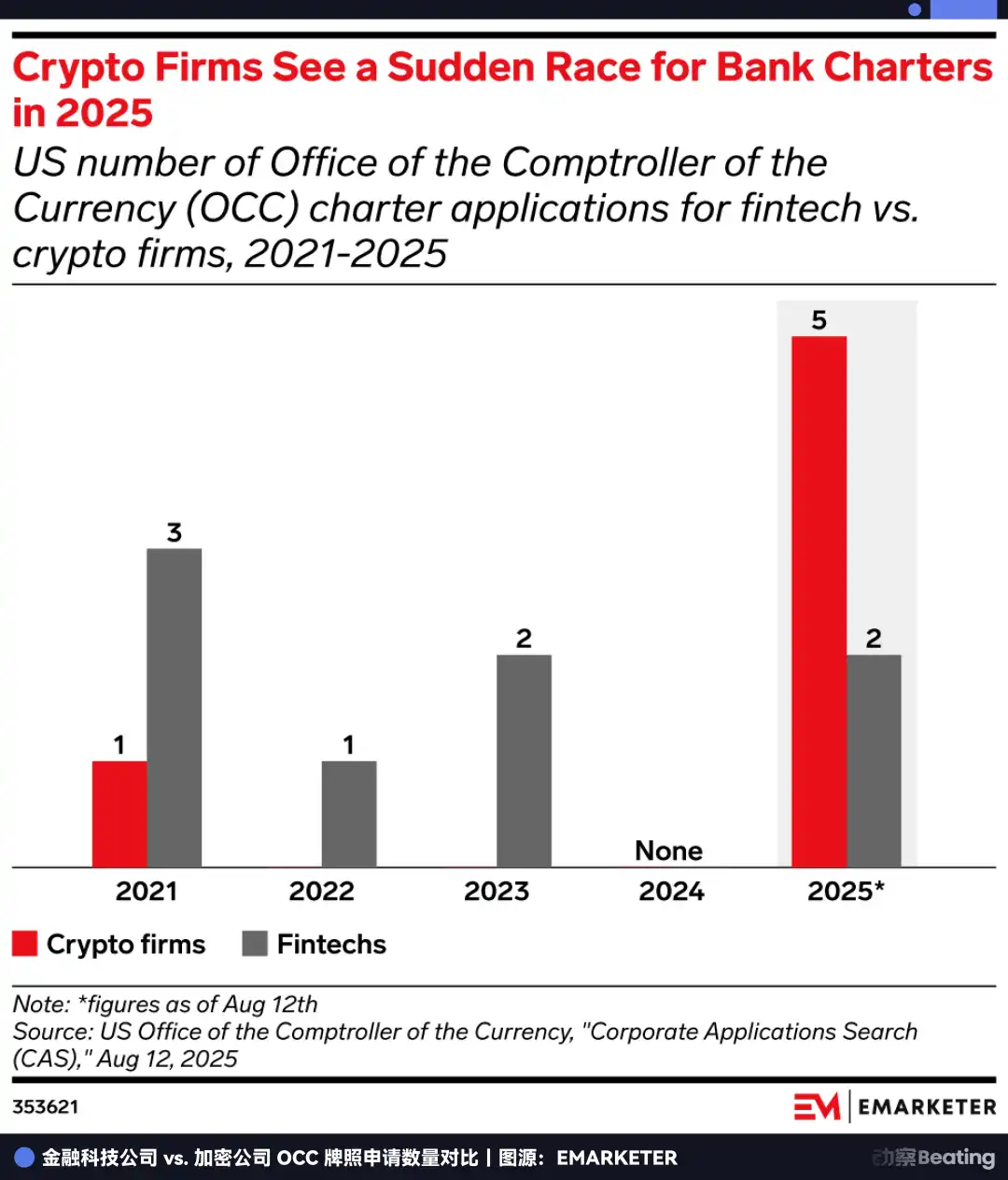
Everyone knows this is the last chance before the door closes. PayPal is racing against the regulators. If you don't rush in before the loophole is彻底堵死 by law, this door might close forever.

A Breakthrough for Survival

The charter PayPal is going to such lengths to obtain is essentially an "option."

Its current value is certain: independently issuing loans and profiting from the interest margin in a high-rate environment. But its future value lies in qualifying PayPal to enter currently forbidden but highly imaginative territories.

Look at the business Wall Street covets most. It's not payments; it's asset management.

Without a bank charter, PayPal could only act as a simple passerby deity, moving funds for users. But once it possesses an ILC charter, it gains a legitimate custodian身份.

This means PayPal can rightfully custody Bitcoin, Ethereum, and even future RWA assets for its 430 million users. Going a step further, under the future《GENIUS Act》framework, banks might be the only permitted legal入口 connecting to DeFi protocols.

Imagine a future where a "High-Yield Savings" button appears in PayPal's App, connecting in the backend to on-chain protocols like Aave or Compound, with PayPal Bank bridging the insurmountable compliance barrier in between. This would彻底打破 the wall between Web2 payments and Web3 finance.

On this dimension, PayPal is no longer competing with Stripe on fees; it's building a financial operating system for the crypto era. It's attempting to evolve from processing transactions to managing assets. Transactions are linear and have a ceiling; asset management is an infinite game.

Understanding this layer allows you to grasp why PayPal is launching this charge at the end of 2025.

It is acutely aware that it is caught in the cracks of the era. Behind it is the fear of its traditional payment business profits being zeroed out by stablecoins. Ahead is the urgency of the ILC regulatory backdoor being permanently welded shut.

To squeeze through this door, it had to sell $7 billion in assets in September to刮骨疗毒, solely to换取 the entry ticket that determines its survival.

If you stretch the timeline back 27 years, you see a轮回 filled with宿命感.

In 1998, when Peter Thiel and Elon Musk founded the precursor to PayPal, their mission was to "challenge the banks," to use electronic money to destroy those old, inefficient financial institutions.

Twenty-seven years later, this former "dragon-slaying youth" is straining every muscle to "become the bank."

In the business world, there are no fairy tales, only survival. On the eve of cryptocurrency重构 the financial order, continuing to be an "ex-giant"游离于 the system之外 means certain death. Only by obtaining that身份, even if through "using the backdoor," can it survive into the next era.

This is a生死突围 that must be completed before the window closes.

If it wins the bet, it becomes the J.P. Morgan of the Web3 era. If it loses, it becomes merely a relic of the previous internet age.

Time is running out for PayPal.

Preguntas relacionadas

QWhy is PayPal applying for an industrial bank (ILC) license while simultaneously selling off $7 billion in 'Buy Now, Pay Later' loan assets?

APayPal is selling its loan assets to 'lighten' its balance sheet to meet strict regulatory capital requirements for bank license approval. Applying for an ILC license is a strategic move to gain direct control over its lending and stablecoin operations, reduce dependency on partners like WebBank, and capture the full profit from interest margins in a high-rate environment.

QWhat is the core risk of PayPal's current 'Banking as a Service' (BaaS) model with WebBank for its lending business?

AThe core risk is dependency. If WebBank faces regulatory issues, changes its terms, or fails (like Synapse did), PayPal's lending business could be paralyzed. This 'landlord-tenant' model leaves PayPal vulnerable, with its core operations controlled by an external entity, risking user trust and business continuity.

QHow does PayPal's stablecoin (PYUSD) strategy relate to its urgency to obtain a bank charter?

APYUSD is currently issued in partnership with Paxos, making PayPal a 'brand licensor' without direct control. As regulators like the OCC grant trust bank charters to entities like Paxos and proposed laws (e.g., GENIUS Act) favor licensed banks for stablecoin issuance, PayPal risks being sidelined. A bank charter is essential for PayPal to control the issuance, compliance, and profits of its stablecoin directly, which is critical as stablecoins threaten its core payment fee revenue.

QWhat is an Industrial Loan Company (ILC) charter, and why is it particularly attractive to non-financial companies like PayPal?

AAn ILC charter is a type of bank license that allows non-financial companies to own a bank without the parent company being classified as a bank holding company and subjected to the Federal Reserve's stringent oversight. This 'regulatory loophole' allows companies like PayPal, BMW, or Target to enjoy banking privileges (like taking deposits) while avoiding comprehensive federal regulation of their entire commercial business, enabling vertical integration of financial services.

QWhy is there a sense of urgency for PayPal to secure the ILC license in 2025?

AThere is urgency because the regulatory 'loophole' for ILCs is at risk of being closed. The FDIC has signaled potential tightening of ILC rules, and legislative efforts in Congress could permanently shut this path. With a record number of applications in 2025, companies are racing to get approved before the window closes. For PayPal, obtaining the charter is a crucial 'option' for future survival, allowing it to move into asset custody, deeper crypto integration, and compete in the evolving financial landscape.

Lecturas Relacionadas

North Korean Hackers Loot $500 Million in a Single Month, Becoming the Top Threat to Crypto Security

North Korean hackers, particularly the notorious Lazarus Group and its subgroup TraderTraitor, have stolen over $500 million from cryptocurrency DeFi platforms in less than three weeks, bringing their total theft for the year to over $700 million. Recent major attacks on Drift Protocol and KelpDAO, resulting in losses of approximately $286 million and $290 million respectively, highlight a strategic shift: instead of targeting core smart contracts, attackers are now exploiting vulnerabilities in peripheral infrastructure. For instance, the KelpDAO attack involved compromising downstream RPC infrastructure used by LayerZero's decentralized validation network (DVN), allowing manipulation without breaching core cryptography. This sophisticated approach mirrors advanced corporate cyber-espionage. Additionally, North Korea has systematically infiltrated the global crypto workforce, with an estimated 100 operatives using fake identities to gain employment at blockchain companies, enabling long-term access to sensitive systems and facilitating large-scale thefts. According to Chainalysis, North Korean-linked hackers stole a record $2 billion in 2025, accounting for 60% of all global crypto theft that year. Their total historical crypto theft has reached $6.75 billion. Post-theft, they employ specialized money laundering methods, heavily relying on Chinese OTC brokers and cross-chain mixing services rather than standard decentralized exchanges. Security experts, while acknowledging the increased sophistication, emphasize that many attacks still exploit fundamental weaknesses like poor access controls and centralized operational risks. Strengthening private key management, limiting privileged access, and enhancing coordination among exchanges, analysts, and law enforcement immediately after an attack are critical to improving defense and fund recovery chances. The industry's challenge now extends beyond secure smart contracts to safeguarding operational security at the infrastructure level.

marsbitHace 28 min(s)

North Korean Hackers Loot $500 Million in a Single Month, Becoming the Top Threat to Crypto Security

marsbitHace 28 min(s)

Circle CEO's Seoul Visit: No Korean Won Stablecoin Issuance, But Met All Major Korean Banks

Circle CEO Jeremy Allaire's recent activities in Seoul indicate a strategic shift for the company, moving away from issuing a Korean won-backed stablecoin and instead focusing on embedding itself as a key infrastructure provider within Korea’s financial and crypto ecosystem. Despite Korea accounting for nearly 30% of global crypto trading volume—with a market characterized by high retail participation and altcoin dominance—Circle has chosen not to compete for the role of stablecoin issuer. Instead, Allaire met with major Korean banks (including Shinhan, KB, and Woori), financial groups, leading exchanges (Upbit, Bithumb, Coinone), and tech firms like Kakao. This approach reflects a broader industry transition: the core of stablecoin competition is shifting from issuance rights to systemic positioning. With Korean regulators still debating whether banks or tech companies should issue stablecoins, Circle is avoiding regulatory uncertainty by strengthening its role as a service and technology partner. The company is deepening integration with trading platforms, building connections, and promoting stablecoin infrastructure. This positions Circle to benefit regardless of which entity eventually issues a won stablecoin. Allaire also noted the potential for a Chinese yuan stablecoin in the next 3–5 years, underscoring a regional trend of stablecoins becoming more regulated and integrated with traditional finance. Ultimately, Circle’s strategy highlights that future influence in the stablecoin market will belong not necessarily to the issuers, but to the foundational infrastructure layers that enable cross-system transactions.

marsbitHace 56 min(s)

Circle CEO's Seoul Visit: No Korean Won Stablecoin Issuance, But Met All Major Korean Banks

marsbitHace 56 min(s)

SpaceX Ties Up with Cursor: A High-Stakes AI Gambit of 'Lock First, Acquire Later'

SpaceX has secured an option to acquire AI programming company Cursor for $60 billion, with an alternative clause requiring a $10 billion collaboration fee if the acquisition does not proceed. This structure is not merely a potential acquisition but a strategic move to control core access points in the AI era. The deal is designed as a flexible, dual-path arrangement, allowing SpaceX to either fully acquire Cursor or maintain a binding partnership through high-cost collaboration. This "option-style" approach minimizes immediate regulatory and integration risks while ensuring long-term alignment between the two companies. At its core, the transaction exchanges critical AI-era resources: SpaceX provides its Colossus supercomputing cluster—one of the world’s most powerful AI training infrastructures—while Cursor contributes its AI-native developer environment and strong product adoption. This synergy connects compute power, models, and application layers, forming a closed-loop AI capability stack. Cursor, founded in 2022, has achieved rapid growth with over $1 billion in annual revenue and widespread enterprise adoption. Its value lies in transforming software development through AI agents capable of coding, debugging, and system design—positioning it as a gateway to future software production. For SpaceX, this move is part of a broader strategy to evolve from a aerospace company into an AI infrastructure empire, integrating xAI, supercomputing, and chip manufacturing. Controlling Cursor fills a gap in its developer tooling layer, strengthening its AI narrative ahead of a potential IPO. The deal reflects a shift in AI competition from model superiority to ecosystem and entry-point control. With programming tools as a key battleground, securing developer loyalty becomes crucial for dominating the software production landscape. Risks include questions around Cursor’s valuation, technical integration challenges, and potential regulatory scrutiny. Nevertheless, the deal underscores a strategic bet: controlling both compute and software development access may redefine power dynamics in the AI-driven future.

marsbitHace 1 hora(s)

SpaceX Ties Up with Cursor: A High-Stakes AI Gambit of 'Lock First, Acquire Later'

marsbitHace 1 hora(s)

Trading

Spot
Futuros

Artículos destacados

Qué es $S$

Entendiendo SPERO: Una Visión General Completa Introducción a SPERO A medida que el panorama de la innovación continúa evolucionando, la aparición de tecnologías web3 y proyectos de criptomonedas juega un papel fundamental en la configuración del futuro digital. Un proyecto que ha atraído la atención en este campo dinámico es SPERO, denotado como SPERO,$$s$. Este artículo tiene como objetivo reunir y presentar información detallada sobre SPERO, para ayudar a entusiastas e inversores a comprender sus fundamentos, objetivos e innovaciones dentro de los dominios web3 y cripto. ¿Qué es SPERO,$$s$? SPERO,$$s$ es un proyecto único dentro del espacio cripto que busca aprovechar los principios de descentralización y tecnología blockchain para crear un ecosistema que promueva la participación, la utilidad y la inclusión financiera. El proyecto está diseñado para facilitar interacciones de igual a igual de nuevas maneras, proporcionando a los usuarios soluciones y servicios financieros innovadores. En su esencia, SPERO,$$s$ tiene como objetivo empoderar a los individuos al proporcionar herramientas y plataformas que mejoren la experiencia del usuario en el espacio de las criptomonedas. Esto incluye habilitar métodos de transacción más flexibles, fomentar iniciativas impulsadas por la comunidad y crear caminos para oportunidades financieras a través de aplicaciones descentralizadas (dApps). La visión subyacente de SPERO,$$s$ gira en torno a la inclusividad, buscando cerrar brechas dentro de las finanzas tradicionales mientras aprovecha los beneficios de la tecnología blockchain. ¿Quién es el Creador de SPERO,$$s$? La identidad del creador de SPERO,$$s$ sigue siendo algo oscura, ya que hay recursos públicos limitados que proporcionan información de fondo detallada sobre su(s) fundador(es). Esta falta de transparencia puede derivarse del compromiso del proyecto con la descentralización, una ética que muchos proyectos web3 comparten, priorizando las contribuciones colectivas sobre el reconocimiento individual. Al centrar las discusiones en torno a la comunidad y sus objetivos colectivos, SPERO,$$s$ encarna la esencia del empoderamiento sin señalar a individuos específicos. Como tal, comprender la ética y la misión de SPERO sigue siendo más importante que identificar a un creador singular. ¿Quiénes son los Inversores de SPERO,$$s$? SPERO,$$s$ cuenta con el apoyo de una diversa gama de inversores que van desde capitalistas de riesgo hasta inversores ángeles dedicados a fomentar la innovación en el sector cripto. El enfoque de estos inversores generalmente se alinea con la misión de SPERO, priorizando proyectos que prometen avances tecnológicos sociales, inclusión financiera y gobernanza descentralizada. Estas fundaciones de inversores suelen estar interesadas en proyectos que no solo ofrecen productos innovadores, sino que también contribuyen positivamente a la comunidad blockchain y sus ecosistemas. El respaldo de estos inversores refuerza a SPERO,$$s$ como un contendiente notable en el dominio de proyectos cripto que evoluciona rápidamente. ¿Cómo Funciona SPERO,$$s$? SPERO,$$s$ emplea un marco multifacético que lo distingue de los proyectos de criptomonedas convencionales. Aquí hay algunas de las características clave que subrayan su singularidad e innovación: Gobernanza Descentralizada: SPERO,$$s$ integra modelos de gobernanza descentralizada, empoderando a los usuarios para participar activamente en los procesos de toma de decisiones sobre el futuro del proyecto. Este enfoque fomenta un sentido de propiedad y responsabilidad entre los miembros de la comunidad. Utilidad del Token: SPERO,$$s$ utiliza su propio token de criptomoneda, diseñado para servir diversas funciones dentro del ecosistema. Estos tokens permiten transacciones, recompensas y la facilitación de servicios ofrecidos en la plataforma, mejorando la participación y la utilidad general. Arquitectura en Capas: La arquitectura técnica de SPERO,$$s$ apoya la modularidad y escalabilidad, permitiendo la integración fluida de características y aplicaciones adicionales a medida que el proyecto evoluciona. Esta adaptabilidad es fundamental para mantener la relevancia en el cambiante paisaje cripto. Participación de la Comunidad: El proyecto enfatiza iniciativas impulsadas por la comunidad, empleando mecanismos que incentivan la colaboración y la retroalimentación. Al nutrir una comunidad sólida, SPERO,$$s$ puede abordar mejor las necesidades de los usuarios y adaptarse a las tendencias del mercado. Enfoque en la Inclusión: Al ofrecer tarifas de transacción bajas e interfaces amigables para el usuario, SPERO,$$s$ busca atraer a una base de usuarios diversa, incluyendo a individuos que anteriormente pueden no haber participado en el espacio cripto. Este compromiso con la inclusión se alinea con su misión general de empoderamiento a través de la accesibilidad. Cronología de SPERO,$$s$ Entender la historia de un proyecto proporciona información crucial sobre su trayectoria de desarrollo y hitos. A continuación se presenta una cronología sugerida que mapea eventos significativos en la evolución de SPERO,$$s$: Fase de Conceptualización e Ideación: Las ideas iniciales que forman la base de SPERO,$$s$ fueron concebidas, alineándose estrechamente con los principios de descentralización y enfoque comunitario dentro de la industria blockchain. Lanzamiento del Whitepaper del Proyecto: Tras la fase conceptual, se lanzó un whitepaper completo que detalla la visión, los objetivos y la infraestructura tecnológica de SPERO,$$s$ para generar interés y retroalimentación de la comunidad. Construcción de Comunidad y Primeras Interacciones: Se realizaron esfuerzos de divulgación activa para construir una comunidad de primeros adoptantes y posibles inversores, facilitando discusiones en torno a los objetivos del proyecto y obteniendo apoyo. Evento de Generación de Tokens: SPERO,$$s$ llevó a cabo un evento de generación de tokens (TGE) para distribuir sus tokens nativos a los primeros seguidores y establecer liquidez inicial dentro del ecosistema. Lanzamiento de la dApp Inicial: La primera aplicación descentralizada (dApp) asociada con SPERO,$$s$ se puso en marcha, permitiendo a los usuarios interactuar con las funcionalidades centrales de la plataforma. Desarrollo Continuo y Alianzas: Actualizaciones y mejoras continuas a las ofertas del proyecto, incluyendo alianzas estratégicas con otros actores en el espacio blockchain, han moldeado a SPERO,$$s$ en un jugador competitivo y en evolución en el mercado cripto. Conclusión SPERO,$$s$ se erige como un testimonio del potencial de web3 y las criptomonedas para revolucionar los sistemas financieros y empoderar a los individuos. Con un compromiso con la gobernanza descentralizada, la participación comunitaria y funcionalidades diseñadas de manera innovadora, allana el camino hacia un paisaje financiero más inclusivo. Como con cualquier inversión en el espacio cripto que evoluciona rápidamente, se anima a los posibles inversores y usuarios a investigar a fondo y participar de manera reflexiva con los desarrollos en curso dentro de SPERO,$$s$. El proyecto muestra el espíritu innovador de la industria cripto, invitando a una mayor exploración de sus innumerables posibilidades. Mientras el viaje de SPERO,$$s$ aún se desarrolla, sus principios fundamentales pueden, de hecho, influir en el futuro de cómo interactuamos con la tecnología, las finanzas y entre nosotros en ecosistemas digitales interconectados.

72 Vistas totalesPublicado en 2024.12.17Actualizado en 2024.12.17

Qué es $S$

Qué es AGENT S

Agent S: El Futuro de la Interacción Autónoma en Web3 Introducción En el paisaje en constante evolución de Web3 y las criptomonedas, las innovaciones están redefiniendo constantemente cómo los individuos interactúan con las plataformas digitales. Uno de estos proyectos pioneros, Agent S, promete revolucionar la interacción humano-computadora a través de su marco agente abierto. Al allanar el camino para interacciones autónomas, Agent S busca simplificar tareas complejas, ofreciendo aplicaciones transformadoras en inteligencia artificial (IA). Esta exploración detallada profundizará en las complejidades del proyecto, sus características únicas y las implicaciones para el dominio de las criptomonedas. ¿Qué es Agent S? Agent S se presenta como un marco agente abierto innovador, diseñado específicamente para abordar tres desafíos fundamentales en la automatización de tareas informáticas: Adquisición de Conocimiento Específico del Dominio: El marco aprende inteligentemente de diversas fuentes de conocimiento externas y experiencias internas. Este enfoque dual le permite construir un rico repositorio de conocimiento específico del dominio, mejorando su rendimiento en la ejecución de tareas. Planificación a Largo Plazo de Tareas: Agent S emplea planificación jerárquica aumentada por la experiencia, un enfoque estratégico que facilita la descomposición y ejecución eficiente de tareas complejas. Esta característica mejora significativamente su capacidad para gestionar múltiples subtareas de manera eficiente y efectiva. Manejo de Interfaces Dinámicas y No Uniformes: El proyecto introduce la Interfaz Agente-Computadora (ACI), una solución innovadora que mejora la interacción entre agentes y usuarios. Utilizando Modelos de Lenguaje Multimodal de Gran Escala (MLLMs), Agent S puede navegar y manipular diversas interfaces gráficas de usuario sin problemas. A través de estas características pioneras, Agent S proporciona un marco robusto que aborda las complejidades involucradas en la automatización de la interacción humana con las máquinas, preparando el terreno para una multitud de aplicaciones en IA y más allá. ¿Quién es el Creador de Agent S? Si bien el concepto de Agent S es fundamentalmente innovador, la información específica sobre su creador sigue siendo elusiva. El creador es actualmente desconocido, lo que resalta ya sea la etapa incipiente del proyecto o la elección estratégica de mantener a los miembros fundadores en el anonimato. Independientemente de la anonimidad, el enfoque sigue siendo en las capacidades y el potencial del marco. ¿Quiénes son los Inversores de Agent S? Dado que Agent S es relativamente nuevo en el ecosistema criptográfico, la información detallada sobre sus inversores y patrocinadores financieros no está documentada explícitamente. La falta de información disponible públicamente sobre las bases de inversión u organizaciones que apoyan el proyecto plantea preguntas sobre su estructura de financiamiento y hoja de ruta de desarrollo. Comprender el respaldo es crucial para evaluar la sostenibilidad del proyecto y su posible impacto en el mercado. ¿Cómo Funciona Agent S? En el núcleo de Agent S se encuentra una tecnología de vanguardia que le permite funcionar de manera efectiva en diversos entornos. Su modelo operativo se basa en varias características clave: Interacción Humano-Computadora Similar a la Humana: El marco ofrece planificación avanzada de IA, esforzándose por hacer que las interacciones con las computadoras sean más intuitivas. Al imitar el comportamiento humano en la ejecución de tareas, promete elevar las experiencias de los usuarios. Memoria Narrativa: Empleada para aprovechar experiencias de alto nivel, Agent S utiliza memoria narrativa para hacer un seguimiento de las historias de tareas, mejorando así sus procesos de toma de decisiones. Memoria Episódica: Esta característica proporciona a los usuarios una guía paso a paso, permitiendo que el marco ofrezca apoyo contextual a medida que se desarrollan las tareas. Soporte para OpenACI: Con la capacidad de ejecutarse localmente, Agent S permite a los usuarios mantener el control sobre sus interacciones y flujos de trabajo, alineándose con la ética descentralizada de Web3. Fácil Integración con APIs Externas: Su versatilidad y compatibilidad con varias plataformas de IA aseguran que Agent S pueda encajar sin problemas en ecosistemas tecnológicos existentes, convirtiéndolo en una opción atractiva para desarrolladores y organizaciones. Estas funcionalidades contribuyen colectivamente a la posición única de Agent S dentro del espacio cripto, ya que automatiza tareas complejas y de múltiples pasos con una intervención humana mínima. A medida que el proyecto evoluciona, sus posibles aplicaciones en Web3 podrían redefinir cómo se desarrollan las interacciones digitales. Cronología de Agent S El desarrollo y los hitos de Agent S pueden encapsularse en una cronología que resalta sus eventos significativos: 27 de septiembre de 2024: El concepto de Agent S fue lanzado en un documento de investigación integral titulado “Un Marco Agente Abierto que Usa Computadoras Como un Humano”, mostrando las bases del proyecto. 10 de octubre de 2024: El documento de investigación fue puesto a disposición del público en arXiv, ofreciendo una exploración profunda del marco y su evaluación de rendimiento basada en el benchmark OSWorld. 12 de octubre de 2024: Se lanzó una presentación en video, proporcionando una visión visual de las capacidades y características de Agent S, involucrando aún más a posibles usuarios e inversores. Estos marcadores en la cronología no solo ilustran el progreso de Agent S, sino que también indican su compromiso con la transparencia y la participación comunitaria. Puntos Clave Sobre Agent S A medida que el marco Agent S continúa evolucionando, varios atributos clave destacan, subrayando su naturaleza innovadora y potencial: Marco Innovador: Diseñado para proporcionar un uso intuitivo de las computadoras similar a la interacción humana, Agent S aporta un enfoque novedoso a la automatización de tareas. Interacción Autónoma: La capacidad de interactuar de manera autónoma con las computadoras a través de GUI significa un salto hacia soluciones informáticas más inteligentes y eficientes. Automatización de Tareas Complejas: Con su metodología robusta, puede automatizar tareas complejas y de múltiples pasos, haciendo que los procesos sean más rápidos y menos propensos a errores. Mejora Continua: Los mecanismos de aprendizaje permiten a Agent S mejorar a partir de experiencias pasadas, mejorando continuamente su rendimiento y eficacia. Versatilidad: Su adaptabilidad en diferentes entornos operativos como OSWorld y WindowsAgentArena asegura que pueda servir a una amplia gama de aplicaciones. A medida que Agent S se posiciona en el paisaje de Web3 y criptomonedas, su potencial para mejorar las capacidades de interacción y automatizar procesos significa un avance significativo en las tecnologías de IA. A través de su marco innovador, Agent S ejemplifica el futuro de las interacciones digitales, prometiendo una experiencia más fluida y eficiente para los usuarios en diversas industrias. Conclusión Agent S representa un audaz avance en la unión de la IA y Web3, con la capacidad de redefinir cómo interactuamos con la tecnología. Aunque aún se encuentra en sus primeras etapas, las posibilidades para su aplicación son vastas y atractivas. A través de su marco integral que aborda desafíos críticos, Agent S busca llevar las interacciones autónomas al primer plano de la experiencia digital. A medida que nos adentramos más en los reinos de las criptomonedas y la descentralización, proyectos como Agent S sin duda desempeñarán un papel crucial en la configuración del futuro de la tecnología y la colaboración humano-computadora.

337 Vistas totalesPublicado en 2025.01.14Actualizado en 2025.01.14

Qué es AGENT S

Cómo comprar S

¡Bienvenido a HTX.com! Hemos hecho que comprar Sonic (S) sea simple y conveniente. Sigue nuestra guía paso a paso para iniciar tu viaje de criptos.Paso 1: crea tu cuenta HTXUtiliza tu correo electrónico o número de teléfono para registrarte y obtener una cuenta gratuita en HTX. Experimenta un proceso de registro sin complicaciones y desbloquea todas las funciones.Obtener mi cuentaPaso 2: ve a Comprar cripto y elige tu método de pagoTarjeta de crédito/débito: usa tu Visa o Mastercard para comprar Sonic (S) al instante.Saldo: utiliza fondos del saldo de tu cuenta HTX para tradear sin problemas.Terceros: hemos agregado métodos de pago populares como Google Pay y Apple Pay para mejorar la comodidad.P2P: tradear directamente con otros usuarios en HTX.Over-the-Counter (OTC): ofrecemos servicios personalizados y tipos de cambio competitivos para los traders.Paso 3: guarda tu Sonic (S)Después de comprar tu Sonic (S), guárdalo en tu cuenta HTX. Alternativamente, puedes enviarlo a otro lugar mediante transferencia blockchain o utilizarlo para tradear otras criptomonedas.Paso 4: tradear Sonic (S)Tradear fácilmente con Sonic (S) en HTX's mercado spot. Simplemente accede a tu cuenta, selecciona tu par de trading, ejecuta tus trades y monitorea en tiempo real. Ofrecemos una experiencia fácil de usar tanto para principiantes como para traders experimentados.

712 Vistas totalesPublicado en 2025.01.15Actualizado en 2025.03.21

Cómo comprar S

Discusiones

Bienvenido a la comunidad de HTX. Aquí puedes mantenerte informado sobre los últimos desarrollos de la plataforma y acceder a análisis profesionales del mercado. A continuación se presentan las opiniones de los usuarios sobre el precio de S (S).

活动图片