Artículos Relacionados con Offshore

El Centro de Noticias de HTX ofrece los artículos más recientes y un análisis profundo sobre "Offshore", cubriendo tendencias del mercado, actualizaciones de proyectos, desarrollos tecnológicos y políticas regulatorias en la industria de cripto.

Collateral Dollars: How the 'Second-Layer Dollar' Above Stablecoins Takes Shape?

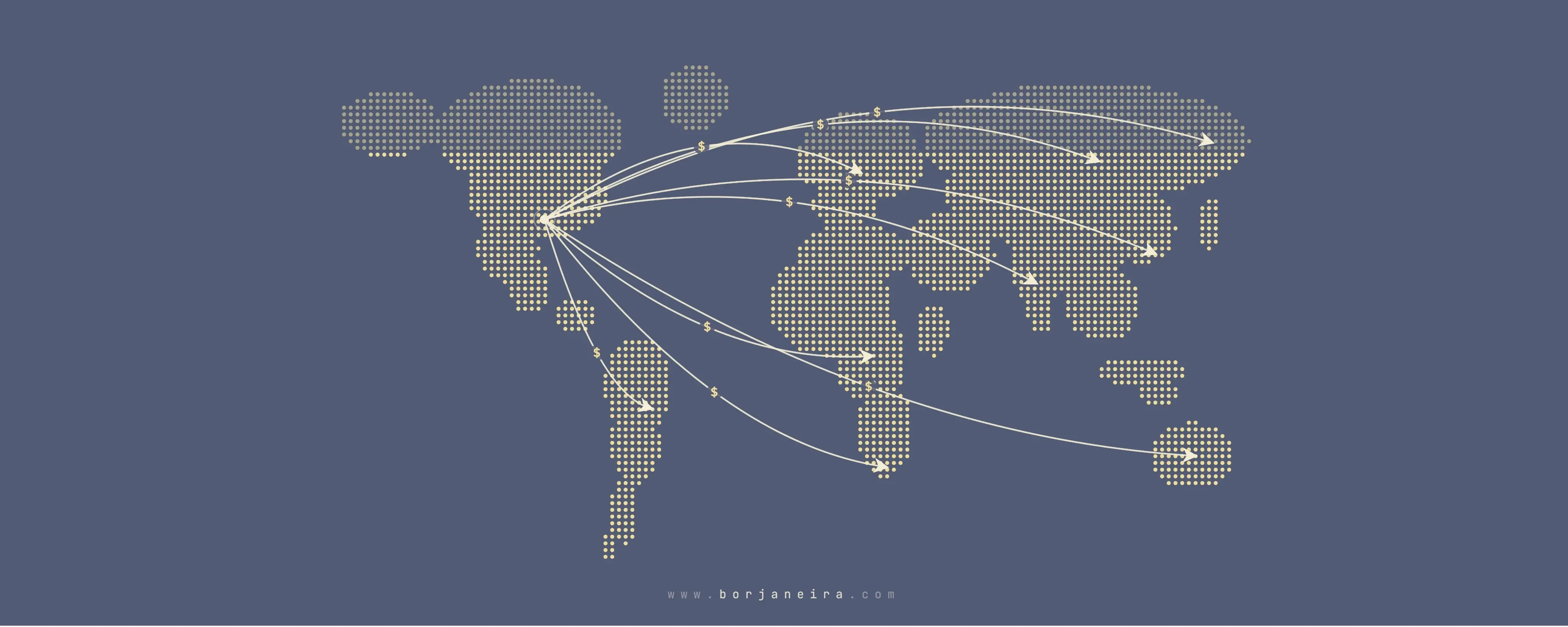
"Collateralized Dollars: How a 'Second Layer of Dollars' Forms on Top of Stablecoins" Most assume stablecoins replicate Eurodollars and expand the offshore dollar system, but this is not accurate. Stablecoins primarily replace certain functions within the existing system, especially operational dollar balances for daily settlement. The critical question is what happens when financial intermediaries create a new layer of dollar claims *on top of* stablecoins. This article explains how this new collateralized funding channel works. Stablecoins introduce tokenized private dollar claims. Even if issuers and reserves are within the US legal perimeter, their circulation and use as collateral can become economically "offshore." Enforceable control over collateral opens a secured credit channel but does not itself create a monetary claim. A true monetary event occurs only when another balance sheet funds, rolls over, or accepts a liability issued against the controlled token at near-par value. The discount prices the gap between "effective control over the token" and "reliable convertibility into bank dollars." Elasticity comes from the balance sheet issuing the liability against the token and from third-party willingness to treat that liability as a near-par asset. Collateralized Dollars are not the stablecoins themselves; they are the second-layer liability that another balance sheet is willing to issue, fund, and maintain at near-par against a controlled token balance. The Eurodollar system is a hierarchy of claims, with elasticity originating in expandable bank liabilities. In contrast, the stablecoin collateral chain starts with a tokenized asset. It gains systemic significance only when an intermediary's liability against that token is treated as money-like by other balance sheets. Key determining factors include: who has effective control, the legal/operational path to bank dollars, and whether the resulting claim can still be financed near-par under stress. Pressure in this new channel manifests differently. The upper-layer (intermediary) claim fails first, losing its money-like status, potentially while the underlying stablecoin remains solvent. Increased haircuts and forced sales can create a destructive feedback loop, widening the very gap the discount measures. In conclusion, the Eurodollar analogy has limits. Reserve quality supports the underlying token's solvency, but the leverage, credit, and liabilities built atop it face a separate test. Collateral eligibility is not monetary acceptance. Only when a claim built on stablecoins survives the leap from "token liquidity" to "bank dollar liquidity" do Collateralized Dollars truly exist.

链捕手07/08 06:16

Collateral Dollars: How the 'Second-Layer Dollar' Above Stablecoins Takes Shape?

链捕手07/08 06:16

Tiger Research: Three Strategies for Financial Institutions to Keep Up with the Tokenization Wave

Tiger Research's in-depth report analyzes the strategic choices for financial institutions entering the rapidly growing Real-World Asset (RWA) tokenization market. With the market projected to be worth $25-36 billion and a lack of complete regulatory frameworks in many jurisdictions, institutions face three options: waiting for domestic legislation, using regulatory sandboxes for limited experiments, or moving first into established overseas markets to gain a competitive edge. Tokenization is not magic; it requires meticulous preparation. Before entry, institutions must strategically plan across six core areas: choosing a jurisdiction, obtaining necessary licenses, defining the asset type, targeting the appropriate investor base, selecting settlement currencies, and designing operational requirements like custody and governance. The report outlines two main operational paths. The first is a direct jurisdictional path, establishing a legal presence in mature markets like Hong Kong, Singapore, or the U.S., often leveraging local licensed platforms to accelerate market entry. The second is a chain-native path, using platforms like Ondo or Plume that are built with regulatory compliance embedded, allowing for faster, more flexible market access without being tied to a specific jurisdiction. Ultimately, the report advises against waiting for perfect regulation. The preparation process can take 6-12 months and requires thorough legal review. Using the example of a mid-sized securities firm, it details steps from evaluating existing entities to final execution. The core message is that accumulating real-world operational experience is paramount, as the market is moving ahead and will not wait for latecomers.

Foresight News07/07 11:01

Tiger Research: Three Strategies for Financial Institutions to Keep Up with the Tokenization Wave

Foresight News07/07 11:01

Sinking Servers into the Sea? They're Dead Serious About This

Sinking Servers into the Sea: A Serious Undertaking The article details China's launch of the world's first offshore, directly wind-powered, subsea data center in the East China Sea near Shanghai. This 1.95 billion yuan project houses over 2,000 servers in a submerged 10-meter-deep module. It is directly powered by a nearby offshore wind farm (over 95% green energy) and cooled by seawater. This innovative approach tackles the two core challenges of data centers: massive power consumption and heat dissipation. It achieves an exceptional Power Usage Effectiveness (PUE) of 1.15, far better than China's national average of 1.48, saving an estimated 61 million kWh of electricity annually. It also uses no freshwater and requires significantly less land. The concept builds upon earlier experiments, like Microsoft's Project Natick, which proved servers could reliably operate underwater with lower failure rates due to a stable, inert environment. The Shanghai project advances the model by co-locating with wind farms, simultaneously solving both the power source and cooling source problems in an economically viable way. This integration reduces infrastructure costs and eliminates grid transmission losses for the electricity used on-site. Looking ahead, the vision is to integrate data center modules directly into the foundations of future large-scale, deep-sea wind turbines. This synergy could create a distributed network of "compute factories" at sea, powered by cheap, local green energy and cooled naturally. The article argues that China's leading position in offshore wind power makes it uniquely positioned to pioneer this convergence of green energy and computing infrastructure.

marsbit05/20 04:29

Sinking Servers into the Sea? They're Dead Serious About This

marsbit05/20 04:29

活动图片