Artículos Relacionados con No-Code

El Centro de Noticias de HTX ofrece los artículos más recientes y un análisis profundo sobre "No-Code", cubriendo tendencias del mercado, actualizaciones de proyectos, desarrollos tecnológicos y políticas regulatorias en la industria de cripto.
No Coding Required: Build Your First AI Agent in 2 Days (Complete Tutorial)

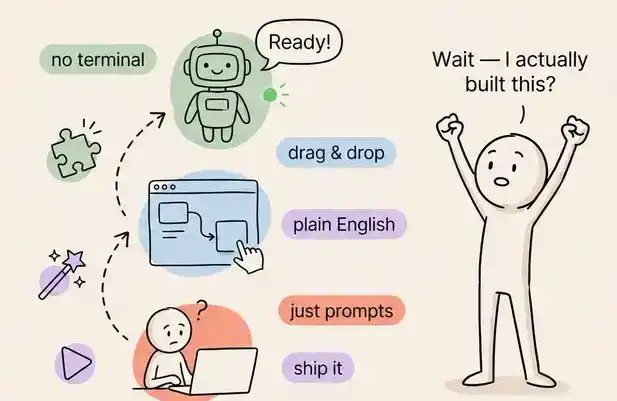
A No-Code Guide to Building Your First AI Agent in a Weekend This article presents a weekend, zero-code tutorial for beginners to build a functional AI Agent using tools like Claude. It clarifies the core difference between a chatbot, which responds to queries, and an Agent, which autonomously plans and executes multi-step tasks using tools to deliver a final result. The process is broken into four stages over two days: 1. **Saturday Morning: Understanding Agents.** Learn that an Agent requires a clear Goal, a Plan, necessary Tools, and an execution Loop. Identify a simple, multi-step task from your own work/life as your first project. 2. **Saturday Afternoon: Building with Claude.** Create a one-page "Agent Blueprint" answering: the Goal, sequential Steps, required Tools, the desired Output format, and error-handling rules. Implement this blueprint in Claude (Desktop Cowork or web Projects) and run the Agent for the first time. 3. **Sunday Morning: Debugging & Optimization.** Review the initial (often 60-70% accurate) output. Identify flaws, trace them back to vague instructions in your blueprint, and refine it with more specific criteria and error handling. Iterate this run-review-refine cycle 3-4 times to reach ~90% reliability. 4. **Sunday Afternoon: Expansion.** Apply the learned workflow to quickly build a second, different Agent (e.g., for research, content repurposing, or meeting prep), experiencing the compounding efficiency gains. The core skill is not writing a perfect blueprint initially, but rapidly iterating based on output. By the end of the weekend, you'll have built two usable Agents, moving beyond just chatting with AI to automating multi-step workflows, fundamentally changing how you approach repetitive tasks.

marsbit05/16 15:19

No Coding Required: Build Your First AI Agent in 2 Days (Complete Tutorial)

marsbit05/16 15:19

Rhythm X Zhihu Hong Kong Event Skills Recruitment, Sign Up Now for a Chance to Showcase On-Site

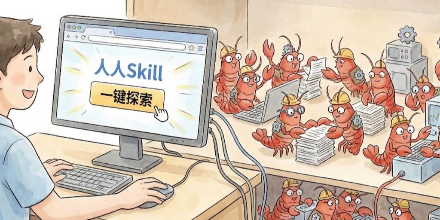
Six months ago, "how to write good prompts" was the hottest topic in group chats. Now, that question is clearly outdated. It has been replaced by Skills. The shift was largely triggered by the emergence of OpenClaw, which brought the concept of AI agents into the mainstream. Unlike a smart search engine that answers questions in isolated interactions, an agent can plan, remember, and complete entire tasks autonomously, creating the novel feeling that it is genuinely working for you. This has led to the rise of Skills—specialized capabilities that equip agents to handle specific domains efficiently. Without Skills, an agent is like a smart but untrained newcomer; with them, it can execute complex, precision-sensitive workflows without constant guidance. Popular Skills currently spreading within communities focus on areas like workflow automation, domain-specific rule injection (e.g., for law, finance, or medicine), personalization, and even financial operations such as identifying arbitrage opportunities on Polymarket or executing quantitative trading strategies. This shifts the门槛 from requiring programming and financial expertise to simply installing a Skill. The underlying change is that people are starting to view agents as long-term collaborators, not just disposable tools. Now, with vibe coding, turning an idea into a functional Skill no longer requires a technical team, code, or infrastructure—it can be done over a weekend. The gap between a good idea and a working product has dramatically narrowed.

marsbit04/03 09:18

Rhythm X Zhihu Hong Kong Event Skills Recruitment, Sign Up Now for a Chance to Showcase On-Site

marsbit04/03 09:18

App Gold Rush Guide: How to Develop and Promote an App with Zero Experience to Achieve 'Passive Winning'?

How to Build and Market an App for Passive Income: A Step-by-Step Guide This guide outlines a strategy for developing and marketing a B2C app to achieve significant Monthly Recurring Revenue (MRR), based on the author's experience of earning $20k in the first 30 days. **1. Validate Your App Idea:** Avoid building an app no one wants. Find a proven niche with existing paid apps (e.g., habit tracking, mental health, productivity). Research competitors on app stores and TikTok/Instagram to confirm demand and analyze their marketing strategies (influencers, UGC, paid ads). **2. Build the App Quickly:** Use an efficient tool stack (e.g., AI coders like Rork/Cursor, Superwall for paywalls, Firebase) to build an MVP in 3-7 days. Heavily "borrow" the onboarding flow and pricing from successful competitors, as this is crucial for converting users. Force an upfront paywall or free trial. **3. Publish on the App Store:** Key elements for the listing are a clear app name, a benefit-driven subtitle, and simple, conversion-focused screenshots. A guide is provided to avoid common App Store rejection pitfalls. **4. Market the App:** Five key channels are recommended: * **UGC Creators:** Pay creators (~$15/video) to post content, with bonuses for viral videos. * **Influencers:** Negotiate cost-per-mille (CPM) deals (~$1 per 1k views). * **Faceless Accounts:** Post consistent, branded slideshow or screen-recorded content for free. * **Founder-Led Content:** challenging but can be highly effective if a viral format is found. * **Paid Ads:** The most scalable and predictable channel once profitable. The core concept is to treat apps as "digital real estate" that generate true passive income. The process is presented as a repeatable formula for success.

marsbit01/25 01:10

App Gold Rush Guide: How to Develop and Promote an App with Zero Experience to Achieve 'Passive Winning'?

marsbit01/25 01:10

活动图片