Artículos Relacionados con Media

El Centro de Noticias de HTX ofrece los artículos más recientes y un análisis profundo sobre "Media", cubriendo tendencias del mercado, actualizaciones de proyectos, desarrollos tecnológicos y políticas regulatorias en la industria de cripto.


Crypto Tycoons Grace the Cover of 'Vanity Fair', Only to Face Widespread Ridicule Online

Crypto industry leaders, including Cathie Wood (ARK Invest), Olaf Carlson-Wee (Polychain), and Michael Novogratz (Galaxy Digital), were featured in a *Vanity Fair* cover story titled “Crypto’s True Believers Want to Be Taken Seriously.” However, the article and its accompanying photos were widely mocked across social media. Rather than portraying the figures as serious innovators, the publication depicted them as eccentric and out-of-touch billionaires—highlighting their interests in extraterrestrial life, extreme survivalism, and going barefoot in public. Critics within the crypto community accused *Vanity Fair* of intentional ridicule, pointing to unflattering photo compositions and dismissive writing that reinforced negative stereotypes. The piece has sparked debate about the crypto industry’s relationship with mainstream media. Some, like Noelle Acheson, acknowledged the awkward portrayal but suggested it reflects how the industry is perceived externally. Others, including Jinelle D’Lima of Nozomi, argued that seeking validation from traditional gateways like *Vanity Fair* contradicts crypto’s original anti-establishment ethos. The incident underscores a cultural disconnect: despite the industry’s financial influence and political lobbying, it remains marginalized in mainstream cultural narratives. The backlash serves as a reminder that crypto’s real strength lies in its technology and decentralized values—not in mainstream approval.

比推03/18 15:00

Crypto Tycoons Grace the Cover of 'Vanity Fair', Only to Face Widespread Ridicule Online

比推03/18 15:00

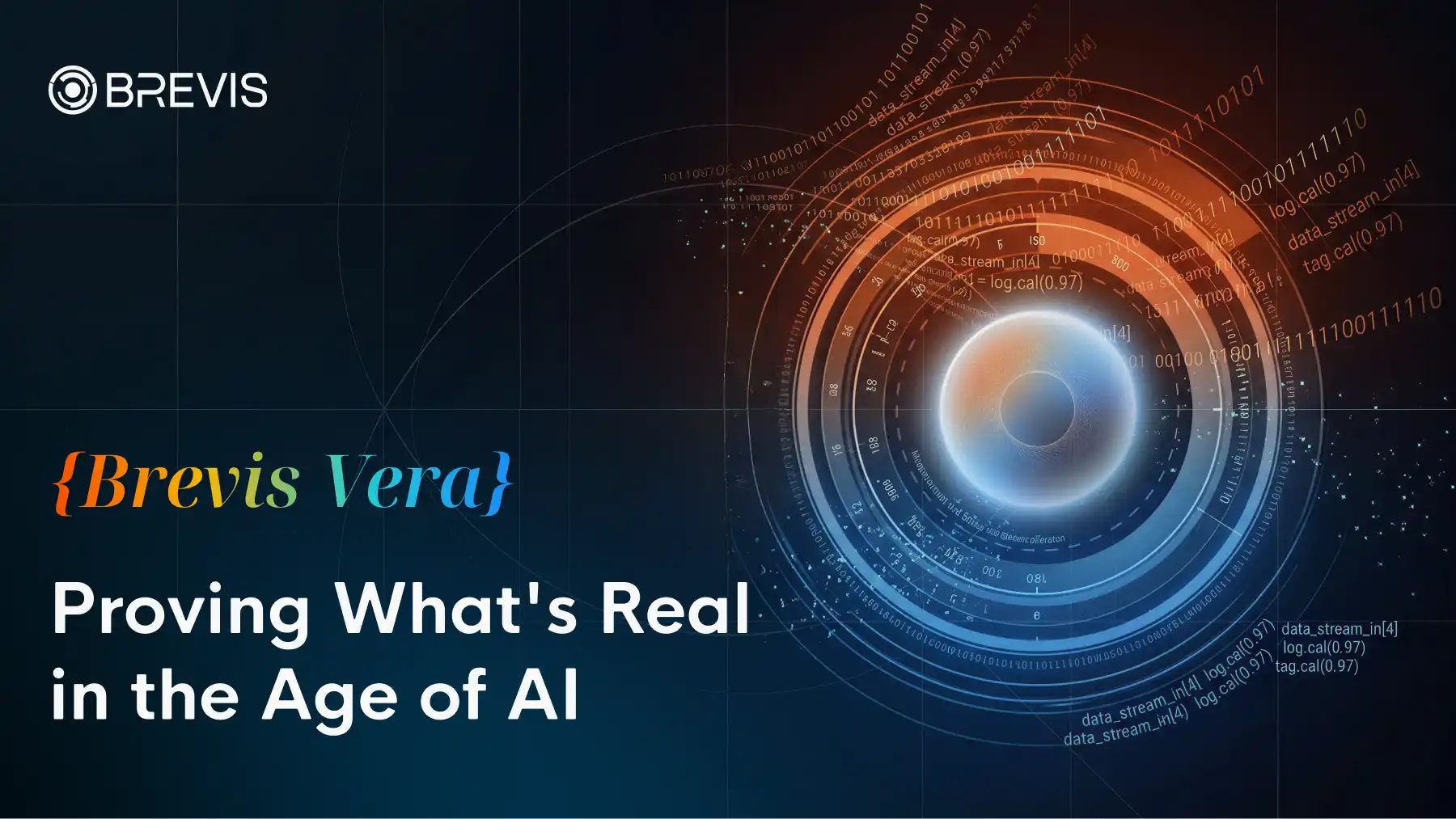
Brevis Vera is Now Live: Proving "Authenticity" in the Age of AI

Brevis Vera is an end-to-end media authenticity system that enables anyone to verify whether a published image or video originates from a real device and has been edited only in provable, compliant, and legitimate ways. It combines hardware-backed C2PA credentials—which cryptographically bind media to its source device at the time of capture—with zero-knowledge proofs (generated via Brevis Pico zkVM) that attest to the integrity of the entire editing process. Unlike AI-based deepfake detection methods, which are reactive and often lag behind generative advances, Vera takes a proactive approach by allowing media to cryptographically prove its origin and the transformations it has undergone. It addresses the "editing gap" where traditional signatures break after any modification, such as cropping or color adjustment. Vera integrates with open-source editing tools to generate proofs that verify three key claims: the output is derived from the signed original, only permitted edits were applied, and no hidden or malicious changes were introduced. The proofs are generated locally, verifiable by anyone, and preserve the privacy of both the source material and the editing workflow. The system is now live, with initial support for common image transformations. Brevis is working to integrate Vera into mainstream consumer editing applications and has open-sourced the reference implementation.

marsbit03/09 12:37

Brevis Vera is Now Live: Proving "Authenticity" in the Age of AI

marsbit03/09 12:37

New Challenges Posed by Prediction Markets to Political Elections

Predictive markets are increasingly influencing political elections, presenting new challenges for campaign teams. While polls have long shaped electoral narratives, donor confidence, and internal decisions, predictive markets introduce a different mechanism and incentive structure. Media outlets may now cite market-based probabilities, forcing campaigns to develop consistent responses. These markets reflect traders’ informed guesses rather than ground-level voter sentiment, and it remains unclear whether they function as leading or lagging indicators—or merely capture market sentiment. Internally, ethical and operational questions arise. Campaign personnel with access to non-public information (e.g., internal polls, strategy) could engage in trading that blurs the line between speculation and insider advantage. Although platforms like Kalshi enforce rules against insider trading, anonymity complicates enforcement. Conversely, predictive markets could theoretically serve as a hedging tool for staff facing electoral uncertainty. Market manipulation is a concern, though liquid markets are generally resilient against sustained manipulation. As predictive markets become embedded in media coverage and donor discussions, campaigns must proactively develop communication strategies, internal policies, and monitoring mechanisms rather than reacting passively. Preparing now will allow teams to better navigate this emerging element of the political information environment.

marsbit03/09 08:50

New Challenges Posed by Prediction Markets to Political Elections

marsbit03/09 08:50

活动图片