Artículos Relacionados con Legal Risk

El Centro de Noticias de HTX ofrece los artículos más recientes y un análisis profundo sobre "Legal Risk", cubriendo tendencias del mercado, actualizaciones de proyectos, desarrollos tecnológicos y políticas regulatorias en la industria de cripto.

Even CZ Praised Hyperliquid as 'Awesome', But Its Biggest Moat Might Also Be Its Biggest Risk

In an episode of Galaxy Brains, Binance founder CZ praised Hyperliquid as "awesome" but clarified that while its product is strong, Binance cannot compete in its specific niche due to Hyperliquid's no-KYC, decentralized model. CZ noted he would not personally operate such a model, highlighting the inherent legal and compliance risks tied to its access advantage. The discussion underscores a core market structure conflict: on-chain perp platforms like Hyperliquid thrive on open, low-barrier access, which regulated exchanges like Binance cannot replicate without abandoning their global compliance posture. However, this very advantage makes Hyperliquid a clear target for regulatory scrutiny. The UK FCA has already issued a warning against Hyperliquid for potentially offering unauthorized services to UK users, framing it as a financial services provider rather than neutral infrastructure. Historical cases like the CFTC's action against bZeroX and Ooki DAO further illustrate that regulators may pursue decentralized structures if they facilitate leveraged trading for retail users without proper controls. Meanwhile, regulated venues like Cboe are developing US-compliant "continuous futures" that mimic perpetual exposure, narrowing the product gap. Hyperliquid's long-term edge may increasingly hinge on its access model—the very feature most exposed to regulatory pressure. The key question is whether its "access premium" can withstand escalating legal challenges as on-chain perps gain mainstream attention.

marsbit06/25 08:32

Even CZ Praised Hyperliquid as 'Awesome', But Its Biggest Moat Might Also Be Its Biggest Risk

marsbit06/25 08:32

Detained for 37 Days: The First Wave of People Who Got Rich from 'AI Gateways' Are Starting to Go to Jail

A prominent AI proxy service operator was reportedly detained for 37 days and is now on bail pending trial, highlighting the legal risks in China's booming but unregulated AI intermediary market. These services act as "AI scalpers," providing domestic users with access to restricted overseas models (like OpenAI, Claude) by bundling APIs, handling payments, and bypassing network blocks, all for a fee. Their controversial profitability stems from practices like bulk-registering accounts to resell free credits, exploiting refund policies, overcharging for tokens, substituting cheaper models, and illegally selling user conversation data. Major figures, including cryptocurrency entrepreneurs, are now entering this space. Legally, these operations face severe risks. Their core model often involves unauthorized API access and operating without required telecom licenses, potentially constituting illegal business operations. They fail to meet data security obligations for the vast amounts of user data they process, risking charges for failing to fulfill network security duties. Crucially, the unauthorized collection and sale of user data, which can include personal and commercial secrets, easily meets the threshold for the crime of infringing on personal information. The case underscores a critical juncture for the AI industry. While proxies lower access barriers, they expose user data to unsecured middlemen and undermine the business models of AI developers, forcing them to divert resources to security and distorting market value perceptions. The article argues that the industry's sustainable future depends on building trust, protecting data, and fostering compliant competition, moving away from its current "wild growth" phase.

marsbit05/21 14:40

Detained for 37 Days: The First Wave of People Who Got Rich from 'AI Gateways' Are Starting to Go to Jail

marsbit05/21 14:40

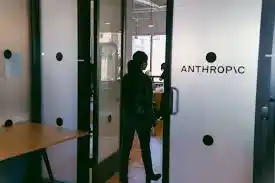
Conversation with Patagon Founder: Revealing the Inside Story of Anthropic's Secondary Market

**Summary: Inside Anthropic's Massive, Opaque Secondary Market** In a revealing interview, Patagon founder Dio Casares pulls back the curtain on the booming, high-risk secondary market for shares in companies like Anthropic. This private market, fueled by companies staying private longer and massive funding rounds, is estimated to involve hundreds of billions of dollars. Casares distinguishes between two types of "secondary" trading: 1. **Company-approved SPV (Special Purpose Vehicle) sales:** Where new capital flows into the company, often facilitated by select private equity firms. Anthropic supports this to manage liquidity and pre-IPO selling pressure. 2. **The "gray" market:** Platforms like Hive and Forge that match buyers and sellers, often creating pricing confusion and competing with official funding rounds. These intermediaries are widely disliked by companies. The market structure is complex and fragmented, relying heavily on personal connections. Brokers connect buyers and sellers, often layering multiple SPVs to pool capital, with single transaction fees as high as 10%. Strikingly, some finance professionals earn more from this trading than from their primary investment roles. **Key risks highlighted include:** * **High Fraud Rates:** An estimated 10-20% of transactions involve fake stock certificates or sellers who take payment without having the shares. * **Complex, Risky Structures:** Nested SPVs, "forward contracts" on employee equity, and tokenized private equity create layers of opacity. This is exemplified by a recent incident where an xAI employee's shares were revoked after an espionage allegation, leaving buyers empty-handed. * **Post-IPO "Settlement Hell":** After an IPO, delays in distributing shares through multiple SPV layers and decisions by fund managers to hold onto shares could trigger years of lawsuits as downstream investors are locked out. **For small investors** holding positions through tokenized vehicles or layered SPVs, it's often impossible to verify the underlying asset. Casares advises caution: if the investment feels wrong, consider exiting. As the private market now surpasses IPO fundraising, this "wild west" ecosystem faces a looming reckoning. While it will likely professionalize, the post-IPO period for a company like Anthropic could unleash a wave of disputes, exposing the vulnerabilities built into this frenzied, largely unregulated marketplace.

marsbit05/17 01:08

Conversation with Patagon Founder: Revealing the Inside Story of Anthropic's Secondary Market

marsbit05/17 01:08

How OTC Merchants Step into the Trap of 'Illegal Business Operation Crime' Step by Step

OTC商家 selling virtual currencies like USDT for profit can inadvertently receive funds linked to illegal foreign exchange activities, leading to potential criminal charges such as Illegal Business Operations or Concealment of Crime Proceeds. This article, based on a real case handled by lawyer Shao Shiwei, discusses how such traders may face legal risks when funds from underground banks involved in unauthorized forex trading enter their accounts during routine transactions. The key issue is whether OTC traders should bear criminal responsibility solely for receiving such funds. Authorities may treat them as accomplices in illegal forex operations, but the traders’ actual role, intent, and awareness must be carefully evaluated. A referenced case illustrates differentiated handling: individuals directly involved in illegal forex were convicted, while those merely providing accounts without clear profit motives or direct participation were not prosecuted. The profit from virtual currency trading differs fundamentally from illegal forex gains; the former stems from market fluctuations, while the latter involves facilitating cross-border transfers. If no intent to assist illegal activities is proven, charges may not apply. Alternatively, Concealment of Crime Proceeds charges require proof that the funds were criminal proceeds and that the trader knowingly handled them. Factors like transaction frequency, anomalies, and prior knowledge are considered, but hindsight alone isn’t sufficient for conviction. In summary, while trading virtual currencies isn’t illegal, involvement with illicit fund sources creates significant risks. Case outcomes depend on evidence regarding the trader’s awareness and role, emphasizing the need for individualized legal assessment.

marsbit03/05 14:32

How OTC Merchants Step into the Trap of 'Illegal Business Operation Crime' Step by Step

marsbit03/05 14:32

The Gray Business of 'Cash for Crypto': How Part-Time Jobs Become Money Laundering Channels for Black Market

This article exposes a growing gray market scheme in China, particularly in Guangdong and Shenzhen, where seemingly legitimate part-time jobs are being used as a front for money laundering operations. Criminals recruit often highly educated but risk-unaware young people through platforms like Xianyu, offering "cash for crypto" or "offline crypto exchange" gigs. The task involves receiving RMB in one's personal bank account, converting it to Hong Kong dollars, and then purchasing stablecoins like USDT at designated Hong Kong OTC crypto shops to transfer to specified wallets. Lawyers Deng Xiaoyu and Huang Wenjing from Mankun Law Firm explain that participants unknowingly become a key "human courier" link in money laundering chains, moving illicit funds from crimes like telecom fraud. Once the funds are identified as illegal, participants face frozen bank and social payment accounts, severe disruption to their lives, and potential criminal charges for offenses like money laundering or assisting information network crimes. The OTC shops in Hong Kong are targeted due to regulatory gaps, the anonymity of cash transactions, and the complex financial environment that helps obscure fund trails. The article warns the public to avoid any兼职 (part-time work) involving handling money, account operations, or crypto exchanges for others, as these are almost certainly illicit. Key red flags include being asked to provide personal bank cards, withdraw cash, convert cash to crypto, or being assured the activity is "legal in Hong Kong." The core advice is to reject any offer that uses an individual as a "funds channel."

比推01/27 06:44

The Gray Business of 'Cash for Crypto': How Part-Time Jobs Become Money Laundering Channels for Black Market

比推01/27 06:44

活动图片