Artículos Relacionados con Identity Verification

El Centro de Noticias de HTX ofrece los artículos más recientes y un análisis profundo sobre "Identity Verification", cubriendo tendencias del mercado, actualizaciones de proyectos, desarrollos tecnológicos y políticas regulatorias en la industria de cripto.

Tiger Research: AI Agents Will Now Need Identity Verification

Tiger Research: AI Agents Now Need "ID Verification" AI agents are increasingly capable of autonomously executing contracts, making payments, and conducting trades. However, a critical issue remains unresolved: how to verify the identity of the agent on the other side of a transaction. This article examines the emerging competition to establish a KYA (Know Your Agent) standard and the current state of regulatory progress. **Core Points:** 1. As AI agents operate independently in A2A (agent-to-agent) scenarios, the focus shifts from KYC (Know Your Customer) to KYA for identity verification. 2. KYA is not universally required; it's essential primarily when independently deployed agents interact with open ecosystems like DEXs, engage in A2A payments, or pay merchants, not within centralized platforms. 3. A standards battle is underway, with four key players approaching KYA from different angles: * **ERC-8004:** A blockchain-native approach, creating agent IDs as NFTs with on-chain registries for identity, reputation, and validation. * **Visa TAP:** Leverages Visa's payment network to issue verified "Agent Intent" credentials, bundling agent identity into its payment rails. * **Trulioo:** Adapts the SSL certificate model to issue dynamic "Digital Agent Passports," verifying both developer (KYB) and user (KYC) credentials. * **Sumsub:** Focuses on real-time risk detection and re-verification of the human behind an agent during suspicious transactions, rather than pre-issuing certificates. 4. Regulatory momentum is building. The EU AI Act, the U.S. NIST, and Singapore's national AI governance framework are prioritizing agent identity management. The rollout of KYA standards is likely to follow a pattern similar to the FATF Travel Rule, becoming a watershed moment for the industry. The market is unlikely to have a single winner. Different approaches will dominate specific niches: ERC-8004 for on-chain autonomous transactions, Visa TAP for payment-bound commerce, Trulioo for regulated finance, and Sumsub for fraud-prone scenarios. The key differentiator will be which players successfully integrate their identity infrastructure earliest as adoption scales.

marsbit05/09 06:56

Tiger Research: AI Agents Will Now Need Identity Verification

marsbit05/09 06:56

Digital Banks No Longer Rely on Banking for Profit; The Real Goldmines Are Stablecoins and Identity Verification

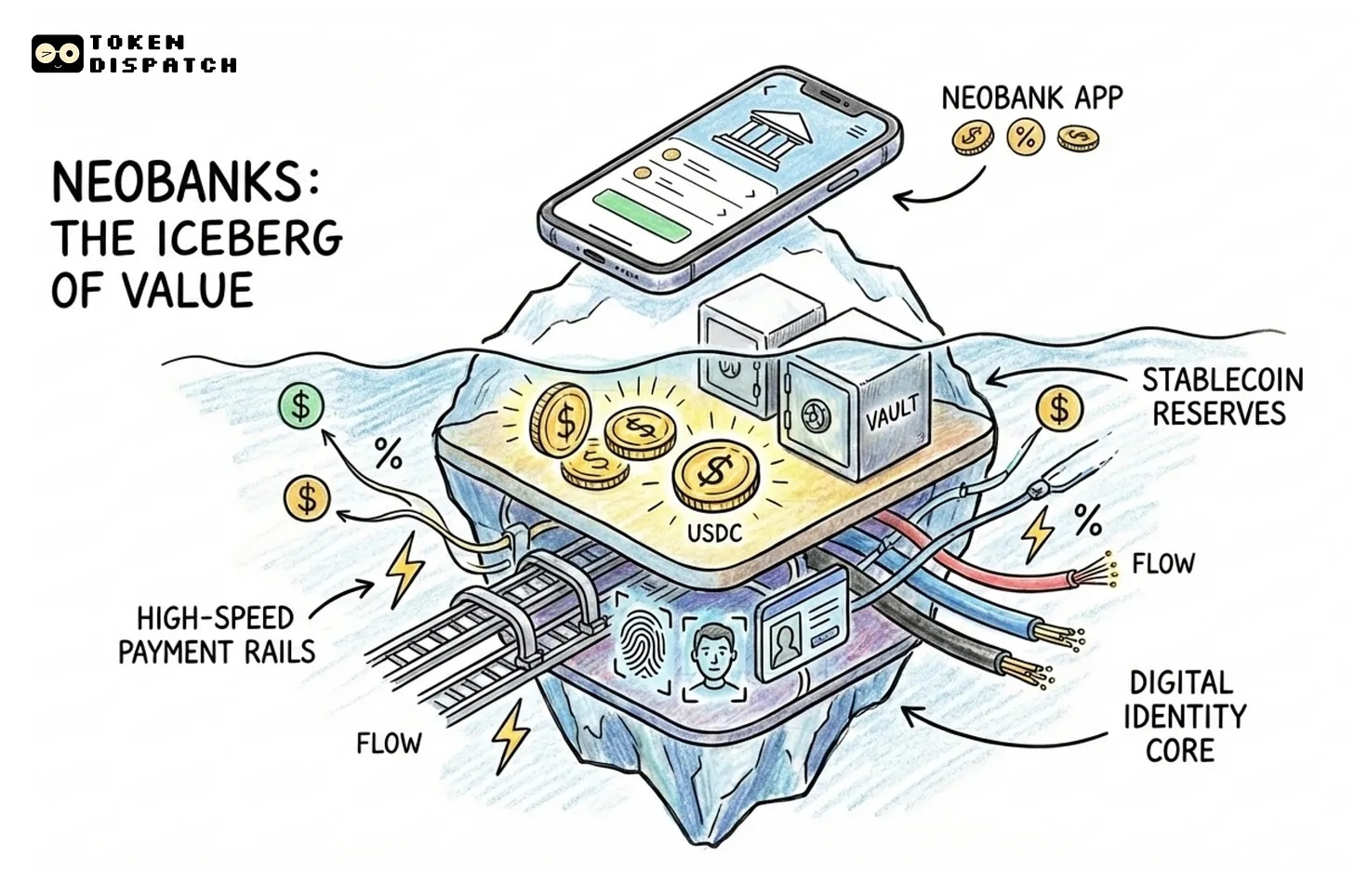
Digital banks are no longer competing on user scale but on revenue per customer, as seen in Revolut's diversified income streams versus Nubank's reliance on credit. The real value lies in stablecoins and identity authentication. Stablecoins, especially those backed by reserves, generate profit from interest on assets like treasury bonds—a revenue stream captured by issuers, not front-end platforms. This has pushed firms like Stripe and Circle to build proprietary settlement networks (e.g., Tempo, Arc) to control profitability, privacy, and transaction efficiency. Stablecoins disrupt traditional payment systems by enabling direct, low-cost transfers, forcing digital banks to integrate stablecoin channels or become obsolete. Simultaneously, identity authentication is evolving into a portable, cross-platform system. Initiatives like the EU Digital Identity Wallet and crypto projects (Worldcoin, Gitcoin Passport, Polygon ID) aim to create reusable digital identities, reducing redundant KYC processes. This shifts digital banks from controlling identity to becoming service providers within a trusted identity framework. Future digital banks will succeed by focusing on one of three models: 1. **Interest-driven**: Profit from user deposits via stablecoin interest and staking. 2. **Payment flow-driven**: Generate revenue from high transaction volumes as the default transfer channel. 3. **Infrastructure-driven**: Control stablecoin issuance, reserves, and settlement for the highest profitability. The market will split between consumer-facing apps (low switching costs) and infrastructure players (high stickiness, core to value flow).

marsbit12/15 10:05

Digital Banks No Longer Rely on Banking for Profit; The Real Goldmines Are Stablecoins and Identity Verification

marsbit12/15 10:05

Digital Banks Are No Longer in the Banking Business; The Real Gold Mine Lies in Stablecoins and Identity Verification

The article argues that the core value of digital banking has shifted away from traditional models. Valuation is no longer driven by user numbers but by revenue per customer, as seen with Revolut's diversified income streams versus Nubank's reliance on credit. The true "gold mines" are now stablecoins and identity verification. For stablecoins, the primary profit is the interest earned on reserve assets (like Treasury bills), a revenue stream captured by the issuer (e.g., Circle) rather than the consumer-facing digital bank. This is leading to vertical integration, with companies like Stripe and Circle building proprietary settlement networks (Tempo, Arc) to control this profitable infrastructure and ensure privacy. Stablecoins are disrupting the old, multi-layered payment system by enabling direct, peer-to-peer transfers, forcing digital banks to become efficient routing layers for these transactions or risk obsolescence. Simultaneously, identity is becoming the new account core. The trend is moving away from siloed KYC processes towards portable, verifiable credentials (e.g., EU's Digital Identity Wallet, Worldcoin, Polygon ID). This will allow a user's identity to travel across platforms, simplifying compliance and making the crypto wallet the central hub for assets and identity. The article concludes that user count, cards, and UI are no longer competitive advantages. Future successful digital banks will be "wallet-first" systems, falling into one of three models: 1. **Interest-driven:** Profit from holding user stablecoin balances and earning yield on reserves. 2. **Payment-flow-driven:** Profit from facilitating a high volume of stablecoin transactions. 3. **Stablecoin infrastructure-driven:** The most profitable model, controlling the issuance, reserves, and settlement of stablecoins itself. The market will split between simple consumer apps and powerful infrastructure providers that control the core of the financial stack.

深潮12/15 09:52

Digital Banks Are No Longer in the Banking Business; The Real Gold Mine Lies in Stablecoins and Identity Verification

深潮12/15 09:52

活动图片