ChangXin Technology: A Cyclical Stock Standing Atop the Cycle Peak

marsbitPublicado a 2026-07-29Actualizado a 2026-07-29

Resumen

Changxin Technology: A Cyclical Stock at the Peak On July 27, 2026, Changxin Technology topped the A-share market with a market capitalization of 3.28 trillion yuan, surging 465% on its first trading day. The company, which lost 16.3 billion yuan in 2023, reported an estimated net profit of 50-57 billion yuan for the first half of 2026. Its dramatic reversal mirrors the volatile DRAM (Dynamic Random Access Memory) cycle. The DRAM industry is inherently cyclical, with booms and busts every 3-4 years. This is due to product standardization and a significant time lag in supply adjustment. When prices rise, manufacturers expand capacity, but new production takes 2-3 years to come online, often leading to oversupply and price crashes when demand cools. Changxin's performance perfectly tracks this cycle. It recorded deep losses in 2023-2024 during the industry downturn, turned its first annual profit in 2025, and saw profits skyrocket in Q1 2026. This surge is primarily price-driven. The AI boom has led major players like Samsung and SK Hynix to shift 70-80% of new capacity to high-margin HBM (High Bandwidth Memory), creating a severe shortage and price explosion in general-purpose DRAM markets where Changxin competes. However, a massive global capacity expansion is underway. The top three manufacturers have announced nearly $70 billion in capital expenditure for 2026. Changxin itself plans to expand from three to seven 12-inch wafer fabs. This investment will translate into si...

Article | Zhi Xie Dao, Author | Shen Huaizheng

On July 27, 2026, ChangXin Technology topped the A-share market with a market capitalization of 3.28 trillion yuan. On its first day of trading, its stock price surged 465%, with trading volume reaching 141.1 billion yuan, setting a new A-share historical record.

A company that reported a loss of 16.3 billion yuan in 2023 achieved a stunning reversal in just over two years, with projected net profit for the first half of 2026 estimated between 50 billion and 57 billion yuan.

Retail investors swarmed to subscribe, institutions competed to grab shares, Hefei State-Owned Assets saw floating profits exceeding one trillion yuan, and thousands of employees joined the ranks of millionaires. Driven by the dual narratives of domestic substitution and AI dividends, market sentiment was pushed to extremes.

Whether ChangXin Technology is worth three trillion yuan depends on how one views its identity.

If it is a growth stock, AI-driven demand growth and the vast space for domestic substitution are sufficient to support a high valuation. If it is a cyclical stock, then the current peak profit levels corresponding to peak-cycle pricing paint a different picture.

The greatest common denominator between these two perspectives points to an unavoidable question: Is ChangXin Technology's explosive performance due to a qualitative change in the company's fundamentals, or is it a gift from the industry cycle?

ChangXin Technology's performance curve is a perfect mirror of the DRAM cycle.

I. DRAM DNA: An Industry Unable to Escape the Cycle

Understanding ChangXin Technology requires first understanding the endogenous laws of the DRAM industry.

DRAM, or Dynamic Random-Access Memory, is a fundamental component indispensable to all electronic devices like mobile phones, computers, and servers. It sounds like a stable business, but in fact, it is known for its severe cyclical fluctuations, completing a cycle from prosperity to recession approximately every three to four years.

This cyclicality is rooted in two structural characteristics of the industry.

First, DRAM products are highly standardized. Chips of the same specifications produced by different manufacturers have almost no functional difference; customers only care about price and supply stability. This means the essence of competition is a contest of scale and cost. Whoever has greater capacity, higher yield, and lower unit cost can survive price wars.

Second, adjustments on the supply side suffer from significant time lags. Building a wafer fab takes two to three years, and another one to two years from production start to yield ramp-up. When prices rise, all manufacturers simultaneously initiate capacity expansion, but these new capacities only translate into actual supply two to three years later. By the time capacities are concentratedly released, demand may have already cooled, leading to oversupply and price crashes.

The combination of these two factors causes the DRAM industry to perpetually swing like a pendulum between shortage and surplus. This is unrelated to management level or strategic choices; it is an inevitable law determined by the industry's underlying structure.
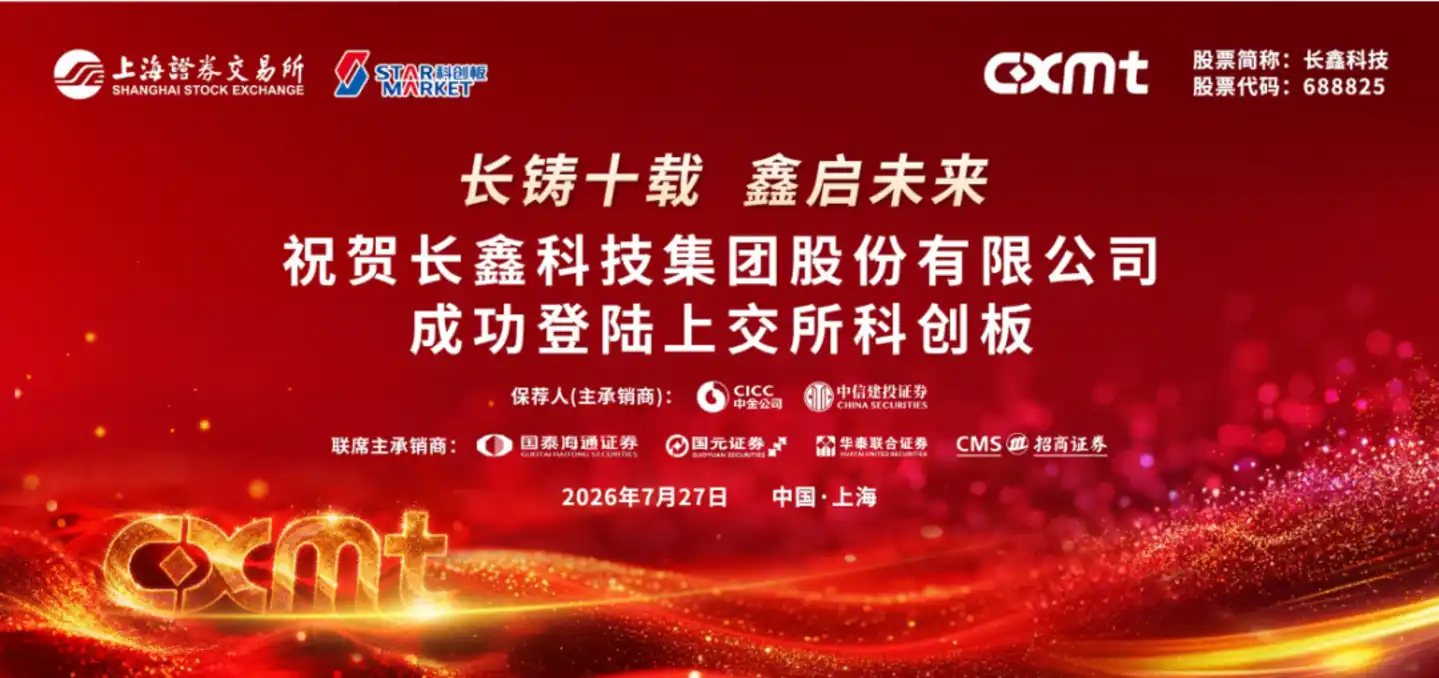
Image Source: ChangXin Technology

ChangXin Technology's growth trajectory has precisely and completely experienced such a cycle. In 2023, when the industry bottomed out, the company's revenue was only 9.087 billion yuan, with a net loss attributable to shareholders as high as 16.34 billion yuan. In 2024, the market began to recover, narrowing the loss to 7.145 billion yuan. In 2025, the explosion of AI demand triggered storage price hikes, with revenue jumping to 61.799 billion yuan and achieving its first annual profit of 1.875 billion yuan.

By the first quarter of 2026, its single-quarter net profit attributable to shareholders soared to 24.762 billion yuan—thirteen times the profit of the entire year 2025.

Going from a loss of tens of billions to earning 300 million per day took only two years. Such a speed of reversal is the most typical performance characteristic of a cyclical stock. Placing the DRAM price trend chart alongside ChangXin's profit curve shows almost perfectly aligned movements.

The steep profit climb did not stem from a sudden market share shift due to technological generational leaps; it was a systemic红利 release granted by the industry to all incumbents.

II. The Cycle Pendulum: How Long Can the Price Rise Last?

The core driver of this surge in performance boils down to one word: price.

In the first quarter of 2026, DRAM contract prices rose by 93% to 98% quarter-on-quarter. In the second quarter, general-purpose DRAM contract prices continued to rise by 58% to 63%. The company's gross profit margin consequently leapt from -2.19% in 2023 to 41.02% in 2025, approaching 65% in Q1 2026. The vast majority of the profit explosion came from the price surge.

The root cause of the price increase lies in the reallocation of capacity triggered by AI.

The three giants—Samsung, SK Hynix, and Micron—allocated 70% to 80% of their new capacity to HBM, the High Bandwidth Memory most critical for AI servers, which yields far higher profits than general-purpose products. This directly led to a significant contraction in the supply of general-purpose DRAM. Simultaneously, the DRAM demand for AI servers is eight to ten times that of traditional servers.

With supply being siphoned away and demand multiplying, a supply-demand gap was torn open. The money ChangXin earned in this round essentially came from the market space released when giants shifted production to HBM—it's the territory yielded by industry leaders pursuing higher profits.

However, the reverse movement of the cycle is already gathering force.

A wave of capacity expansion is sweeping the globe. The combined capital expenditure of the three giants is approaching $70 billion: Samsung's total investment in 2026 exceeds 110 trillion won, breaking the 100 trillion won mark for the first time; SK Hynix's capital expenditure is projected at $20.5 billion; Micron's capital expenditure for fiscal year 2026 is expected to exceed $25 billion, a year-on-year increase of over 80%.

ChangXin itself is also expanding, planning to grow from its current three 12-inch wafer fabs to seven, with a new Shanghai factory expected to commence operations in 2027.

Massive capital expenditure signifies a cliché yet harsh reality: today's high prices are breeding tomorrow's oversupply.

It takes two to three years for a wafer fab to be built and reach mass production. Every dollar invested today will translate into specific capacity figures in the next two to three years. When these new capacities are concentratedly released, whether demand remains robust is a question all storage manufacturers must face squarely.

The pace of price increases is also changing. TrendForce predicts that DRAM contract price increases will narrow to 13% to 18% in the third quarter of 2026. Downstream customers' wallets are stretched thin; some manufacturers are beginning to cut configurations or lower shipment forecasts.

Although prices are still rising, the slope has noticeably flattened. Multiple institutions judge that from the second half of 2026 to 2027, DRAM contract prices will maintain a high level with fluctuating increases, but the rate of increase will gradually narrow. Around 2028, as overseas new factory capacities complete their ramp-up, the supply-demand relationship may reverse and enter a downward channel.

The most critical variable in this process is HBM itself. HBM is currently the most profitable and rapidly growing segment of the memory market, and also ChangXin's most obvious shortcoming. ChangXin's HBM3 samples have been delivered to leading customers for verification, with mass production expected in 2026. However, Samsung and SK Hynix are already mass-shipping the more advanced HBM3E and moving towards HBM4.

The gap objectively exists; catching up takes time, and the cycle's pendulum won't stop and wait. Whether ChangXin can successfully tackle the HBM challenge before the next price decline determines whether it merely enjoyed this round's price increase红利 or truly gained the ability to穿越 cycles.

III. Conclusion

ChangXin Technology is a good company; this is beyond doubt.

It broke the monopoly of overseas giants in the DRAM market over a decade, giving China genuine话语权 in the global storage industry; its business is about the infrastructure of the digital economy; its growth is related to the security and autonomy of the national supply chain.

From an industrial perspective, ChangXin's rise is one of the most significant breakthroughs worthy of documentation in China's semiconductor field.

However, between a good company and a good investment often lies a清醒 recognition of the cycle.

In today's market, ChangXin Technology simultaneously carries two different narratives.

One narrative views it as a growth stock: vast space for domestic substitution, continuously climbing global market share, AI红利 just beginning to be released—these stories are real, forming the solid foundation for ChangXin's long-term value.

The other narrative views it as a cyclical stock: calculated based on projected 2026 profits, the dynamic price-to-earnings ratio is about 5 to 6 times,恰好 falling within the typical valuation range for cyclical stocks at peak prosperity; a market capitalization of 3.28 trillion yuan has already提前 digested growth expectations for many years to come.

These two judgments are not contradictory. ChangXin is an excellent company while also being a typical cyclical stock.

The cycle of the DRAM industry will not disappear because of the rise of a Chinese company. AI has indeed extended the duration of this cycle, but it has only changed the slope; it has not eliminated the cycle itself.

For investors, facing a cyclical stock at the peak of the cycle, what truly requires deep thought is: When the tide recedes, will there be sufficient preparation to handle the pullback?

Criptos en tendencia

Preguntas relacionadas

QAccording to the article, what are the two key structural characteristics of the DRAM industry that create its inherent cyclical nature?

AThe two key structural characteristics are: 1. DRAM products are highly standardized, with competition based primarily on scale and cost. 2. Supply adjustments have a significant time lag, as building and ramping up a new wafer fab takes several years, often leading to supply overshooting demand.

QWhat is identified as the primary driver behind ChangXin Technology's dramatic profit surge from 2023 to 2026 Q1?

AThe primary driver is the sharp increase in DRAM prices. The article states that the core reason for the profit surge is essentially one word: 'price'. The profit growth is largely attributed to price increases driven by AI-induced supply shortages.

QHow has the AI boom specifically affected the supply and demand dynamics for general-purpose DRAM, creating the opportunity for ChangXin?

AThe AI boom has redirected the major global memory makers (Samsung, SK Hynix, Micron) to allocate 70-80% of their new capacity to HBM production, which is more profitable. This has severely contracted the supply of general-purpose DRAM. Meanwhile, the demand for DRAM in AI servers is 8-10 times that of traditional servers. This supply-demand gap is the opportunity ChangXin captured.

QWhat is the author's view on whether AI has eliminated the cyclical nature of the DRAM industry for ChangXin Technology?

AThe author believes AI has not eliminated the cycle. The view is that 'AI has indeed extended the duration of this cycle and changed its slope, but it has not eliminated the cycle itself.' The inherent cyclicality of the DRAM industry remains.

QWhat two contrasting narratives does the market hold about ChangXin Technology according to the article's conclusion?

AThe market holds two narratives: 1. A growth stock narrative, focusing on its vast domestic substitution potential, rising global market share, and the early stages of AI红利 (AI红利). 2. A cyclical stock narrative, where its current high valuation at the peak of the cycle already prices in years of future growth, and its P/E ratio is typical for a cyclical stock at a peak.

Lecturas Relacionadas

The Semiconductor Industry's Most Obscure Chokepoint Material: It Has Multiplied in Price Unnoticed, and China Just Banned Its Export

"Helium: The Silent Choke Point in Semiconductors" Helium, despite being the universe's second most abundant element, is critically scarce on Earth. It cannot be synthesized artificially and escapes Earth's gravity once released, making it a non-renewable resource. Yet, it is indispensable for advanced semiconductor manufacturing, requiring ultra-high purity (99.9999%) for processes like wafer etching, leak detection, and thermal management in lithography tools, with no viable substitutes. This low-profile resource, whose price has doubled unnoticed, suddenly gained attention when China imposed an export ban on July 10th. The ban is a response to a severe global shortage triggered months earlier. In March, missile attacks damaged the world's largest helium production hub in Qatar's Ras Laffan, halting a third of global supply with repairs expected to take 3-5 years. Concurrently, Russia tightened export controls, and the US sold off its federal helium reserve. Approximately 200 specialized transport containers, each worth ~$1 million, were stranded with perishable cargo. Global spot prices skyrocketed, and chipmakers like TSMC warned of potential impacts. China, which imports over 84% of its helium (primarily from Qatar and Russia), faces a severe squeeze. Despite being helium-poor, China has developed domestic extraction technology over five years, processing byproduct gases from LNG plants to produce ultra-pure helium. Domestic output, while still only covering less than 20% of demand, enabled the recent export ban aimed at securing domestic supply for its own expanding chip industry. The industry now faces "Helium Shortage 5.0." With key global sources constrained for years, this invisible gas—once wasted on party balloons—has become a critical, geopolitically charged bottleneck for chips, healthcare (MRI machines), and beyond, forcing the world to finally treat it as the finite strategic resource it is.

marsbitHace 25 min(s)

The Semiconductor Industry's Most Obscure Chokepoint Material: It Has Multiplied in Price Unnoticed, and China Just Banned Its Export

marsbitHace 25 min(s)

Early Investor of Unitree Bets on a Brain-Computer Interface Company

"Wabo Technologies, a brain-computer interface (BCI) startup, has secured new funding from Vertex Ventures (under Temasek), Hongtai Fund, Chengdu Future Industry Fund, and Huifengda Capital. Vertex Ventures is known for its early bet on Unitree Robotics. Inspired by the sci-fi film "Avatar," founder Zhang Xingzhi has pursued human-machine interaction for over a decade. He established Wabo in late 2025, coinciding with China's push for BCI as a future industry. Unlike companies focused solely on medical hardware, Wabo positions itself as a model company. Its core mission is to develop a "Human Neural Intent Model" that decodes EEG, EMG, and behavioral signals to understand a user's goals, confirmations, corrections, and stop intentions before physical action, translating them into standardized control signals for machines, robots, or smart devices. The young, full-stack team, backed by academic collaborators from Tianjin University and Fudan University, quickly attracted investors. The company had previously raised a seed round from Ceyuan Capital. Investors were impressed by Wabo's systematic capabilities in data collection, signal processing, and engineering, seeing potential beyond a single hardware product toward a reusable layer of human intent interpretation. Applications span medical rehabilitation, smart homes, embodied AI, and even space exploration, with Wabo partnering with Tianjin University on pioneering "space BCI" research. Wabo plans a dual-headquarters strategy, with Shanghai focusing on high-end R&D and model development, and Chengdu handling hardware, product development, and supply chain. The BCI sector in China is heating up, with over 30 financing deals in early 2026. Zhang believes future competition will center on who can build a sustainable data-model-scenario loop. He predicts industry consolidation within three years, with only companies that master this闭环 surviving. The vision from "Avatar" is inching closer to reality."

marsbitHace 39 min(s)

Early Investor of Unitree Bets on a Brain-Computer Interface Company

marsbitHace 39 min(s)

What If the CLARITY Act Ultimately Fails to Pass?

This article examines the potential consequences if the CLARITY Act, a major US crypto market structure bill, fails to pass in the Senate. Having cleared the House in July 2025 and a key committee in May 2026, the bill's passage into law this year is now considered uncertain, with prediction markets showing its probability dropping from 82% in February to 35%. The article analyzes three main areas of impact should the bill fail. First, for the crypto market, analysts believe a negative reaction is limited and partially priced in already, with Bitcoin's recent weakness attributed more to macro factors. The specific details of the failed bill would matter more than its failure alone. Second, for US stocks, Coinbase (COIN) could see short-term pressure, with analysts citing a potential drop to the $140-$160 range, though its long-term thesis is not solely tied to the bill. For Circle, failure might be neutral or even positive long-term, as a passed bill could invite more stablecoin competition. Bitcoin-treasury firms like Strategy (MSTR) are seen as more directly tied to Bitcoin's price than the legislation. Third, in Washington, the failure is framed within a broader political struggle. Democratic resistance is partly linked to concerns over former President Trump's crypto holdings, making the bill a political tool. If it fails in 2026, the industry would likely rely on existing frameworks like the GENIUS Act and agency-level rules. Missing the August window likely pushes any significant progress to 2027, a period of political reshuffling after midterm elections, making consensus harder to achieve.

Odaily星球日报Hace 1 hora(s)

What If the CLARITY Act Ultimately Fails to Pass?

Odaily星球日报Hace 1 hora(s)

Trading

Spot

Artículos destacados

Cómo comprar DAO

¡Bienvenido a HTX.com! Hemos hecho que comprar DAO Maker (DAO) sea simple y conveniente. Sigue nuestra guía paso a paso para iniciar tu viaje de criptos.Paso 1: crea tu cuenta HTXUtiliza tu correo electrónico o número de teléfono para registrarte y obtener una cuenta gratuita en HTX. Experimenta un proceso de registro sin complicaciones y desbloquea todas las funciones.Obtener mi cuentaPaso 2: ve a Comprar cripto y elige tu método de pagoTarjeta de crédito/débito: usa tu Visa o Mastercard para comprar DAO Maker (DAO) al instante.Saldo: utiliza fondos del saldo de tu cuenta HTX para tradear sin problemas.Terceros: hemos agregado métodos de pago populares como Google Pay y Apple Pay para mejorar la comodidad.P2P: tradear directamente con otros usuarios en HTX.Over-the-Counter (OTC): ofrecemos servicios personalizados y tipos de cambio competitivos para los traders.Paso 3: guarda tu DAO Maker (DAO)Después de comprar tu DAO Maker (DAO), guárdalo en tu cuenta HTX. Alternativamente, puedes enviarlo a otro lugar mediante transferencia blockchain o utilizarlo para tradear otras criptomonedas.Paso 4: tradear DAO Maker (DAO)Tradear fácilmente con DAO Maker (DAO) en HTX's mercado spot. Simplemente accede a tu cuenta, selecciona tu par de trading, ejecuta tus trades y monitorea en tiempo real. Ofrecemos una experiencia fácil de usar tanto para principiantes como para traders experimentados.

208 Vistas totalesPublicado en 2024.12.11Actualizado en 2026.06.02

Cómo comprar DAO

Discusiones

Bienvenido a la comunidad de HTX. Aquí puedes mantenerte informado sobre los últimos desarrollos de la plataforma y acceder a análisis profesionales del mercado. A continuación se presentan las opiniones de los usuarios sobre el precio de DAO (DAO).

活动图片