Artículos Relacionados con Hardware

El Centro de Noticias de HTX ofrece los artículos más recientes y un análisis profundo sobre "Hardware", cubriendo tendencias del mercado, actualizaciones de proyectos, desarrollos tecnológicos y políticas regulatorias en la industria de cripto.

He Gave Wang Xingxing the First 2 Million, Now Serves as Chairman for the Next 'Unitree'

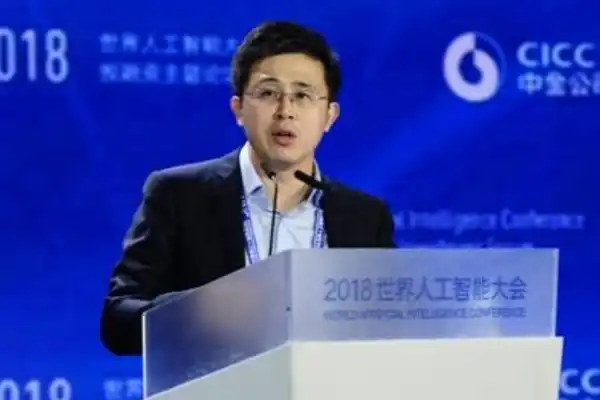
On August 19, 2024, Unitree Robotics, China's "first humanoid robotics stock," went public. Its founder, Wang Xingxing, started a decade ago with his self-developed XDog. In 2016, at a critical funding juncture, he received his first angel investment of 2 million RMB from Yin Fangming. This bet has since yielded a return of over 140 times. Yin Fangming is more than just a key investor. He was a co-founder of the AI robotics company ROOBO, whose own venture ultimately struggled. This firsthand experience with the hardware challenges in robotics gave him unique insight when backing Unitree, a company renowned for its hardware R&D and cost control. While his own company faltered, Yin continued investing shrewdly. He partially cashed out some Unitree shares early, reinvesting the proceeds into sectors like energy (e.g., solid-state battery firm TaiLan) and commercial aerospace (e.g., small launch vehicle developer XianDeng Aerospace). However, his most significant move after Unitree is his deep involvement with Galaxy General, a leading embodied AI unicorn. In July 2024, Yin stepped from behind the scenes to officially become its Chairman, indicating a role far beyond a typical investor. This comes as Galaxy General is viewed as preparing for future capital moves. Yin's career has consistently been ahead of the curve—from mobile internet to AI and robotics. Known for his foresight and low profile, he declined an interview for this story, offering only a statement encouraging support for visionary entrepreneurs like Wang Xingxing.

marsbitHace 2 días 07:21

He Gave Wang Xingxing the First 2 Million, Now Serves as Chairman for the Next 'Unitree'

marsbitHace 2 días 07:21

The 19 Must-Know Top Chinese and American Entrepreneurs Born After 2000 • The 21st-Century Successors Have Arrived

The 21st century's first generation of entrepreneurs, born in the 2000s, are already taking center stage. This analysis of publicly prominent founders reveals distinct trends between China and the U.S., shaped by their respective ecosystems. In China, young founders are heavily focused on giving AI a physical presence, tackling challenges in robotics and hardware. Examples include Huang Yi (RoboParty, humanoid robots), Qin Shentao (Yuanchen Taichu, embodied AI data infrastructure), and founders working on robotic hands, home cleaning robots, and computing power networks. Their paths often emerge from university labs and robotics competitions, prioritizing prototype demonstration, cost control, and manufacturing delivery. In contrast, their U.S. counterparts frequently leverage software, AI, and capital networks to rapidly reorganize digital services and information flows. Startups like Mercor (AI talent/data, reaching $10B revenue), Etched (AI chips), and various AI-powered SaaS tools for consumers and SMBs demonstrate a focus on user growth, subscription models, and global scalability. However, this velocity has also led to high-profile cases questioning business practices and credibility. The key differentiator for this generation is not merely youth, but the compressed early stage of venture creation. Access to open-source tools, AI models, mature supply chains, and willing venture capital allows them to bypass traditional career ladders. Yet, while technology lowers the barrier to product creation, it does not reduce the challenges of building a sustainable company—managing teams, ensuring reliable delivery, and establishing trust remain hard-earned skills. The article concludes that the true test for these founders will be the "second growth": evolving from product creators into responsible company leaders capable of sustained execution and organizational building. For established businesses, the rise of these fast-moving, technologically adept teams necessitates new strategies for collaboration, competition, and investment.

marsbit08/20 01:32

The 19 Must-Know Top Chinese and American Entrepreneurs Born After 2000 • The 21st-Century Successors Have Arrived

marsbit08/20 01:32

A Financing Showdown Among 9 "Giant-Firm Affiliated" Factions in Embodied AI, the Strongest "Brand" is Neither ByteDance, Baidu, nor DJI

The IT Orange report "China's Embodied AI Entrepreneur Ecosystem Portrait" reveals that "Big Tech background" is a major amplifier for funding in the embodied AI sector. Among 1155 entrepreneurs, over 300 had worked at Huawei, Microsoft, Baidu, Google, DJI, Alibaba, Tencent, ByteDance, or Xiaomi. Their 232 companies, constituting 20% of the industry, secured about half of total financing. A comparison of nine "Big Tech factions" shows Huawei leads in company count (26) and total funding (¥388.5B), excelling in hardware systems and engineering execution. Microsoft ranks second (¥339.2B) with the highest average funding per company (¥15.42B), driven by AI research talent. Baidu follows (¥270.2B) with expertise migrating from autonomous driving. Google (10 companies) has the second-highest average (¥15.09B), focusing on elite AI research. DJI (¥117.5B) demonstrates strong full-stack hardware capabilities, while ByteDance (¥99.5B) applies AI-native and product thinking. Tencent (¥102.3B) has a mixed profile of veterans and new talent, often acting as an investor. Alibaba (¥58.0B) and Xiaomi (¥28.2B) rank lower, with Alibaba's projects mostly early-stage and Xiaomi's leveraging its ecosystem's supply chain experience. Key findings indicate that a combined "hardware + AI" capability is crucial for funding, with pure internet backgrounds (e.g., Alibaba, Tencent) lagging. The ability to achieve mass production is a critical differentiator, as seen in DJI's strength versus ByteDance's earlier-stage ventures. Capital increasingly favors teams with both algorithmic strength and tangible hardware experience.

marsbit08/19 13:01

A Financing Showdown Among 9 "Giant-Firm Affiliated" Factions in Embodied AI, the Strongest "Brand" is Neither ByteDance, Baidu, nor DJI

marsbit08/19 13:01

Web3 Wallets in a 'Turbulent Autumn': In the AI Era, How to Understand the Evolution of 'Spear and Shield' in Crypto Security?

The recent spate of incidents involving Coldcard, Trezor, and SafePal highlights a critical evolution in cryptocurrency wallet security, moving the focus beyond simple private key protection to a holistic, multi-layered attack surface. These events—spanning a random number generator flaw, supply chain data leaks, and plugin permission issues—underscore that vulnerabilities now exist across the entire wallet lifecycle: from secure element and code generation to logistics, user data, and daily interactions with dApps. This broadening threat landscape is accelerating with the advent of AI. Attackers are leveraging AI to automate and scale previously labor-intensive tasks like vulnerability discovery, sophisticated social engineering, and targeted phishing campaigns. This effectively lowers the cost of attacks, eroding the security margin once provided by the high effort required to find and exploit flaws. In response, defense strategies must also evolve by integrating AI. The future of wallet security lies not just in static rules and blacklists, but in proactive, AI-powered risk assessment. This includes pre-transaction simulation, behavioral analysis to detect anomalies (like sudden large approvals), and contextual awareness of dApps and counterparties. The goal is to transform wallets from passive signing tools into active guardians that can understand intent, predict outcomes, and clearly communicate risks to users—all while preserving user sovereignty and control through minimal permissions and human confirmation for critical actions. Ultimately, self-custody does not guarantee inherent safety; it returns absolute control to the user. Protecting that control requires a dynamic, evolving security posture where AI becomes a essential tool on both sides of an ongoing "spear and shield" arms race in the Web3 ecosystem.

marsbit08/19 08:41

Web3 Wallets in a 'Turbulent Autumn': In the AI Era, How to Understand the Evolution of 'Spear and Shield' in Crypto Security?

marsbit08/19 08:41

Overnight, GPT-5.6 Sol Was Accelerated 14x by OpenAI

OpenAI, in collaboration with chipmaker Cerebras, has unveiled a limited preview of an "Ultrafast Mode" for its flagship GPT-5.6 Sol model. This new service tier reportedly achieves output speeds of up to 750 tokens per second—a 14x increase over the standard mode's baseline of ~53 tokens/s—without any loss in quality. Key to this acceleration is Cerebras's wafer-scale architecture (WSE-3), which houses model parameters entirely in on-chip SRAM to eliminate the memory bandwidth bottlenecks typical of traditional GPU clusters. In benchmark testing on the challenging "Humanity's Last Exam" (HLE), GPT-5.6 Sol in Ultrafast Mode answered all 2500 questions in 11 hours and 11 minutes, compared to over 78 hours for a competitor model, while maintaining similar accuracy. The speed boost also translated to a 5.6x faster end-to-end performance on the GDP-Val benchmark for economically valuable knowledge work. OpenAI highlights several potential applications for such rapid inference, including real-time event response and reliability analysis, dynamic financial research and security, complex customer support, interactive shopping assistance, and accelerated research and experimentation workflows that enable multiple iterative cycles within a single workday. This advancement may allow users to deploy the highest-tier models for tasks previously requiring slower secondary models, significantly compressing multi-step agent workflows from hours to minutes.

marsbit08/14 00:02

Overnight, GPT-5.6 Sol Was Accelerated 14x by OpenAI

marsbit08/14 00:02

From Text to Voice: Google, OpenAI, and Microsoft Invest Billions in AI Verbal Communication

Major tech companies Google, OpenAI, and Microsoft are heavily investing billions into AI-powered voice communication, anticipating a shift from text-based to spoken interaction with AI. Data shows a sevenfold increase in funding for voice AI startups in early 2026 compared to the same period in 2025. Google reports that voice and image queries now constitute over one-sixth of searches in the US, with visual searches growing monthly. OpenAI revealed that more than 150 million of its weekly ChatGPT users engage via voice. The company launched its full-duplex GPT-Live models, enabling simultaneous listening and responding, and is reportedly developing a screenless smart speaker. Microsoft introduced MAI-Voice-2, an expressive speech synthesis model with emotional control for 15 languages, integrated into its enterprise services. Key investment areas include voice/image-based search, full-duplex dialogue models, dedicated hardware for voice interaction, and emotionally controlled speech synthesis for business applications. This trend indicates voice interfaces are evolving from experimental features into a core AI development focus. However, rapid advancement brings regulatory challenges, such as potential requirements for AI to disclose its non-human nature immediately. The history of voice assistants also suggests caution, as previous cycles of high expectations, like with early Siri and Alexa, were followed by disappointing monetization. The success of this new wave hinges on whether these full-duplex models represent a genuine technological shift or another iteration in the hype cycle.

cryptonews.ru08/07 13:16

From Text to Voice: Google, OpenAI, and Microsoft Invest Billions in AI Verbal Communication

cryptonews.ru08/07 13:16

活动图片