Artículos Relacionados con Future Prediction

El Centro de Noticias de HTX ofrece los artículos más recientes y un análisis profundo sobre "Future Prediction", cubriendo tendencias del mercado, actualizaciones de proyectos, desarrollos tecnológicos y políticas regulatorias en la industria de cripto.
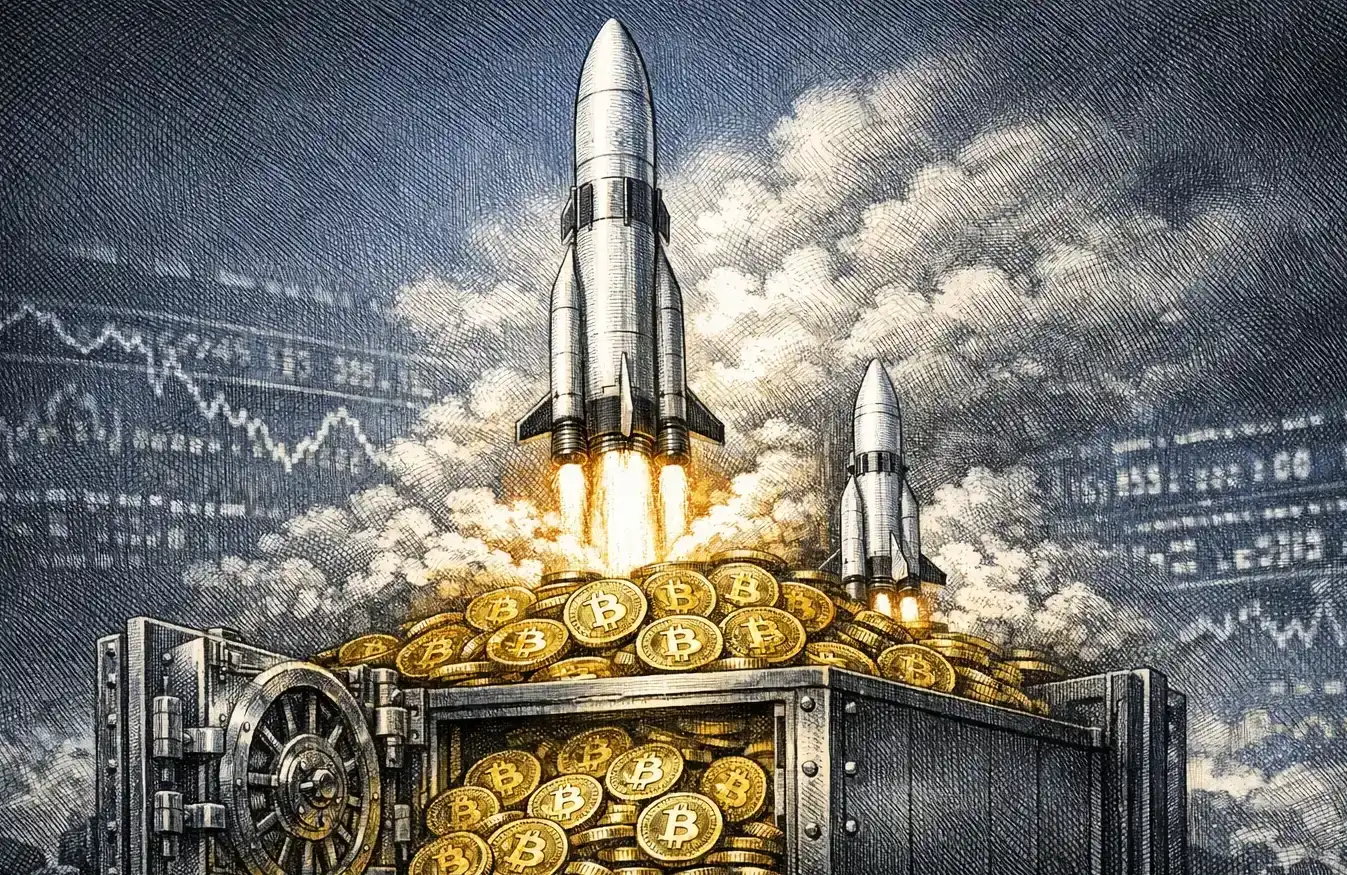

Will the Next Crypto Bull Run Start with On-Chain Trading of SpaceX?

This article presents a scenario-based forecast for the crypto industry from 2026 to 2029, arguing that the next major cycle will be driven not by technological narratives but by legal access to real-world assets. The author predicts that by mid-2026, pre-IPO perpetual contracts for top private companies like SpaceX, OpenAI, and Anthropic on platforms like Hyperliquid will become the primary gateway for accessing quality assets, as most crypto-native tokens fail to capture real value. The much-hyped AI x Crypto intersection largely fails except for prediction markets, which thrive on betting on AI model supremacy. By 2027, public blockchain foundations are forced to choose between catering to retail speculation or building compliant infrastructure for institutions, with many opting for the latter. Growth in stablecoins and tokenized private credit/equity hits a "triple ceiling" due to regulatory and political uncertainty rather than market demand. The pivotal shift is forecast for 2028. A major liquidation event in pre-IPO perpetuals exposes the structural flaw of synthetic markets lacking a real underlying asset anchor. In response, regulatory changes finally allow the public solicitation of private securities resales to verified accredited investors. This creates a legitimate secondary market for real company equity, which then becomes the core asset class of the new bull market, relegating synthetic perps to a niche role. By 2029, the industry becomes "boring" but foundational. Tokens without claims on real cash flows or assets cease trading. Stablecoin growth is steady but politically capped. Crypto infrastructure fades from view as it gets absorbed into traditional finance backends. The article's central thesis is that the key bottleneck for crypto's next phase is legal and regulatory channels for real asset ownership, not technology.

marsbitHace 4 hora(s)

Will the Next Crypto Bull Run Start with On-Chain Trading of SpaceX?

marsbitHace 4 hora(s)

a16z: Why Do Prediction Markets Matter?

Prediction markets, which allow users to trade on the outcome of future events, have gained significant traction, especially in the U.S. At their core, these markets function like any other market by aggregating information from all participants and translating it into a price signal—in this case, the perceived probability of a specific event occurring. Unlike polls or surveys that offer static snapshots, prediction markets provide dynamic, quantifiable probability estimates that update in real-time as new information and participants enter. A key advantage is the incentive structure: participants risk their own capital, which encourages serious research and trading based on genuine knowledge. This can surface information that traditional methods might miss. Furthermore, prediction markets can be created for a vast array of specialized questions—from geopolitical events to AI model performance—that aren't covered by traditional financial markets. However, several challenges remain. Infrastructure issues include reliably determining event outcomes and resolving disputes. Market design must ensure participation from well-informed individuals while preventing manipulation, such as insider trading or attempts to sway public perception by artificially moving prices. Addressing these concerns around rules, participation, and contract design is crucial. If these hurdles are overcome, prediction markets could evolve into a powerful, widely-used tool for forecasting and navigating uncertainty.

marsbit06/01 08:33

a16z: Why Do Prediction Markets Matter?

marsbit06/01 08:33

Life's K-Line Can't Save You from Anxiety, Prediction Markets Can't Calculate the Outcome

In early 2026, a sudden geopolitical event shocked the world: the U.S. captured Venezuelan President Nicolás Maduro, an outcome largely unpredicted by prediction markets like Polymarket, where his ouster was priced at only 5–7 cents shortly before the event. This incident underscores a recurring theme: major historical shifts often occur without warning. Against this backdrop, two tools gained attention in late 2025: “Life K-line,” which visualizes personal fate based on birth data, and prediction markets that quantify event probabilities through financial betting. Both promise a sense of control in an uncertain world—Life K-line offers emotional comfort through narrative structure, while prediction markets use price signals to suggest actionable foresight. However, these systems have significant limitations. Life K-line, though marketed as entertainment, may influence real-life decisions, while prediction markets are vulnerable to manipulation and insider influence. More fundamentally, predictive tools are inherently constrained by algorithmic bias, cultural assumptions, and the inevitability of black swan events. Relying too heavily on them can dull intuition and create a false sense of security. Ultimately, uncertainty is an irreducible part of life. Rather than seeking illusory control through prediction, the article argues for building antifragility—adapting to unpredictability and embracing the unscripted moments that define real life. True resilience lies beyond the charts and odds.

marsbit01/05 03:33

Life's K-Line Can't Save You from Anxiety, Prediction Markets Can't Calculate the Outcome

marsbit01/05 03:33

活动图片