Artículos Relacionados con Football

El Centro de Noticias de HTX ofrece los artículos más recientes y un análisis profundo sobre "Football", cubriendo tendencias del mercado, actualizaciones de proyectos, desarrollos tecnológicos y políticas regulatorias en la industria de cripto.
Zoomex X Space Recap With Djibril Cissé and the World Cup Trading Panel

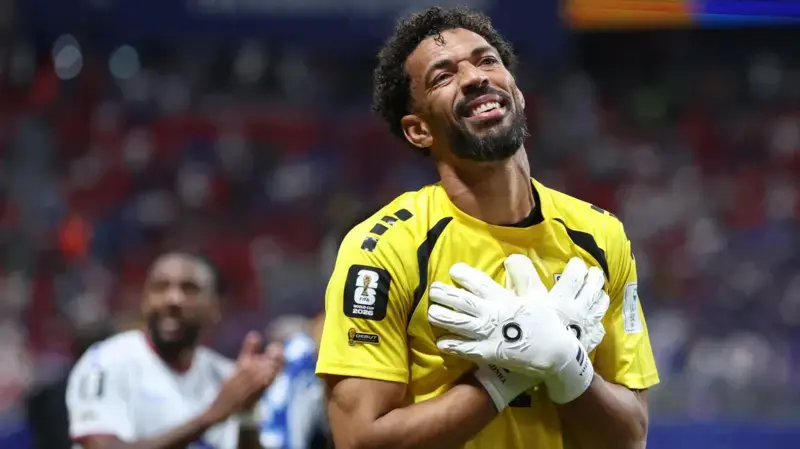
Zoomex hosted a World Cup-themed X Space with Champions League winner Djibril Cissé and four crypto traders, discussing pressure management, analysis, and philosophy, and launching a charity pledge. Cissé emphasized embracing pressure in critical moments, drawing from his experience taking a penalty in a Champions League final. The traders agreed that managing stress comes from systematic preparation and clear risk parameters before executing a trade. The conversation explored parallels between football and trading. Cissé highlighted pace as his key weapon, but stressed that output (goals) matters more than tools. The traders debated timing versus speed of execution, concluding that timing is paramount and relative to one's timeframe. Discussing resilience, Cissé shared his mindset after major injuries: focusing on recovery and finding the positive. Similarly, traders emphasized learning from losses rather than avoiding them. Cissé declined to speculate on alternate histories, like France's 2006 World Cup run without his injury, stating one must work only with reality—a principle directly applicable to trading. In a lighter segment, traders mapped cryptocurrencies to national teams (e.g., Bitcoin to Brazil/France). The core lesson was that high performers, in both fields, thrive on uncertainty by relying on tested systems and focusing solely on actionable information. The session was part of Zoomex's World Cup Impact Pledge, which includes charity donations tied to guest predictions.

TheNewsCrypto06/22 10:40

Zoomex X Space Recap With Djibril Cissé and the World Cup Trading Panel

TheNewsCrypto06/22 10:40

Spain Held to a Draw by Cape Verde, Jucom Prediction Market Witnesses Historic Upset

In a major upset at the 2026 FIFA World Cup, tournament favorites Spain were held to a surprising 0-0 draw by debutants Cape Verde in their Group H opener on June 16, Beijing time. Despite dominating possession (74%) and recording 27 shots with an expected goals figure of 2.16, Spain failed to break down a resilient Cape Verde defense, with their 40-year-old goalkeeper Vozinha making 7 saves to earn Man of the Match. Pre-match predictions on the Jucom prediction market had heavily favored Spain, assigning them a 92% win probability. The actual result, a goalless draw, triggered significant volatility across related prediction markets. This outcome forces a market-wide reassessment of several key probabilities, including Spain's likelihood of winning the group and the tournament itself, while Cape Verde's previously near-zero chance of advancing is now being re-evaluated. The event highlights both the efficiency and the inherent limitations of prediction markets. While prices aggregate known information, football's low-scoring, high-variance nature means unquantifiable in-game factors can lead to unlikely results. The core value of such markets lies not in perfect foresight but in their ability to dynamically reflect how new information is incorporated into collective expectations. Platforms like Jucom, which track outcomes from single matches to the final champion, provide a real-time lens into how global consensus evolves with each game.

链捕手06/16 10:14

Spain Held to a Draw by Cape Verde, Jucom Prediction Market Witnesses Historic Upset

链捕手06/16 10:14

What Endures Through Bull and Bear Markets Is Not Consensus, But Structure: Learning from Century-Old Football Clubs to Understand Web3

This article draws parallels between the sustainability of century-old European football clubs and the challenges faced by Web3 projects in building lasting communities. It argues that while Web3 excels at discussing growth, incentives, and tokenomics, it often lacks the deep sense of belonging and trust that allows communities to endure market cycles. The piece uses the origins of clubs like Manchester United, FC Barcelona, and Juventus to illustrate how they were founded on strong cultural identity, grassroots community, and a shared sense of purpose—principles that Web3 projects can emulate. It highlights how these identities, forged in local communities and through powerful narratives, created unwavering fan loyalty. Furthermore, it examines how clubs like Liverpool and Borussia Dortmund survived existential crises not through wealthy owners, but through the unwavering support of their fan communities. The article points to governance models like the member-owned structure of FC Barcelona or Germany’s “50+1” rule as examples of how deep community integration creates resilience. Finally, it discusses the role of legendary figures, like Liverpool’s Bill Shankly, as spiritual leaders who embody the community’s values and provide a narrative anchor. For Web3, this underscores the importance of authentic leadership and using key figures to build emotional resonance, while also ensuring the community’s culture is institutionalized to outlast any individual. The core conclusion is that Web3 can learn from football’s focus on authentic identity, community-powered governance, and shared cultural narratives to build projects that survive beyond short-term hype.

比推12/30 04:52

What Endures Through Bull and Bear Markets Is Not Consensus, But Structure: Learning from Century-Old Football Clubs to Understand Web3

比推12/30 04:52

活动图片