Artículos Relacionados con Finance

El Centro de Noticias de HTX ofrece los artículos más recientes y un análisis profundo sobre "Finance", cubriendo tendencias del mercado, actualizaciones de proyectos, desarrollos tecnológicos y políticas regulatorias en la industria de cripto.

Bernstein Research Report Analysis: Circle Benefits from USDC Expansion Cycle, Maintains Outperform Rating with $140 Price Target

Bernstein Report Analysis: Circle Benefits from USDC Expansion Cycle, Maintains Outperform Rating with $140 Target Stablecoin markets are reversing. After nearly six months of stagnation and decline, the supply of USDC suddenly increased by $1.7 billion in the final week of August. Circle's stock price has rebounded 42% from its slump driven by concerns over OUSD competition. On August 24, Bernstein published a report stating this is not a temporary technical rebound. Four key factors are driving a new stablecoin expansion cycle: the macro interest rate environment, expansion of the on-chain capital market, proliferation of stablecoin payments, and the emerging use of AI agent payments. Circle, as the largest compliant stablecoin issuer, is positioned to benefit significantly. Bernstein maintains its "Outperform" rating for Circle with a $140 price target, implying a 59% upside from the current price. The recovery in USDC supply validates the macro logic. The US Treasury's long-end bond buyback plan is reshaping the macro narrative for stablecoins, with stablecoins absorbing incremental short-term Treasury supply. Both Bitcoin and stablecoins benefit from this macro shift. AI agent payments represent a new growth frontier. Stablecoin payments are extending from "person-to-person" to "machine-to-machine." Bernstein highlights the x402 payment protocol, designed for AI agents to autonomously hold wallets, discover services, and make instant micropayments using USDC. While current volumes are small, this signals stablecoins' evolution towards becoming a native currency for the digital economy. USDC accounts for over 99% of x402 transaction volume. Circle benefits from two structural trends. First, the expansion of the on-chain capital market: its ARC blockchain, with validators like BlackRock and DTCC, supports asset tokenization. USDC has also been used as collateral for regulated derivatives. Second, the continued adoption of stablecoin payments: USDC's share of adjusted transaction volume has risen from ~40% in 2025 to over 60% year-to-date in 2026. Bernstein's $140 valuation is based on a long-term discounted cash flow model, corresponding to ~23x 2028 adjusted EBITDA. Key risks include digital asset volatility, increased competition, and Circle's reliance on interest income for 99% of its revenue. The stablecoin expansion is a structural story, and Circle sits at the confluence of these driving trends.

marsbitHace 46 min(s)

Bernstein Research Report Analysis: Circle Benefits from USDC Expansion Cycle, Maintains Outperform Rating with $140 Price Target

marsbitHace 46 min(s)

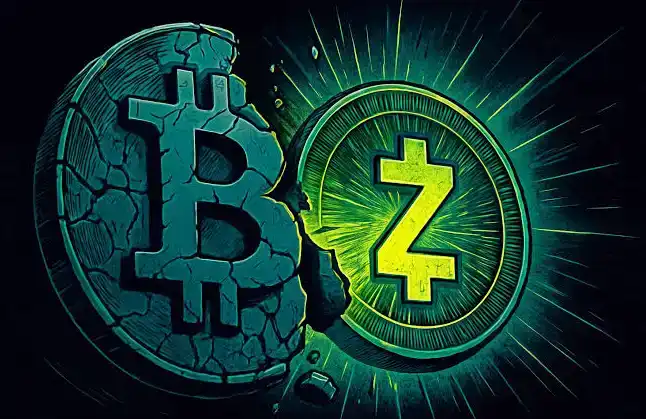
Grayscale Reassesses Zcash: In the Era of AI Surveillance, What is Financial Privacy Worth?

Grayscale Research reevaluates Zcash (ZEC) in the context of AI-powered financial surveillance. The report posits that stablecoins, transparent blockchains, and AI analytics tools are increasing the traceability of digital finance, potentially reigniting mainstream demand for financial privacy as a core monetary attribute. While AI could drive a third wave of privacy concern, Zcash's investment thesis hinges on whether this theoretical demand translates into sustained adoption. Zcash, operational for nearly a decade, uses zero-knowledge proofs to offer users a choice between transparent and shielded transactions, placing control of information disclosure back in users' hands. Recent infrastructure improvements—like wallet enhancements, mining pool expansions, and protocol upgrades—have reduced usability barriers. On-chain data shows shielded transactions comprise ~90% of transaction count, with ~25% of circulating ZEC in shielded pools, indicating existing use. However, significant risks remain. These include regulatory hurdles for exchanges and custodians dealing with shielded assets, past protocol vulnerabilities (theoretical, now patched), long-term quantum computing threats, and execution risks for future scalability upgrades. Grayscale's analysis suggests ZEC's current low market share (~0.6% of the "digital currency" crypto sector) offers valuation upside *if* the market reprices privacy. A scenario analysis notes that capturing 5% of this sector could imply a ~9x valuation increase, though this is a simplified sensitivity test, not a price target. Ultimately, Zcash's opportunity lies in the unresolved question: in an AI-monitored era, what price will the market assign to financial privacy? Validating the thesis requires monitoring growth in real shielded usage, wallet usability, upgrade timelines, and regulatory accessibility, not just price appreciation.

marsbitHace 18 hora(s)

Grayscale Reassesses Zcash: In the Era of AI Surveillance, What is Financial Privacy Worth?

marsbitHace 18 hora(s)

Cryptocurrency Transfers Abroad: What Changes for Russians Starting September 1st

From September 1, 2026, a new Russian law will legalize cryptocurrency transfers abroad for citizens. The regulations will allow sending crypto to personal foreign wallets and using it for payments to foreign businesses, provided established rules are followed. The law recognizes crypto as property and introduces a legal framework for its circulation, permitting both qualified and non-qualified investors (with an annual limit of 300,000 rubles for the latter) to buy cryptocurrencies and stablecoins. Notably, using crypto for domestic payments within Russia remains illegal and subject to fines. Companies can use crypto for foreign trade contracts, but these transactions remain under currency control and anti-money laundering (AML) scrutiny. Major banks are increasing oversight of crypto operations, requiring detailed explanations for business transactions, with stricter controls expected from July 2027. While providing new legal avenues, the article warns of risks. Users must choose transfer methods (exchanges, P2P platforms, crypto exchangers) carefully, considering fees, speed, and service reliability. Key risks include service providers freezing transactions, demanding documentation, or blocking accounts. Experts caution that even popular assets like Bitcoin can be tracked or potentially targeted, and sanctions may restrict access to international platforms. Ultimately, while legalized, cross-border crypto transfers will operate within a framework of enhanced state control over fund origins and counterparties.

cryptonews.ruHace 2 días 17:45

Cryptocurrency Transfers Abroad: What Changes for Russians Starting September 1st

cryptonews.ruHace 2 días 17:45

Beyond the 'Kimchi Premium': Institutional Transformation in Korea

South Korea's crypto landscape is moving beyond the volatile "Kimchi Premium" era driven by retail speculation, according to Andrew Park, CEO of Factblock. Park, who organizes Korea Blockchain Week, notes a significant shift in the nature of international inquiries. Global institutions are now focusing on market access, asset custody, tokenization, stablecoins, and regulatory compliance, rather than just token listings and prices. This institutionalization is being built through foundational, "unsexy" back-office work: developing corporate crypto accounts, legal finality for settlements, accounting standards, and custody solutions. Key regulatory steps include the Financial Services Commission's framework for corporate virtual asset accounts and National Assembly amendments to laws governing tokenized securities and real-world assets. Park, with a traditional finance background, bridges the perspectives of Wall Street and Web3. He explains that traditional banks prioritize managing edge-case failures and regulatory reporting, which crypto-native firms sometimes misunderstand. Conversely, traditional financiers often overlook blockchain's systemic utility for 24/7 global settlement and programmable money. Looking ahead, Park sees South Korea's next frontier at the intersection of AI and programmable blockchain infrastructure. He is particularly interested in the infrastructure needed for a "machine-to-machine" economy, where AI agents could autonomously conduct micropayments and transactions using on-chain settlement mechanisms—a concept already being explored in pilot projects by the Bank of Korea. With its advanced digital infrastructure and investments in both Web3 and AI, South Korea is uniquely positioned to develop this future.

cryptonews.ruHace 2 días 17:38

Beyond the 'Kimchi Premium': Institutional Transformation in Korea

cryptonews.ruHace 2 días 17:38

Circle's Jeremy Allaire Optimistic About Prospects of 'Massive Strategic Unlock' for Stablecoins by FASB

Jeremy Allaire, co-founder of Circle, hailed a new FASB (Financial Accounting Standards Board) proposal as a "huge strategic breakthrough" for stablecoins like USDC. Announced on August 18, 2026, the proposal would allow companies to classify qualifying stablecoins as cash equivalents on their balance sheets, simplifying corporate holdings. Allaire gave the proposal a "nine out of ten" rating, linking it to the potential of the GENIUS Act to drive wider USDC adoption. The accounting change is significant because cash equivalents are favored by lenders and treasurers, unlike intangible assets which carry a balance sheet penalty. The FASB's update to its cash flow statement standard (Topic 230) sets three clear criteria for a stablecoin to qualify: 1) the holder must have a contractually enforceable right to redeem on demand, 2) redemption must be for a fixed amount of cash directly from the issuer, and 3) the issuer must hold segregated, high-quality liquid reserves (excluding volatile assets like crypto or gold) backing each token 1:1. Secondary market liquidity does not qualify. While Coinbase has already adopted this accounting method for USDC, EURC, and PYUSD, skeptics like Professor Jack Castonguay believe treating stablecoins as cash equivalents goes too far. The public comment period ends November 19, after which the FASB will make a final decision.

cryptonews.ruHace 2 días 10:37

Circle's Jeremy Allaire Optimistic About Prospects of 'Massive Strategic Unlock' for Stablecoins by FASB

cryptonews.ruHace 2 días 10:37

活动图片