Artículos Relacionados con Developer

El Centro de Noticias de HTX ofrece los artículos más recientes y un análisis profundo sobre "Developer", cubriendo tendencias del mercado, actualizaciones de proyectos, desarrollos tecnológicos y políticas regulatorias en la industria de cripto.

Tencent, Alibaba, ByteDance in a Battle for the Skill Store

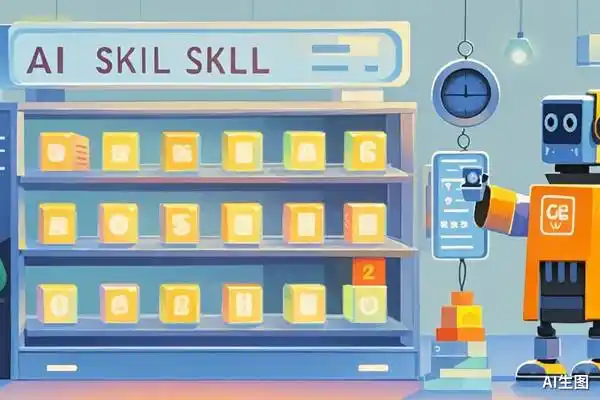
Skill is becoming a key concept in the AI field, essentially serving as a structured "instruction manual" for AI Agents that specifies tool calls, decision logic, and output standards. This allows Agents to execute predefined tasks. As the number of Skills grows, distribution platforms have emerged. Major tech companies are swiftly entering this space. In March, Tencent, Alibaba, and ByteDance launched Skill stores within their respective Agent platforms. Subsequently, players like Zhipu AI, Meituan, and Xiaohongshu joined the fray. This competition for the "Skill store" is fundamentally a battle for the AI-era user entry point; whoever controls distribution controls the users. While ByteDance's Coze has experimented with paid Skills, most platforms offer them for free. The real value lies not in the stores themselves but in using them to attract and retain users within an ecosystem, driving revenue from services like cloud computing, model calls, or advertising. The landscape features three main player types: 1) **Internet giants** (e.g., Alibaba, ByteDance, Tencent, Meituan), leveraging Skills to drive traffic and monetize through their broader ecosystems (cloud services, transactions, ads). 2) **Large model companies** (e.g., Zhipu AI, Moonshot AI), using Skill stores to increase user engagement and monetize model API calls. 3) **Content platforms** (e.g., Xiaohongshu), treating Skills as a new content format to generate traffic and ad revenue. However, transforming Skill stores into a sustainable business faces significant hurdles. Key challenges include: the **difficulty in pricing Skills** due to inconsistent outputs across different models and contexts; **lack of cost transparency** (varying token consumption); **security risks** like Skill poisoning; and the **absence of standardized protocols** for development and evaluation. Unlike standardized mobile apps, Skills are often personalized workflows resistant to uniformity, which hinders the establishment of a reliable review and monetization system akin to the App Store. While there is genuine user demand for paid Skills—particularly in enterprise (e.g., contract review) and certain personal productivity scenarios—current platforms offer developers limited and unpredictable distribution. The future of Skill stores depends on overcoming these standardization, evaluation, and safety challenges to make acquiring a Skill as straightforward as downloading an app. For now, the stores function more as display shelves than robust marketplaces.

marsbit06/03 12:30

Tencent, Alibaba, ByteDance in a Battle for the Skill Store

marsbit06/03 12:30

The Revived Codex, Carrying OpenAI's Hopes for IPO

This article analyzes the intense recent development of OpenAI's Codex, positioning it as a crucial component for OpenAI's impending IPO. Over the past two months, Codex has seen a rapid series of major updates focused on integrating into real enterprise workflows. Key new features include enhanced context capture (Appshots, file previews, built-in browser), long-running task execution ("Goal Mode"), remote operation (phone control, lock-screen access), and enterprise management tools (plugin sharing, access tokens, automated risk review). These updates aim to make Codex a comprehensive AI workbench that can "see the scene, push tasks, and manage risks." The author argues that while ChatGPT proves OpenAI's massive user base and API provides foundational revenue, Codex represents OpenAI's clearest path to demonstrating tangible, high-value commercial viability. It targets developers and engineering teams—a segment already accustomed to paying for efficiency gains in costly software development cycles. This is critical because, despite higher overall revenue, OpenAI's adjusted operating margins remain deeply negative, highlighting the challenge of outrunning immense compute costs. The pressure is amplified by competitor Anthropic's success with Claude Code, which has shown that a focused approach on high-value enterprise and developer workflows can lead to a path toward profitability. Codex's aggressive evolution is thus seen as OpenAI's strategic move to capture a similar enterprise-ready, revenue-generating narrative essential for its market debut. In essence, "ChatGPT proved OpenAI has users. Codex needs to prove OpenAI is a business that can make money."

marsbit05/24 04:55

The Revived Codex, Carrying OpenAI's Hopes for IPO

marsbit05/24 04:55

GitHub Empire on the Brink of Collapse: Source Code Leak, 18-Year Veteran Leaves, Microsoft Loses 1.5 Billion Developers

GitHub is facing an unprecedented crisis, marked by a massive exodus of developers and severe operational failures. The tipping point came when Mitchell Hashimoto, creator of Ghostty and an 18-year GitHub user, publicly severed ties, citing persistent platform outages that made serious work impossible. This departure highlights a broader pattern of user frustration. The platform's instability has drawn complaints from major corporate clients like Citibank and Intel, forcing Microsoft to issue substantial service credits. A critical incident last month saw an accidentally triggered, unreleased feature cause widespread repository rollbacks, erasing recent code changes and pushing enterprises to migrate. Security has catastrophically breached. In May 2026, hackers infiltrated over 3,800 of GitHub's internal repositories via a poisoned VS Code extension installed by a developer, leading to the attempted sale of core source code for $50,000. This follows the discovery of a critical zero-day vulnerability in March that threatened access to millions of repositories. Internally, GitHub's autonomy has collapsed. After the resignation of CEO Thomas Dohmke in mid-2025, Microsoft eliminated the CEO role, folding GitHub into its CoreAI division under the unpopular leadership of Jay Parikh. This triggered a talent drain, with key executives and engineers leaving. A disruptive migration of GitHub's infrastructure to Azure servers, pushed by CTO Vladimir Fedorov, is blamed for the recurring outages. Competitively, GitHub Copilot is under "existential threat" from superior AI coding tools like Cursor (now owned by SpaceX) and Claude Code, which offer more advanced contextual coding and automation. Ironically, Microsoft's own engineers reportedly preferred Claude Code, forcing management to revoke licenses. Financially, GitHub is a loss leader. Despite Copilot surpassing 4.7 million paid users and $3 billion in annual revenue, the AI inference costs for free services massively outstrip subscription income, hurting Microsoft's cloud margins. The recent shift from a flat fee to a pay-as-you-go model for Copilot has further alienated developers. The core question for Microsoft is whether a centralized code repository remains essential in the AI agent era. The erosion of trust, developer culture, and platform reliability threatens the very ecosystem Microsoft spent decades building.

marsbit05/22 10:52

GitHub Empire on the Brink of Collapse: Source Code Leak, 18-Year Veteran Leaves, Microsoft Loses 1.5 Billion Developers

marsbit05/22 10:52

Cutting Off OpenAI, Anthropic Acquires the Tool Provider Used by a Quarter of Global Developers

Anthropic has acquired Stainless, a developer tool company that automatically generated official SDKs (Software Development Kits) for AI giants including OpenAI, Anthropic, Meta, and Cloudflare. The deal, reportedly valued at around $300 million, marks a strategic shift for Anthropic as it builds its "AI agent" infrastructure. Stainless acted as a "translator," converting complex API specifications into ready-to-use code libraries for developers. Its tools indirectly reached about a quarter of professional software developers globally. Following the acquisition, Stainless will shut down its public products and its team will join Anthropic to focus on internal platform development, notably for the Claude Platform. Existing SDKs remain with their respective client companies but will no longer receive updates from Stainless. This move is part of Anthropic's broader 18-month strategy to assemble a complete "agent stack." The stack consists of the Claude model at its core, the newly acquired Stainless for standardized API interfaces, and the Model Context Protocol (MCP), an open standard for connecting agents to external tools and data. This contrasts with OpenAI's focus on model generations and consumer-scale compute. Anthropic believes an agent's ultimate utility depends on its ability to connect to external systems. By internalizing the SDK layer and promoting MCP as a connection standard, Anthropic aims to lock in long-term ecosystem advantages and create path dependency, moving beyond the transient lead provided by any single model generation.

marsbit05/21 11:33

Cutting Off OpenAI, Anthropic Acquires the Tool Provider Used by a Quarter of Global Developers

marsbit05/21 11:33

Claude's New Policy Abandons Its Most Loyal Agent Users

Anthropic, in a move signaling the end of the "all-you-can-eat" era for AI subscriptions, has separated programmatic usage from its Claude subscription plans. Starting June 15, 2024, usage of the Claude Agent SDK, `claude -p` command, and third-party tools like OpenClaw will no longer draw from subscription limits. Instead, users receive a fixed monthly credit based on retail API prices: $20 for Pro, $100 for Max 5x, and $200 for Max 20x. This change drastically reduces usable capacity for heavy users—previously, their shared subscription limit was worth an estimated $2,000-$5,000 in API value. While Anthropic simultaneously increased Claude Code interactive limits to appease users, the new policy primarily impacts developers running automated, high-frequency agents, pushing their effective costs nearly ten times higher. Seizing the opportunity, OpenAI promptly announced a free two-month migration plan for its Codex enterprise service, which does not differentiate between interactive and automated usage, directly targeting discontented Claude users. This marks an opening salvo in the broader ASI (Artificial Superintelligence) competition, where the final battle is shifting from pure model capability to ecosystem strength, developer loyalty, and infrastructure. The article frames this as a necessary correction of a pricing "loophole" by Anthropic ahead of its IPO, as programmatic calls lack training data value and can incur massive costs. The move underscores a wider industry trend towards consumption-based billing for AI, mirroring the evolution of cloud computing.

marsbit05/15 00:22

Claude's New Policy Abandons Its Most Loyal Agent Users

marsbit05/15 00:22

Don't Say There's Nothing to Do in a Bear Market, These Four Types of Smart People Are Already Quietly Making Money

In a crypto market filled with noise and unproductive debates, opportunities still exist for those who adapt to the new meta. While past trends like Play-to-Earn, Move-to-Earn, and airdrop farming have faded, four current pathways offer real earnings: 1. **X Platform Monetization**: Verified creators can earn $500–$2,000 monthly through X’s revenue-sharing program based on impressions from Premium users. 2. **Ambassador Programs**: Structured programs from projects like Alchemy Pay and Injective offer monthly stable payments (e.g., 200 USDT base) and performance bonuses for community contributions. 3. **Discord Moderators**: Managing Discord servers by answering questions, handling tickets, and banning scammers provides a steady income. 4. **Developer Programs**: Coders can earn through builder initiatives, bounties, and grants. Examples include Zama’s program with 15,000 cUSDT in prizes, Arc’s Architects plan rewarding contributions, and Ink’s grants up to 200,000 USDC for dApp development. The key insight is that opportunities shift with each market phase—from gaming and walking to clicking and now building. Success requires self-assessment: leverage your skills in content creation, community management, or coding instead of waiting for outdated trends. The bear market rewards those who engage actively with their strengths.

marsbit04/16 10:25

Don't Say There's Nothing to Do in a Bear Market, These Four Types of Smart People Are Already Quietly Making Money

marsbit04/16 10:25

活动图片