Artículos Relacionados con Conflict

El Centro de Noticias de HTX ofrece los artículos más recientes y un análisis profundo sobre "Conflict", cubriendo tendencias del mercado, actualizaciones de proyectos, desarrollos tecnológicos y políticas regulatorias en la industria de cripto.

Behind Musk and Huang Jen-hsun's 'AI Factories', an Unseen Battle for Freshwater Has Begun

Behind the "AI factories" of Elon Musk and Jensen Huang lies a hidden battle for a critical resource: fresh water. As AI models like ChatGPT and Claude process billions of prompts daily, they consume vast amounts of water for cooling. By 2030, global AI infrastructure is projected to use 9.3 trillion liters annually—enough to meet the basic needs of 1.3 billion people. This "water grab" stems from the massive heat generated by high-powered GPUs. Over 70% of data centers use evaporative cooling systems, where water absorbs heat and evaporates into the atmosphere, depleting local groundwater. Training models like GPT-4 can consume over 600 million liters of water. Tech giants like Google and Microsoft report skyrocketing water usage, sparking conflicts with local communities over resources. A flashpoint occurred in Memphis, Tennessee, where Musk's xAI built the Colossus supercomputer. It draws nearly 3.8 million liters of drinking water daily from local aquifers, leading to public outrage and legal action. In response, xAI is building an $80 million water recycling plant to use treated wastewater instead. Facing pressure, companies like Microsoft promote "waterless" closed-loop cooling systems. However, these systems increase electricity consumption by 20-30%, shifting the water burden to power plants, which require immense cooling water themselves—a case of indirect water footprint transfer. For China's AI industry, this crisis offers a strategic warning and opportunity. Instead of replicating the West's resource-intensive model, China can leverage its "East Data, West Computing" policy to locate data centers in cooler, water-rich regions like Guizhou. Furthermore, developing lightweight edge computing for smart homes and embodied AI robots can drastically reduce the need for constant cloud queries, cutting both water and energy consumption at the source. The freshwater war underscores a fundamental question: Will AI be a tool for human advancement or a silicon-based monster competing for our planet's last drops of clean water? The answer is becoming clearer as the water vapor rises.

marsbit06/11 05:23

Behind Musk and Huang Jen-hsun's 'AI Factories', an Unseen Battle for Freshwater Has Begun

marsbit06/11 05:23

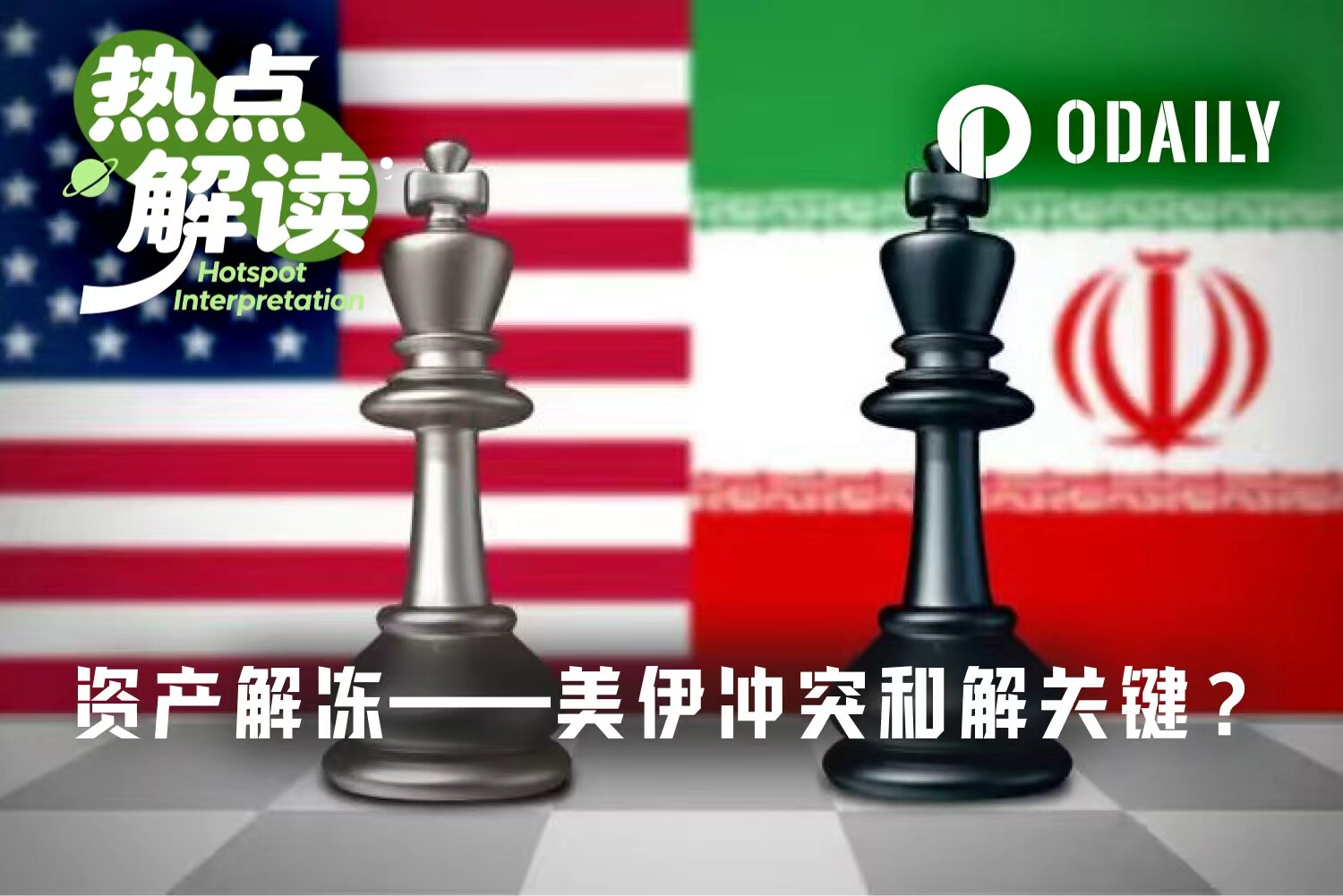
U.S.-Israel-Iran Conflict Surpasses 100 Days: Is Asset Unfreezing a Key to Reconciliation?

**Title: U.S.-Israel-Iran Conflict Surpasses 100 Days; Key to Reconciliation Lies in Unfreezing Assets?** **Summary:** As the conflict between the U.S./Israel and Iran enters its 103rd day, peace talks remain stalled. A central sticking point in the negotiations is the fate of approximately $240 billion in Iranian assets frozen by the United States. This includes around $1 billion in cryptocurrency assets, such as USDT, BTC, and ETH, which were seized as part of U.S. sanctions. Iran has outlined a four-phase plan for a potential deal, with the second phase demanding the immediate unfreezing of at least 50% of its assets upon signing an initial agreement, and the remainder within one to two months. However, the U.S., particularly President Trump, has firmly rejected any preemptive release of funds, viewing them as crucial leverage for future negotiations on Iran's nuclear program. The Trump administration's approach is described as unpredictable, mixing tough rhetoric with offers of talks. Meanwhile, the U.S. is reportedly considering using the frozen Iranian assets to fund reconstruction in affected Gulf countries. While both sides express a desire to end the conflict, the deep-seated issue of the frozen assets, alongside broader geopolitical tensions, suggests a prolonged period of "fighting while talking" is likely to continue. The article concludes that the conflict's primary impact on cryptocurrency markets is macro-level, with minimal direct selling pressure on specific assets like BTC or ETH.

marsbit06/10 10:34

U.S.-Israel-Iran Conflict Surpasses 100 Days: Is Asset Unfreezing a Key to Reconciliation?

marsbit06/10 10:34

You Bet on the News, the Pros Read the Rules: The True Cognitive Gap in Losing Money on Polymarket

The article explains that the key to profiting on Polymarket, a prediction market platform, lies not just predicting real-world events correctly, but in meticulously understanding the specific rules that govern how each market will be resolved. It illustrates this with examples, such as a market on Venezuela's 2026 leader, where the official rules defining "officially holds" the office overruled the intuitive answer of who was in practical control. Other examples include debates over the definition of a "token" or what constitutes an "agreement." The core argument is that a "reality vs. rules" gap creates pricing discrepancies that savvy traders ("车头" or "whales") exploit. The platform has a formal dispute resolution process managed by UMA token holders to settle ambiguous outcomes. This process involves proposal submission, a challenge window, a discussion period, and a final vote. However, the article highlights a critical flaw in this system compared to a traditional court: the lack of separation between the arbiters (UMA voters) and the interested parties (traders with financial stakes in the outcome). This conflict of interest undermines the discussion phase, leads to herd mentality, and results in opaque final decisions without explanatory rulings. Consequently, the system lacks a body of precedent, making it difficult for users to learn from past disputes. The ultimate takeaway is that success on Polymarket requires a lawyer-like scrutiny of the rules to identify and capitalize on the cognitive gap between how events appear and how they are contractually defined for settlement.

marsbit04/21 03:08

You Bet on the News, the Pros Read the Rules: The True Cognitive Gap in Losing Money on Polymarket

marsbit04/21 03:08

WLFI's $75 Million Lending Game: Dolomite Depositors Deeply Trapped

Author: ChandlerZ, Foresight News. On April 9, CoinDesk reported that World Liberty Financial (WLFI), a crypto project co-founded by the Trump family, conducted multiple collateralized loans through the DeFi lending protocol Dolomite, raising market concerns about insider relationships, circular financing, and liquidity risks. WLFI used approximately 5 billion WLFI tokens as collateral on Dolomite to borrow around $75 million in stablecoins, with over $40 million transferred to Coinbase Prime, likely for fiat conversion or OTC trading. Between February and April, WLFI executed a series of transactions, including depositing its own stablecoin (USD1) and WLFI tokens into Dolomite to borrow funds, and directly sending USD1 to Coinbase. Dolomite’s co-founder, Corey Caplan, is also an advisor to WLFI, and WLFI’s lending platform is built on Dolomite, indicating potential conflicts of interest. WLFI now accounts for about 55% of Dolomite’s total supplied liquidity. The USD1 pool has a 93% utilization rate, leaving limited liquidity for other depositors. If WLFI’s token price drops significantly, forced liquidations could cause severe losses for ordinary users. This incident follows previous controversies, including a $500 million investment deal linked to an Abu Dhabi royal, sanctions-related associations, and a prior USD1 depegging event. WLFI responded that there is no liquidation risk and emphasized its business growth, but questions about governance and risk management remain unanswered.

marsbit04/10 06:19

WLFI's $75 Million Lending Game: Dolomite Depositors Deeply Trapped

marsbit04/10 06:19

The TAO Subnet Team Praised by Jensen Huang Has Parted Ways with the Founder Amidst a Fallout

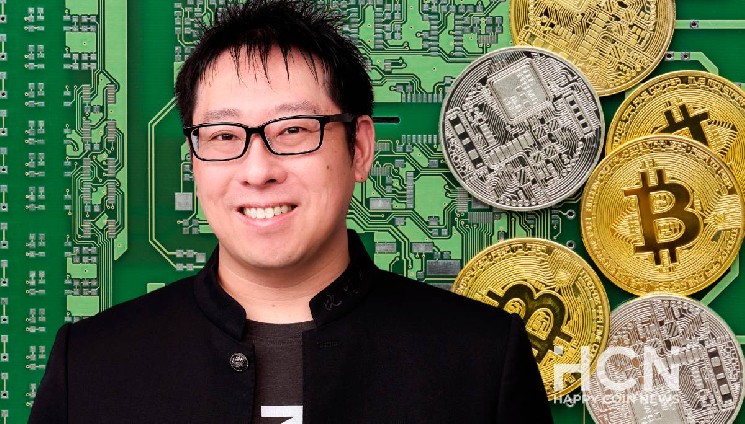
Nvidia CEO Jensen Huang recently praised the decentralized AI project Bittensor (TAO) during a podcast, specifically highlighting a 72-billion-parameter Llama model trained collaboratively by a subnet team called Covenant AI. This endorsement initially boosted TAO's price, but the situation deteriorated rapidly when Covenant AI's founder, Sam Dare, publicly announced the team's departure from the Bittensor network. Covenant AI accused Bittensor and its key figure, Jacob Steeves (known as Const), of centralization and abuse of power, contradicting Bittensor’s decentralized ethos. The team claimed that Const exercised unilateral control by halting subnet emissions, removing administrative rights, discarding infrastructure, and using token sales to pressure the team. They argued that Bittensor’s governance is effectively centralized under Const, despite claims of distributed control. As a result, Covenant AI decided to leave, intending to continue its work on decentralized AI training elsewhere. The exit has sparked significant concern within the Bittensor community, raising doubts about the network’s decentralization narrative, technical future, and token value. TAO’s price fell sharply following the news. Const responded vaguely on social media, suggesting the event would push Bittensor toward more decentralized, “headless” subnets, but has not addressed the specific allegations in detail. The incident has damaged Bittensor’s reputation while raising Covenant AI’s profile.

Odaily星球日报04/10 03:08

The TAO Subnet Team Praised by Jensen Huang Has Parted Ways with the Founder Amidst a Fallout

Odaily星球日报04/10 03:08

活动图片