Original Title: Trump Extends Iran Ceasefire, Blockade as Peace Talks Stumble
Original Author: Courtney Subramanian and Jennifer A Dlouhy,Bloomberg
Original Compilation: Peggy,BlockBeats
Editor's Note: US President Donald Trump announced an indefinite extension of the ceasefire with Iran just before the agreement was set to expire, while continuing the maritime blockade of the Strait of Hormuz. Trump stated that the US would extend the ceasefire until Iran submits a new proposal, "and regardless of the outcome, until the negotiations conclude"; he also emphasized that without this blockade, "it would be impossible to reach any agreement with Iran."
From a strategic perspective, the US is attempting through the combination of "extending the ceasefire + maintaining the blockade" to avoid an immediate escalation into full-scale war while continuing to pressure Iran to make concessions on nuclear issues and negotiation terms. However, Iran has neither accepted the negotiation conditions nor proactively requested an extension of the ceasefire. Instead, it has maintained a firm response in terms of energy exports and military posture, leading to a stalemate between the two sides on the core issues of "whether to negotiate and how to negotiate."
More notably, this confrontation has begun to spill over into global markets. As a critical channel for global energy transportation, the blockade and repeated reopening of the Strait of Hormuz have not only intensified oil price volatility but also amplified uncertainties in the energy and shipping systems. In the short term, the ceasefire extension provides a certain buffer for the market; but in the medium to long term, in the absence of a clear negotiation structure and basic mutual trust, this passively extended ceasefire resembles a fragile balance that could be broken at any time.
As diplomatic paths continue to be blocked and military deterrence intensifies, the next phase of this conflict will depend on whether the two sides return to the negotiating table or slide toward more intense confrontation.
Below is the original text:
US President Donald Trump announced an indefinite extension of the ceasefire with Iran just before the agreement was set to expire; meanwhile, the US continues to maintain a maritime blockade of the Strait of Hormuz after the collapse of the originally planned peace talks between the two sides.
Trump stated on his social platform Truth Social that Pakistan, as the mediator, requested the US to postpone launching a new round of strikes. The US will extend the ceasefire deadline until Iran submits a new proposal and "regardless of the outcome, until the negotiations conclude." In another post, he also stated that without this blockade, "it would be impossible to reach any agreement with Iran—unless we blow up the rest of their country, including their leaders!"
US Vice President JD Vance was originally scheduled to travel to Pakistan to restart negotiations with Iran, but representatives from Tehran refused to attend, stating that the conditions proposed by the US were "unacceptable." Iran's semi-official Tasnim News Agency stated that there is currently "no realistic possibility" for Iran to participate in negotiations.
A White House official confirmed in a statement that the Vice President's scheduled trip on Tuesday will not take place.
This statement contrasts sharply with Donald Trump's remarks earlier that day. At the time, he stated in an interview with CNBC that if Iran did not meet his conditions, "I expect bombing to occur," and claimed that the US military "is eager and ready to act at any time." In a phone interview on Monday, Trump also stated that if an agreement was not reached, it was "highly unlikely" that he would extend the current ceasefire.
Driven by the news of the ceasefire extension, oil prices rose for the second consecutive day. After accumulating a nearly 9% increase over the previous two trading sessions, Brent crude price is currently around $98 per barrel. In January of this year, oil prices once fell below $60, and in March, they reached a high of $119.50. The average retail price of gasoline in the US is currently about $4 per gallon, compared to about $3 before the war broke out on February 28.
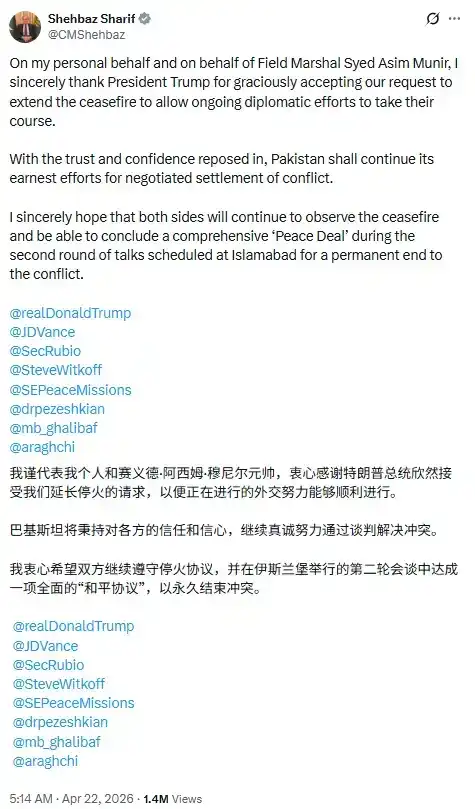
Pakistani Prime Minister Shehbaz Sharif thanked Trump for extending the ceasefire in a statement, "buying time for ongoing diplomatic efforts to proceed smoothly."
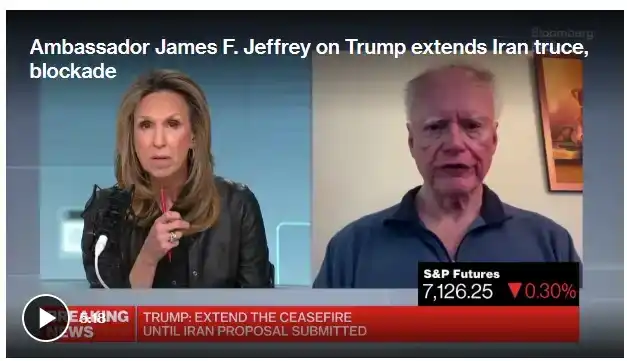
Former US Deputy National Security Advisor and current Philip Solondz Distinguished Fellow at the Washington Institute, James F. Jeffrey, appeared on 'Bloomberg Businessweek Daily' to discuss the ceasefire extension and engaged in a dialogue with hosts Carol Massar and Tim Stenovec.
He posted on platform X: "I sincerely hope both sides will continue to abide by the ceasefire agreement and reach a comprehensive 'peace agreement' in the second round of negotiations in Islamabad, thereby achieving a permanent end to the conflict."
Senior Iranian officials had not responded to Donald Trump's statement by nighttime Tehran time. Iran's semi-official Tasnim News Agency, quoting unnamed sources, stated that Iran did not request an extension of the ceasefire. Simultaneously, the media outlet stated that as long as the US maintains the maritime blockade, Iran will not reopen the Strait of Hormuz.
Iran's semi-official Fars News Agency quoted a statement from the military stating that the Iranian armed forces "are in a state of full combat readiness, with fingers on the trigger."
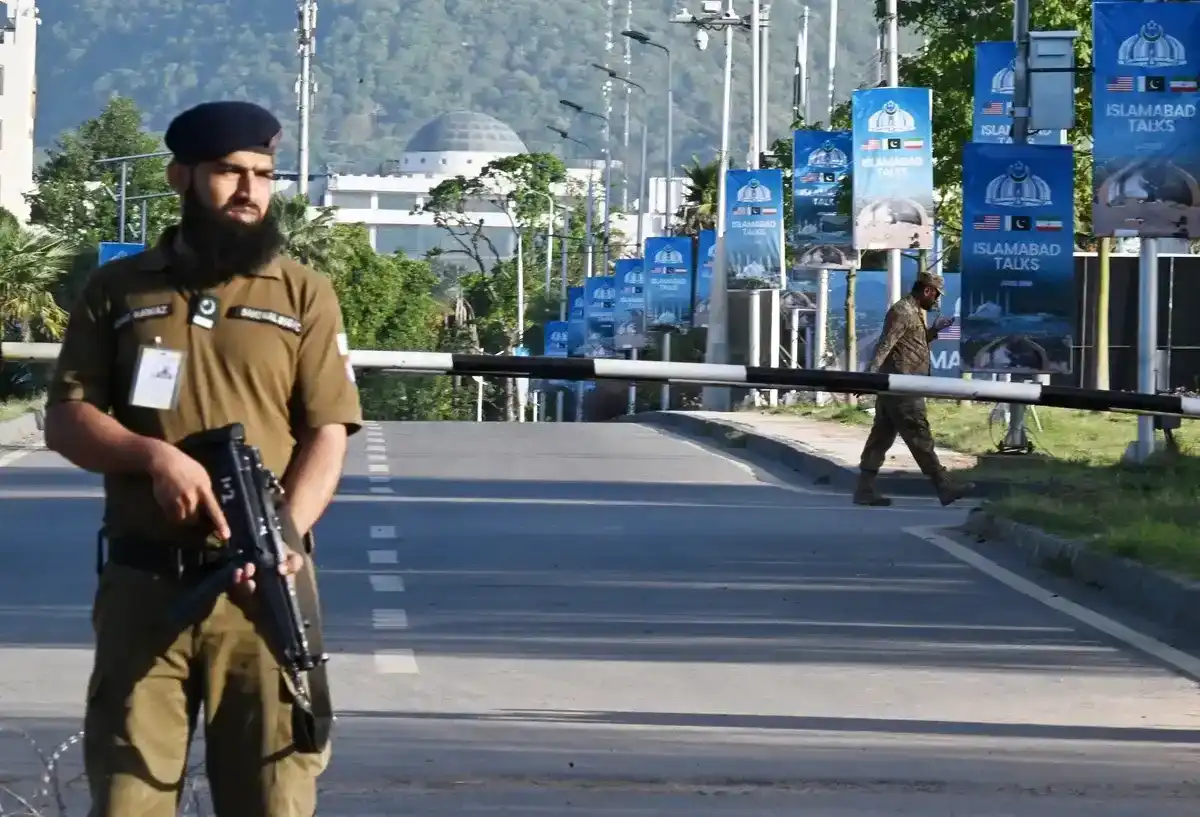
Security personnel guard a checkpoint near the Serena Hotel in Islamabad on April 22. Photo: Aamir Qureshi / AFP / Getty Images.
These developments mark the latest round of back-and-forth between Washington and Tehran since April 7, when the two sides announced a two-week ceasefire. Since then, the two sides have continuously publicly disputed the terms of the agreement and alternately closed and reopened the Strait of Hormuz. Before the war, about one-fifth of the world's oil and liquefied natural gas exports passed through this strait.
According to data intelligence company Vortexa, at least two fully loaded Iranian oil tankers have sailed out of the Persian Gulf this week and breached the US blockade. The company's data also shows that Iran still has the capacity to export oil, with at least 34 oil tankers and gas carriers related to Iran passing through the Strait of Hormuz and navigating past the naval blockade.
The British Navy stated on Wednesday that an Iranian gunboat fired upon a container ship near the Strait of Hormuz, causing "serious damage" to its bridge, but fortunately, there were no casualties.
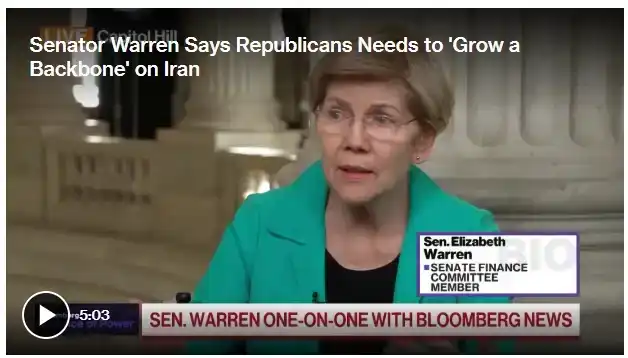
US Democratic Senator Elizabeth Warren from Massachusetts criticized President Donald Trump for lacking a clear plan regarding the Iran conflict. Warren expressed these views on the 'Balance of Power: Evening Edition' program.
The UK and France are convening military planners from over 30 countries for a two-day summit to discuss how to ensure the Strait of Hormuz remains open. British Prime Minister Keir Starmer and French President Emmanuel Macron have been leading the coordination of a plan aimed at keeping the strait open after the Iran war ends, though they have rejected Trump's request for allies to use force to reopen the Strait of Hormuz.
After the initial ceasefire was announced, a round of negotiations took place between the US and Iran but ended in failure. US officials stated that Iran was unwilling to accept restrictions on its nuclear program; while the Iranian side stated that the US had put forward a series of demands that it could not accept.
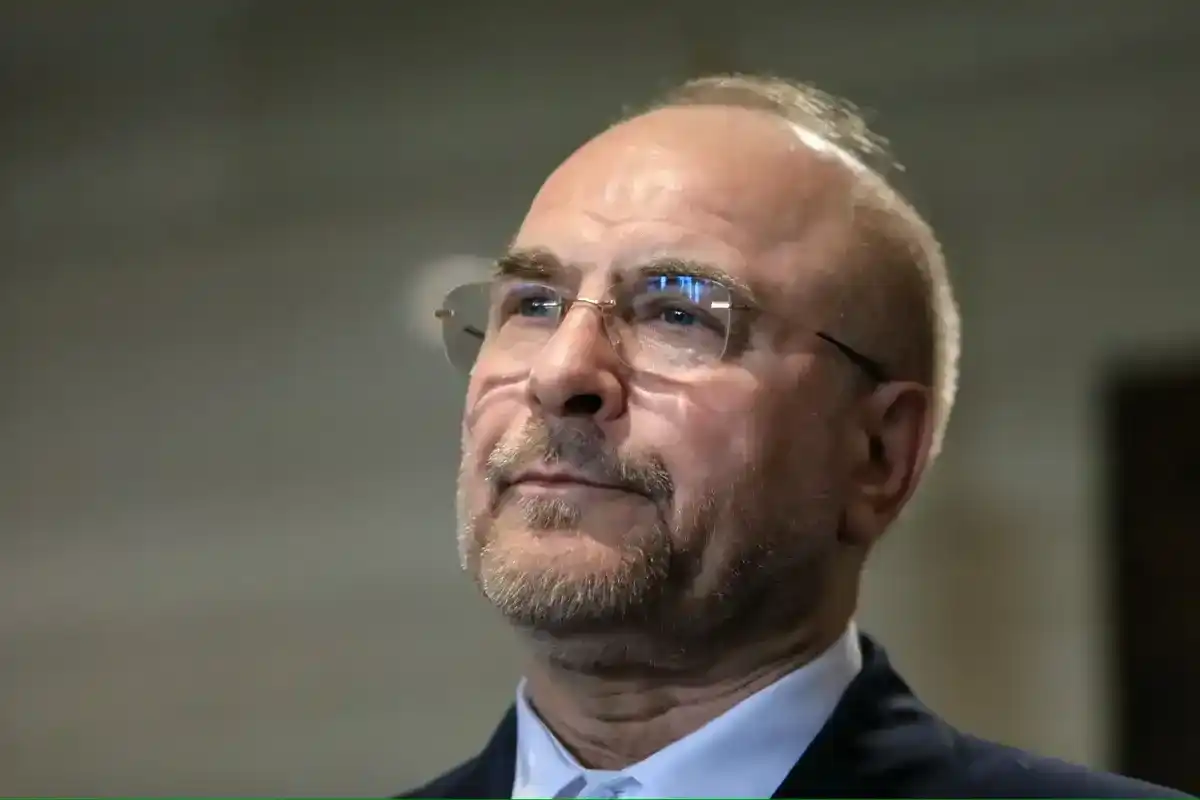
Iranian Parliament Speaker Mohammad Bagher Ghalibaf Source: AFP / Getty Images
Iranian Parliament Speaker Mohammad Bagher Ghalibaf, who led the Tehran delegation in the first round of negotiations, stated on Monday that Iran would not "accept negotiations under the shadow of threat."
Although the ceasefire extension may soothe investor sentiment in the short term, the path to a lasting agreement to end the war remains fraught with uncertainty. This conflict, now in its eighth week, has resulted in thousands of deaths, triggered a global energy crisis, and increased pressure on both sides to find an "exit path."
Donald Trump demands that Iran abandon its pursuit of nuclear weapons and hand over its nuclear materials. Tehran denies having any such intentions and refuses to hand over its enriched uranium.
Alex Vatanka, a senior fellow at the Middle East Institute, stated that Trump has somewhat "painted himself into a corner" because he does not actually want to return to military conflict.
"He made a strategic mistake in thinking that raising his voice and increasing pressure on the Iranians would work," Vatanka said. "This approach doesn't work with this regime. Quiet pressure often works better than public pressure."
Original link