Artículos Relacionados con BUSD

El Centro de Noticias de HTX ofrece los artículos más recientes y un análisis profundo sobre "BUSD", cubriendo tendencias del mercado, actualizaciones de proyectos, desarrollos tecnológicos y políticas regulatorias en la industria de cripto.

The Trillion-Dollar Stablecoin War: Binance Decides to Re-enter the Fray

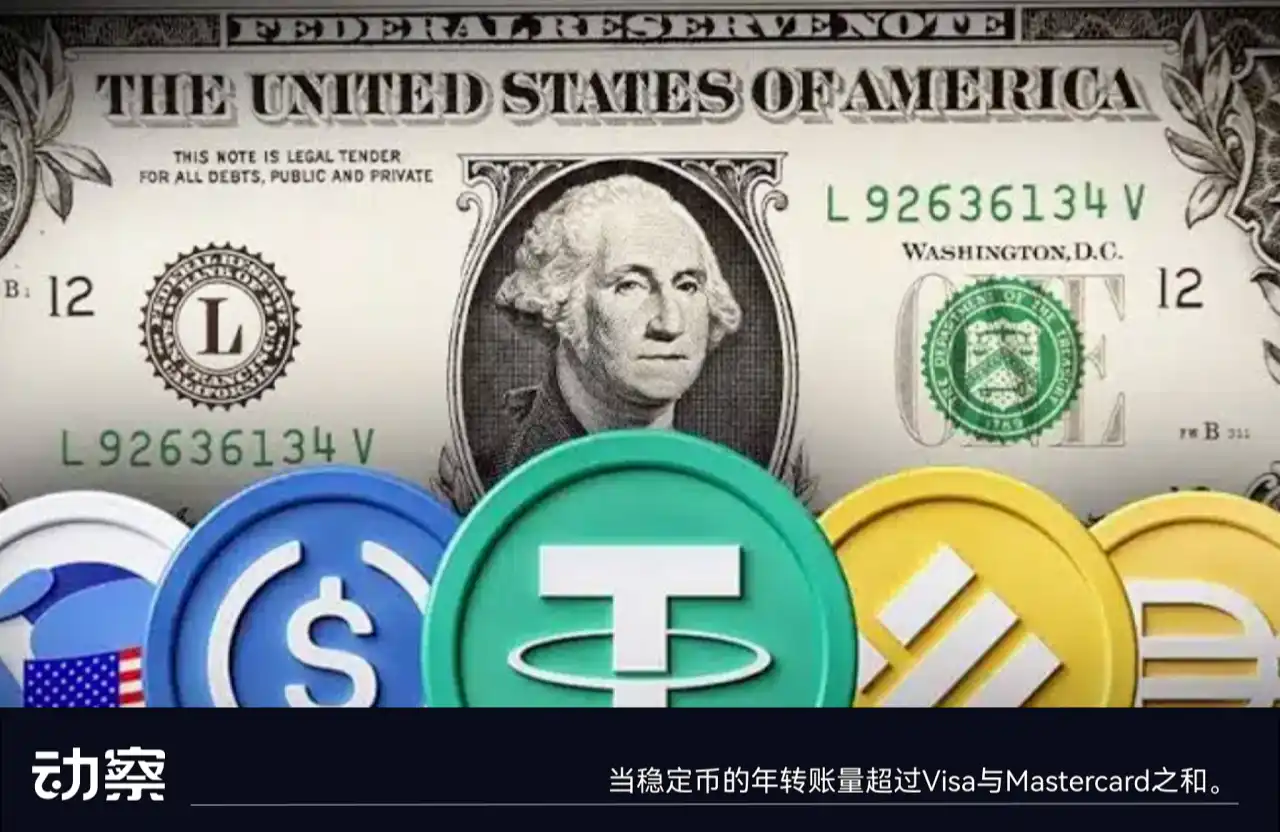
The stablecoin market, with $27.6 trillion in on-chain transfers in 2024, has surpassed the combined volume of Visa and Mastercard. This marks a shift from a niche crypto product to a critical piece of global financial infrastructure. The article outlines the evolution of stablecoins. The 1.0 era was defined by first-mover advantage and passive monopolies. Tether's USDT dominates with a 60% market share, while Circle's USDC, despite its compliance focus, faced a crisis during the 2023 Silicon Valley Bank collapse, proving that network effect is the ultimate moat. Binance's journey reflects this competitive landscape. Its first stablecoin, the regulated BUSD, was shut down by U.S. regulators in 2023. It then pivoted to supporting FDUSD and has now taken a strategic stake in a new model with the launch of $U. Unlike traditional stablecoins, $U is a "stablecoin ETF" or "套娃" (nesting doll), backed by a basket of existing stablecoins: USDT, USDC, and the politically-connected USD1 from the Trump family. USD1's rapid growth, including a $2 billion investment into Binance from an Abu Dhabi fund, highlights a new dimension: stablecoins. The article argues that stablecoins are no longer just financial tools but vehicles for political capital and a new front in the battle for monetary influence, as evidenced by the U.S. passing the GENIUS Act to establish a federal regulatory framework. The "nesting doll" structure of $U aims to mitigate single-point risks (e.g., USDT's opacity, USDC's banking risk, USD1's political ties) and aggregate liquidity. However, it also creates a potential chain of risk contagion. The competition has moved from a solo fight for survival (1.0) to an era of alliances and aggregation (2.0), where the key is who can build the largest coalition. With giants like PayPal and Ripple entering the fray, the battle for the future of digital dollars is intensifying, and its outcome will have profound implications for the global financial system.

marsbit12/24 06:11

The Trillion-Dollar Stablecoin War: Binance Decides to Re-enter the Fray

marsbit12/24 06:11

The Rise and Fall of Binance's Hegemony: The Stablecoin War from BUSD's 'Unification' to $U's 'Dominance'

"Binance's Stablecoin Wars: From BUSD's 'Unification' to $U's 'Domination'" This article chronicles Binance's evolving strategy in the stablecoin arena, tracing its journey from aggressive dominance to a more sophisticated, aggregator model. The story begins with the ambitious launch of BUSD, a Paxos-issued stablecoin born from a partnership between Binance's CZ and Paxos's Richmond Teo. Binance's most aggressive move came in 2022 with a "liquidity unification" blitz, automatically converting user balances of USDC, USDP, and TUSD into BUSD and removing their trading pairs. This tactic briefly propelled BUSD to a $23 billion market cap. However, its downfall was swift. A critical structural flaw was its "Binance-Peg BUSD," an unregulated, shadow version on the BNB Chain that sometimes lacked sufficient collateral. This led to a regulatory "Valentine's Day massacre" in February 2023, when the NYDFS ordered Paxos to stop minting BUSD, effectively killing the project. In the subsequent vacuum, Binance first promoted the Hong Kong-based FDUSD as a transitional solution and created BFUSD, an internal, yield-bearing "reward asset" for use as futures collateral. The narrative then shifts to Binance's latest and most surprising play: United Stables ($U). This new "meta-stablecoin" represents a strategic evolution. Instead of trying to eliminate rivals like USDT and USDC, $U aggregates them, backing itself with a basket of these major stablecoins. Notably, it also includes USD1, a stablecoin from the Trump-linked World Liberty Financial project, led by none other than Richmond Teo. A key innovation of $U is its design for the "AI economy," featuring gasless transactions (EIP-3009) to facilitate machine-to-machine micropayments. The article concludes that Binance's strategy has evolved from the "霸道" (hegemonic) force of BUSD to the "大同" (greater unification) approach of $U, which seeks to absorb existing liquidity rather than destroy it, while positioning itself for the future frontier of AI-driven finance.

marsbit12/19 12:13

The Rise and Fall of Binance's Hegemony: The Stablecoin War from BUSD's 'Unification' to $U's 'Dominance'

marsbit12/19 12:13

活动图片