Artículos Relacionados con Bond Market

El Centro de Noticias de HTX ofrece los artículos más recientes y un análisis profundo sobre "Bond Market", cubriendo tendencias del mercado, actualizaciones de proyectos, desarrollos tecnológicos y políticas regulatorias en la industria de cripto.

The Biggest Enemy of the AI Bull Market Is Not a Bubble, But the Bond Market?

The bond market is emerging as the most dangerous variable for the AI stock rally. US Bank's chief investment strategist Michael Hartnett warns that surging bond yields are tightening financial conditions beyond what corporate earnings can support. Key indicators include the 30-year Treasury yield hitting 5.2% (a high since 2007) and real yields reaching 3% (a peak since 2008). Hartnett argues this bond market stress could force the Fed to hike rates, which would be detrimental to equities. A critical risk signal would be if the bullish combination of "rising yields & rising bank stocks" flips to "rising yields & falling bank stocks," potentially triggering a broader de-risking in markets. Simultaneously, credit risk for hyperscale cloud companies has reached record highs, with Credit Default Swaps (CDS) at unprecedented levels. This reflects bond investors' growing skepticism about the return on investment from the massive AI capital expenditure boom. The core concern is: if debt markets refuse to fund the AI spending spree, where will the capital for expensive memory chips and potentially unprofitable frontier models come from? Hartnett frames the current dynamic as "FCI > EPS" – where tightening Financial Conditions outweigh the support from Earnings Per Share. He advises a defensive tilt: going long defensive stocks, high-dividend stocks, and long-duration bonds, while shorting bank stocks, brokers, tech, and industrials to hedge against a potential reversal of the "boom" narrative. From a macro perspective, the 2020s are characterized by supply-side constraints (labor, imports, oil) rather than demand, while bond and equity supply remains abundant due to persistent fiscal deficits and reduced corporate buybacks. In this environment, Hartnett sees gold and Bitcoin quietly forming a base in 2026.

marsbit07/27 11:32

The Biggest Enemy of the AI Bull Market Is Not a Bubble, But the Bond Market?

marsbit07/27 11:32

Three 'Reflexivity' Shadows Hang Over the Market

Global markets are currently enveloped by three mutually reinforcing "reflexive" loops: oil price politics, outsized capital expenditure by hyperscale cloud providers, and AI debt risks. According to Goldman Sachs, the combined negative feedback from these factors places the market in a fragile and precarious state. The first loop involves the two-way feedback between surging oil prices and rising interest rates. Brent crude's brief breach of $100 per barrel tests expectations of a U.S. policy response to curb prices and inflation. However, the delay in such intervention forces markets to increasingly price in the risks themselves. Higher energy costs are already impacting corporate earnings, as seen with an airline's profit warning, and threaten to fuel broader inflation. The second loop concerns the massive, escalating capital expenditure (capex) by major tech firms like Google, which recently raised its 2026 capex forecast significantly. The market's tolerance for viewing such spending as a cost-free growth signal is waning, shifting focus to investment returns. This competitive capex spiral pressures the entire cloud and semiconductor sector. Furthermore, the competitive gap in AI between leading closed-source and Chinese open-source models is narrowing rapidly, threatening the economic rationale behind massive investments. The third reflexive danger lies in the financing structures supporting this expansion. Bond prices for entities funding AI infrastructure, such as a Meta financing vehicle, have fallen sharply from issue price. While hyperscale balance sheets remain strong, soaring capex is eroding free cash flow conversion. There is a growing risk that today's capacity build-out leads to future oversupply and significant depreciation charges. Key near-term tests for these dynamics include Microsoft's upcoming earnings, which will scrutinize its balance of growth, spending, and cash flow, and the IPO of Chinese memory chipmaker CXMT, a major new competitor. The current environment is characterized by reflexivity, where each variable is both a cause and an effect, creating a self-reinforcing cycle of uncertainty.

链捕手07/27 10:29

Three 'Reflexivity' Shadows Hang Over the Market

链捕手07/27 10:29

Warsh Takes the Helm at the Fed: A Capital Layout Clearing the Way for AI Productivity

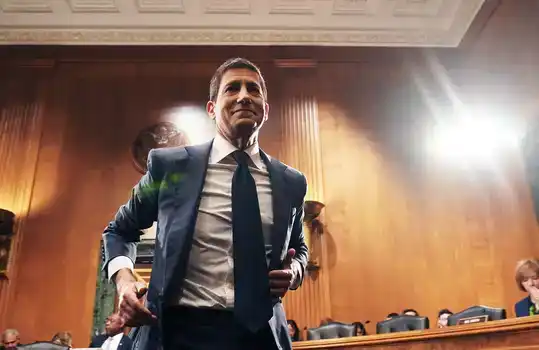
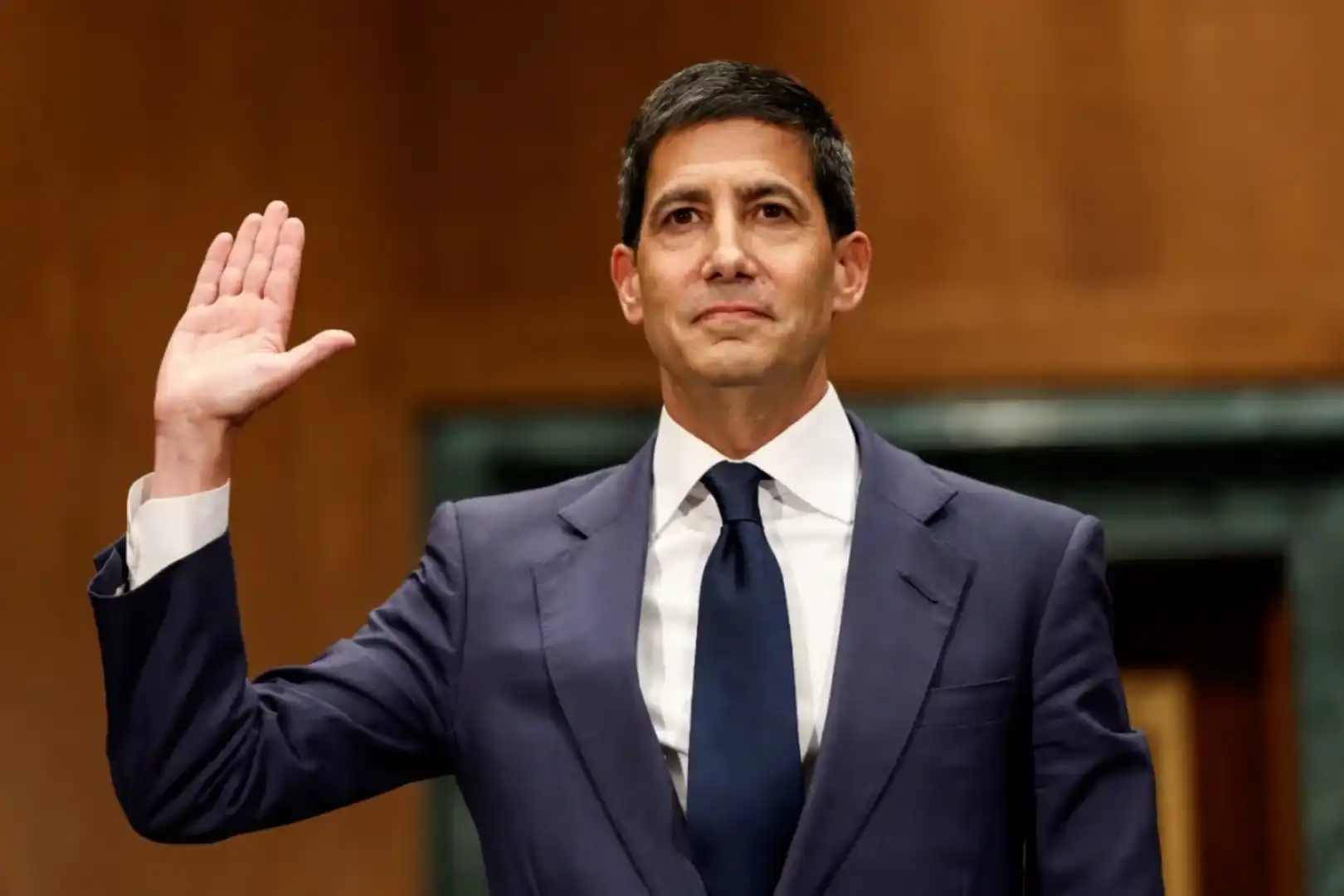
Kevin Warsh's confirmation as the 17th Federal Reserve Chair signals a significant strategic pivot, not merely a political victory. The core narrative, as framed by the author's "Universal Code," is that capital flows towards maximizing intelligence output per unit of energy—currently represented by the AI-driven semiconductor and energy infrastructure boom. Warsh, uniquely among candidates, is a former tech investor who has personally invested in this AI "productivity miracle." His mandate is to enable this transformation by aligning monetary policy to support, not stifle, the capital-intensive AI buildout. His proposed policy framework blends elements of 1950s financial repression with Alan Greenspan's 1990s playbook: tolerating higher headline inflation driven by volatile components (e.g., energy) while relying on AI-driven productivity gains to suppress core inflation and unit labor costs. This allows for a more accommodative stance than conventional models suggest. The strategy's success hinges on a coordinated "Treasury-Fed Accord" with Treasury Secretary Bessant. Bessant's role is international: securing foreign demand for long-term U.S. debt through bilateral agreements (e.g., with China, Japan, Gulf states) that offer access to AI infrastructure in exchange for recycling trade surpluses into Treasuries. A weaker dollar and controlled real yields are essential to make this foreign duration buying viable. Warsh's Fed must avoid overly restrictive policy that would break this flow. The underlying coalition driving this agenda consists of crypto founders, AI infrastructure operators, and energy investors seeking policy stability. While Warsh's initial meetings may not deliver immediate rate cuts, they will signal a shift in focus toward core inflation and greater policy discretion. The critical variable is the bond market. If long-term yields, term premiums, or real yields rise beyond certain thresholds (e.g., 10-year yields above 5.5%), the entire architecture could fail regardless of Fed actions. The next six months will determine whether the bond market grants the new Fed Chair the space to implement this framework. If successful, the cycle extends, benefiting risk assets, cryptocurrencies, and AI capital expenditure stocks. The market's current pricing of a conventional inflation fight creates an asymmetry versus this productivity-led, financially repressive framework, which represents the potential for significant returns.

marsbit05/14 10:07

Warsh Takes the Helm at the Fed: A Capital Layout Clearing the Way for AI Productivity

marsbit05/14 10:07

Is the Rebound an Illusion? The Bond Market Has Already Given the Answer

Is the stock market's rapid rebound to pre-war levels a sign of recovery or a misleading rally driven by momentum rather than fundamentals? While the S&P 500 has fully recovered its losses from the U.S.-Iran conflict and nears all-time highs, bond and oil markets tell a different story. Key data reveals contradictions: 10-year Treasury yields have risen 30 basis points, signaling persistent inflation concerns and constrained Fed policy space. WTI crude is up 37%, indicating that geopolitical risks are not priced to resolve soon. The 2-year Treasury yield, a sensitive gauge of rate expectations, has increased nearly 40 bps, challenging the narrative of imminent Fed rate cuts. The equity market appears to be pricing in a "perfect scenario": subdued oil impact on consumption, Fed rate cuts despite hot inflation, stable corporate margins, and near-term conflict resolution. However, bonds and oil reflect a reality of sticky inflation, limited Fed flexibility, and ongoing geopolitical tension. This divergence suggests the rally may be momentum-driven rather than fundamentally justified. If upcoming CPI data exceeds expectations (e.g., above 3.5%), the 2026 rate-cut narrative could collapse. Investors chasing the rally are betting on an ideal outcome—swift conflict resolution, controlled inflation, Fed easing, and resilient earnings—while ignoring signals from more cautious asset classes. The gap will likely close either through a fundamental improvement validating stocks or a market correction aligning with bond and oil realities.

marsbit04/16 07:05

Is the Rebound an Illusion? The Bond Market Has Already Given the Answer

marsbit04/16 07:05

Soaring Oil Prices No Longer Drive Up Interest Rates, What Is the Market Afraid Of?

Oil prices surged nearly 60% in March 2026—the steepest monthly rise since Brent crude's inception in 1988—after the Strait of Hormuz closed, cutting off 17.8 million barrels per day of oil flow. Historically, such spikes pushed inflation expectations and bond yields higher, but this time, the 10-year Treasury yield fell sharply from 4.44% to 3.92% in late March, signaling a decoupling. This divergence reflects a market shift: growth risks now outweigh inflation concerns. Bond markets are betting on recession rather than persistent inflation. Historical oil shocks—like those in 1973, 1979, 1990, and 2008—often preceded economic downturns. The sole exception was the 2022 spike, which triggered severe inflation instead. Market expectations pivoted rapidly. Earlier, traders anticipated rate cuts, but by late March, weak consumer confidence and manufacturing data drove bets toward Fed dovishness. Chair Powell emphasized monitoring whether the supply shock is temporary, but the bond market has already priced in recession risks. If stagflation emerges—as during 1973–1982—real assets like gold and commodities may outperform, while stocks and bonds could suffer. The 60/40 portfolio would be particularly vulnerable. Analysts project Brent could average $115–125 in April, with a peak of $150 possible if the Strait remains closed. The bond market’s verdict is clear: fear of recession dominates.

marsbit03/31 03:05

Soaring Oil Prices No Longer Drive Up Interest Rates, What Is the Market Afraid Of?

marsbit03/31 03:05

活动图片